With the midterm elections underway, the direction of the US dollar still depends on votes and data.
2026-11-03 18:20:25
On Tuesday (November 3), the US midterm elections were held, with all 435 seats in the House of Representatives and 35 seats in the Senate up for re-election. The struggle for control of Congress has firmly captured the attention of the foreign exchange, US Treasury, and commodity markets. Many traders have already proactively reduced their positions and entered a wait-and-see mode.  Three Election Scenarios and Their Representations in Dollar Pricing Market consensus suggests the Democrats will have little difficulty winning the House of Representatives, needing only a net gain of four seats to control it; the Senate race, however, is much fiercer. The trading market projects a 74%-76% probability of Democrats winning a Senate majority. The results won't be clear quickly; initial news is likely to emerge in early Wednesday trading, but the counting process for fiercely contested seats will be lengthy. Mail-in ballot verification and potential legal disputes could delay the final Senate election outcome for days or even weeks. The swing Senate seats in Alaska, Iowa, Kansas, Maine, Michigan, Nebraska, Ohio, and Texas are key targets for market monitoring; six of these are currently held by Republicans, and their fate will directly determine the final power structure in Congress. The market has largely priced in the baseline scenario of Republicans losing the House, but it hasn't fully priced in a Democratic sweep of both houses. If a blue wave materializes, the dollar is likely to come under downward pressure. On the one hand, tightening regulations are expected to suppress AI and other technology sectors, and the weakness in these sectors has already dragged down the dollar multiple times recently. On the other hand, with the same party controlling both houses of Congress, increased uncertainty regarding government funding and debt ceiling negotiations will also weaken dollar buying. However, most institutions believe that even a Democratic sweep is unlikely to drive a sustained depreciation of the dollar. Federal Reserve policy is the core driver of dollar pricing in the medium to long term, and the election results will not immediately change the Fed's interest rate path. In contrast, the most likely outcome of a divided Congress—Republicans retaining the Senate and Democrats winning the House—has a neutral impact on the dollar, and may even have a slight positive impact. Conversely, if the Republicans unexpectedly win both houses, it represents a significant expectation gap, likely pushing up US Treasury yields and strengthening the dollar. Geopolitical tensions and oil prices are constraining the dollar's short-term volatility. Besides the election, oil prices and geopolitical news were the main variables that roiled the currency market earlier this week. Previously, the market bet on a breakthrough in US-Iran diplomatic negotiations, causing Brent crude oil to fall below $105 per barrel. The cooling oil prices led to a slight weakening of the US dollar, while commodity currencies like the Canadian dollar and Australian dollar rebounded. US-Iran negotiations have remained fraught with twists and turns. On Monday, Trump signaled that Iran was willing to reach a ceasefire agreement, suggesting a possible consensus; Iranian Foreign Minister Arakchi also confirmed that consultations through Qatari mediators had been ongoing intensively. Iran also proposed a phased plan, allowing the Strait of Hormuz to be temporarily opened for two days, provided the US meets certain conditions. However, after multiple rounds of communication, there has been no substantial progress, and the shipping risks in the strait have not been completely eliminated. Furthermore, renewed tensions between Russia and Ukraine have provided support for the US dollar due to geopolitical safe-haven demand, preventing the full release of downward pressure on gold. A barrage of news impacted the market, coupled with traders' reluctance to take large positions before the election, locking in the short-term trading range for the US dollar, making it difficult for bulls to launch a strong offensive. Economic data showed mixed results, with non-farm payrolls being the core focus this week. US manufacturing data showed significant divergence. The October ISM Manufacturing PMI rose to 55.5, exceeding expectations and the previous reading, with new orders and output sub-indices both rebounding, reflecting the resilience of the manufacturing sector. However, the S&P Global Manufacturing PMI was revised down from 55.9 to 54.9, indicating a slowdown in the expansion rate. These conflicting surveys have made the market hesitant to conclude that the economy is continuing to strengthen. Later tonight in the North American trading session, the September JOLTS job openings data will be released. The tightness of the labor market directly relates to inflation stickiness; strong data would reinforce expectations of higher interest rates for a longer period, benefiting the US dollar. However, traders see the JOLTS data as more of a warm-up; the real highlight this week is Friday's non-farm payroll report, which will set the tone for asset pricing in the latter half of the week. US Treasury Supply and Credit Signals Reveal Liquidity Clues The Treasury Department's latest QRA quarterly funding announcement contains clues about changes in US Treasury supply and liquidity from the fourth quarter to the first quarter of next year, an aspect easily overlooked by forex traders. The fourth-quarter bond issuance plan was largely in line with expectations, benefiting from a higher-than-expected cash balance at the beginning of the period. The issuance size was reduced by $10 billion to $618 billion, while the year-end cash target remained at $850 billion. However, supply pressure shifted later, with first-quarter bond issuance directly increasing to $800 billion and the first-quarter cash target raised to $1 trillion, exceeding normal levels. The massive bond issuance, coupled with the approaching April tax payment window, has raised market concerns about a temporary tightening of bank liquidity, leading to yield fluctuations and indirectly impacting the dollar. The credit side also warrants attention, with the latest Senior Loan Officer Survey (SLOOS) reflecting the lagged effects of financial tightening. While bank approval standards haven't tightened significantly, demand for commercial loans, commercial real estate loans, and residential mortgages has weakened simultaneously. The Federal Reserve had already seen this report before last week's interest rate meeting, which also contributed to the cautious statements from some officials. With manufacturing resilience remaining while credit demand is declining, the US economy is in a delicate state of flux, further increasing the difficulty of pricing.
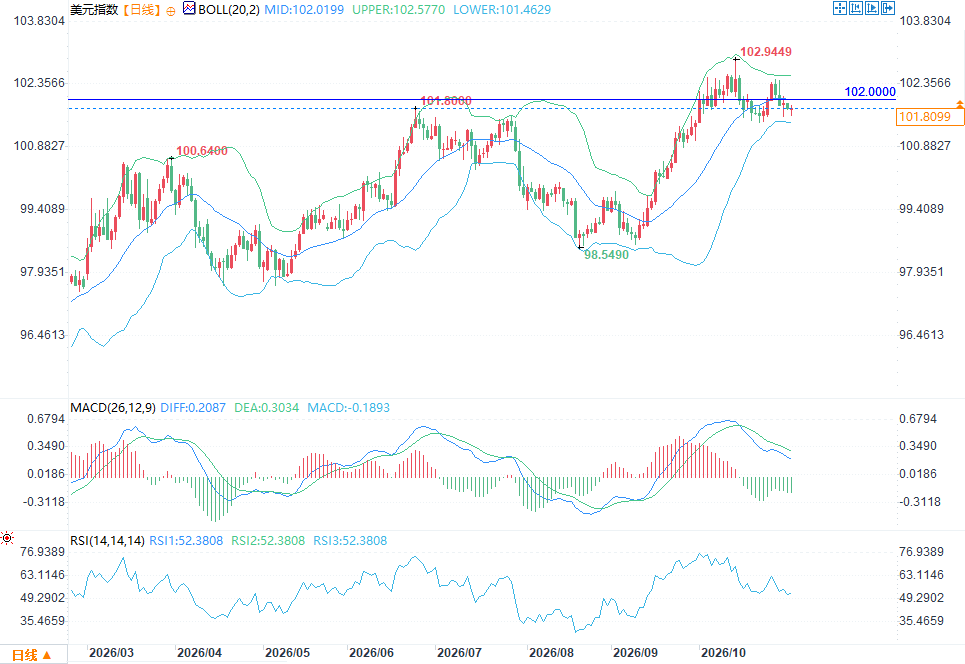 (US Dollar Index Daily Chart Source: FX678) Summary The market is currently in a typical waiting window. Short-term sentiment follows the vote count and swing state results, but the medium-term direction of the US dollar will be determined by Federal Reserve policy, the pace of US Treasury supply, and non-farm payroll data. The balance of power between bulls and bears is currently balanced, and the trend is unclear. Most institutions prefer to maintain a light position and wait for the election results and employment data to be released before seeking clearer trading clues.
Three Election Scenarios and Their Representations in Dollar Pricing Market consensus suggests the Democrats will have little difficulty winning the House of Representatives, needing only a net gain of four seats to control it; the Senate race, however, is much fiercer. The trading market projects a 74%-76% probability of Democrats winning a Senate majority. The results won't be clear quickly; initial news is likely to emerge in early Wednesday trading, but the counting process for fiercely contested seats will be lengthy. Mail-in ballot verification and potential legal disputes could delay the final Senate election outcome for days or even weeks. The swing Senate seats in Alaska, Iowa, Kansas, Maine, Michigan, Nebraska, Ohio, and Texas are key targets for market monitoring; six of these are currently held by Republicans, and their fate will directly determine the final power structure in Congress. The market has largely priced in the baseline scenario of Republicans losing the House, but it hasn't fully priced in a Democratic sweep of both houses. If a blue wave materializes, the dollar is likely to come under downward pressure. On the one hand, tightening regulations are expected to suppress AI and other technology sectors, and the weakness in these sectors has already dragged down the dollar multiple times recently. On the other hand, with the same party controlling both houses of Congress, increased uncertainty regarding government funding and debt ceiling negotiations will also weaken dollar buying. However, most institutions believe that even a Democratic sweep is unlikely to drive a sustained depreciation of the dollar. Federal Reserve policy is the core driver of dollar pricing in the medium to long term, and the election results will not immediately change the Fed's interest rate path. In contrast, the most likely outcome of a divided Congress—Republicans retaining the Senate and Democrats winning the House—has a neutral impact on the dollar, and may even have a slight positive impact. Conversely, if the Republicans unexpectedly win both houses, it represents a significant expectation gap, likely pushing up US Treasury yields and strengthening the dollar. Geopolitical tensions and oil prices are constraining the dollar's short-term volatility. Besides the election, oil prices and geopolitical news were the main variables that roiled the currency market earlier this week. Previously, the market bet on a breakthrough in US-Iran diplomatic negotiations, causing Brent crude oil to fall below $105 per barrel. The cooling oil prices led to a slight weakening of the US dollar, while commodity currencies like the Canadian dollar and Australian dollar rebounded. US-Iran negotiations have remained fraught with twists and turns. On Monday, Trump signaled that Iran was willing to reach a ceasefire agreement, suggesting a possible consensus; Iranian Foreign Minister Arakchi also confirmed that consultations through Qatari mediators had been ongoing intensively. Iran also proposed a phased plan, allowing the Strait of Hormuz to be temporarily opened for two days, provided the US meets certain conditions. However, after multiple rounds of communication, there has been no substantial progress, and the shipping risks in the strait have not been completely eliminated. Furthermore, renewed tensions between Russia and Ukraine have provided support for the US dollar due to geopolitical safe-haven demand, preventing the full release of downward pressure on gold. A barrage of news impacted the market, coupled with traders' reluctance to take large positions before the election, locking in the short-term trading range for the US dollar, making it difficult for bulls to launch a strong offensive. Economic data showed mixed results, with non-farm payrolls being the core focus this week. US manufacturing data showed significant divergence. The October ISM Manufacturing PMI rose to 55.5, exceeding expectations and the previous reading, with new orders and output sub-indices both rebounding, reflecting the resilience of the manufacturing sector. However, the S&P Global Manufacturing PMI was revised down from 55.9 to 54.9, indicating a slowdown in the expansion rate. These conflicting surveys have made the market hesitant to conclude that the economy is continuing to strengthen. Later tonight in the North American trading session, the September JOLTS job openings data will be released. The tightness of the labor market directly relates to inflation stickiness; strong data would reinforce expectations of higher interest rates for a longer period, benefiting the US dollar. However, traders see the JOLTS data as more of a warm-up; the real highlight this week is Friday's non-farm payroll report, which will set the tone for asset pricing in the latter half of the week. US Treasury Supply and Credit Signals Reveal Liquidity Clues The Treasury Department's latest QRA quarterly funding announcement contains clues about changes in US Treasury supply and liquidity from the fourth quarter to the first quarter of next year, an aspect easily overlooked by forex traders. The fourth-quarter bond issuance plan was largely in line with expectations, benefiting from a higher-than-expected cash balance at the beginning of the period. The issuance size was reduced by $10 billion to $618 billion, while the year-end cash target remained at $850 billion. However, supply pressure shifted later, with first-quarter bond issuance directly increasing to $800 billion and the first-quarter cash target raised to $1 trillion, exceeding normal levels. The massive bond issuance, coupled with the approaching April tax payment window, has raised market concerns about a temporary tightening of bank liquidity, leading to yield fluctuations and indirectly impacting the dollar. The credit side also warrants attention, with the latest Senior Loan Officer Survey (SLOOS) reflecting the lagged effects of financial tightening. While bank approval standards haven't tightened significantly, demand for commercial loans, commercial real estate loans, and residential mortgages has weakened simultaneously. The Federal Reserve had already seen this report before last week's interest rate meeting, which also contributed to the cautious statements from some officials. With manufacturing resilience remaining while credit demand is declining, the US economy is in a delicate state of flux, further increasing the difficulty of pricing. (US Dollar Index Daily Chart Source: FX678) Summary The market is currently in a typical waiting window. Short-term sentiment follows the vote count and swing state results, but the medium-term direction of the US dollar will be determined by Federal Reserve policy, the pace of US Treasury supply, and non-farm payroll data. The balance of power between bulls and bears is currently balanced, and the trend is unclear. Most institutions prefer to maintain a light position and wait for the election results and employment data to be released before seeking clearer trading clues.
- Risk Warning and Disclaimer
- The market involves risk, and trading may not be suitable for all investors. This article is for reference only and does not constitute personal investment advice, nor does it take into account certain users’ specific investment objectives, financial situation, or other needs. Any investment decisions made based on this information are at your own risk.