The market has already priced in the peak, so why is the Reserve Bank of Australia still emphasizing the need to retain options?
2026-11-04 18:44:30
On Wednesday, November 4th, the Reserve Bank of Australia's Monetary Policy Committee voted 6-3 to raise the cash rate target by 25 basis points to 4.85%, the highest level in 18 years. This decision comes against a backdrop of persistently higher-than-target inflation, a significant decline in housing prices, and a gradual rise in unemployment. Market expectations for further tightening have cooled rapidly. Overnight index swap pricing indicates a roughly 10% probability of a rate hike at the December meeting, leaving only about 8 basis points of room for rate hikes by February 2027, while implying about 9 basis points of rate cuts by September 2027. The Australian dollar is currently fluctuating around 0.700 against the US dollar. Commerzbank analysts Charlie Lai and Henry Haw pointed out that although the committee raised rates, its wording was softer than before, with three members voting against the rate hike due to concerns about unemployment and the housing market. 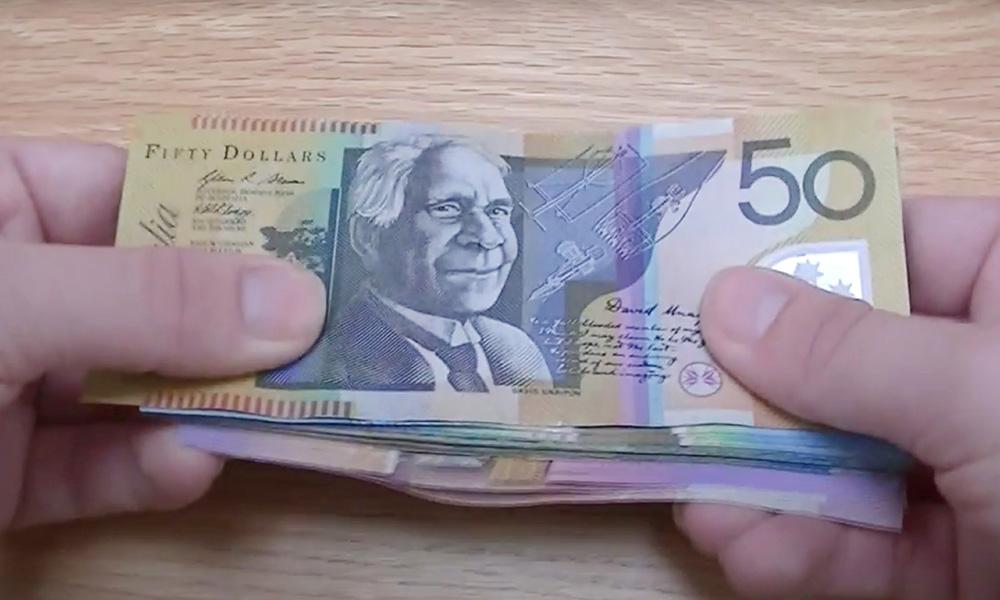
The Reserve Bank of Australia's rate hike to 4.85% and the policy implications splitting the vote
The Reserve Bank of Australia (RBA) raised the cash rate from 4.60% to 4.85% at its November meeting, marking the fifth rate hike by 2026. The vote was 6-3, with opponents primarily concerned that rising unemployment and a weak housing market could further drag down the economy. In the post-meeting press conference, Governor Michel Bullock emphasized that the committee retained policy options and did not explicitly rule out further adjustments, but also stated that the effects of the previous four rate hikes had not yet fully materialized, and the time was ripe to assess the data. The statement removed the previous phrase "if necessary, the cash rate will continue to be raised," a change in wording interpreted by the market as a weakening of the hawkish stance. Bullock explicitly stated that the rate hike was not aimed at the direct impact of oil prices on inflation, but rather at domestic production pressures that had already begun to emerge before the Middle East conflict pushed up oil prices.Upward revision of the inflation outlook and the dual pressures of employment and housing
The Reserve Bank of Australia (RBA) significantly revised its inflation path upward in its updated forecasts. Both headline and core inflation are projected to remain above 3% until the end of 2027, with the return to the midpoint of the 2% to 3% target range pushed back to mid-2028. Recent data shows that the Consumer Price Index (CPI) rose approximately 4.3% year-on-year as of September, while the core index remained around 3.6%. Capacity pressures were assessed as slightly tighter than previously expected, and rising energy prices have begun to pass on to other goods and services. Meanwhile, the unemployment rate has risen to approximately 4.6% to 4.7%, and forecasts indicate it could exceed 5% by the end of 2028. Housing prices have fallen significantly from their year-to-date highs, with some major cities experiencing declines exceeding 10%. Bullock noted that dissenting members placed greater emphasis on these downside risks, arguing that after five rate hikes, more data should be awaited to validate the economic response. These factors collectively form the core of the disagreement within the policy committee.Market pricing reflects the difference between peak expectations and policy path.
The overnight index swap market has clearly shifted its pricing in the Reserve Bank of Australia's (RBA) future path. The probability of a 25 basis point rate hike at the December meeting is now only about 10%, with a cumulative rate hike of about 8 basis points by February 2027, while a rate cut of about 9 basis points by September 2027 is already implied. This means the market no longer expects further rate hikes and considers the policy peak near. In contrast, the RBA's own forecasts show that the return to the inflation target has been delayed by several quarters, and it emphasizes the risk of inflation expectations solidifying. Analysis by Charlie Lay and Henry Howe points out that although the committee raised its inflation forecast and retained the option, the divided voting and softened rhetoric have led the market to view the rate hike cycle as nearing its end. This pricing difference reflects differing market assessments of the trade-off between the pace of economic slowdown and inflation stickiness.AUD/USD Daily Technical Structure Analysis
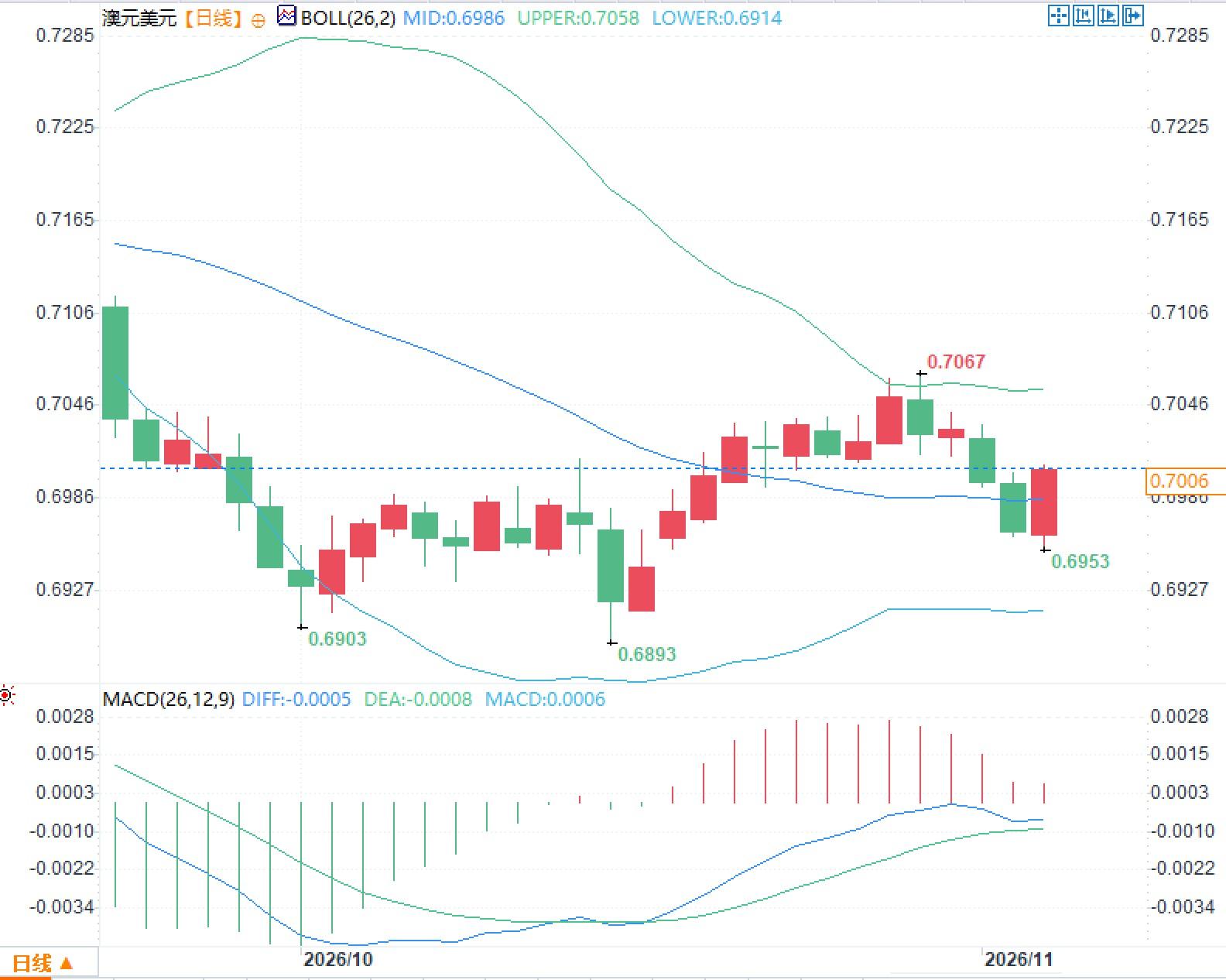
The Australian dollar/US dollar daily chart shows that the price has recently been trading around the Bollinger Band middle line at 0.6986, with the upper band at 0.7058 and the lower band at 0.6914. The price has been fluctuating between 0.6953 and 0.7067 recently, with the current trading level close to the upper Bollinger Band. The MACD indicator shows a DIFF of -0.0005, a DEA of -0.0008, and a histogram value of approximately 0.0006, with the fast and slow lines converging narrowly near the zero line. The relative position of the price to the middle Bollinger Band and the MACD crossover pattern reflect the recent convergence of volatility, with the trading focus repeatedly testing the middle Bollinger Band area.Frequently Asked Questions
Question 1: Why did the Reserve Bank of Australia soften its wording and split its vote after this rate hike? Answer: The committee voted 6-3 to raise rates, with three members voting against it due to rising unemployment and weak housing conditions. Bullock stated that the effects of previous rate hikes had not yet fully materialized, and it was appropriate to assess the data now while retaining policy options. The statement also removed explicit statements about further rate hikes. Question 2: What does the upward revision of the inflation forecast to 3% by the end of 2027 mean for policy? Answer: Both aggregate and core inflation are expected to remain above 3% until the end of 2027, with the return to the midpoint of the target delayed until mid-2028. This reinforces the committee's concerns about sticky inflation and entrenched expectations, but differs from market pricing, which has largely ruled out further rate hikes.- Risk Warning and Disclaimer
- The market involves risk, and trading may not be suitable for all investors. This article is for reference only and does not constitute personal investment advice, nor does it take into account certain users’ specific investment objectives, financial situation, or other needs. Any investment decisions made based on this information are at your own risk.