Will US Treasury yields hit 5.5%? Gold, crude oil, and forex face triple pressure.
2026-11-04 20:44:25
A recent report from ING Bank indicates that the yield on the 10-year US Treasury bond faces triple pressure from AI productivity, high deficits, and sticky inflation. It is projected to rise to 5.25%-5.5% by the first quarter of 2027, before falling to 4.5%-4.75% as inflation declines. This has a profound impact on traders in gold (due to pressure from real interest rates), crude oil (due to the US dollar and growth expectations), and forex (due to the strength of the US dollar). The high-interest-rate environment is not over, and the market needs to be wary of upside risks while also paying attention to potential turning points arising from expectations of later interest rate cuts. Traders should plan ahead. 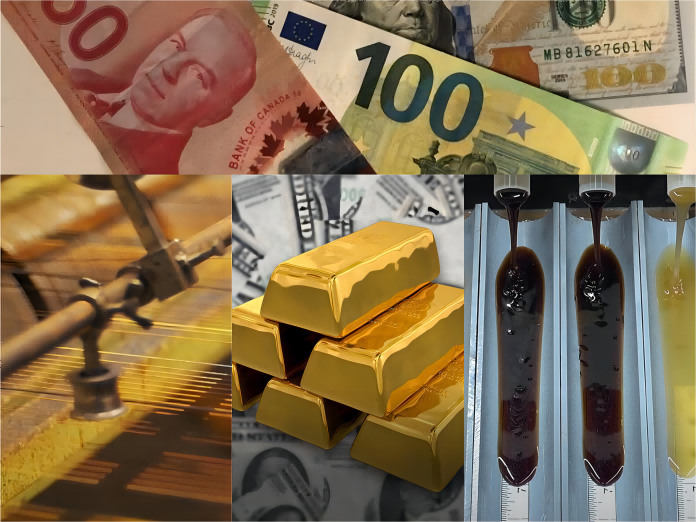 A recent analysis by ING Bank points out that long-term US interest rates are facing a triple obstacle of "good, bad, and ugly" factors, which are unlikely to be easily overcome in the short term. The "good" factor is AI-driven productivity gains; the "bad" factor is persistently high fiscal deficits; and the "ugly" factor is sticky inflation. ING predicts that these forces will push the yield on 10-year US Treasury bonds to 5.25% by the first quarter of 2027, and may even reach 5.5%. Afterward, as inflation falls and the market reprices Fed rate cuts, the yield is expected to fall back to the 4.5%-4.75% range. Currently, the 10-year US Treasury yield is around 4.9%. ING believes that the upward momentum is driven by a combination of factors: real economic growth and rising real yields due to AI, term premium pressure from a large supply of Treasury bonds, and the fact that inflation has not yet fully subsided. In particular, the direction of real yields often dominates the direction of nominal yields. Inflation expectations are relatively stable; the real drivers of volatility are real interest rates and supply factors. For gold traders, this directly relates to real interest rates. Rising US Treasury yields and persistently high real interest rates typically put downward pressure on gold, a non-interest-bearing asset. If yields surge as expected in early 2027, gold may continue to face temporary pressure, especially given a strengthening US dollar. However, ING also emphasizes that a later decline in inflation will open a window for interest rate cuts, and a drop in real interest rates would benefit gold. Traders should pay attention to whether yields truly approach the 5.25%-5.5% high and whether inflation data begins to cool significantly, as potential entry signals for long positions. Increased risk aversion due to geopolitical or fiscal concerns could also provide temporary support. The oil market, on the other hand, is more influenced by the US dollar and growth expectations. High US Treasury yields are often accompanied by a strong dollar, putting pressure on dollar-denominated oil. Simultaneously, if a high-interest-rate environment suppresses economic growth expectations, oil demand will also be affected. ING mentions that the stickiness of inflation is partly related to previous geopolitical conflicts (such as events related to Iran), and energy prices are an important component of inflation. If rising yields reflect strong growth rather than simple tightening, oil may receive some support; conversely, if the market worries that high interest rates will drag down the economy, oil price volatility may increase. Traders need to track the changes in the US dollar index and real US Treasury yields simultaneously. The foreign exchange market is the area most directly affected or harmed. The high US Treasury yields relative to other major economies will continue to support the dollar. ING points out that similar dynamics are also occurring in France, Japan, the UK, and other regions, indicating that the global interest rate environment is not unique to the US. Against the backdrop of a strong dollar, non-US currencies (especially emerging market currencies and high-yield currencies) may face pressure. If domestic fiscal or inflation problems simultaneously worsen, the exchange rate fluctuations against the dollar will be more pronounced for currencies such as the euro and yen. Forex traders can pay attention to changes in the yield spread between US Treasuries and other sovereign bonds, and whether the US Treasury will adjust the issuance scale of long-term Treasury bonds—a potential constraint mentioned by ING. A large-scale reduction in long-term issuance or an increase in repurchase agreements could alleviate upward pressure on yields, thereby weakening the dollar. ING's baseline scenario is not extreme. They do not believe that the 10-year yield will easily reach 6% (unless growth is strong to 3-4%, the deficit worsens further, or inflation remains above 3%), but also caution against betting too early on a bond bull market. The first half of 2027 will still be dominated by pressure, with a turning point likely only in the second half. For gold, crude oil, and forex traders, the key is not predicting precise price points, but rather grasping the rhythm: in the early stages, be wary of the dollar's strength and pressure on gold due to rising yields; in the mid-to-late stages, closely monitor the cooling of inflation and the repricing of interest rate cut expectations, looking for opportunities in gold rebounds, improved crude oil demand, and stabilization of non-US currencies. US Treasury yields remain the anchor for macroeconomic pricing; focusing on them is more effective than simply looking at the price of a single asset. Markets never move in a straight line; under triple pressure, volatility itself presents trading opportunities.
- Risk Warning and Disclaimer
- The market involves risk, and trading may not be suitable for all investors. This article is for reference only and does not constitute personal investment advice, nor does it take into account certain users’ specific investment objectives, financial situation, or other needs. Any investment decisions made based on this information are at your own risk.