US Treasury yields fell to 4.87%, how long can the dollar index correction continue?
2026-11-05 18:48:26
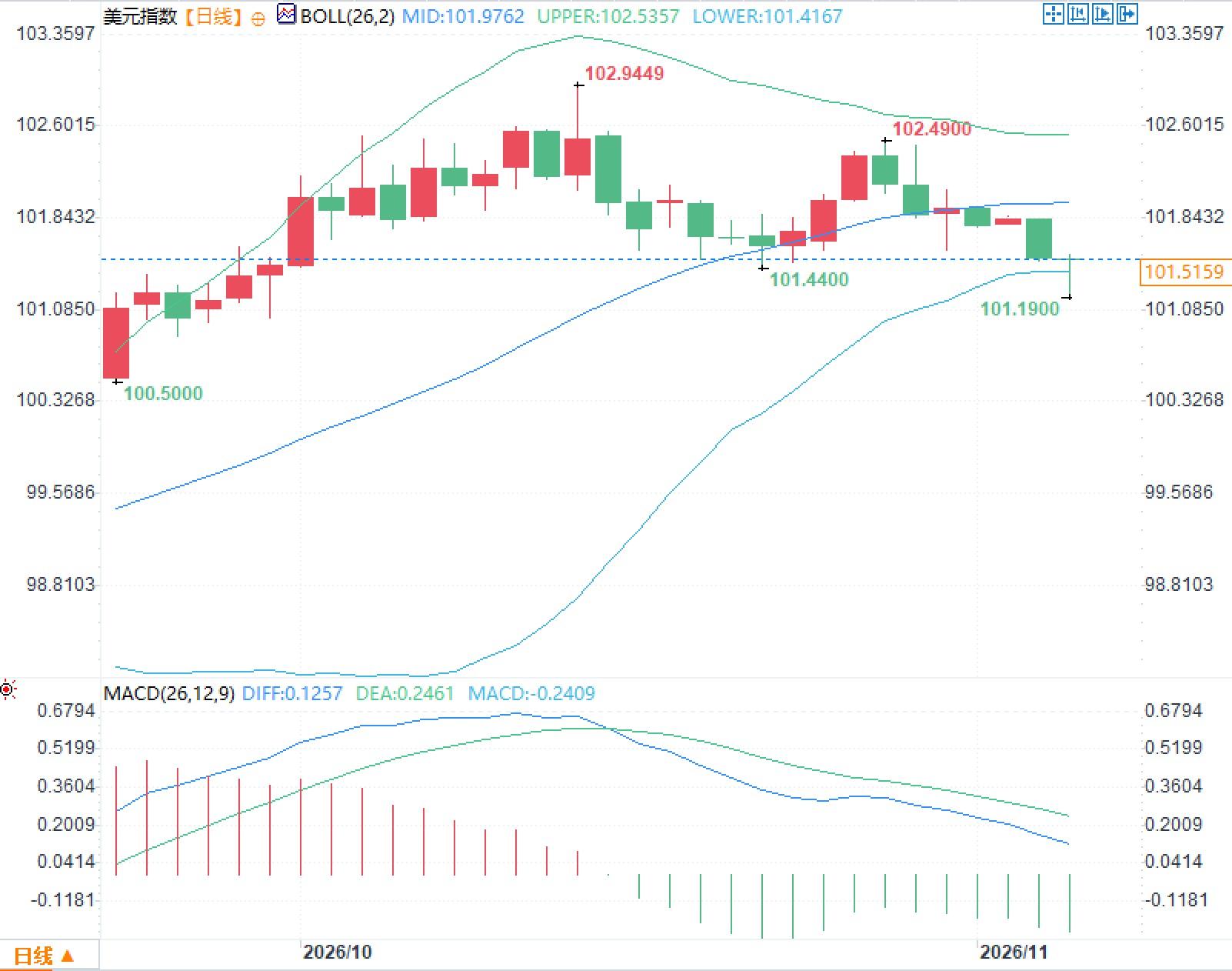
On Thursday, November 5th, the US dollar index continued its adjustment following the release of the US midterm election results, trading at around 101.5, a cumulative decline of about 0.6% since the election results were announced. During the same period, US Treasury yields fell, with the 10-year Treasury yield around 4.87%. Brent crude oil fell back to the $96/barrel range, nearing its 200-day moving average. Market optimism regarding a possible easing of the US-Iran conflict and a potential agreement helped alleviate upward inflationary pressures from energy prices. Lee Hardman, an analyst at Mitsubishi UFJ, pointed out that the weakening dollar and the adjustment in US Treasury yields occurred simultaneously, and the decline in oil prices further weakened the factors that had previously supported the dollar. Wednesday's US ADP employment data showed that private sector employment increased by 86,000 in October, higher than the market expectation of 69,000. Friday's US non-farm payroll report will provide more comprehensive clues about the labor market. 
Election Results and Adjustment of the US Dollar Index
The US dollar index declined significantly after the Democrats won a majority in both the House of Representatives and the Senate in the midterm elections. Since the election results were announced, the dollar index has gradually fallen from around 102 to around 101.5. Lee Hardman stated that the selling pressure triggered by the election results continued into the overnight session, with the dollar index falling by approximately 0.6% cumulatively. The change in the political landscape reduced market expectations for further fiscal expansion, thus putting pressure on the dollar. The exchange rate adjustment was accompanied by a decline in US Treasury yields, reflecting the linkage between risk appetite and interest rate expectations. The market is focusing on the impact of subsequent policy implementation details on exchange rate pricing, rather than simply the election results themselves.The impact of falling oil prices on inflation and the US dollar
Brent crude oil has fallen by about $10 per barrel since the election results were announced, currently hovering around $96 per barrel, close to the 200-day moving average of about $93.5 per barrel. The decline in oil prices helps alleviate inflation concerns stemming from the previous energy price shock. Lee Hardman points out that the sharp drop in oil prices occurred simultaneously with a weakening dollar and adjustments in US Treasury yields, with these three factors reinforcing each other. The decline in energy price risk premiums has reduced the market's need for the Federal Reserve to maintain high interest rates, thus weakening the previous support for the dollar. The Brent-WTI price spread remains around $7 per barrel, reflecting the recovery in global supply and changes in transportation conditions. If oil prices remain at low levels, it will have a positive impact on the terms of trade for importing countries, while simultaneously altering the dollar pricing logic previously strengthened by the energy shock.US Treasury yield adjustments and interest rate expectations
The 10-year US Treasury yield was 4.87%, a slight decline from its recent high. The decline in yields coincided with a correction in the US dollar index, indicating a repricing of the real interest rate path by the market. Cooling expectations for fiscal expansion after the election, coupled with easing inflationary pressures from falling oil prices, jointly pushed down long-term yields. Short-term yields also adjusted, reflecting changes in market expectations for the Federal Reserve's future policy path. Lee Hardman stated that the weakening dollar and the further decline in US Treasury yields corroborate each other. The decline in real interest rates may alter the dollar premium previously supported by energy prices and inflation expectations. The market will continue to observe the further impact of inflation data and the employment report on interest rate expectations; changes in the yield curve shape will be a key point of observation.US employment data and short-term market focus
ADP data showed that private sector employment increased by 86,000 in October, exceeding expectations and indicating that the labor market remains resilient. The market expects Friday's US non-farm payroll report to show a total increase of approximately 65,000 jobs, with the unemployment rate remaining around 4.2%. Lee Hardman pointed out that leading indicators suggest stronger labor demand; if Friday's data confirms this trend, it could provide some short-term support for the US dollar. The interaction between employment data and oil prices and yields will determine the short-term pricing of the dollar. A stable labor market will limit further significant adjustments in the dollar; a significant slowdown could reinforce the current adjustment logic driven by political and energy factors. The market will cross-validate the US non-farm payroll data with the previous ADP results to assess whether there has been a substantial change in economic momentum.Frequently Asked Questions
Question 1: Why did the US midterm election results cause the dollar index to fall? Answer: After the Democrats gained a majority in Congress, market expectations for fiscal expansion cooled, coupled with a drop in oil prices, weakening the factors that previously supported the dollar. Lee Hardman pointed out that post-election selling pressure continued, with the dollar index falling by about 0.6% cumulatively, coinciding with the adjustment in US Treasury yields. Question 2: How does the drop in oil prices affect dollar pricing? Answer: Brent crude oil fell to around $96 per barrel, close to the 200-day moving average, helping to alleviate the upward risk of inflation from energy prices. The decline in oil prices reduced the market's assessment of the necessity for the Federal Reserve to maintain high interest rates, thus putting pressure on the dollar. Question 3: What impact will Friday's US non-farm payroll report have on the dollar? Answer: ADP data showed an increase of 86,000 private sector jobs, higher than expected. If the US non-farm payroll report confirms stronger labor demand, it may provide short-term support for the dollar; if the data is weak, it may reinforce the current adjustment logic dominated by political and energy factors.- Risk Warning and Disclaimer
- The market involves risk, and trading may not be suitable for all investors. This article is for reference only and does not constitute personal investment advice, nor does it take into account certain users’ specific investment objectives, financial situation, or other needs. Any investment decisions made based on this information are at your own risk.