Brent crude oil fell 17% in a week: How will the US election results reshape the Middle East conflict premium?
2026-11-06 21:00:28
On Friday, November 6th, Brent crude oil fluctuated around $98 per barrel, oscillating between gains and losses throughout the day. Since Monday, prices have swung significantly within a range of approximately $19, on track for their biggest weekly drop since April 2020. This movement occurred after the US midterm election results became clear, prompting the market to reassess the possibility of de-escalation in the Middle East conflict and the prospect of a possible resumption of related energy flows. The phone call between the Emir of Qatar and the US President further reinforced signals of diplomatic mediation, but the recovery of supply in the physical market and continued product-side disruptions kept prices highly volatile. 
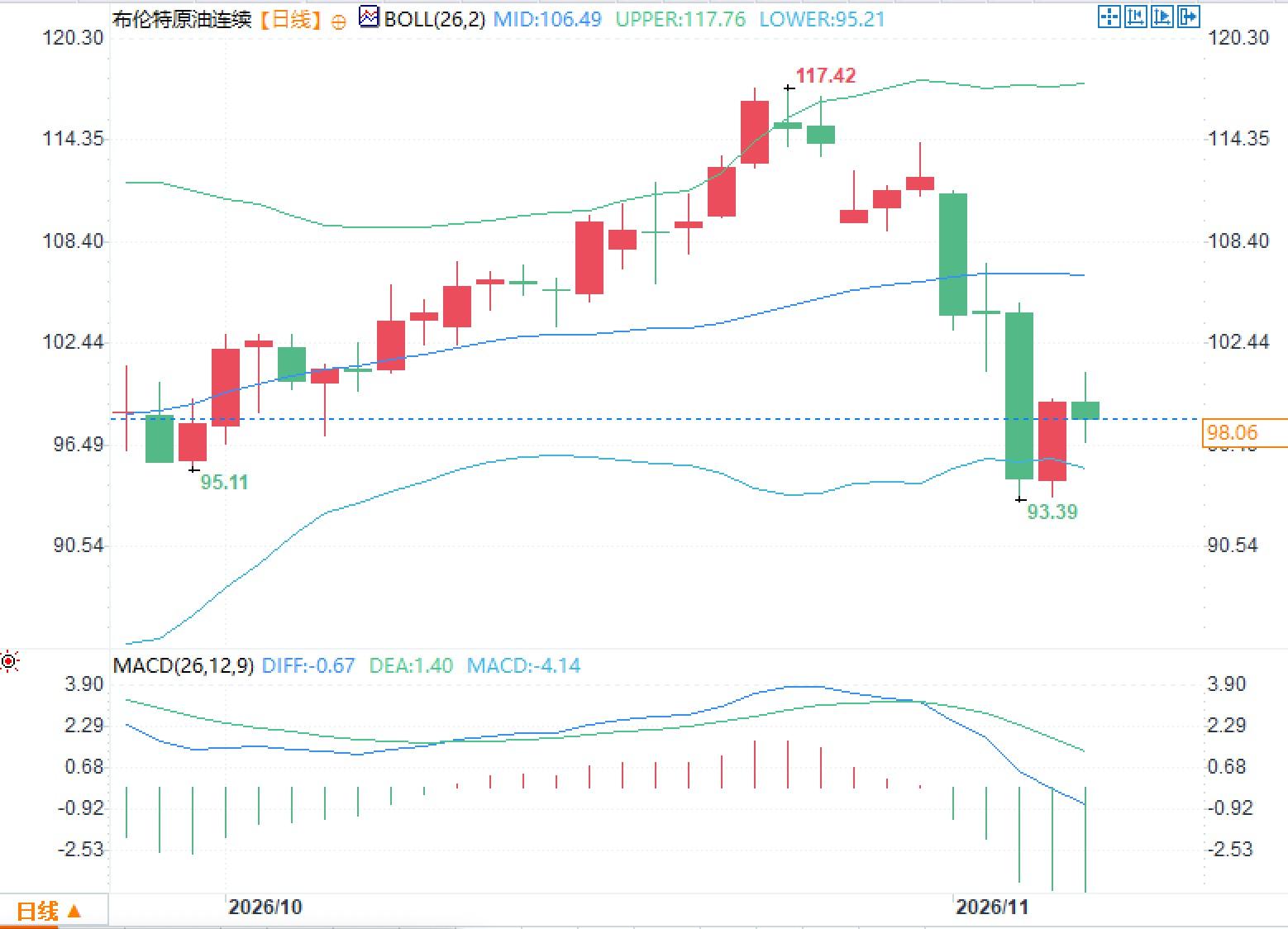
Political Cycle Shift and Conflict Premium Revaluation
The US midterm election results altered market expectations regarding the duration of the conflict. With the Democrats gaining a majority in both houses of Congress, some market participants believed that the administration's room for further military action might be constrained. Previously, Brent crude had hit a six-month high in October, when market pricing included a risk premium for a more intense continuation of the conflict. This premium has begun to be reassessed after the election. Emily Ashford, head of energy research at Standard Chartered, noted that US political calculations have undergone a substantial shift, with the market re-evaluating the incentive structures of both sides in the conflict, and the appeal of a diplomatic path increasing. However, she also emphasized that the market remains vulnerable to a sharp reversal until verifiable substantial progress is made. Price volatility on Friday also coincided with a decline in risk appetite in European equities, and a stronger dollar further pressured commodity prices. This combination suggests that short-term price movements are not solely determined by supply and demand, but rather by a combination of geopolitical expectations, financial conditions, and the interplay of risk assets.Diplomatic progress coexists with core differences
Qatar's mediation efforts are gaining some traction. Reports indicate that relevant parties are reviewing specific proposals put forward by mediators regarding the nuclear program, suggesting that efforts to prevent a full-blown escalation of the conflict are progressing. The US President discussed the issue with his National Security Advisor on Thursday, with market rumors suggesting that he is considering paths including continued economic pressure or an agreement involving significant concessions. However, the core demands of both sides remain significantly different. One side demands the lifting of the maritime blockade, the easing of sanctions, and the release of frozen assets as prerequisites for the full restoration of passage through the Strait of Hormuz. The on-and-off negotiation pattern has repeatedly failed to produce an enforceable agreement, making any progress highly uncertain. Even with increased diplomatic signals, physical attacks continue to occur. The coexistence of disrupted shipping and damaged refineries has led to a divergence in the crude oil and refined product markets. Crude oil supply recovery is more pronounced, while refined product exports remain more constrained.Physical supply recovery and the battle for market share
A rebound in Persian Gulf crude oil exports has weighed on market sentiment. Physical crude oil prices have continued to soften recently, from the Middle East to the North Sea and West Africa, and in some cases have even turned to a discount. Shipments from Saudi Arabia and the UAE are gradually recovering to pre-conflict levels, and competition for market share has re-emerged among producers. Saudi Aramco lowered its crude oil prices for Asia to a six-year low, reflecting a narrowing premium in the spot market and increased bargaining power for buyers. The pace of export recovery has exceeded some institutions' previous expectations. Institutional forecasts for Saudi fourth-quarter production have been revised upwards, with a further recovery expected in the medium term. This change echoes the intermittent resumption of passage through the Strait of Hormuz, but the continued presence of attacks means that the improvement on the supply side remains non-linear.Product-side disturbances and cross-market collaborations
While crude oil prices have fallen, the refined oil market still faces supply constraints. Limited exports from the Gulf region, coupled with capacity losses due to attacks on Russian refineries, are supporting product prices. This divergence in price between crude oil and refined products reflects the asymmetrical impact of the conflict on different stages of the supply chain. Downstream refinery profits and inventory changes will be crucial indicators of the actual degree of shortage. Meanwhile, the sell-off in European stock markets and the strengthening of the US dollar have further amplified crude oil price volatility. The correlation between risk assets and commodities is more pronounced in the current environment. While digesting political signals, the market still needs to address actual supply-side disruptions and bottlenecks in the product chain.Frequently Asked Questions
Question 1: What were the main drivers behind the sharp decline in Brent crude oil prices this week? Answer: The core reason was the increased market expectations for de-escalation of the Middle East conflict following the US midterm elections, coupled with signals of Qatar's mediation and a rebound in physical crude oil exports. These factors combined to compress the previously priced risk premium, leading to significant price fluctuations within a range of approximately $19, with a cumulative drop of nearly 17% this week. Question 2: Has diplomatic progress eliminated supply risks? Answer: Not yet. Although the nuclear project plan is under review and exports have recovered somewhat, significant differences remain between the two sides on core issues such as lifting the blockade and easing sanctions. The ongoing attack in the Strait of Hormuz continues, limiting refined oil exports, and improvements on the supply side remain intermittent. Question 3: What does Saudi Arabia's reduction in Asian crude oil prices reflect? Answer: It reflects the narrowing of physical market premiums and intensified competition for market share. The recovery in exports has softened spot prices, with some turning into discounts. Producers are attracting buyers through price adjustments. Meanwhile, constraints on the product side and changes in cross-market risk appetite continue to shape the overall price structure.- Risk Warning and Disclaimer
- The market involves risk, and trading may not be suitable for all investors. This article is for reference only and does not constitute personal investment advice, nor does it take into account certain users’ specific investment objectives, financial situation, or other needs. Any investment decisions made based on this information are at your own risk.