The Bank of Japan minutes fueled expectations of a December rate hike, and the USD/JPY pair continued its range-bound trading.
2026-11-09 13:44:27
The dollar weakened against the yen in early Asian trading on Monday, trading around 158.25 . This yen appreciation was primarily driven by policy signals from the Bank of Japan: the minutes of its September meeting, released on Thursday, showed that most policymakers believed further interest rate hikes were appropriate as underlying inflation gradually approached its 2% target. While the Bank of Japan kept interest rates unchanged last month, it emphasized its determination to combat inflation risks, reinforcing market bets on a December rate hike. 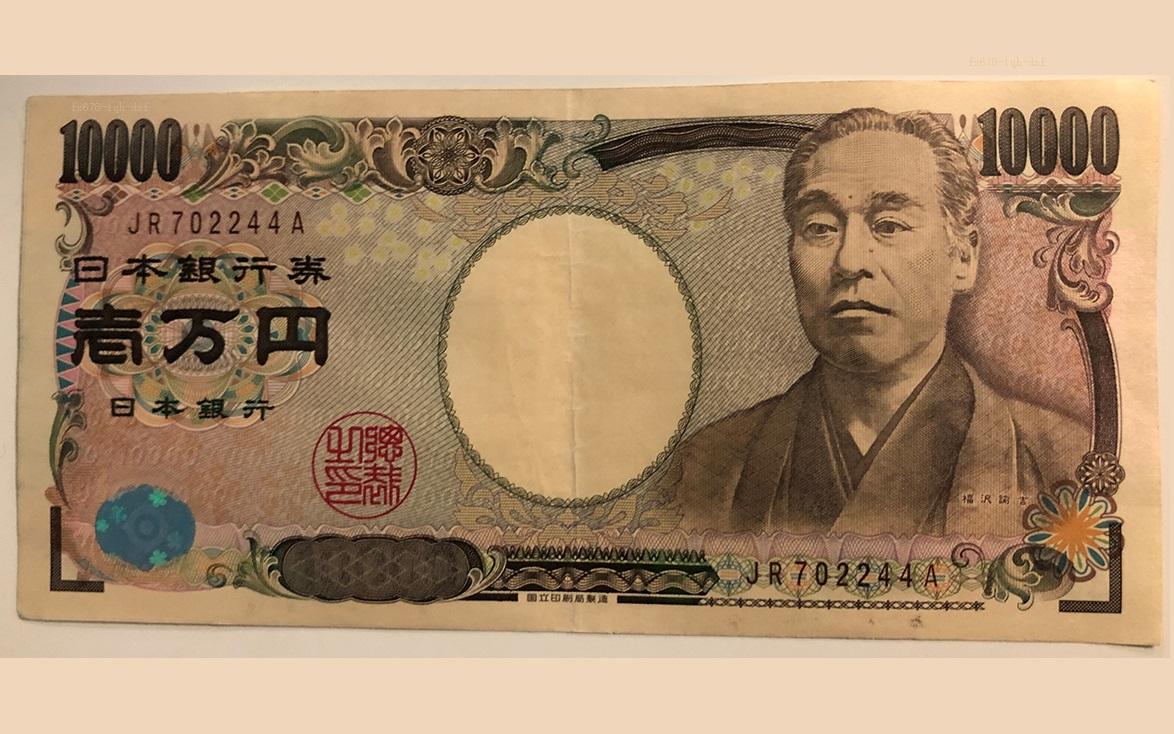 On Friday, former Bank of Japan chief economist Seisaku Kameda further reinforced this expectation, stating that the Bank of Japan is expected to raise interest rates in December and continue to increase borrowing costs next year until rates reach 2% to combat accumulating inflationary pressures. As a result, the market has significantly advanced its pricing in the normalization of Japan's monetary policy. In the US, strong employment data has provided a counterbalancing force for the dollar. October's non-farm payrolls increased by 165,000 , far exceeding the market expectation of 65,000 and also higher than September's 60,000; the unemployment rate fell to 4.1% , down from 4.2% previously. Nationwide chief economist Kathy Bostjancic stated, "The labor market is heating up across the board, which supports our view that the Fed will raise rates again in December." According to the CME Group's FedWatch tool, the market's pricing in a December rate hike has risen to approximately 79.6% , compared to 72.8% before the non-farm payrolls data release. On the safe-haven front, ABN AMRO strategists pointed out that in the latest round of risk aversion, "safe-haven demand favored the yen over the dollar": While the stock market crashed, the dollar index remained largely unchanged at 101.6, as declining US Treasury yields weakened the dollar's appeal; the yen, on the other hand, received support from both safe-haven flows and domestic policy signals, appreciating by as much as 0.5% to around 157.70. Meanwhile, hawkish comments from Federal Reserve official Daly provided a floor for the dollar—she emphasized that the jobs report was "good news," wage growth "wasn't booming," real wages were declining, and inflation had been "high for too long," thus prioritizing inflation and believing that a strong labor market provided room for policy action. Her FXS speech tracking score rose to 8/10 , significantly higher than the baseline of 6.4/10. The FXS Fed Sentiment Index also rose 0.95 points to 143.10 , well above the neutral threshold of 100, confirming the market's mainstream assessment: despite ongoing uncertainties such as tariffs, war, and artificial intelligence, the Fed remains inclined to further tighten. Consequently, the USD/JPY pair is caught in a two-way tug-of-war: tightening expectations and safe-haven appeal of the yen exert downward pressure, while the Fed's hawkish stance and strong employment limit its decline. The divergence in US-Japan monetary policy is narrowing—the Bank of Japan is moving towards normalization, while the Fed is priced in by the market as "one more rate hike," and the interest rate differential is marginally weakening its support for USD/JPY. Technically, on the daily chart, USD/JPY remains within a narrow range below the 100-day simple moving average, while hovering above the Bollinger Band's middle line, exhibiting an overall neutral-to-oscillating pattern: the upper Bollinger Band and the 100-day moving average provide double resistance, while the lower Bollinger Band provides support; the Relative Strength Index (RSI, 14-day) is around 52.93 , indicating moderately constructive momentum but lacking a clear direction. On the upside resistance front, recent resistance is concentrated at the upper Bollinger Band at 158.95 , followed by the 100-day moving average at 159.05 – only a daily close above this level can reopen a more decisive bullish trend. On the downside support front, initial support is at the middle Bollinger Band at 157.95 , with a deeper technical bottom at the lower Bollinger Band around 156.95 ; a break below the lower band would signal a broader correction. On the 4-hour chart, the price is fluctuating around 158.25, remaining within a short-term range without a directional breakout. A sustained move above the 158.95-159.05 area could break the daily resistance, allowing bulls to target higher levels. Conversely, a failed rebound below 157.95 would likely test the lower Bollinger Band support at 156.95; a break below this level would confirm a correction.
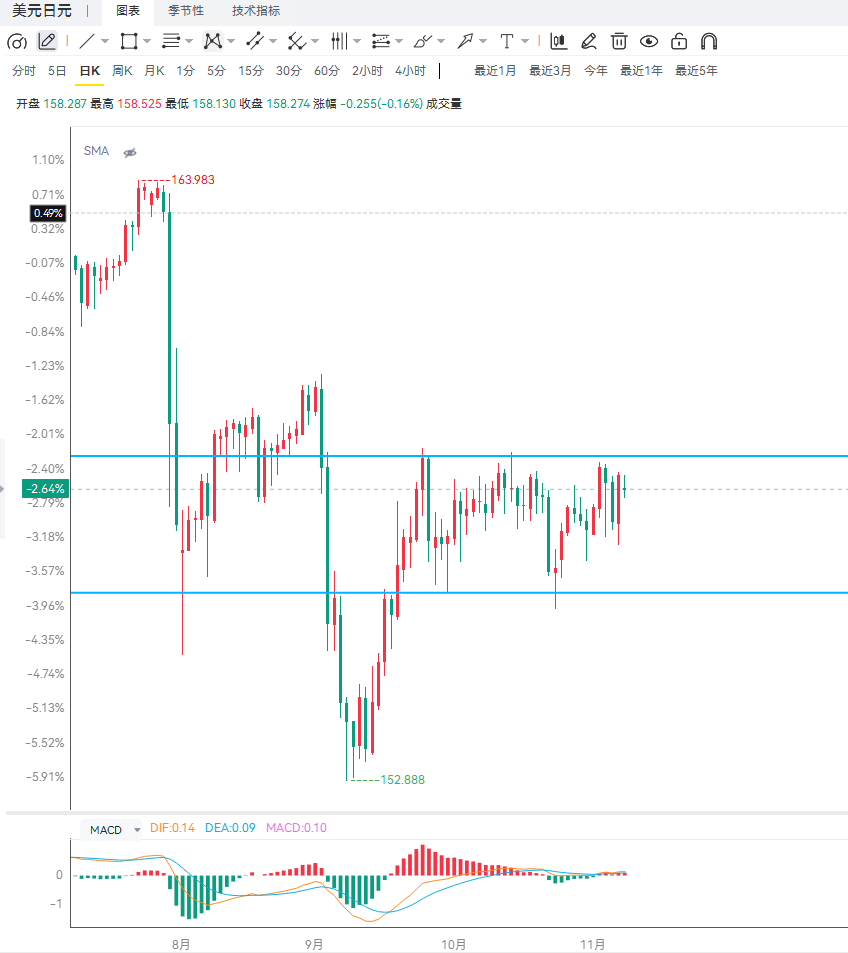 Editor's Summary: The core contradiction in the current USD/JPY exchange rate is the hedging between "accelerated normalization by the Bank of Japan + safe-haven preference for the yen" and "hawkish stance by the Federal Reserve + strong employment." 158.25 is the midpoint of the range between the 158.95-159.05 resistance zone and the 157.95-156.95 support zone. In the medium term, if the Bank of Japan raises rates in December and confirms a path of further rate hikes to 2% next year, the medium-term appreciation logic of the yen will be further strengthened, and the upside potential of USD/JPY will be structurally suppressed. However, if the Federal Reserve raises rates in December and inflation data remains resilient, the dollar's interest rate advantage can still provide a buffer, and the exchange rate is likely to maintain high-level fluctuations rather than a downward trend. It is not advisable to blindly chase the price higher before breaking through 159.05; a break below 156.95 would confirm a correction and open up further downside potential. Key factors to watch include the policy guidance from the December Bank of Japan meeting, US CPI and PPI data, and marginal changes in the USD/JPY interest rate differential.
On Friday, former Bank of Japan chief economist Seisaku Kameda further reinforced this expectation, stating that the Bank of Japan is expected to raise interest rates in December and continue to increase borrowing costs next year until rates reach 2% to combat accumulating inflationary pressures. As a result, the market has significantly advanced its pricing in the normalization of Japan's monetary policy. In the US, strong employment data has provided a counterbalancing force for the dollar. October's non-farm payrolls increased by 165,000 , far exceeding the market expectation of 65,000 and also higher than September's 60,000; the unemployment rate fell to 4.1% , down from 4.2% previously. Nationwide chief economist Kathy Bostjancic stated, "The labor market is heating up across the board, which supports our view that the Fed will raise rates again in December." According to the CME Group's FedWatch tool, the market's pricing in a December rate hike has risen to approximately 79.6% , compared to 72.8% before the non-farm payrolls data release. On the safe-haven front, ABN AMRO strategists pointed out that in the latest round of risk aversion, "safe-haven demand favored the yen over the dollar": While the stock market crashed, the dollar index remained largely unchanged at 101.6, as declining US Treasury yields weakened the dollar's appeal; the yen, on the other hand, received support from both safe-haven flows and domestic policy signals, appreciating by as much as 0.5% to around 157.70. Meanwhile, hawkish comments from Federal Reserve official Daly provided a floor for the dollar—she emphasized that the jobs report was "good news," wage growth "wasn't booming," real wages were declining, and inflation had been "high for too long," thus prioritizing inflation and believing that a strong labor market provided room for policy action. Her FXS speech tracking score rose to 8/10 , significantly higher than the baseline of 6.4/10. The FXS Fed Sentiment Index also rose 0.95 points to 143.10 , well above the neutral threshold of 100, confirming the market's mainstream assessment: despite ongoing uncertainties such as tariffs, war, and artificial intelligence, the Fed remains inclined to further tighten. Consequently, the USD/JPY pair is caught in a two-way tug-of-war: tightening expectations and safe-haven appeal of the yen exert downward pressure, while the Fed's hawkish stance and strong employment limit its decline. The divergence in US-Japan monetary policy is narrowing—the Bank of Japan is moving towards normalization, while the Fed is priced in by the market as "one more rate hike," and the interest rate differential is marginally weakening its support for USD/JPY. Technically, on the daily chart, USD/JPY remains within a narrow range below the 100-day simple moving average, while hovering above the Bollinger Band's middle line, exhibiting an overall neutral-to-oscillating pattern: the upper Bollinger Band and the 100-day moving average provide double resistance, while the lower Bollinger Band provides support; the Relative Strength Index (RSI, 14-day) is around 52.93 , indicating moderately constructive momentum but lacking a clear direction. On the upside resistance front, recent resistance is concentrated at the upper Bollinger Band at 158.95 , followed by the 100-day moving average at 159.05 – only a daily close above this level can reopen a more decisive bullish trend. On the downside support front, initial support is at the middle Bollinger Band at 157.95 , with a deeper technical bottom at the lower Bollinger Band around 156.95 ; a break below the lower band would signal a broader correction. On the 4-hour chart, the price is fluctuating around 158.25, remaining within a short-term range without a directional breakout. A sustained move above the 158.95-159.05 area could break the daily resistance, allowing bulls to target higher levels. Conversely, a failed rebound below 157.95 would likely test the lower Bollinger Band support at 156.95; a break below this level would confirm a correction. Editor's Summary: The core contradiction in the current USD/JPY exchange rate is the hedging between "accelerated normalization by the Bank of Japan + safe-haven preference for the yen" and "hawkish stance by the Federal Reserve + strong employment." 158.25 is the midpoint of the range between the 158.95-159.05 resistance zone and the 157.95-156.95 support zone. In the medium term, if the Bank of Japan raises rates in December and confirms a path of further rate hikes to 2% next year, the medium-term appreciation logic of the yen will be further strengthened, and the upside potential of USD/JPY will be structurally suppressed. However, if the Federal Reserve raises rates in December and inflation data remains resilient, the dollar's interest rate advantage can still provide a buffer, and the exchange rate is likely to maintain high-level fluctuations rather than a downward trend. It is not advisable to blindly chase the price higher before breaking through 159.05; a break below 156.95 would confirm a correction and open up further downside potential. Key factors to watch include the policy guidance from the December Bank of Japan meeting, US CPI and PPI data, and marginal changes in the USD/JPY interest rate differential.
- Risk Warning and Disclaimer
- The market involves risk, and trading may not be suitable for all investors. This article is for reference only and does not constitute personal investment advice, nor does it take into account certain users’ specific investment objectives, financial situation, or other needs. Any investment decisions made based on this information are at your own risk.