













Rumors of easing tensions in the Strait of Hormuz caused a sharp drop in international oil prices.
2026-11-09 20:50:28
According to Israel's Israel Today newspaper, Qatari Prime Minister Al Thani will travel to Washington on Monday to meet with Trump, as Qatar accelerates its mediation efforts to push for a provisional agreement between the United States and Iran. 
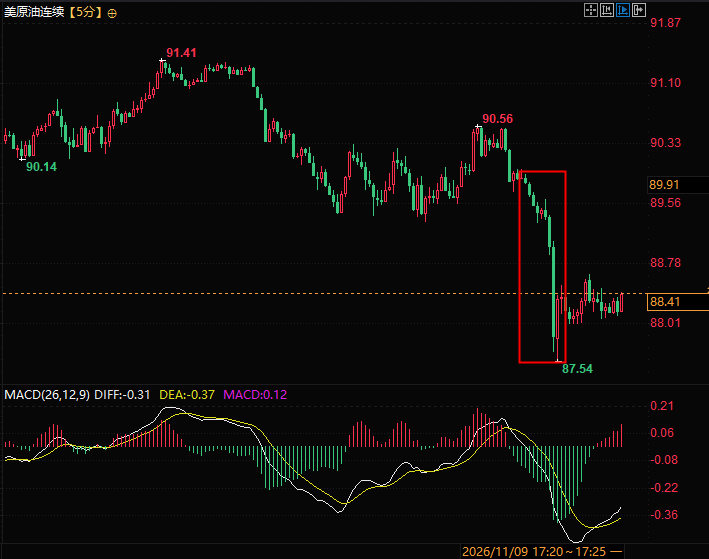 (WTI crude oil futures 5-minute chart, source: FX678)
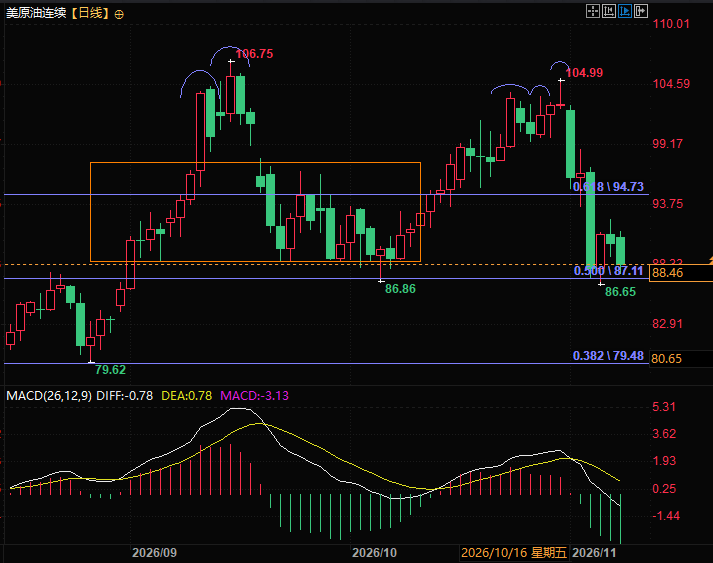 (WTI crude oil futures daily chart, source: EasyTrade) At 20:47 Beijing time, WTI crude oil futures are currently trading at $88.46 per barrel.
Media reports reveal Iran's concessions, outlining the negotiation framework.
Two informed diplomatic sources revealed that Al Thani brought a proposal regarding the reopening of the Strait of Hormuz, which had been approved by Iran. The proposal stipulated that the US would lift its maritime and economic blockade against Iran; in exchange, Iran would cease attacks on merchant ships and oil tankers in the Gulf region, and $8 billion in Iranian funds held in Qatar would be unfrozen. The report emphasized that Iran appears to have abandoned its previous demands—no longer intending to control the Strait of Hormuz or charge tolls for passing ships. However, Iran's bottom line remains unchanged: Tehran is currently unwilling to discuss its nuclear program and has not signaled a willingness to negotiate. Affected by this conciliatory news, international crude oil prices fell rapidly, with Brent crude dropping by more than 3% to around $95 per barrel. It should be noted that this concession is currently only reported by media citing anonymous sources and has not yet been officially confirmed by Iran. (WTI crude oil futures 5-minute chart, source: FX678)Divergent attitudes from the US, military frictions still exist behind the seemingly positive results of negotiations.
Market sentiment had already been influenced by statements from high-ranking US officials. In a weekend interview, Trump stated that he was unlikely to order a large-scale attack on Iran, but only if Iran was willing to sign a strongly binding agreement. US Secretary of State Rubio held a more conservative view, repeatedly warning against having high expectations for a breakthrough in negotiations. While diplomatic efforts continued, the conflict did not completely subside: Iranian media reported that the US military attacked Qeshm Island near the Strait of Hormuz at night. Coupled with the Democratic Party's landslide victory in the midterm elections, the market generally believed that the possibility of a full-scale escalation of the conflict had decreased, and oil prices had clearly fallen from their six-month high at the end of October. In short: although there are signs of easing tensions, the statements and actions of all parties are contradictory, making it difficult to determine whether these verbal statements can translate into a concrete agreement.Looking back at previous negotiating positions: Iran had put forward several tough conditions.
Prior to this round of mediation, Iran's negotiating conditions were much tougher, a key reason for the previous sustained rise in oil prices. Iran initially proposed a "seven-day plan," which, at the suggestion of mediators Qatar and Pakistan, was compressed into a "two-day plan": the US would fulfill its promises first, and the Strait of Hormuz would resume normal navigation the following day. At that time, Iran's conditions included lifting the blockade, unfreezing funds, restoring oil export exemptions, and ending fighting on multiple fronts in the region. In addition, Iran had made two other strong demands that were of great interest to the market: first, control of the strait and collection of passage fees from oil tankers; second, demanding that the US pay trillions of dollars in compensation for the environmental damage caused in the Persian Gulf over the past decades. Both of these demands have softened in the newly circulated proposal.Concessions do not equate to the resolution of the conflict; several key issues remain unresolved.
The most significant change in this rumor is that Iran has temporarily set aside its two highly confrontational demands—a toll for passage through the Strait and substantial environmental damage claims—lowering the threshold for a provisional agreement. However, one bottom line remains unchanged: Iran is unwilling to bring the nuclear issue to the negotiating table. An Iranian Foreign Ministry spokesperson also confirmed that the two-day plan to open the Strait remains valid, and that as long as the United States meets Iran's conditions, navigational safety and regional security can be restored within two days.Several areas worth continued attention
Whether Qatar's mediation can lead to a genuine consensus between the two sides remains to be seen, and whether the United States is willing to accept Iran's demands for a comprehensive package of sanctions relief and the unfreezing of funds. The Iranian nuclear issue remains a long-term core contradiction, and as long as there is no room for negotiation on this issue, the root causes of tension in the Middle East will not disappear. (WTI crude oil futures daily chart, source: EasyTrade) At 20:47 Beijing time, WTI crude oil futures are currently trading at $88.46 per barrel.
- Risk Warning and Disclaimer
- The market involves risk, and trading may not be suitable for all investors. This article is for reference only and does not constitute personal investment advice, nor does it take into account certain users’ specific investment objectives, financial situation, or other needs. Any investment decisions made based on this information are at your own risk.

