Gold plunges $30! Why did Fed's Waller suddenly mention a 50 basis point rate hike?
2026-11-10 18:00:30
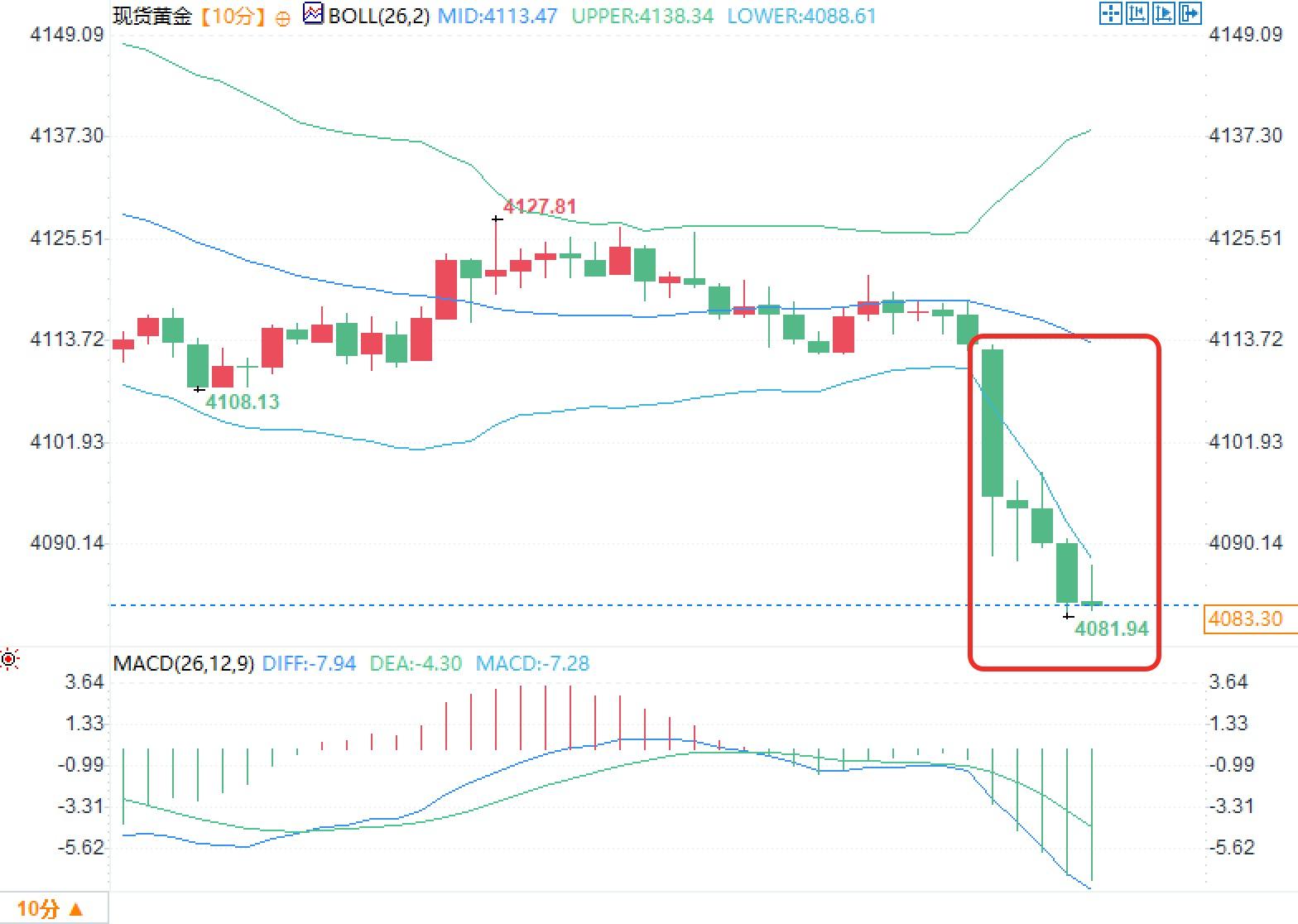
On Tuesday, November 10th, spot gold experienced significant volatility amid a flurry of policy signals from the Federal Reserve. Federal Reserve Governor Christopher Waller, speaking in London that day, clearly indicated his support for a December rate hike and noted that if October inflation data failed to improve as expected, the Fed would consider a more substantial policy adjustment to maintain its credibility. Previously, at its October meeting, the Fed voted 10-2 to maintain the target range for the federal funds rate at 3.75% to 4%, emphasizing the need to accumulate more information to determine the appropriate policy level. The latest US labor market data showed that non-farm payrolls increased by 165,000 in October, and the unemployment rate fell from 4.2% to 4.1%, indicating a faster pace of job growth than before. Meanwhile, with the October consumer price index data release window approaching, the market continued to adjust its pricing regarding inflation stickiness and the policy path. Spot gold prices have recently fluctuated between $4080 and $4140 per ounce, with short-term charts showing a rapid decline after the previous rebound. 
The Fed's policy stance and the core logic of Waller's remarks
Waller's remarks further advanced the possibility of a rate hike at the December meeting, explicitly linking the policy力度 (intensity/strength) to the inflation data to be released that day. His statement distinguished between two scenarios: if October's monthly inflation improves, he favors a 25 basis point increase in the policy rate; if the core consumer price index (CPI) monthly increase remains at 0.3% or higher, he believes a 50 basis point adjustment should be considered. This stance is not isolated but continues the statements made by most policymakers after the September meeting regarding the necessity of additional rate hikes. The September meeting raised the target range to 3.75% to 4%, while October opted to wait and see, arguing that "accumulating more information" would help determine the optimal policy level. Waller emphasized that if the data does not improve and only a 25 basis point increase is made, it may be difficult to solidify market confidence in the central bank's determination to combat inflation, thereby affecting policy credibility. The stable performance of the labor market and the reality that inflation remains above target form the basis of his policy prescription. Policymakers will receive a complete sequence of employment and inflation data before subsequent meetings, making the December meeting a crucial juncture in the policy path.The pricing mechanism of spot gold in response to interest rate expectations and liquidity conditions
As a non-interest-bearing asset, spot gold prices are highly sensitive to real interest rates and the dollar liquidity environment. When policy interest rates are expected to rise, the opportunity cost of holding gold increases, and the allocation logic tends to shift from precious metals to yield-generating assets. This mechanism is not unidirectional but works in conjunction with inflation expectations, changes in real interest rates, and global liquidity conditions. Currently, the target range for the federal funds rate is between 3.75% and 4%. If it is further raised in December, the increase in nominal interest rates will directly affect the real interest rate level. Historical experience shows that during periods of rising expectations of policy tightening, gold often faces pressure to adjust holdings, but the magnitude of the adjustment is simultaneously constrained by geopolitical conflict premiums, the absolute level of real interest rates, and investors' portfolio rebalancing needs. The better-than-expected October employment data further reinforced the market's pricing in a continued tight policy stance, while the final inflation data reading will determine whether this expectation is confirmed or corrected.Short-term price structure and technical indicators
Observing the 10-minute chart, spot gold experienced a rapid pullback after the previous rebound, with the price briefly touching around 4081.94 before stabilizing slightly in the 4083 area. The Bollinger Bands show the middle band at 4113.47, the upper band at 4138.34, and the lower band at 4088.61; the price moved near the lower band and slightly crossed it. The MACD indicator shows the DIFF at -7.94, the DEA at -4.30, and the MACD histogram at -7.28, all in negative territory, and momentum indicators do not show significant convergence. This structure reflects weak price momentum in the short term, but the distance between the upper and lower Bollinger Bands and the position of the middle band still provide statistical reference for price movements.The potential impact of US employment data and inflation stickiness on December policy decisions.
Non-farm payrolls increased by 165,000 in October, significantly higher than the previous average, while the unemployment rate fell to 4.1%, indicating a stable labor market. This result is consistent with Waller's description of a "strong economy and a stable labor market," providing data support for maintaining a tight policy stance. Regarding inflation, the market generally expects the monthly increase in the Consumer Price Index (CPI) to slow in October, but the core component is likely to remain somewhat sticky, and due to data compilation reasons, the 12-month year-on-year reading will not be released. If the monthly data is similar to or higher than the previous two months, Waller's 50 basis point scenario will have more room for discussion. The Fed clearly stated in its October statement that "inflation remains high" and emphasized its commitment to price stability. Policymakers will receive additional employment reports and complete inflation data before the December meeting, which will jointly determine the magnitude and pace of policy rate adjustments. The spot gold market has already partially priced in the above data in recent fluctuations, and subsequent readings will further influence real interest rate expectations and asset allocation logic.Frequently Asked Questions
Question 1: Why did Waller directly link the 50 basis point rate hike to inflation data? Answer: Waller believes that if the core inflation monthly reading remains at 0.3% or higher in October, a mere 25 basis point increase may not be enough to solidify market confidence in the central bank's determination to combat inflation, thus affecting policy credibility. Therefore, a larger adjustment needs to be considered to address the potential risk of accelerating inflation. Question 2: What is the significance of the current federal funds rate range for spot gold pricing? Answer: The target range is between 3.75% and 4%. A further increase would raise nominal interest rates and push up real interest rates, increasing the opportunity cost of holding non-interest-bearing gold, thus creating adjustment pressure at the asset allocation level. The specific magnitude still depends on the combined changes in inflation expectations and liquidity conditions. Question 3: How will the US October employment data affect market expectations for the December meeting? A: The increase of 165,000 non-farm payroll jobs and the drop in the unemployment rate to 4.1% indicate a stable labor market, consistent with Waller's description of a "strong economy," further reinforcing market pricing in a December rate hike. However, the final magnitude will still need to be determined by combining the inflation data of the day with subsequent complete data sets.- Risk Warning and Disclaimer
- The market involves risk, and trading may not be suitable for all investors. This article is for reference only and does not constitute personal investment advice, nor does it take into account certain users’ specific investment objectives, financial situation, or other needs. Any investment decisions made based on this information are at your own risk.