Cook's refusal to attend the hearing raises the question: where is the debate over the Fed's independence headed?
2026-11-18 09:16:40
Federal Reserve Governor Lisa Cook's lawyer informed the White House Monday evening (November 16) that Cook would not attend a hearing regarding her potential removal from office, arguing that the process was unfair and threatened the central bank's independence. In a letter to government officials, Cook's lawyer, Abe Lowell, stated that Cook "has no legal obligation to attend an unfair hearing—in fact, she has an obligation to the Federal Reserve to refuse to participate in any process that undermines the institution's unique position and independence." This letter came after President Trump established a commission in August to investigate allegations of mortgage fraud against Cook and to determine whether her statements constitute legitimate grounds for removal. 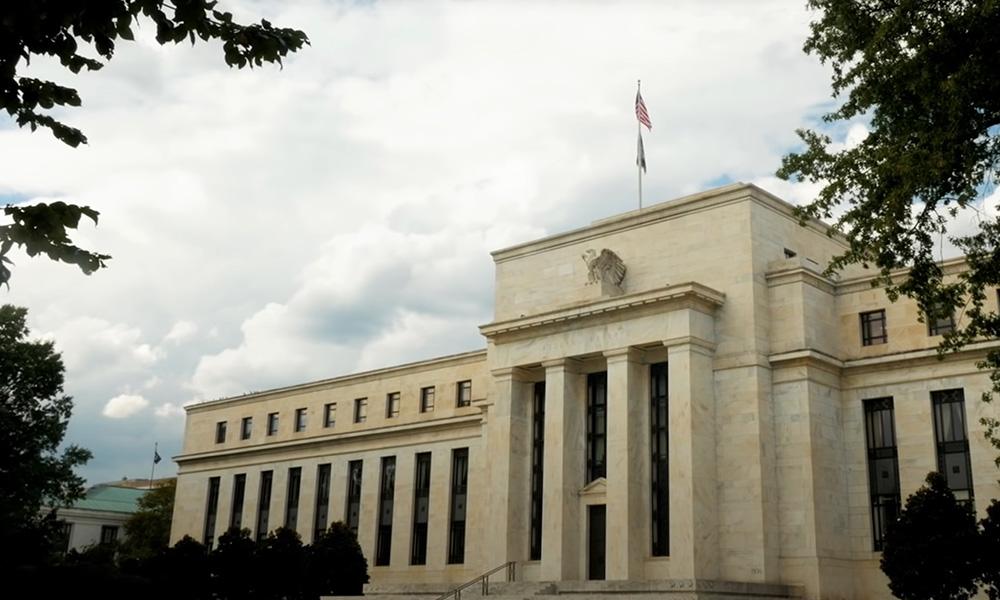
Accusations and Defense: The mortgage loan statements occurred before his employment and do not constitute a "justifiable reason".
The White House alleges that Cook made false or misleading statements in her 2021 mortgage application—listing two different properties as her primary residence to obtain more favorable loan terms. Cook's legal team argues that the alleged conduct occurred before she took office and therefore does not constitute a "just cause" for removal from office. The core of the dispute is not whether the alleged conduct is true, but whether it constitutes a legal ground for removal. If the conduct occurred before taking office, the applicability of the president's power of removal depends on the interpretation of the legal term "just cause," which is precisely the root of the dispute.Procedural Dispute: Nearly 20 Letters Exchanged, White House Only Agrees to Change Date
A hearing originally scheduled for November 5 has been postponed, but it has now been revealed that in nearly 20 exchanges of letters over the past few months, Cook's lawyers repeatedly raised procedural concerns and requests, which they claim the White House refused to respond to. A review of the letters shows that the government did comply with the date change, but failed to meet other requests from Cook and his lawyers. Lowell writes, "Unfortunately, your latest letter fails to address the concerns previously raised by Governor Cook—clearly indicating your unwillingness to hold what you claim to be a 'substantial and fair hearing.' Instead, you only want to create 'reasons' for a predetermined dismissal." The crux of the procedural dispute is whether the hearing has any substantive meaning—if the White House refuses to respond to Cook's requests regarding procedures, questioners, and review of evidence, then the hearing is more of a "form" than a "substance," which is precisely the basis for Cook's refusal to attend.The debate over true motives: Trump claims Cook was an "automatic vote against" interest rate cuts.
Cook's legal team argues that Trump has decided to fire her, citing his public statements following Supreme Court rulings in June 2025 and 2026—rulings that allowed Cook to remain in her position but did not preclude Trump's efforts to remove her. The letter also cites comments from October 10th: when asked why a committee was established to review Cook's position, Trump, according to the letter, stated that Cook was an "automatic dissenting vote" on interest rate cuts, "which is not a good thing." Cook's lawyers argue that this statement confirms the government's true motive is to control the Federal Reserve's interest rate decisions. If the real motive for dismissal is "policy stance" rather than "legitimate reasons," then this process transforms from a "personnel review" into "interference with the central bank's independence"—which is precisely why Cook's legal team links "refusal to participate" with "maintaining the Federal Reserve's independence."The White House responded that the hearing will be "fair and substantive," and Cook can review the evidence.
In a letter dated October 14, White House Counsel Will Scharf wrote, “In fact, you have failed to provide any specific dates on which you may attend the hearings. This position is untenable. The allegations against you are serious, and you must respond to them without delay.” Scharf promised that the hearings would be fair and substantive, and that Cook would be able to review the evidence the committee would consider. Ultimately, Cook’s lawyers suggested that he could attend during the week of December 14 or on December 21, 22, or 23, and the White House agreed to December 14. Lowell wrote that if the December 14 hearings were as “fair and substantive” as he claimed, Cook was willing to “fully participate in the process.” Lowell also requested that questioning at the hearings be conducted by committee members, not Justice Department personnel; and requested confirmation of whether the president would attend or participate in the hearings—given that the location had changed from the Eisenhower Executive Office Building to the White House. Lowell also stated that Hassett, the director of the National Economic Council and one of the three members appointed to the committee, was "unqualified" to serve on any fact-finding committee because his previous remarks indicated that he had anticipated the issue; Hassett's continued presence on the committee was "unacceptable." Scharf responded that this statement was "false" and that the president undoubtedly has the power to remove members of the Federal Reserve Board of Governors "for any reason."Editor's Summary
The boundary between the Federal Reserve's independence and the president's personnel appointment power has once again been brought to the forefront. Whether pre-appointment actions constitute "justifiable reasons," whether the hearings were substantially impartial, and whether policy disagreements were disguised as disciplinary procedures are the three main threads of the controversy. The procedural tug-of-war and the contrasting public statements have extended the incident from an individual personnel issue to a test of the central bank's institutional design. The market and the public are not only concerned with the fate of a single board member, but also with whether decision-making independence could be substantially affected by administrative interference. Future developments depend on whether the committee adjusts its procedural arrangements and on possible further judicial intervention.Frequently Asked Questions
Q: What are the specific allegations against Cook? A: The White House claims that in her 2021 mortgage application, she listed both properties as her primary residence to obtain more favorable terms. Cook's side denies any wrongdoing and emphasizes that the actions occurred before she joined the Federal Reserve. Q: Why do Cook's lawyers believe the hearings are unfair? A: The lawyers point out that most procedural concerns in nearly 20 letters were not substantively addressed, there were signs of preconceived notions among committee members, the evidence review was insufficient, and the overall process seemed more like creating reasons for a predetermined outcome than a genuine investigation of facts. Q: What was the core of the Supreme Court's previous ruling? A: The June 2026 ruling clarifies that the president cannot arbitrarily remove a Federal Reserve governor, but can do so with justifiable reasons after being given an opportunity to defend themselves. It also maintained Cook's position and emphasized the importance of an image of independence. Q: How were Trump's public statements cited by Cook's side? A: The lawyers cite his statement that Cook "automatically voted against" interest rate cuts, arguing that this shows the real motive was to influence interest rate policy, rather than simply based on mortgage allegations. Q: What consequences might arise if Cook does not participate? A: The White House has stated that the committee can draw adverse conclusions and proceed even in her absence. Cook's side, however, insisted that it would only participate after the procedures were adjusted to be fair and substantive, in order to maintain the independence of the Federal Reserve.- Risk Warning and Disclaimer
- The market involves risk, and trading may not be suitable for all investors. This article is for reference only and does not constitute personal investment advice, nor does it take into account certain users’ specific investment objectives, financial situation, or other needs. Any investment decisions made based on this information are at your own risk.