Gold prices remained under pressure as a stronger dollar weighed on them.
2026-11-19 19:10:32
Over the past few days, the downward momentum in gold has remained stable. Many traders have been waiting for a reversal in gold prices, and their bullish stance, betting on a rapid price surge, has been repeatedly tested recently. The strong US dollar remains a solid foundation. Despite the sharp sell-off in gold, many market participants who are bullish on the precious metals' future are still raising questions. For ordinary retail traders, the focus should be on short-term and near-term market conditions.  Ignoring the strengthening downtrend in gold over the past few days is a misjudgment. Investors bullish on gold believe the precious metal is deeply oversold and may see the current lows as an opportunity to buy in stages. However, judging from the short-term trading direction, bearish forces still dominate. Gold prices are suffering a sharp decline, and retail traders looking to capitalize on the trend are indeed facing a clear downtrend, but they still need to remain vigilant, as anxiety permeates the overall market. Some are hoping for a sudden reversal in gold prices, which is understandable, but these bullish investors must be cautious. Currently, bearish forces are strong, and gold prices are continuously being suppressed. As gold prices test lower levels, key support remains at a considerable distance below.
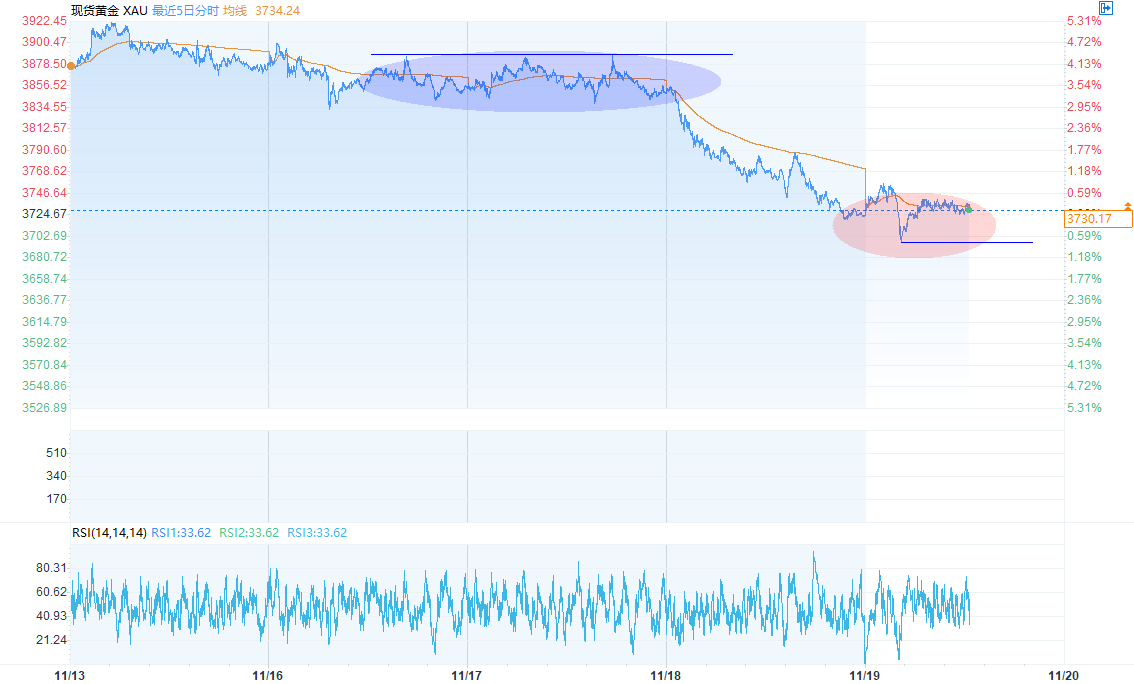 Gold is currently trading around $3734, a level last seen in September 2025. From a technical perspective, a longer-term chart analysis is needed; the chart clearly shows that gold is digesting the speculative premium accumulated over the past year. The last time gold touched this level was during a previous upward trend. Technically, gold still has considerable downside potential from the strong support zone of $3500-$3400, a range where price stabilization signals have been consistently observed. For speculative traders, these support levels are far from the current price, and overly aggressive short positions are not advisable. However, gold prices have fallen rapidly in recent days, easily breaking through various support levels. Traders should not blindly chase the downtrend, recognizing that market sentiment could shift abruptly. The current global market sentiment is tense and prone to rapid changes. Will rising market anxiety reignite safe-haven buying of gold? Gold prices certainly have room to continue falling; there are no hard and fast rules preventing precious metals from declining. Technical analysis suggests gold prices still have room to fall, while fundamental factors cannot be ignored, which is where the current dynamic risks lie. If market panic intensifies, when will gold once again be used as a safe-haven asset? Currently, the strong dollar is suppressing gold's rebound. But will the growing safe-haven sentiment change market perceptions of the dollar and its correlation with gold? A short-term bearish outlook on gold remains reasonable, but caution is essential, as market conditions can change at any time. The uncertainty surrounding a sustained gold price rebound remains high . Traders will inevitably seek opportunities to go long on gold, but they must consider trading cycles rationally. Traders with access to the options market can try buying call options in the futures market to speculate on a rebound. The short-term gold price trend has formed a clear downward channel. The strong dollar is likely to ease in the future, but before that, gold is likely to remain volatile, facing continued selling pressure. Traders maintaining a bullish stance need to employ sophisticated strategies. What signals indicate a turning point in the downward momentum? Going against the existing price trend is never a wise move; waiting for a confirmed trend reversal is a more prudent trading strategy. The current problem in the gold market is that large speculative funds are still primarily shorting. While the bullish side has historical support, this doesn't mean a price reversal will occur in the short term. Gold Short-Term Outlook: Current Resistance: $3750.00 Current Support: $3718.00 Upside Target: $3830.00 Downside Target: $3665.00
Ignoring the strengthening downtrend in gold over the past few days is a misjudgment. Investors bullish on gold believe the precious metal is deeply oversold and may see the current lows as an opportunity to buy in stages. However, judging from the short-term trading direction, bearish forces still dominate. Gold prices are suffering a sharp decline, and retail traders looking to capitalize on the trend are indeed facing a clear downtrend, but they still need to remain vigilant, as anxiety permeates the overall market. Some are hoping for a sudden reversal in gold prices, which is understandable, but these bullish investors must be cautious. Currently, bearish forces are strong, and gold prices are continuously being suppressed. As gold prices test lower levels, key support remains at a considerable distance below. Gold is currently trading around $3734, a level last seen in September 2025. From a technical perspective, a longer-term chart analysis is needed; the chart clearly shows that gold is digesting the speculative premium accumulated over the past year. The last time gold touched this level was during a previous upward trend. Technically, gold still has considerable downside potential from the strong support zone of $3500-$3400, a range where price stabilization signals have been consistently observed. For speculative traders, these support levels are far from the current price, and overly aggressive short positions are not advisable. However, gold prices have fallen rapidly in recent days, easily breaking through various support levels. Traders should not blindly chase the downtrend, recognizing that market sentiment could shift abruptly. The current global market sentiment is tense and prone to rapid changes. Will rising market anxiety reignite safe-haven buying of gold? Gold prices certainly have room to continue falling; there are no hard and fast rules preventing precious metals from declining. Technical analysis suggests gold prices still have room to fall, while fundamental factors cannot be ignored, which is where the current dynamic risks lie. If market panic intensifies, when will gold once again be used as a safe-haven asset? Currently, the strong dollar is suppressing gold's rebound. But will the growing safe-haven sentiment change market perceptions of the dollar and its correlation with gold? A short-term bearish outlook on gold remains reasonable, but caution is essential, as market conditions can change at any time. The uncertainty surrounding a sustained gold price rebound remains high . Traders will inevitably seek opportunities to go long on gold, but they must consider trading cycles rationally. Traders with access to the options market can try buying call options in the futures market to speculate on a rebound. The short-term gold price trend has formed a clear downward channel. The strong dollar is likely to ease in the future, but before that, gold is likely to remain volatile, facing continued selling pressure. Traders maintaining a bullish stance need to employ sophisticated strategies. What signals indicate a turning point in the downward momentum? Going against the existing price trend is never a wise move; waiting for a confirmed trend reversal is a more prudent trading strategy. The current problem in the gold market is that large speculative funds are still primarily shorting. While the bullish side has historical support, this doesn't mean a price reversal will occur in the short term. Gold Short-Term Outlook: Current Resistance: $3750.00 Current Support: $3718.00 Upside Target: $3830.00 Downside Target: $3665.00
- Risk Warning and Disclaimer
- The market involves risk, and trading may not be suitable for all investors. This article is for reference only and does not constitute personal investment advice, nor does it take into account certain users’ specific investment objectives, financial situation, or other needs. Any investment decisions made based on this information are at your own risk.