With divisions within the Bank of Japan's board and the risk of a leadership transition looming, what lies ahead for the yen?
2026-11-20 11:38:30
On Friday (November 20th) during the Asian session, the USD/JPY pair fluctuated lower, currently trading around 159.15, down approximately 0.3%. The market is almost certain that the Bank of Japan will raise interest rates to 1.50% in December, but media analysis warns that there is significant disagreement within the committee regarding the ultimate target for the rate hike. This ambiguous policy endpoint leaves an opportunity for yen short sellers. The USD/JPY pair is hovering around the key 160 level, and currently, the constraint on yen depreciation relies more on exchange rate intervention risks, with limited support from interest rate expectations. Historically, there have been instances of "yen sell-offs immediately after rate hikes," and Kazuo Ueda's statements after the December meeting will be crucial in determining whether the yen can gain sustained support. 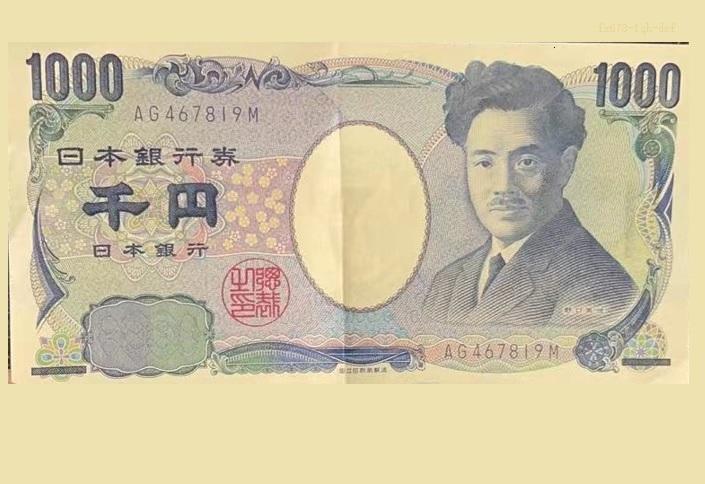
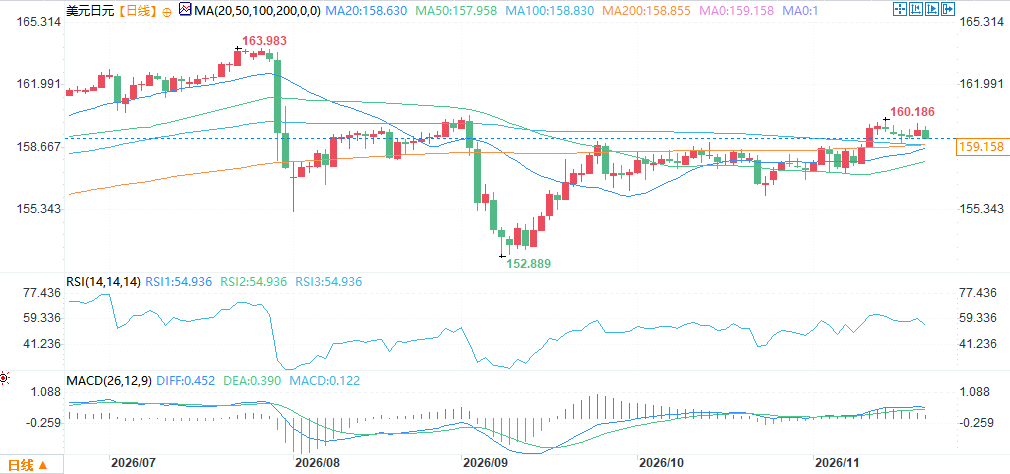 (USD/JPY daily chart, source: FX678) At 11:34 Beijing time, USD/JPY was trading at 159.14/15.
A December rate hike is widely expected, but the interest rate cut committee is divided.
Japan's core inflation remained above the 2% target for the second consecutive month in October. Kazuo Ueda signaled continued interest rate hikes, with the market consensus expecting a 25bp rate hike to 1.50% at the December 17-18 policy meeting, followed by another rate hike at the end of March next year. The main point of contention is the terminal interest rate: there is no consensus within the Bank of Japan on the neutral interest rate, with internal calculations placing it within a wide range of 1.1% to 2.5%. The committee members are clearly divided: hawkish Naoki Tamura estimates the neutral interest rate at around 2%; Takada favors a rate increase to the middle of the range and opposes a fixed pace of rate hikes; dovish members Asada and Sato believe there is limited room for further tightening; and Koeda and Masui are swing voters. The market and economists generally expect the current rate hike cycle to end at 1.75% to 2%, while the more aggressive expectation of 2.5% remains a minority view. Nomura analysis points out that anchoring to a 2% inflation target is a completely new policy environment, hence the central bank's deliberate avoidance of providing clear guidance on the endpoint.The risk of a repeat of the "buy the rumor, sell the fact" scenario is high, making the post-meeting speech in December crucial.
Historical lessons are worth heeding. Last December, the Bank of Japan raised interest rates, but due to insufficiently hawkish signals after the meeting, the market experienced a sell-off of the yen following the rate hike, causing the yen to fall instead of rise. Now, with the Federal Reserve still in a rate hike cycle and the USD/JPY interest rate differential remaining high, the same risk has resurfaced. If the December decision merely results in a rate hike, but the post-meeting statement is vaguely worded and Kazuo Ueda's press conference is cautious, the market will again trigger the "sell the yen on rate hikes" scenario. Only if the central bank releases a clear signal, committing to continuing towards a 2% terminal interest rate, can the yen obtain sustained fundamental support. Currently, the USD/JPY is trading above 159. Given the current difficulty in providing protection from interest rate expectations, the area around 160 mainly relies on government intervention to suppress further depreciation.The July committee reshuffle has sown the seeds of a long-term dovish tail risk, putting downward pressure on the yen in the long term.
Of the nine members of the Bank of Japan's board of directors, the terms of two core hawkish members, Naoki Tamura and Takada, will expire next July, and their replacements will be nominated by Prime Minister Sanae Takaichi. The market is concerned that the Prime Minister may appoint a more dovish candidate to the board, altering the voting pattern. While Takaichi has not publicly commented extensively on monetary policy, market observers believe that the Prime Minister's nomination will directly determine the upper limit of future interest rate hikes. This transition risk is already being reflected in the forward pricing of the yen; even if a December rate hike is implemented in the short term, the yen will still face potential pressure from dovish expectations in the forward market.Trading logic: Interest rate hikes have been fully priced in; the final direction is the key variable.
The market has largely priced in the expected 25bp rate hike in December, limiting its boost to the yen. The yen's future direction depends not on whether there is a rate hike, but on the post-meeting statement regarding the end point and subsequent path of rate increases. Scenario analysis: A clear signal of continued tightening would put downward pressure on USD/JPY; ambiguous wording would allow short sellers to re-enter the market, leaving the 160 level vulnerable to verbal or actual intervention from the Japanese authorities. Simultaneously, it's crucial to continuously compare the pace of the Fed's policy. As long as the Fed maintains rate hikes and the USD/JPY interest rate differential remains high, the yen's potential for recovery will be naturally constrained. (USD/JPY daily chart, source: FX678) At 11:34 Beijing time, USD/JPY was trading at 159.14/15.
- Risk Warning and Disclaimer
- The market involves risk, and trading may not be suitable for all investors. This article is for reference only and does not constitute personal investment advice, nor does it take into account certain users’ specific investment objectives, financial situation, or other needs. Any investment decisions made based on this information are at your own risk.