Japan's situation is similar to that of the United States before the midterm elections, but Japan's situation is desperate.
2026-11-20 17:18:33
At first glance, the Bank of Japan's current power struggle is reminiscent of the Federal Reserve's actions on the eve of the midterm elections: both sides naturally favor an accommodative environment, while the central bank maintains a hawkish stance verbally but is slow to raise interest rates and provides vague guidance, often making a lot of noise but little action. However, there is a fundamental difference between the two: the US still has room to maneuver, while Japan is in a dilemma with almost no room for error. 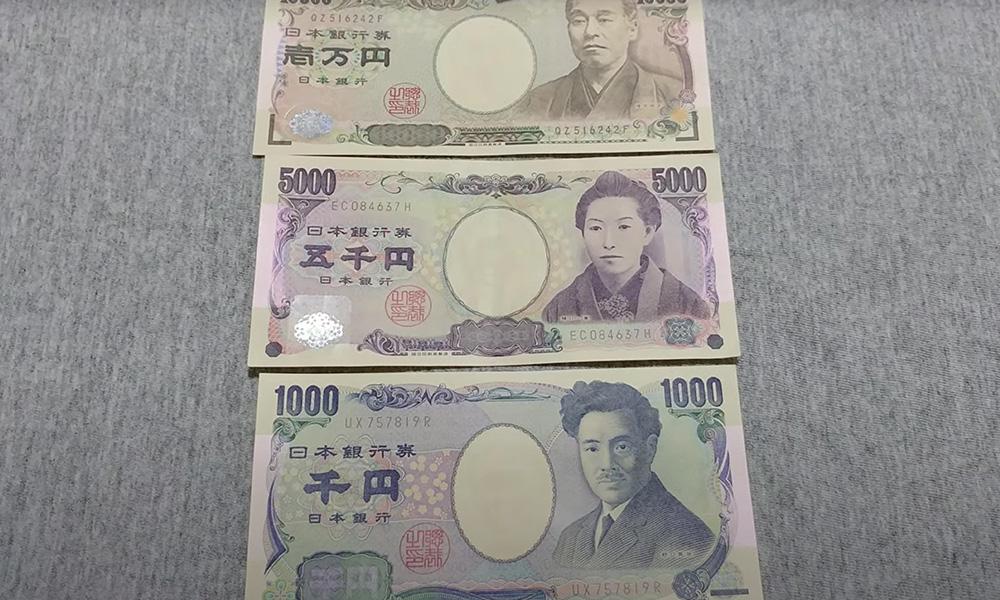
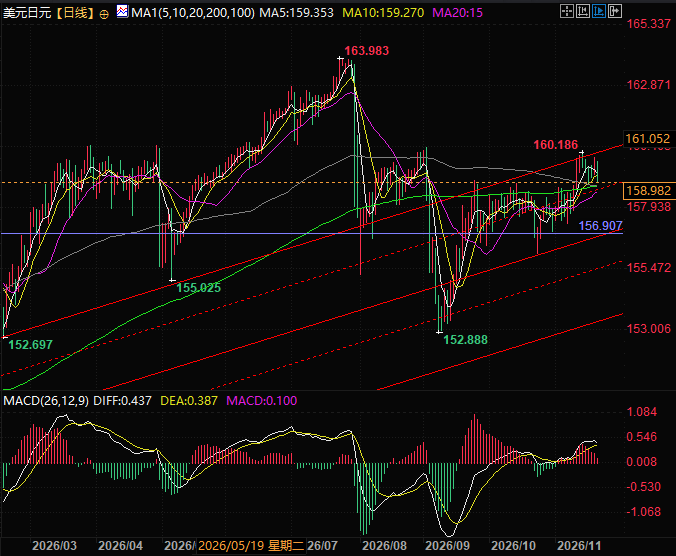 (USD/JPY daily chart, source: FX678) At 17:14 Beijing time, USD/JPY is currently trading at 158.98 and 99.
Superficial similarities: Political cycles intervene in monetary policy, and expectations of interest rate hikes are continuously diluted.
Similar to the game theory logic of the US election cycle in the past, the Sanae Takaichi government is unwilling to see interest rate hikes too quickly. The Japanese government relies on continuous fiscal expansion, and its high-debt structure cannot withstand the interest burden brought by rapidly rising interest rates. The Prime Minister cannot directly order the central bank to stop raising interest rates, but she holds the power to nominate committee members. With the terms of two hawkish members expiring next July, she has the opportunity to replace them and gradually change the committee's voting structure, slowly guiding the policy tone towards a dovish direction. In the market, the effect is highly similar to that of the Federal Reserve before the election: the central bank verbally acknowledges the risk of inflation but does not deny the possibility of interest rate hikes, giving the market an expectation of steady tightening; however, it deliberately obscures the neutral interest rate and the path of interest rate hikes next year, resulting in significant internal disagreements among committee members, and the final interest rate hike is always lower than the most aggressive market predictions. This "hawkish rhetoric, mild action" makes it easy for short sellers to repeatedly test the waters.The key difference: The US faces a choice, while Japan is caught between two precipices.
The dilemma faced by the US Federal Reserve back then was a trade-off between inflation, employment, and the stock market. When inflation was high, it could aggressively raise interest rates; after inflation subsided, it could slow it down, demonstrating the resilience of its economy and allowing for trial and error. Japan is different; it's bound by three shackles. The first shackle is the US-Japan interest rate differential. With the Fed's consistently hawkish stance and persistently high US Treasury yields, if the Bank of Japan's interest rate hikes don't keep pace, the yen will continue to depreciate, and imported inflation will return, directly impacting people's livelihoods. The second shackle is weak domestic demand. Japanese consumption is already sluggish, and wage sustainability is questionable. Rapid interest rate hikes could easily extinguish the hard-won 2% inflation rate, returning to years of deflation. The third shackle is massive government debt. Japan's government debt is extremely high; every slight increase in interest rates significantly raises national debt interest payments, squeezing public finances and even threatening debt sustainability. This creates a very strange situation: no interest rate hikes lead to a collapsed yen and a rebound in inflation; interest rate hikes put pressure on public finances and cripple domestic demand. It's not about choosing which is better, but rather which option causes less damage.The internal divisions within the central bank are a direct manifestation of this desperate situation.
The lack of consensus within the Bank of Japan regarding the position of the neutral interest rate is a microcosm of its predicament. Hawkish members believe the neutral rate is close to 2% and requires continued tightening; dovish members judge that the current rate is already close to the neutral range, with limited room for further rate hikes. Kazuo Ueda can only adopt a vague strategy: confirming a high probability of a rate hike in December, but refusing to provide a roadmap for next year's rate hikes, and not specifying where the neutral rate will fall within the appropriate range. This ambiguity is not a deliberate attempt by the central bank to guide the market, but rather reflects its own uncertainty. The ability of households and businesses to withstand interest rate hikes is unknown, and the yen's exchange rate could force policy changes at any time; the central bank can only proceed cautiously. This information gap provides a trading opportunity for yen short sellers; once the market determines that the central bank lacks the determination to continue tightening, it will continue to bet on a weaker yen.The yen is the final arbiter; it won't give the Bank of Japan time to stall.
The US Federal Reserve can temporarily ignore exchange rates, and a stronger dollar is often the outcome it desires. However, the Bank of Japan's interest rate hikes are largely dictated by the yen. If the yen continues to depreciate, imported inflationary pressures surge, forcing the central bank to accelerate tightening even if the government doesn't want to raise rates and domestic demand is weak. Conversely, if the yen stabilizes, the central bank has an excuse to extend the rate hike cycle. In other words, personnel changes in the market can only alter medium- to long-term policy orientation, but cannot circumvent the external constraints of the Federal Reserve and the exchange rate. As long as the Federal Reserve maintains high interest rates, the Bank of Japan's easing demands will remain suppressed.Summarize:
On the surface, the Bank of Japan, like the Federal Reserve before the election, is caught in a tug-of-war between political demands and its anti-inflation targets, with a disconnect between its pronouncements and actions regarding interest rate hikes. However, the Federal Reserve has a choice in its game, while Japan faces a predicament with few options. The Federal Reserve can wait for inflation to subside and flexibly switch policies; Japan, on the other hand, faces external pressure from the Federal Reserve's high interest rates and internal constraints from weak consumption and high debt—both options come with consequences. This situation dictates that every interest rate hike will be approached with extreme caution, and it also keeps the yen's valuation perpetually uncertain. (USD/JPY daily chart, source: FX678) At 17:14 Beijing time, USD/JPY is currently trading at 158.98 and 99.
- Risk Warning and Disclaimer
- The market involves risk, and trading may not be suitable for all investors. This article is for reference only and does not constitute personal investment advice, nor does it take into account certain users’ specific investment objectives, financial situation, or other needs. Any investment decisions made based on this information are at your own risk.