With two major economic indicators both weakening, has the Reserve Bank of Australia's interest rate hike cycle come to an end?
2026-11-23 08:36:33
On Monday (November 23) in early Asian trading, the Australian dollar rose slightly to around 0.6635 against the US dollar, temporarily holding above the 0.6600 level. The exchange rate is in its lowest range since the end of last year. Falling US Treasury yields and a brief weakening of the US dollar provided short-term support for the Australian dollar. However, simultaneously weakening Australian employment and PMI data, indicating a slowing economy, have sparked discussions about the end of the Reserve Bank of Australia's (RBA) rate hike cycle; meanwhile, continued hawkish signals from Federal Reserve officials suggest that the medium-term support for the US dollar remains, limiting the upside potential of this Australian dollar rebound. 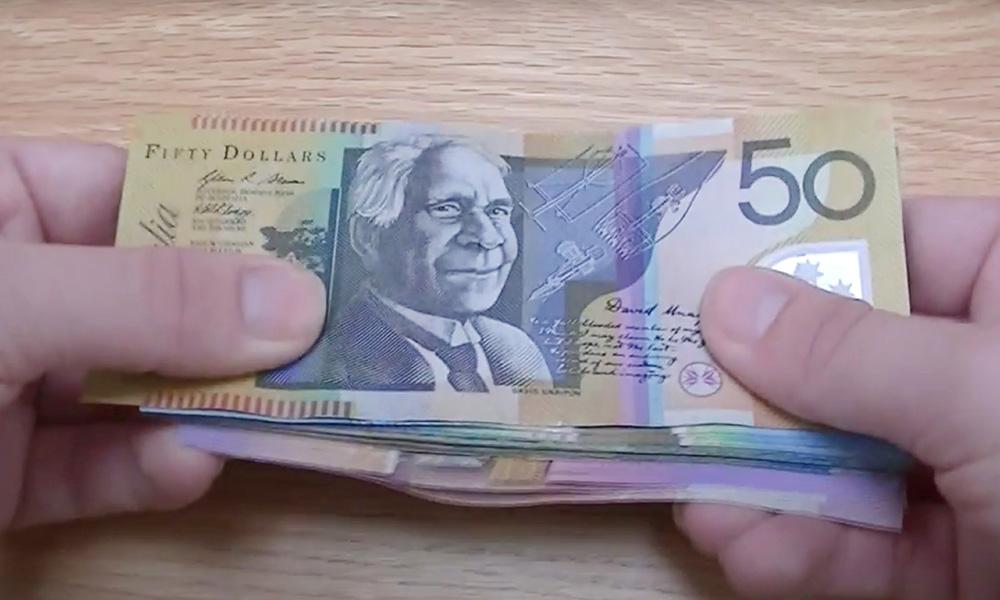
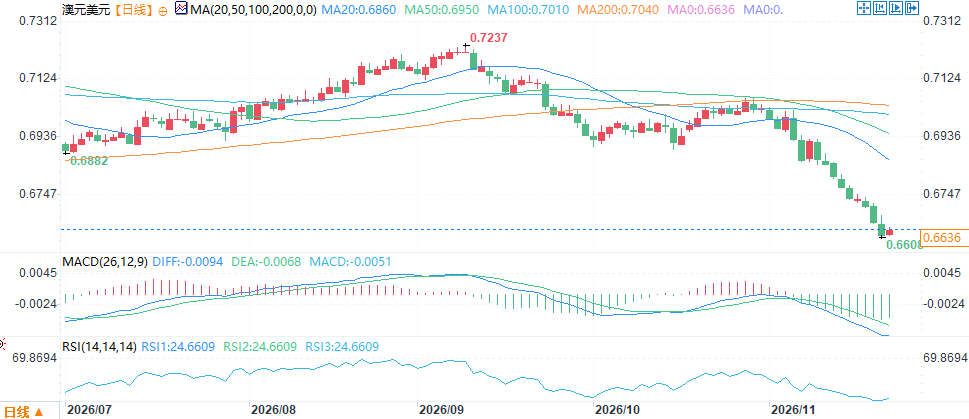 (Australian dollar against US dollar daily chart, source: EasyForex) At 8:30 Beijing time, the Australian dollar was trading at 0.6635/36 against the US dollar.
Short-term support: US Treasury yields have fallen, and the US dollar is weakening in the short term.
On the previous trading day, pressure on the global AI sector and volatility in US stocks led to a decline in US Treasury yields, resulting in a weaker US dollar and a rebound in the Australian dollar. However, Bannockburn's chief strategist, Mark Chandler, believes that while the dollar's upward momentum has slowed, it is too early to conclude that the dollar has peaked. The market continues to price in further tightening by the Federal Reserve, which will limit the upside potential of the Australian dollar against the US dollar. If risk sentiment subsequently improves and US Treasury yields rebound again, the Australian dollar could easily come under renewed pressure.Internal pressures: Weakening employment and PMI data lead to shifts in RBA policy expectations.
Australia's seasonally adjusted unemployment rate rose to 4.9% in October, up from 4.7% in September; the number of employed people fell sharply by 43,500, a stark contrast to market expectations of an increase of 25,000. Commerzbank pointed out that the Australian job market continues to cool, and the suppressive effect of high interest rates on demand is becoming apparent. Reserve Bank of Australia Governor Bullock also acknowledged that the unemployment rate needs to rise further to fully alleviate inflationary pressures from an overheated labor market. Meanwhile, the preliminary S&P Global PMI for Australia in November fell across the board: the manufacturing PMI fell to 48.7, the services PMI fell to 46.2, and the composite PMI fell to 46.1, the lowest since August 2021, remaining below the 50-point threshold, indicating a faster contraction in business activity. Commerzbank judged that the Reserve Bank of Australia's current rate hike cycle has likely ended. The bank believes that it is too early to bet on a rate cut based solely on current employment data, and further data is needed to confirm a continued economic slowdown.Policy Game: Fed's Hawkish Stance Leads to Monetary Policy Divergence in Australian Dollar
Federal Reserve official Cook's remarks further reinforced the tightening stance. She argued that current policy is insufficiently restrictive, the September rate hike was not strong enough, and delaying further tightening could lead to stagnant inflation; current inflation is worrying, and financial conditions remain too loose. With the market discussing a rate cut by the Reserve Bank of Australia on one hand, and the Federal Reserve continuing to raise rates on the other, this divergence in monetary policy expectations is unfavorable for the Australian dollar in the long term.Main observation line for the future market
Next, we will focus on two sets of data. First, the Australian inflation and subsequent employment report: if inflation is lower than expected, expectations of interest rate cuts will rise, and the Australian dollar may weaken again; if inflation unexpectedly rises, expectations of interest rate cuts will cool, and the Australian dollar will find support. Second, US inflation and statements from Federal Reserve officials will determine the direction of the US dollar and US Treasury yields, and are the dominant external variables for the medium-term trend of the Australian dollar. (Australian dollar against US dollar daily chart, source: EasyForex) At 8:30 Beijing time, the Australian dollar was trading at 0.6635/36 against the US dollar.
- Risk Warning and Disclaimer
- The market involves risk, and trading may not be suitable for all investors. This article is for reference only and does not constitute personal investment advice, nor does it take into account certain users’ specific investment objectives, financial situation, or other needs. Any investment decisions made based on this information are at your own risk.