What's hidden behind Chalmers' budget cut as the Australian dollar comes under pressure?
2026-11-23 16:02:33
On Monday, November 23, the Australian economic fundamentals and news environment saw significant adjustments. Treasurer Jim Chalmers indicated in Parliament that economic growth would be slower than the government predicted six months ago, with prices and unemployment rising due to factors such as the Middle East conflict. Nominal growth expectations are facing downward revision from 4.25% in May, and consumption is being suppressed by both interest rates and inflation. The Reserve Bank of Australia's cash rate remained at an 18-year high of 4.85%, with labor market data and the inflation outlook both indicating accumulating pressure. 
Australian Treasurer issues warnings and budget update outlook
Chalmers stated unequivocally, “2026 is going to be a very difficult year for our people, our economy, and the world. There’s no need to pretend otherwise.” He added that interest rates are at work, unemployment is rising, prices are increasing, wages are not keeping pace, and households are under pressure. If the Treasury updates its medium-term forecast today, it will reflect an environment of slower growth, higher inflation, and higher unemployment. The shrinking nominal economy is expected to lead to a “significant downward revision” in income, putting pressure on the medium-term budget. The government plans to achieve “moderate net savings” in its upcoming medium-term economic and fiscal outlook, avoiding harsh cuts to services while fulfilling its role in curbing inflation. Chalmers emphasized that this is not a microbudget full of new initiatives, but rather savings that include the budget size. Previously, the government had run budget deficits supported by full employment and commodity export prices, drawing criticism from some economists. Now, accelerating inflation and rising fuel costs are further amplifying fiscal constraints.Weak labor market and persistently high inflation
Data from the Australian Bureau of Statistics shows that the unemployment rate rose to 4.9% in October, the highest in five years, with a decrease of approximately 44,000 in employment. The employment-to-population ratio fell to 63.3%, and the participation rate also declined. Chalmers expects the unemployment rate to peak above 5%, higher than the forecast in the May budget. Meanwhile, inflation, driven by a sharp rise in fuel prices, is expected to remain in the mid-3% range until around the middle of next year, with a return to the target range later than previously anticipated. The Reserve Bank of Australia raised the cash rate by 25 basis points to 4.85% in November, a relatively significant increase among developed economies this year, aimed at addressing widespread price pressures. Household sentiment turned pessimistic, and consumption was dragged down by both interest rates and prices. The misalignment between nominal and real economic growth will further transmit to tax revenue and fiscal balance.Rising Recession Risks and Policy Trade-offs
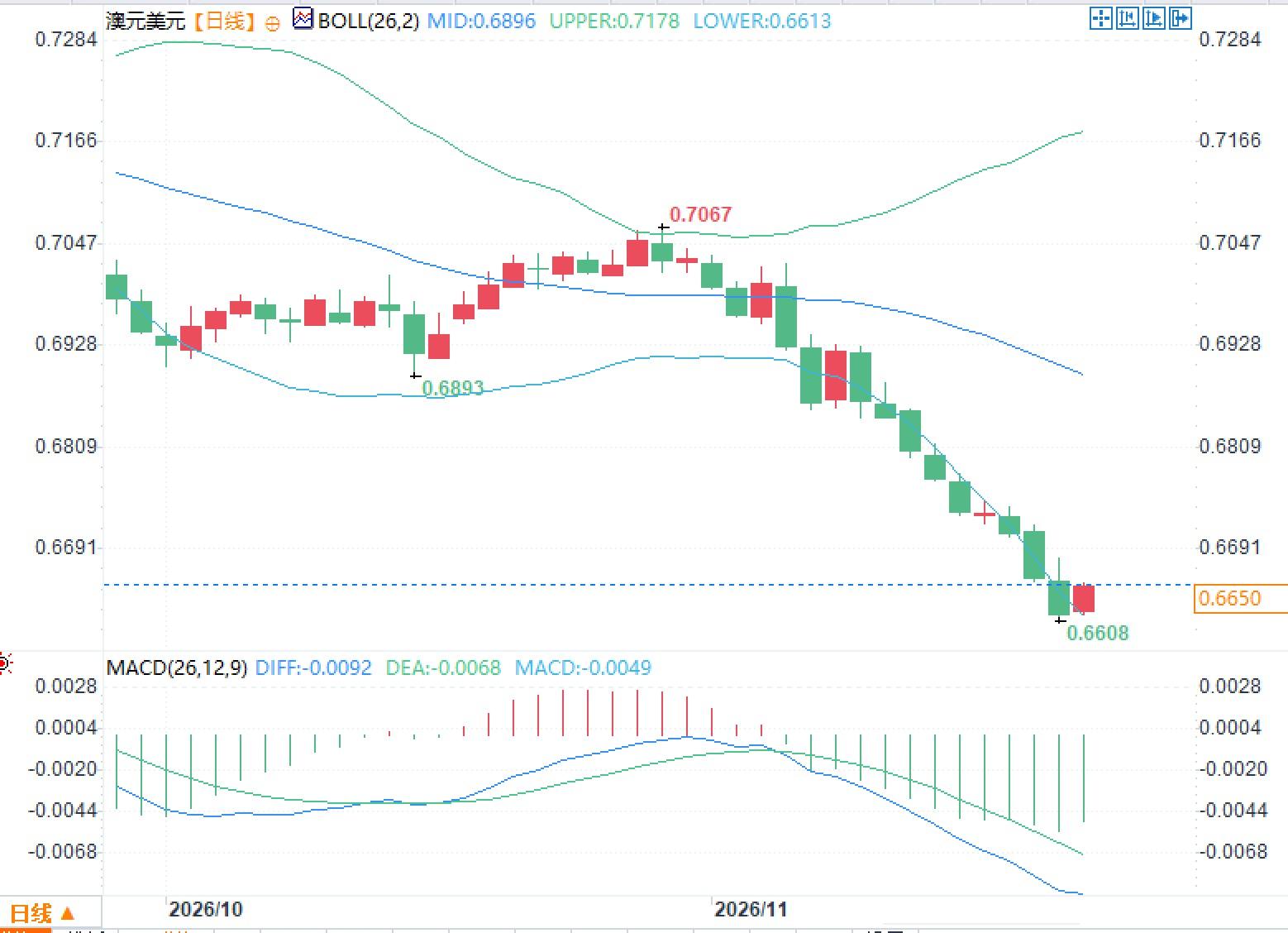
Market research indicates a roughly 25% probability of Australia falling into recession over the next 12 months. AMP Chief Economist Shane Oliver noted in his notes that the risk of recession is "high and still rising," around 40%, citing softening house prices, deteriorating consumer and business sentiment, increased rumors of mortgage stress, job losses, and a rise in business closures. Chalmers responded, "Nevertheless, neither the Reserve Bank of Australia nor the Treasury has predicted a recession." Growth is likely to slow from 2.3% last year to well below 2% over the next two years. On the policy front, the government is attempting to mitigate inflation through moderate spending constraints, but needs to balance service sector maintenance with growth risks. The Middle East conflict is pushing up energy costs, coupled with domestic production capacity pressures, prolonging the inflationary path; coordination between monetary and fiscal measures is a key variable. The Australian dollar has recently fluctuated around 0.66 against the US dollar, reflecting adjustments in growth and interest rate expectations.Frequently Asked Questions
Question 1: Why did Chalmers lower his nominal growth forecast? Answer: The Middle East conflict has driven up fuel costs, coupled with rising interest rates suppressing consumption. The unemployment rate has risen to 4.9% and is expected to peak above 5%. The shrinking nominal economy will lead to a downward revision of fiscal revenue, making the May forecast of 4.25% no longer applicable. Question 2: How will the RBA's interest rate hike affect the current economy? Answer: After the cash rate rose to 4.85%, the labor market saw job losses and rising unemployment. Household sentiment is pessimistic, constraining consumption and growth prospects, but officials have not predicted an economic recession. Question 3: Why are there disagreements in the recession risk assessment? Answer: The survey probability is about 25%, while Oliver's assessment is 40% and rising, based on sentiment and employment pressures. Chalmers emphasized that neither the Treasury nor the RBA has predicted a recession, and while growth has slowed, it remains positive.- Risk Warning and Disclaimer
- The market involves risk, and trading may not be suitable for all investors. This article is for reference only and does not constitute personal investment advice, nor does it take into account certain users’ specific investment objectives, financial situation, or other needs. Any investment decisions made based on this information are at your own risk.