Silver prices have fallen 66% from their all-time high; fund managers are waiting for a deeper correction before positioning themselves.
2026-11-27 13:10:40
Silver's current price has retreated approximately 66% from its historical high of around $122, leading many investors to question whether the long-term bull market for silver has ended. However, the founder of Baden Capital views this sell-off as a rare opportunity to position herself. She is not in a hurry to buy the dip for a short-term rebound, but rather reserves funds to wait for silver prices to fall another 20%, while also pointing out the contradictory fundamental logic within the silver market.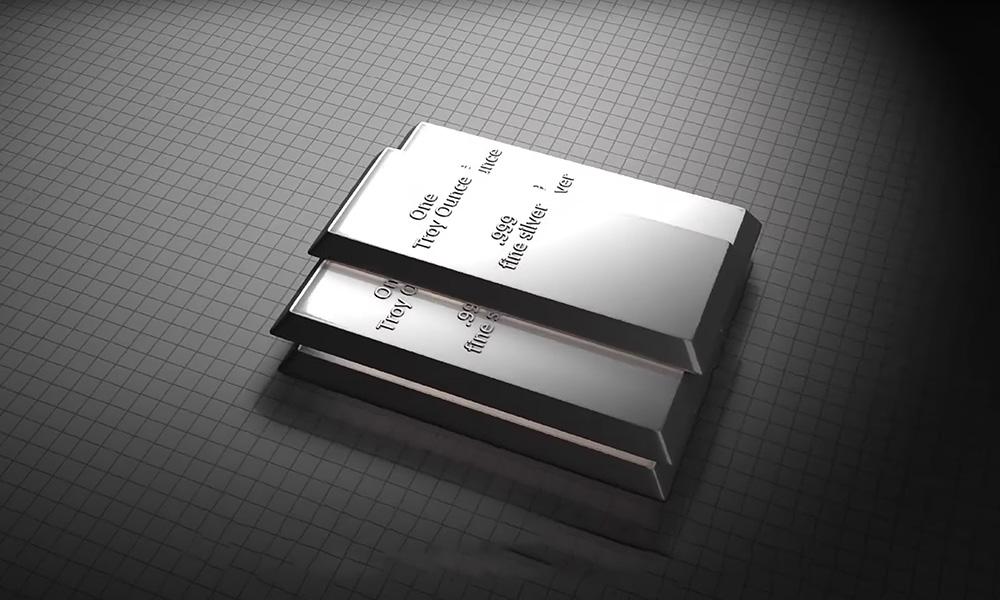
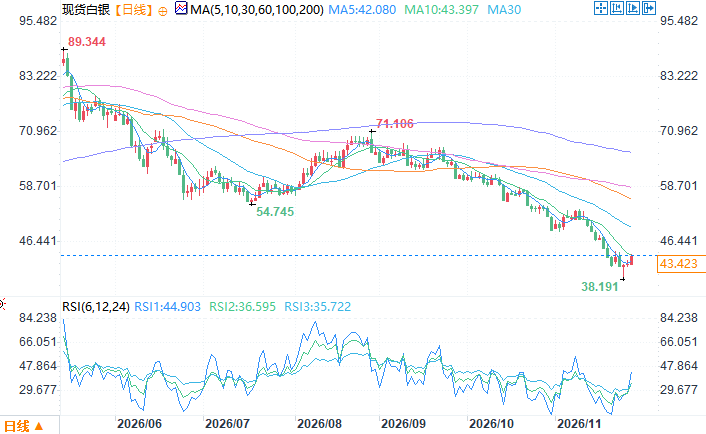 Spot silver daily chart source: FX678. As of 12:58 Beijing time on November 27th, spot silver was trading at $43.423 per ounce.
We are optimistic about the long-term fundamentals of silver, and will not chase the rebound but wait for a deeper correction.
In her latest market commentary released on Monday (November 23), Jen Bawden, founder of Baden Capital, stated that silver may continue to face downward pressure in the short term, but rising mining costs and a persistent physical supply gap support its long-term fundamentals. Her trading strategy is to wait for a further 20% drop before entering a position, rather than chasing short-term rallies. Bawden said, "This once-in-a-decade opportunity is coming. I won't chase the early morning rebound, nor will I try to pinpoint the absolute bottom. Instead, I've placed long-term limit buy orders at prices well below last Friday's lows, patiently waiting for the price to fall to my order price." This view continues her bullish assessment of precious metals earlier this month, where she believes silver is falling into a petrodollar trap, with ongoing geopolitical tensions in the Middle East supporting a stronger dollar and pushing up US Treasury yields, thus suppressing silver prices. Rising energy prices will force major oil-importing countries to stockpile dollars. Coupled with sticky inflation, the market is worried that the Federal Reserve will extend its tightening cycle, raising the opportunity cost of holding precious metals.Oil prices have a dual impact: supply gaps and mining costs provide support.
She added that the energy crisis has had contradictory effects on the silver market. Rising oil prices indirectly suppress silver prices while simultaneously increasing silver mining costs, with the maintenance costs of some primary silver mines already approaching $35 per ounce. Given the sixth consecutive year of structural supply shortages, how long can the persistently low silver prices last? This is a question worth considering. Even with a long-term positive fundamental outlook, she cautioned that silver remains vulnerable to liquidity-driven sell-offs. High financing costs continue to suppress the technology sector, market enthusiasm for AI assets is cooling, and a tightening liquidity environment will impact precious metals. She compared the current environment to the 2008 financial crisis and the 2020 pandemic, noting that silver experienced sharp declines followed by strong rebounds in both crises. During the financial crisis, silver halved before surging to nearly $50, while during the initial stages of the pandemic, silver fell 35% before rebounding by approximately 150%.Multiple risks remain; preference remains for physical silver and high-quality mining companies.
Baden acknowledged that silver faces other risks. Silver has strong industrial attributes, and industrial demand will weaken significantly during an economic downturn. A prolonged period of low prices will also create financing difficulties for small and medium-sized exploration and mining companies. In terms of asset selection, she favors physical silver, well-capitalized silver producers, and profit-sharing mining companies, focusing on Sprott Physical Silver Trust, First Magnificent Silver, and the Sprott Silver Mining and Physical Silver ETF, all of which have experienced significant pullbacks since their 52-week highs. Her bullish view on silver is based on the expansion of global sovereign debt. She believes that governments cannot sustain high financing costs indefinitely, as this would put enormous pressure on the banking system and the macroeconomy. This debt pressure will eventually force central banks to shift course, ending the tightening cycle, weakening the dollar, and reigniting demand for physical assets. However, she explicitly stated that the market turning point has not yet arrived and she will not rush to conclude that silver has bottomed out. She also disclosed that she holds long positions in physical silver and silver mining stocks, while simultaneously establishing short positions in overvalued technology companies.Conclusion
The supply gap in silver and the costs of mining companies provide bottom support, but the US dollar, US Treasury yields and liquidity risks are still suppressing the market. This fund manager chose to patiently wait for a deeper correction rather than rush to buy the dip. Spot silver daily chart source: FX678. As of 12:58 Beijing time on November 27th, spot silver was trading at $43.423 per ounce.
- Risk Warning and Disclaimer
- The market involves risk, and trading may not be suitable for all investors. This article is for reference only and does not constitute personal investment advice, nor does it take into account certain users’ specific investment objectives, financial situation, or other needs. Any investment decisions made based on this information are at your own risk.