The pound sterling has plummeted after a double whammy of unemployment and inflation, signaling the approaching storm of interest rate cuts.
2025-12-17 17:12:44
On Wednesday (December 17), during the Asian and European sessions, the UK released several price indices, showing that overall inflation in the UK has eased significantly, increasing market expectations for a Bank of England interest rate cut. The pound fell sharply against the dollar by 60 points, or about 0.5%, and is currently trading around 1.3326.
The pound has recently shown a good instantaneous response to data. Tuesday's better-than-expected PMI caused the pound to appreciate significantly against the euro. Although all the gains have been given back today, the performance of the US CPI data should be watched in the future. The obvious easing of inflation in the UK has set the tone for the short-term trend of the pound.
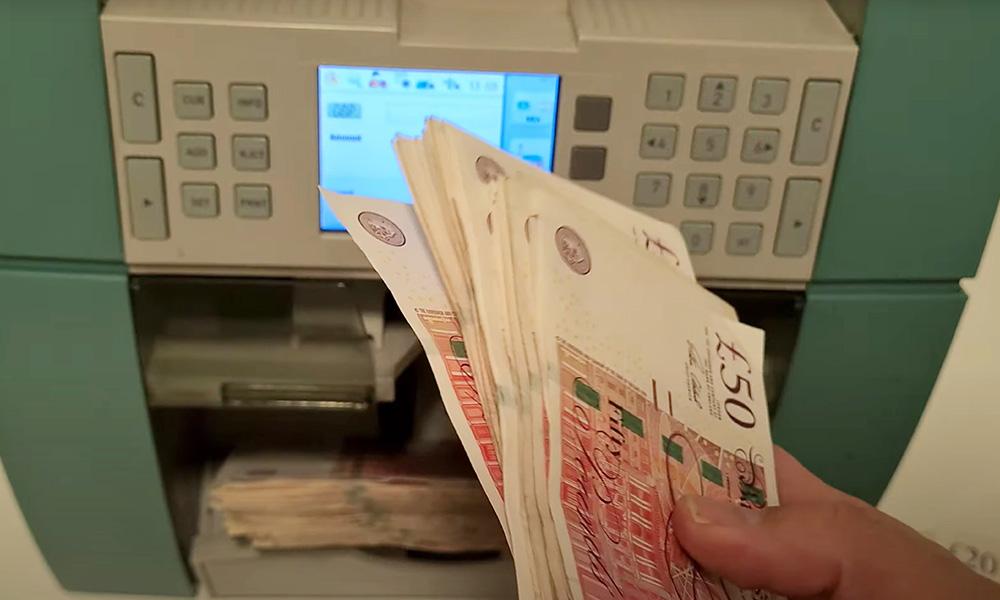
The UK's overall CPI growth rate fell to 3.2% year-on-year in November from 3.6% in October, significantly lower than the market expectation of 3.5%, marking the second consecutive month of slowdown and further clarifying the trend of price pressures converging towards the 2% policy target.
Core CPI (excluding volatile items such as food and energy) fell to 3.2%, lower than expected and the previous value. Inflation in the services sector, which is closely monitored by the Bank of England, also fell slightly from 4.5% to 4.4%, indicating that inflation stickiness continued to weaken.
From a trading perspective, weak inflation data directly reinforced the rationale for the Bank of England to cut interest rates. The market quickly adjusted its pricing regarding the timing of the rate cut, and previous disagreements about "when to initiate rate cuts" gradually narrowed, shifting towards short-term speculation surrounding Thursday's policy meeting, becoming the core factor driving changes in pound fund flows. Furthermore, the CPI fell by 0.2% month-on-month (expected to remain flat), indicating stronger-than-expected downward pressure on short-term inflation, further weakening the pound's interest rate differential support.
This week's UK employment data for the three months to October, along with inflation, presented a "double weakness" scenario, with the ILO unemployment rate rising to 5.1%, a near five-year high. The sluggish job market has exacerbated concerns about an economic downturn.
For the pound, the simultaneous weakening of employment and inflation has completely shattered the market's previous expectation that the Bank of England would maintain a hawkish stance. Although the market had generally expected an interest rate cut, it was still concerned that the resilience of the job market might support maintaining the current policy. However, the current data clearly shows that the UK economy is under pressure, and an interest rate cut has changed from an "optional policy" to a "necessary measure".
This fundamentally driven shift in expectations triggered speculative positioning in the pound, further solidifying the dominance of the interest rate cut logic in trading.
Despite the weak labor market data from the US October-November non-farm payrolls report, the US dollar index did not continue to weaken; instead, it rebounded from its lows, indirectly impacting the pound against the dollar. The core reason for the dollar's rebound is that the market believes the US employment data was distorted by the government shutdown, casting doubt on its accuracy. Therefore, expectations of a Fed rate cut did not further develop, but instead triggered short covering.
Meanwhile, weak PMI data in Europe also benefited the US dollar, while news from Japan indicated that the Bank of Japan might postpone interest rate hikes. For the pound, this means that its movement is driven not only by the internal logic of rising expectations for interest rate cuts, but also by the external influence of the US dollar's performance. With these two logics intertwined, short-term fluctuations in the pound are more driven by policy expectation differences than by a single direction.
The future trend of the US dollar will depend on the performance of US CPI data. If US inflation cools down in tandem, it may alleviate external pressure on the pound. Conversely, if inflation stickiness exceeds expectations, a stronger dollar will further intensify the downward pressure on the pound.
For trading in British pounds, the next 48 hours are a key window for policy and data releases, with two major events as the primary focus.
First, the Bank of England's monetary policy meeting on Thursday. The market has already fully priced in some of the expected interest rate cuts. The interest rate cuts and forward guidance in the policy statement will directly determine the short-term direction of the pound. Whether it is a direct interest rate cut, maintaining the interest rate but releasing a dovish signal, or unexpectedly maintaining a hawkish stance, all will trigger a market reaction to the difference between expectations and reality.
Secondly, the US November CPI data, released simultaneously, will indirectly affect the pound sterling by influencing the dollar's trajectory, becoming an important variable for short-term fluctuations.
Atlanta Fed President Bostic explicitly warned that further cuts to the federal funds rate would push monetary policy into an easing range, potentially exacerbating already high inflation and causing business and consumer inflation expectations to decouple.
This statement reinforces the Federal Reserve's "cautious rate cut" stance, implying that the pace of rate cuts by the Federal Reserve and the Bank of England may differ in the future, making it difficult to substantially alleviate the interest rate differential pressure between the pound and the dollar, which will put downward pressure on the pound in the medium to long term.
The combination of weak inflation and employment data in the UK has completely shifted the core driver of the pound's performance to the game of the Bank of England's interest rate cut policy.
In the short term, weak fundamentals and escalating policy expectations are jointly driving the pound's movements, while the indirect influence of the dollar's performance adds to the complexity of short-term fluctuations.
The focus for subsequent trading should be on Thursday's Bank of England policy statement and US CPI data.
The British pound retreated after rising to the key resistance level of 1.3452 against the US dollar. Currently, the exchange rate has broken below the upward trend line and the key support level of 1.3344. 1.3344 is now the first resistance level for any rebound. If the rebound fails to break through this level, the pound may turn to a downward trend. As the currency that accounts for 11.9% of the US dollar index, this also benefits the rebound of the US dollar index.
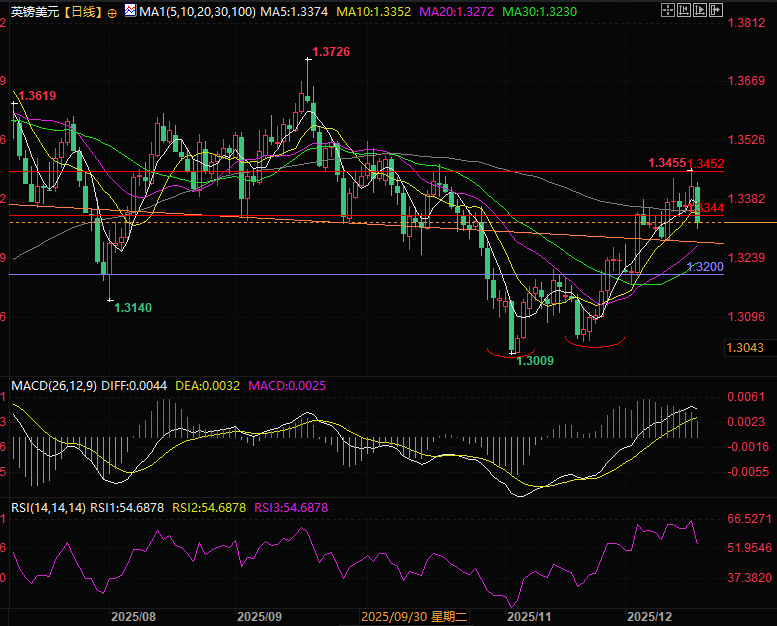
(GBP/USD daily chart, source: FX678)
At 17:08 Beijing time, the British pound was trading at 1.3330/31 against the US dollar.
The pound has recently shown a good instantaneous response to data. Tuesday's better-than-expected PMI caused the pound to appreciate significantly against the euro. Although all the gains have been given back today, the performance of the US CPI data should be watched in the future. The obvious easing of inflation in the UK has set the tone for the short-term trend of the pound.
Inflation cooled down more than expected, and the logic behind interest rate cuts was directly implemented.
The UK's overall CPI growth rate fell to 3.2% year-on-year in November from 3.6% in October, significantly lower than the market expectation of 3.5%, marking the second consecutive month of slowdown and further clarifying the trend of price pressures converging towards the 2% policy target.
Core CPI (excluding volatile items such as food and energy) fell to 3.2%, lower than expected and the previous value. Inflation in the services sector, which is closely monitored by the Bank of England, also fell slightly from 4.5% to 4.4%, indicating that inflation stickiness continued to weaken.
From a trading perspective, weak inflation data directly reinforced the rationale for the Bank of England to cut interest rates. The market quickly adjusted its pricing regarding the timing of the rate cut, and previous disagreements about "when to initiate rate cuts" gradually narrowed, shifting towards short-term speculation surrounding Thursday's policy meeting, becoming the core factor driving changes in pound fund flows. Furthermore, the CPI fell by 0.2% month-on-month (expected to remain flat), indicating stronger-than-expected downward pressure on short-term inflation, further weakening the pound's interest rate differential support.
Weak employment conditions have fueled the shift in interest rate cuts from "expected" to "necessary."
This week's UK employment data for the three months to October, along with inflation, presented a "double weakness" scenario, with the ILO unemployment rate rising to 5.1%, a near five-year high. The sluggish job market has exacerbated concerns about an economic downturn.
For the pound, the simultaneous weakening of employment and inflation has completely shattered the market's previous expectation that the Bank of England would maintain a hawkish stance. Although the market had generally expected an interest rate cut, it was still concerned that the resilience of the job market might support maintaining the current policy. However, the current data clearly shows that the UK economy is under pressure, and an interest rate cut has changed from an "optional policy" to a "necessary measure".
This fundamentally driven shift in expectations triggered speculative positioning in the pound, further solidifying the dominance of the interest rate cut logic in trading.
The dollar's movements indirectly influence the pound, which is affected by a complex interplay of factors.
Despite the weak labor market data from the US October-November non-farm payrolls report, the US dollar index did not continue to weaken; instead, it rebounded from its lows, indirectly impacting the pound against the dollar. The core reason for the dollar's rebound is that the market believes the US employment data was distorted by the government shutdown, casting doubt on its accuracy. Therefore, expectations of a Fed rate cut did not further develop, but instead triggered short covering.
Meanwhile, weak PMI data in Europe also benefited the US dollar, while news from Japan indicated that the Bank of Japan might postpone interest rate hikes. For the pound, this means that its movement is driven not only by the internal logic of rising expectations for interest rate cuts, but also by the external influence of the US dollar's performance. With these two logics intertwined, short-term fluctuations in the pound are more driven by policy expectation differences than by a single direction.
The future trend of the US dollar will depend on the performance of US CPI data. If US inflation cools down in tandem, it may alleviate external pressure on the pound. Conversely, if inflation stickiness exceeds expectations, a stronger dollar will further intensify the downward pressure on the pound.
Policy implementation and data interplay dominate short-term trading windows.
For trading in British pounds, the next 48 hours are a key window for policy and data releases, with two major events as the primary focus.
First, the Bank of England's monetary policy meeting on Thursday. The market has already fully priced in some of the expected interest rate cuts. The interest rate cuts and forward guidance in the policy statement will directly determine the short-term direction of the pound. Whether it is a direct interest rate cut, maintaining the interest rate but releasing a dovish signal, or unexpectedly maintaining a hawkish stance, all will trigger a market reaction to the difference between expectations and reality.
Secondly, the US November CPI data, released simultaneously, will indirectly affect the pound sterling by influencing the dollar's trajectory, becoming an important variable for short-term fluctuations.
Atlanta Fed President Bostic explicitly warned that further cuts to the federal funds rate would push monetary policy into an easing range, potentially exacerbating already high inflation and causing business and consumer inflation expectations to decouple.
This statement reinforces the Federal Reserve's "cautious rate cut" stance, implying that the pace of rate cuts by the Federal Reserve and the Bank of England may differ in the future, making it difficult to substantially alleviate the interest rate differential pressure between the pound and the dollar, which will put downward pressure on the pound in the medium to long term.
Summary and Technical Analysis:
The combination of weak inflation and employment data in the UK has completely shifted the core driver of the pound's performance to the game of the Bank of England's interest rate cut policy.
In the short term, weak fundamentals and escalating policy expectations are jointly driving the pound's movements, while the indirect influence of the dollar's performance adds to the complexity of short-term fluctuations.
The focus for subsequent trading should be on Thursday's Bank of England policy statement and US CPI data.
The British pound retreated after rising to the key resistance level of 1.3452 against the US dollar. Currently, the exchange rate has broken below the upward trend line and the key support level of 1.3344. 1.3344 is now the first resistance level for any rebound. If the rebound fails to break through this level, the pound may turn to a downward trend. As the currency that accounts for 11.9% of the US dollar index, this also benefits the rebound of the US dollar index.
(GBP/USD daily chart, source: FX678)
At 17:08 Beijing time, the British pound was trading at 1.3330/31 against the US dollar.
- Risk Warning and Disclaimer
- The market involves risk, and trading may not be suitable for all investors. This article is for reference only and does not constitute personal investment advice, nor does it take into account certain users’ specific investment objectives, financial situation, or other needs. Any investment decisions made based on this information are at your own risk.