What does "good position" really mean? The ECB's true cards are about to be revealed.
2025-12-18 19:47:51
On Thursday, December 18th, the European Central Bank (ECB) will hold its final policy meeting of the year, with interest rates expected to remain unchanged for the fourth consecutive time. Market focus will be on the latest economic forecasts and ECB President Christine Lagarde's policy statements. Currently, Eurozone inflation rose to 2.1% in November, while core inflation remained stable at 2.4%, indicating that price pressures remain sticky. Although economic growth achieved expansion throughout the year, momentum was weak, exhibiting a pattern of "insufficient resilience and moderate recovery."
The policy is at a "neutral level," with no rush to cut or raise interest rates, emphasizing "decision-making at each meeting, depending on the data." If the forward guidance leans hawkish, reinforcing expectations of maintaining high interest rates in the long term, it will support the euro and European bond yields; if it turns dovish, it may trigger bets on rate cuts, lowering the interest rate outlook.
The European Central Bank (ECB) is holding its final policy meeting of the year, with the results to be announced tonight at 21:15. Based on current market expectations and publicly available information, it is almost certain that the three key interest rates will remain unchanged—the main refinancing rate will remain at 2.15%, the marginal lending facility rate at 2.4%, and the deposit facility rate at 2%. This will be the fourth consecutive time the ECB has held rates steady. Since its last rate cut in June, the ECB has entered a period of observation, no longer in a hurry to adjust its policy.
However, the real focus is not on whether interest rates will change, but on their future direction. Investors are more concerned with how the European Central Bank views inflation and economic growth over the next few years, and how President Lagarde will describe the balance of risks at the press conference. These seemingly mundane statements often have a greater impact on financial market sentiment than actual interest rate changes. After all, with monetary policy now in a "neutral range," every subtle adjustment in wording can be interpreted by the market as a harbinger of the next move.
Analysts point out that the ECB's core strategy is currently "leaving room for maneuver within ambiguity." Lagarde repeatedly emphasized that policy is in a "good position," meaning that current interest rates can both suppress inflation and avoid excessively suppressing the economy. However, she also insisted on "decision-making at each meeting, depending on the data," precisely to avoid the market forming one-sided expectations and to prevent financial conditions from fluctuating drastically due to excessive bets. This "not making definitive statements" approach is precisely the key point to watch at this meeting.
While overall inflation in the Eurozone appears to be approaching target levels, the situation is far from as optimistic as it seems. Latest data shows that the Harmonized Index of Consumer Prices (HICP) rose to 2.1% year-on-year in November, while the core HICP remained stable at 2.4%. Although 2.1% is not far from the common medium-term inflation target, and a single month's rise is not enough to cause panic, the fact that core inflation has remained at 2.4% indicates that price stickiness, excluding energy and food, remains relatively strong.
This means that inflationary pressures in the service sector, wages, and corporate pricing behavior have not completely subsided. For the European Central Bank, prematurely releasing easing signals at this time could lead to a resurgence of inflation expectations, forcing it to take more aggressive tightening measures in the future. Therefore, even with positive overall data, policymakers still need to remain cautious.
What the market really wants to see is whether the ECB's latest macroeconomic forecasts can provide a clear path. If the forecasts show a slight upward revision to inflation this year, followed by a gradual downward revision over the next two years, it would send a dual signal: vigilance is still needed in the short term, but a return to normalcy is expected in the long term. This "stabilize first, then ease" approach would help soothe market expectations for rapid interest rate cuts and avoid the risks of a premature policy shift. Conversely, a significant downward revision to future inflation forecasts could ignite expectations for a new round of easing, thereby lowering the interest rate outlook.
Besides inflation, economic growth also significantly influences policy direction. Recent data shows that Eurozone business activity expanded for the 12th consecutive month in December, marking the first full year of expansion since the pandemic, which sounds like good news. However, a closer look reveals that this expansion was extremely limited, and the growth rate was the slowest in nearly three months. Related indicators such as the Purchasing Managers' Index (PMI) also suggest that the economy is in a state of "expansion, but weak."
This situation, characterized by "resilience tinged with fatigue," presents the European Central Bank with a classic dilemma: on the one hand, the economy has not yet fallen into recession and does not require immediate interest rate cuts to stimulate growth; on the other hand, insufficient growth momentum means that maintaining high interest rates could further hinder the recovery. Therefore, policymakers are unwilling to ease monetary policy too quickly, nor can they consider raising interest rates again.
Against this backdrop, the direction of the European Central Bank's latest GDP forecast revision becomes particularly crucial. An upward revision would be interpreted by the market as indicating that current interest rates are sufficient to support the economy without additional stimulus, thus reinforcing the "maintain interest rates for longer" stance. Conversely, a downward revision could reignite discussions about future interest rate cuts. Currently, some institutions, such as BNP Paribas, believe that the 2026 growth forecast may even be revised upwards, further reducing the likelihood of a near-term interest rate cut.
Ultimately, the market's reaction will likely depend on Lagarde's every word and action at the press conference. Her phrasing will be the most important clue to judging policy inclination. If she continues to emphasize that "policy is in a good position" and reiterates "data-driven, meeting-by-meeting decisions," while expressing confidence in declining inflation and cautious optimism about growth, the overall effect will lean towards a "hawkish hold-up"—that is, no commitment to rate cuts or rate hikes, but effective suppression of market bets on near-term easing.
Conversely, if she mentions more downside risks to growth in her speech, or hints that inflation is largely under control and financial conditions are tight, the market may interpret "good position" as "leaving room for future easing." Once this subtle shift occurs, traders will quickly adjust their interest rate expectations, pushing the euro weaker and European bond yields lower.
The bond market is particularly sensitive to this. Some analysts believe that if macroeconomic forecasts confirm an improved growth outlook for 2026, coupled with the possibility of Germany adopting a more expansionary fiscal policy, the European Central Bank may not only refrain from further interest rate cuts but could even resume rate hikes in the third quarter of 2027. If this scenario is priced into the market, the yield on 10-year German government bonds could rise to 3%, leading to a steepening of the entire Eurozone yield curve.
Reflected in the foreign exchange market, the euro's exchange rate against the US dollar will also fluctuate accordingly. If the meeting signals a "long-term commitment to a tight monetary policy," the euro may strengthen due to interest rate differentials; if it turns dovish, it may fall back. The current relative strength of the euro largely stems from the weakening of the US dollar itself, rather than a significant improvement in the euro's fundamentals. Therefore, if expectations for the European Central Bank's policy change, exchange rate volatility may amplify.
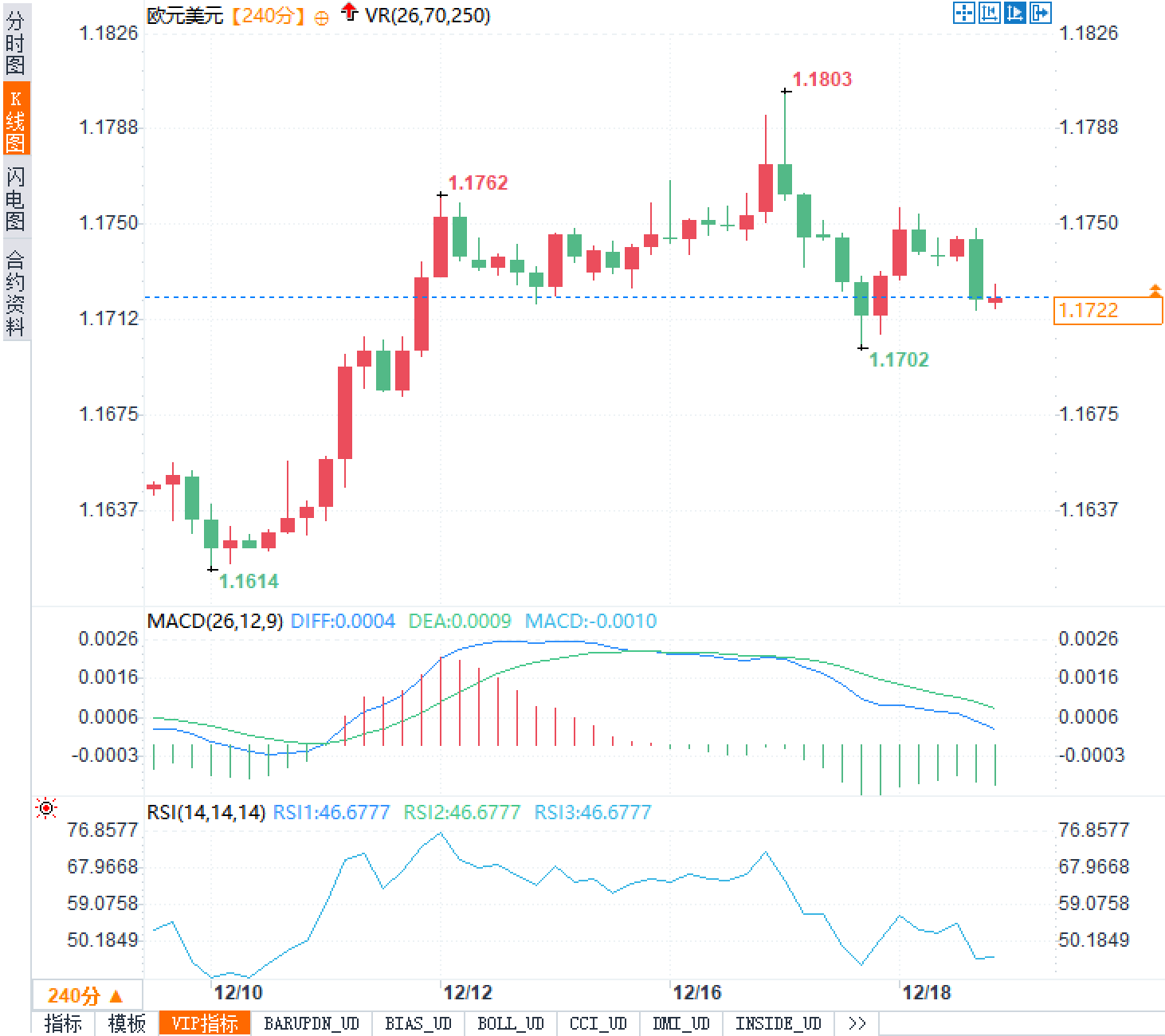
In summary, while this meeting lacked concrete policy action, it was a crucial battle of "expectation management." The real outcome lay not in interest rates themselves, but in the market's imagination of the interest rate path over the next two to three years. As long as inflation stickiness persists, growth can still support the neutral interest rate, and policy communication continues to suppress expectations of rate cuts, the euro is likely to maintain its resilience. Conversely, any pessimism about growth or confidence in easing inflation could quickly reverse the situation and trigger a new round of market revaluation.
The policy is at a "neutral level," with no rush to cut or raise interest rates, emphasizing "decision-making at each meeting, depending on the data." If the forward guidance leans hawkish, reinforcing expectations of maintaining high interest rates in the long term, it will support the euro and European bond yields; if it turns dovish, it may trigger bets on rate cuts, lowering the interest rate outlook.
The meeting is likely to leave things as they are, but what the market is really watching is the "direction of the trend."
The European Central Bank (ECB) is holding its final policy meeting of the year, with the results to be announced tonight at 21:15. Based on current market expectations and publicly available information, it is almost certain that the three key interest rates will remain unchanged—the main refinancing rate will remain at 2.15%, the marginal lending facility rate at 2.4%, and the deposit facility rate at 2%. This will be the fourth consecutive time the ECB has held rates steady. Since its last rate cut in June, the ECB has entered a period of observation, no longer in a hurry to adjust its policy.
However, the real focus is not on whether interest rates will change, but on their future direction. Investors are more concerned with how the European Central Bank views inflation and economic growth over the next few years, and how President Lagarde will describe the balance of risks at the press conference. These seemingly mundane statements often have a greater impact on financial market sentiment than actual interest rate changes. After all, with monetary policy now in a "neutral range," every subtle adjustment in wording can be interpreted by the market as a harbinger of the next move.
Analysts point out that the ECB's core strategy is currently "leaving room for maneuver within ambiguity." Lagarde repeatedly emphasized that policy is in a "good position," meaning that current interest rates can both suppress inflation and avoid excessively suppressing the economy. However, she also insisted on "decision-making at each meeting, depending on the data," precisely to avoid the market forming one-sided expectations and to prevent financial conditions from fluctuating drastically due to excessive bets. This "not making definitive statements" approach is precisely the key point to watch at this meeting.
A decline in inflation does not equate to safety; core pressures still constrain policy intervention.
While overall inflation in the Eurozone appears to be approaching target levels, the situation is far from as optimistic as it seems. Latest data shows that the Harmonized Index of Consumer Prices (HICP) rose to 2.1% year-on-year in November, while the core HICP remained stable at 2.4%. Although 2.1% is not far from the common medium-term inflation target, and a single month's rise is not enough to cause panic, the fact that core inflation has remained at 2.4% indicates that price stickiness, excluding energy and food, remains relatively strong.
This means that inflationary pressures in the service sector, wages, and corporate pricing behavior have not completely subsided. For the European Central Bank, prematurely releasing easing signals at this time could lead to a resurgence of inflation expectations, forcing it to take more aggressive tightening measures in the future. Therefore, even with positive overall data, policymakers still need to remain cautious.
What the market really wants to see is whether the ECB's latest macroeconomic forecasts can provide a clear path. If the forecasts show a slight upward revision to inflation this year, followed by a gradual downward revision over the next two years, it would send a dual signal: vigilance is still needed in the short term, but a return to normalcy is expected in the long term. This "stabilize first, then ease" approach would help soothe market expectations for rapid interest rate cuts and avoid the risks of a premature policy shift. Conversely, a significant downward revision to future inflation forecasts could ignite expectations for a new round of easing, thereby lowering the interest rate outlook.
A "moderate economic recovery" presents a dilemma, and weak growth complicates interest rate cuts.
Besides inflation, economic growth also significantly influences policy direction. Recent data shows that Eurozone business activity expanded for the 12th consecutive month in December, marking the first full year of expansion since the pandemic, which sounds like good news. However, a closer look reveals that this expansion was extremely limited, and the growth rate was the slowest in nearly three months. Related indicators such as the Purchasing Managers' Index (PMI) also suggest that the economy is in a state of "expansion, but weak."
This situation, characterized by "resilience tinged with fatigue," presents the European Central Bank with a classic dilemma: on the one hand, the economy has not yet fallen into recession and does not require immediate interest rate cuts to stimulate growth; on the other hand, insufficient growth momentum means that maintaining high interest rates could further hinder the recovery. Therefore, policymakers are unwilling to ease monetary policy too quickly, nor can they consider raising interest rates again.
Against this backdrop, the direction of the European Central Bank's latest GDP forecast revision becomes particularly crucial. An upward revision would be interpreted by the market as indicating that current interest rates are sufficient to support the economy without additional stimulus, thus reinforcing the "maintain interest rates for longer" stance. Conversely, a downward revision could reignite discussions about future interest rate cuts. Currently, some institutions, such as BNP Paribas, believe that the 2026 growth forecast may even be revised upwards, further reducing the likelihood of a near-term interest rate cut.
A single statement can change the market; the euro's trajectory is hidden in the details.
Ultimately, the market's reaction will likely depend on Lagarde's every word and action at the press conference. Her phrasing will be the most important clue to judging policy inclination. If she continues to emphasize that "policy is in a good position" and reiterates "data-driven, meeting-by-meeting decisions," while expressing confidence in declining inflation and cautious optimism about growth, the overall effect will lean towards a "hawkish hold-up"—that is, no commitment to rate cuts or rate hikes, but effective suppression of market bets on near-term easing.
Conversely, if she mentions more downside risks to growth in her speech, or hints that inflation is largely under control and financial conditions are tight, the market may interpret "good position" as "leaving room for future easing." Once this subtle shift occurs, traders will quickly adjust their interest rate expectations, pushing the euro weaker and European bond yields lower.
The bond market is particularly sensitive to this. Some analysts believe that if macroeconomic forecasts confirm an improved growth outlook for 2026, coupled with the possibility of Germany adopting a more expansionary fiscal policy, the European Central Bank may not only refrain from further interest rate cuts but could even resume rate hikes in the third quarter of 2027. If this scenario is priced into the market, the yield on 10-year German government bonds could rise to 3%, leading to a steepening of the entire Eurozone yield curve.
Reflected in the foreign exchange market, the euro's exchange rate against the US dollar will also fluctuate accordingly. If the meeting signals a "long-term commitment to a tight monetary policy," the euro may strengthen due to interest rate differentials; if it turns dovish, it may fall back. The current relative strength of the euro largely stems from the weakening of the US dollar itself, rather than a significant improvement in the euro's fundamentals. Therefore, if expectations for the European Central Bank's policy change, exchange rate volatility may amplify.
In summary, while this meeting lacked concrete policy action, it was a crucial battle of "expectation management." The real outcome lay not in interest rates themselves, but in the market's imagination of the interest rate path over the next two to three years. As long as inflation stickiness persists, growth can still support the neutral interest rate, and policy communication continues to suppress expectations of rate cuts, the euro is likely to maintain its resilience. Conversely, any pessimism about growth or confidence in easing inflation could quickly reverse the situation and trigger a new round of market revaluation.
- Risk Warning and Disclaimer
- The market involves risk, and trading may not be suitable for all investors. This article is for reference only and does not constitute personal investment advice, nor does it take into account certain users’ specific investment objectives, financial situation, or other needs. Any investment decisions made based on this information are at your own risk.