Behind the CPI's 20-point "flash crash" in the US dollar, a logical verification that will determine the direction of the entire year has begun.
2025-12-18 21:47:30
On Thursday (December 18) at 9:30 PM, the U.S. Bureau of Labor Statistics released the November Consumer Price Index (CPI), which was delayed due to the government shutdown. The data showed that the U.S. CPI rose 2.7% year-on-year in November, significantly lower than the market expectation of 3.1% and also lower than the 3.0% increase in September; the core CPI, excluding food and energy, rose 2.6% year-on-year, also slowing from 3.0% in September. This weaker-than-expected inflation report immediately caused ripples in global foreign exchange and bond markets.

The market reacted swiftly upon the data release. The US Dollar Index (DXY) immediately fell by about 20 points, hitting a low of around 98.24. Non-US currencies generally strengthened against the dollar. The euro/dollar (EUR/USD) reacted most directly, rising nearly 30 points in the short term, quickly recovering from its intraday low. The dollar/yen (USD/JPY), however, fell nearly 40 points in the short term due to the combined effects of a weaker dollar and safe-haven demand, hitting a low of 155.35. US Treasury prices jumped sharply, and yields fell rapidly, with the two-year Treasury yield dropping more than 3 basis points to 3.452%, a change particularly pronounced in this policy-sensitive yield.
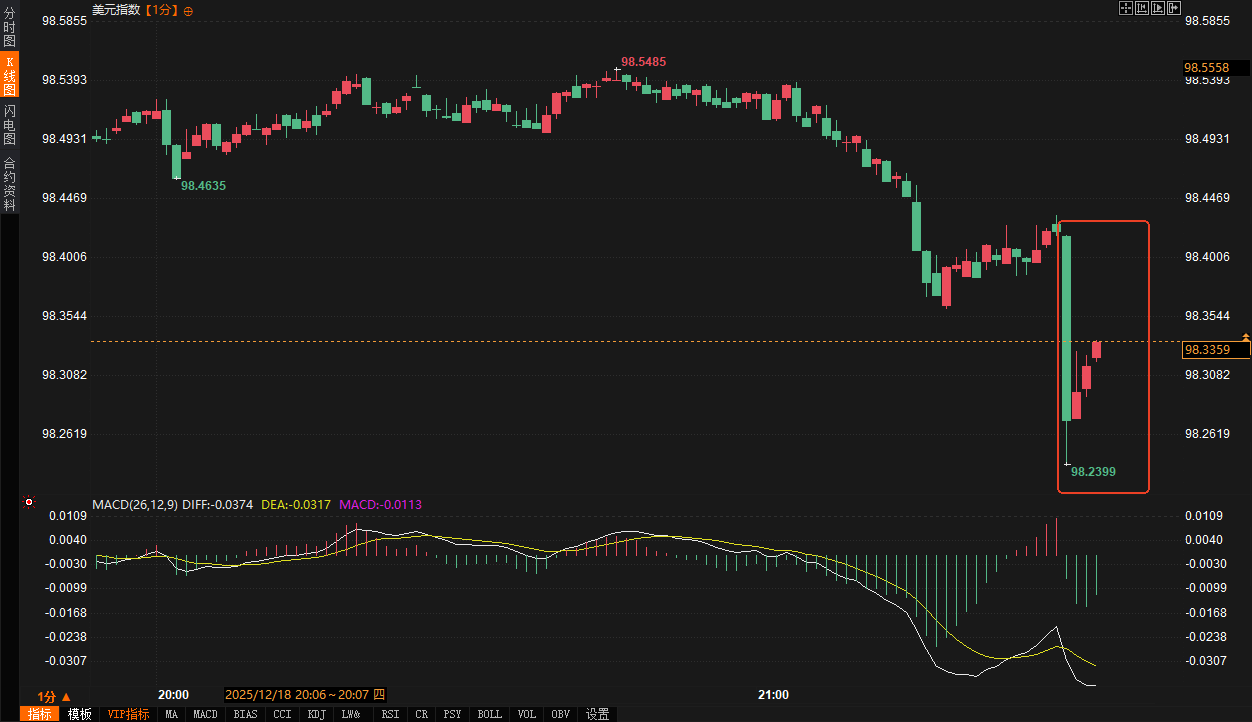
This "technical" slowdown in CPI data contrasted sharply with the market's generally cautious expectations before its release. Prior to the data's release, although the market had partially priced in the Fed's decision to pause rate cuts in December, concerns about the persistent inflation outlook and the potential impact of tariffs remained, providing some support for the dollar. Therefore, the lower-than-expected CPI reading acted like a stone thrown into a calm lake, instantly reversing short-term market sentiment. Traders quickly adjusted their positions, betting that easing inflationary pressures might provide the Fed with room to shift to an easing policy earlier. According to the latest pricing in the federal funds rate futures market, market expectations for cumulative rate cuts by the end of 2026 have risen slightly.
The interplay of opinions between institutional analysts and retail traders reflects the complex sentiment in the market.
Institutional Perspective: Exercise caution when analyzing single-month data; focus on long-term trends and the "tariff effect."
While acknowledging the positive aspects of the data, most professional institutions emphasized its unique characteristics. Several well-known analysis firms pointed out that the slowdown in November's CPI may have been partly due to data collection being delayed until the end of the month because of the government shutdown, coinciding with retailers launching holiday promotions such as "Black Friday," which temporarily suppressed the prices of some goods. Therefore, they generally warned that there is a risk of a rebound in the December data, and it is inappropriate to conclude that the inflation trend has completely reversed based solely on a single month's data.
More attention from institutions is focused on the structural pressures behind inflation. Analysis from several economists on the platform is widely cited, their core viewpoints consistent with the analysis in the data report: former President Trump's remarks on comprehensive import tariffs and their potential implementation continue to push up the cost of goods. Although businesses have absorbed some of these costs, the proportion passed on to consumers is expected to continue to rise, which will pose a sustained burden on low- and middle-income families. The Federal Reserve Chairman's previous comments that "most inflation overshoots are due to tariffs" have also been reiterated, highlighting the profound impact of policy uncertainty on inflation. Therefore, institutions generally believe that while the data is positive, it does not fundamentally change the stickiness of inflation and the challenges facing the economic outlook.
Retail Investor Sentiment: Focus on Interest Rate Cut Expectations, Optimism and Profit-Taking Coexist <br /> In contrast, discussions in retail trading communities focused more directly on trading opportunities. After the CPI data release, many retail traders interpreted the data as a clear bearish signal for the US dollar and discussed the further upside potential of non-US currencies, especially the euro and the yen. In discussions about the euro/dollar exchange rate, bullish sentiment surged after breaking through key technical levels.
However, experienced traders have also issued warnings, pointing out the potential for data distortion as a basis for this market rally, the challenges facing the European economy itself, and the possibility of weakening liquidity at the end of the year, cautioning against chasing the rally at higher levels. Some comments indicate that some traders have already chosen to take profits after the euro's rapid rise, reflecting a cautious attitude following major data releases.
1. Market Liquidity: As the year draws to a close, market liquidity may decrease, amplifying price volatility. Traders should be wary of "false breakouts."
2. Official Remarks: Any comments from Federal Reserve or European Central Bank officials regarding the inflation outlook, economic assessment, or policy path could trigger a sharp short-term market reaction.
3. Bond Market Interaction: Close attention should be paid to the yields of US Treasury bonds, especially the changes in the spread between the two-year and ten-year yields (currently around 66.5 basis points), as this relates to the market's pricing of economic recession and long-term policies, and will directly affect the strength of the US dollar.
In the short term, cooling inflation data has temporarily weakened the dollar's relative interest rate advantage, and the dollar may maintain a weak and volatile pattern, providing a breather for non-US currencies. However, this is not a definitive signal of a trend reversal. The core of the medium-term trend still lies in whether the sustainability of the decline in US inflation can be confirmed by data in the coming months, and how the supply-side cost pressures triggered by "tariff rhetoric" will evolve. The Fed's "wait and see" stance means that any fluctuations in data could quickly reignite hawkish expectations for policy. For currencies such as the euro, the interplay between their own economic growth momentum and policy easing space will be key to determining whether they can seize the window of short-term dollar weakness and achieve an effective rebound. After a brief period of excitement, the market will soon return to a more sober examination and verification of economic fundamentals.
Data triggers market volatility: dollar plunges, non-US currencies rise across the board
The market reacted swiftly upon the data release. The US Dollar Index (DXY) immediately fell by about 20 points, hitting a low of around 98.24. Non-US currencies generally strengthened against the dollar. The euro/dollar (EUR/USD) reacted most directly, rising nearly 30 points in the short term, quickly recovering from its intraday low. The dollar/yen (USD/JPY), however, fell nearly 40 points in the short term due to the combined effects of a weaker dollar and safe-haven demand, hitting a low of 155.35. US Treasury prices jumped sharply, and yields fell rapidly, with the two-year Treasury yield dropping more than 3 basis points to 3.452%, a change particularly pronounced in this policy-sensitive yield.
This "technical" slowdown in CPI data contrasted sharply with the market's generally cautious expectations before its release. Prior to the data's release, although the market had partially priced in the Fed's decision to pause rate cuts in December, concerns about the persistent inflation outlook and the potential impact of tariffs remained, providing some support for the dollar. Therefore, the lower-than-expected CPI reading acted like a stone thrown into a calm lake, instantly reversing short-term market sentiment. Traders quickly adjusted their positions, betting that easing inflationary pressures might provide the Fed with room to shift to an easing policy earlier. According to the latest pricing in the federal funds rate futures market, market expectations for cumulative rate cuts by the end of 2026 have risen slightly.
In-depth market analysis: Technical slowdown and structural concerns coexist.
The interplay of opinions between institutional analysts and retail traders reflects the complex sentiment in the market.
Institutional Perspective: Exercise caution when analyzing single-month data; focus on long-term trends and the "tariff effect."
While acknowledging the positive aspects of the data, most professional institutions emphasized its unique characteristics. Several well-known analysis firms pointed out that the slowdown in November's CPI may have been partly due to data collection being delayed until the end of the month because of the government shutdown, coinciding with retailers launching holiday promotions such as "Black Friday," which temporarily suppressed the prices of some goods. Therefore, they generally warned that there is a risk of a rebound in the December data, and it is inappropriate to conclude that the inflation trend has completely reversed based solely on a single month's data.
More attention from institutions is focused on the structural pressures behind inflation. Analysis from several economists on the platform is widely cited, their core viewpoints consistent with the analysis in the data report: former President Trump's remarks on comprehensive import tariffs and their potential implementation continue to push up the cost of goods. Although businesses have absorbed some of these costs, the proportion passed on to consumers is expected to continue to rise, which will pose a sustained burden on low- and middle-income families. The Federal Reserve Chairman's previous comments that "most inflation overshoots are due to tariffs" have also been reiterated, highlighting the profound impact of policy uncertainty on inflation. Therefore, institutions generally believe that while the data is positive, it does not fundamentally change the stickiness of inflation and the challenges facing the economic outlook.
Retail Investor Sentiment: Focus on Interest Rate Cut Expectations, Optimism and Profit-Taking Coexist <br /> In contrast, discussions in retail trading communities focused more directly on trading opportunities. After the CPI data release, many retail traders interpreted the data as a clear bearish signal for the US dollar and discussed the further upside potential of non-US currencies, especially the euro and the yen. In discussions about the euro/dollar exchange rate, bullish sentiment surged after breaking through key technical levels.
However, experienced traders have also issued warnings, pointing out the potential for data distortion as a basis for this market rally, the challenges facing the European economy itself, and the possibility of weakening liquidity at the end of the year, cautioning against chasing the rally at higher levels. Some comments indicate that some traders have already chosen to take profits after the euro's rapid rise, reflecting a cautious attitude following major data releases.
Future Outlook: Key Catalysts
1. Market Liquidity: As the year draws to a close, market liquidity may decrease, amplifying price volatility. Traders should be wary of "false breakouts."
2. Official Remarks: Any comments from Federal Reserve or European Central Bank officials regarding the inflation outlook, economic assessment, or policy path could trigger a sharp short-term market reaction.
3. Bond Market Interaction: Close attention should be paid to the yields of US Treasury bonds, especially the changes in the spread between the two-year and ten-year yields (currently around 66.5 basis points), as this relates to the market's pricing of economic recession and long-term policies, and will directly affect the strength of the US dollar.
Trend Outlook:
In the short term, cooling inflation data has temporarily weakened the dollar's relative interest rate advantage, and the dollar may maintain a weak and volatile pattern, providing a breather for non-US currencies. However, this is not a definitive signal of a trend reversal. The core of the medium-term trend still lies in whether the sustainability of the decline in US inflation can be confirmed by data in the coming months, and how the supply-side cost pressures triggered by "tariff rhetoric" will evolve. The Fed's "wait and see" stance means that any fluctuations in data could quickly reignite hawkish expectations for policy. For currencies such as the euro, the interplay between their own economic growth momentum and policy easing space will be key to determining whether they can seize the window of short-term dollar weakness and achieve an effective rebound. After a brief period of excitement, the market will soon return to a more sober examination and verification of economic fundamentals.
- Risk Warning and Disclaimer
- The market involves risk, and trading may not be suitable for all investors. This article is for reference only and does not constitute personal investment advice, nor does it take into account certain users’ specific investment objectives, financial situation, or other needs. Any investment decisions made based on this information are at your own risk.