Ukraine's allies are planning for a "post-ceasefire era," but short-term "peace expectations" are unlikely to change the underlying logic supporting high oil prices.
2026-01-07 10:18:14
Ukraine's allies said on Tuesday (January 6) that they had made significant progress in how to defend the country. These countries stated they were prepared to provide international guarantees should a peace agreement be reached between Russia and Ukraine.
The plans discussed at the important meeting in Paris included having the United States take the lead in monitoring any ceasefire agreement—which could give the U.S. a direct role in maintaining peace between Russia and Ukraine.
Leaders from 27 European countries and Canada, along with representatives from the United States and senior officials from the European Union and NATO, said they would provide equipment and training to frontline troops in Kyiv, backed by land, sea and air support.
This was the 15th meeting of the so-called "Volunteer Alliance," and the largest "Volunteer Alliance" ever—the number of participating heads of state and government reached a record high, and the US special envoy was also present for the first time.
The post-ceasefire framework will also include strengthening the Ukrainian military, including replenishing its weapons stockpile.
Tuesday was the eve of Orthodox Christmas, and Russian officials have not yet immediately commented.
The size of the support force has not been disclosed, and many details of the plan are only applicable while the ceasefire agreement is in effect, so the overall picture remains unclear.
British Prime Minister Keir Starmer said the meeting had made "good progress" but warned that "the toughest phase is still ahead," noting that the Russia-Ukraine conflict continues.
Moscow has released few details about its position in the US-led peace talks. Officials reiterated Russia's demands and insisted that a ceasefire is impossible until a comprehensive solution is reached. Russian President Vladimir Putin has ruled out the possibility of NATO countries deploying troops on Ukrainian territory.
Starmer added that peace can only be achieved if Russia makes compromises, stating, "Putin has not shown that he is ready for peace."
Starmer stated that once a ceasefire is reached, Britain and France "will establish military hubs throughout Ukraine and build protective facilities to store weapons and military equipment to support Ukraine's defense needs."
Ukrainian President Zelenskyy said the talks had made progress, although the commitments required approval from all countries before any agreement could be implemented.
"We have identified which countries are ready to play a leading role in ensuring security and rebuilding on the ground, in the air, and at sea," Zelenskyy said at a press conference in Paris. "We have determined the required troop size and planned how these forces will operate and their command levels."
U.S. Special Envoy Steve Vitkov stated that the United States "firmly supports" the security guarantees. Jared Kushner, Trump's son-in-law who also attended the meeting, called the Paris conference "a very, very big milestone."
Kushner said, "This doesn't mean we will achieve peace, but peace would be impossible without the progress we've made today."
French President Emmanuel Macron stated that the security declaration endorsed by Ukraine's allies is an "important step" towards ending the Russia-Ukraine conflict. He indicated that the coalition plan also envisions establishing a Ukrainian army of 800,000 personnel.
The joint statement issued after the meeting said that the allies also agreed to continue providing long-term military assistance and weapons to the Ukrainian armed forces, which "will continue to serve as the first line of defense and deterrence should any peace agreement be signed."
The statement said that allies still need to finalize "binding commitments" that clearly articulate how they will support Ukraine.
The outcome of the meeting was uncertain, as the Trump administration’s attention was turning to Venezuela, and the proposed U.S. takeover of Greenland raised signs of no compromise in tensions with Europe and Moscow.
The series of meetings held during the summit demonstrated the intensity and complexity of diplomatic efforts.
Zelenskyy met with Macron ahead of the summit. Military leaders from France, the UK, and Ukraine also met, with NATO's Supreme Allied Commander, US General Alex G. Greenkevich, participating. The French army chief stated that the focus of the talks was on implementing security guarantees. Army chiefs from other alliance countries also participated via video link.
Macron's office stated that the US delegation was originally scheduled to be led by Secretary of State Marco Rubio, but he changed his plans after the US military intervention in Venezuela.
On Tuesday, the Security Service of Ukraine carried out drone strikes on military weapons depots and oil storage facilities deep inside Russian territory. This information came from a security official who was not authorized to comment publicly.
The official stated that a long-range drone strike hit an arms depot in Russia's Kostroma region, causing explosions that lasted for several hours and forced the evacuation of nearby settlements. The location is described as a key logistical hub supplying ammunition to western and central Russia.
In another attack, a drone strike by the Ukrainian Security Service hit an oil depot in Russia's Lipetsk region, causing a fire, the official said.
This meeting did not change the fundamentals of the Russia-Ukraine conflict; on the contrary, it confirmed the enduring nature of the confrontation through long-term military arrangements.
In the short term, oil prices may experience a brief and slight pullback due to the headline "peace talks," but this will be fragile. During Wednesday's Asian trading session, US crude oil continued its decline, falling by approximately 1.45%.
However, the prospect of long-term confrontation it reveals is more persistent. This may shatter short-term illusions of peace, confirming long-term geopolitical risks and, in the long run, providing support for oil prices at high levels. The market also needs to pay attention to information such as OPEC+ oil production figures and make a cautious and comprehensive judgment on oil market trends.
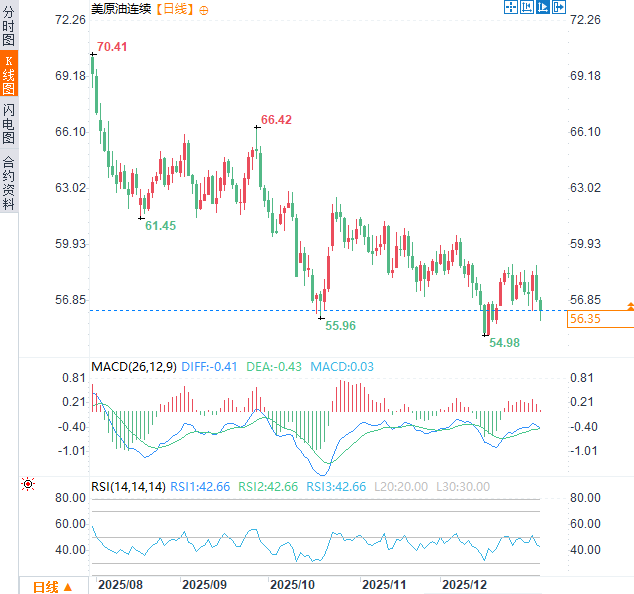
(US crude oil daily chart, source: FX678)
At 10:06 Beijing time, US crude oil futures were trading at $56.30 per barrel.
The plans discussed at the important meeting in Paris included having the United States take the lead in monitoring any ceasefire agreement—which could give the U.S. a direct role in maintaining peace between Russia and Ukraine.
Leaders from 27 European countries and Canada, along with representatives from the United States and senior officials from the European Union and NATO, said they would provide equipment and training to frontline troops in Kyiv, backed by land, sea and air support.
This was the 15th meeting of the so-called "Volunteer Alliance," and the largest "Volunteer Alliance" ever—the number of participating heads of state and government reached a record high, and the US special envoy was also present for the first time.
The post-ceasefire framework will also include strengthening the Ukrainian military, including replenishing its weapons stockpile.
Tuesday was the eve of Orthodox Christmas, and Russian officials have not yet immediately commented.
Details of the plan were not disclosed.
The size of the support force has not been disclosed, and many details of the plan are only applicable while the ceasefire agreement is in effect, so the overall picture remains unclear.
British Prime Minister Keir Starmer said the meeting had made "good progress" but warned that "the toughest phase is still ahead," noting that the Russia-Ukraine conflict continues.
Moscow has released few details about its position in the US-led peace talks. Officials reiterated Russia's demands and insisted that a ceasefire is impossible until a comprehensive solution is reached. Russian President Vladimir Putin has ruled out the possibility of NATO countries deploying troops on Ukrainian territory.
Starmer added that peace can only be achieved if Russia makes compromises, stating, "Putin has not shown that he is ready for peace."
Zelensky agreed that progress had been made.
Starmer stated that once a ceasefire is reached, Britain and France "will establish military hubs throughout Ukraine and build protective facilities to store weapons and military equipment to support Ukraine's defense needs."
Ukrainian President Zelenskyy said the talks had made progress, although the commitments required approval from all countries before any agreement could be implemented.
"We have identified which countries are ready to play a leading role in ensuring security and rebuilding on the ground, in the air, and at sea," Zelenskyy said at a press conference in Paris. "We have determined the required troop size and planned how these forces will operate and their command levels."
U.S. Special Envoy Steve Vitkov stated that the United States "firmly supports" the security guarantees. Jared Kushner, Trump's son-in-law who also attended the meeting, called the Paris conference "a very, very big milestone."
Kushner said, "This doesn't mean we will achieve peace, but peace would be impossible without the progress we've made today."
French President Emmanuel Macron stated that the security declaration endorsed by Ukraine's allies is an "important step" towards ending the Russia-Ukraine conflict. He indicated that the coalition plan also envisions establishing a Ukrainian army of 800,000 personnel.
The commitment still needs to be finalized.
The joint statement issued after the meeting said that the allies also agreed to continue providing long-term military assistance and weapons to the Ukrainian armed forces, which "will continue to serve as the first line of defense and deterrence should any peace agreement be signed."
The statement said that allies still need to finalize "binding commitments" that clearly articulate how they will support Ukraine.
The outcome of the meeting was uncertain, as the Trump administration’s attention was turning to Venezuela, and the proposed U.S. takeover of Greenland raised signs of no compromise in tensions with Europe and Moscow.
The series of meetings held during the summit demonstrated the intensity and complexity of diplomatic efforts.
Zelenskyy met with Macron ahead of the summit. Military leaders from France, the UK, and Ukraine also met, with NATO's Supreme Allied Commander, US General Alex G. Greenkevich, participating. The French army chief stated that the focus of the talks was on implementing security guarantees. Army chiefs from other alliance countries also participated via video link.
Macron's office stated that the US delegation was originally scheduled to be led by Secretary of State Marco Rubio, but he changed his plans after the US military intervention in Venezuela.
On Tuesday, the Security Service of Ukraine carried out drone strikes on military weapons depots and oil storage facilities deep inside Russian territory. This information came from a security official who was not authorized to comment publicly.
The official stated that a long-range drone strike hit an arms depot in Russia's Kostroma region, causing explosions that lasted for several hours and forced the evacuation of nearby settlements. The location is described as a key logistical hub supplying ammunition to western and central Russia.
In another attack, a drone strike by the Ukrainian Security Service hit an oil depot in Russia's Lipetsk region, causing a fire, the official said.
Impact analysis on the crude oil market
This meeting did not change the fundamentals of the Russia-Ukraine conflict; on the contrary, it confirmed the enduring nature of the confrontation through long-term military arrangements.
In the short term, oil prices may experience a brief and slight pullback due to the headline "peace talks," but this will be fragile. During Wednesday's Asian trading session, US crude oil continued its decline, falling by approximately 1.45%.
However, the prospect of long-term confrontation it reveals is more persistent. This may shatter short-term illusions of peace, confirming long-term geopolitical risks and, in the long run, providing support for oil prices at high levels. The market also needs to pay attention to information such as OPEC+ oil production figures and make a cautious and comprehensive judgment on oil market trends.
(US crude oil daily chart, source: FX678)
At 10:06 Beijing time, US crude oil futures were trading at $56.30 per barrel.
- Risk Warning and Disclaimer
- The market involves risk, and trading may not be suitable for all investors. This article is for reference only and does not constitute personal investment advice, nor does it take into account certain users’ specific investment objectives, financial situation, or other needs. Any investment decisions made based on this information are at your own risk.