January 8th Financial Breakfast: Profit-taking by investors limited gold price gains; oil prices digested Trump's Venezuela oil deal, awaiting non-farm payroll data.
2026-01-08 07:26:43
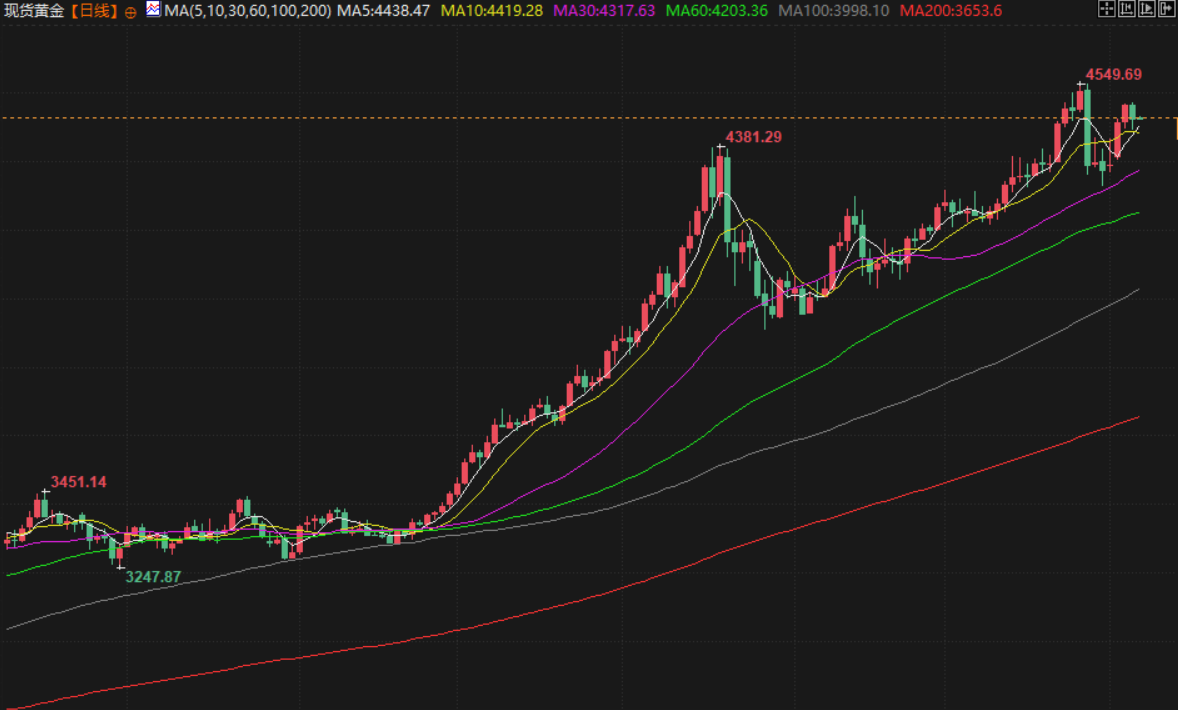
On Thursday (January 8th, Beijing time) in early Asian trading, spot gold was trading around $4461.60 per ounce. Gold prices fell nearly 1% on Wednesday as investors took profits after recent gains. However, weaker-than-expected US jobs data supported expectations of a Federal Reserve rate cut, narrowing the losses for gold before the close. US crude oil was trading at $56.40, having fallen for the second consecutive trading day on Wednesday as investors digested US President Trump's announcement of a deal to import up to $2 billion worth of crude oil from Venezuela, an agreement expected to increase supply from the world's largest oil consumer.

U.S. stocks traded mixed on Wednesday, with the S&P 500 closing lower, dragged down by financial and defense stocks, while artificial intelligence-related stocks boosted the Nasdaq. Both the S&P 500 and the Dow Jones Industrial Average hit record highs during the session before turning lower.
Financial stocks were generally under pressure, mainly due to President Trump's statement that he planned to push for a ban on Wall Street investors buying single-family homes to lower housing prices. Blackstone and Apollo Global Management shares fell more than 5%, dragging the S&P 500 Financials index down 1.4%. American Homes 4 Rent, a real estate rental company, fell 4.3%, while online real estate platform Zillow rose more than 2%. JPMorgan Chase fell 2.3% after its rating was downgraded.
Defense stocks also weakened. Trump stated on social media that he would not allow defense companies to pay dividends or buy back shares until they resolved their arms production issues, causing Northrop Grumman to fall 5.5% and Lockheed Martin to fall 4.8%.
Meanwhile, AI-related stocks saw a return of capital. Nvidia and Microsoft both rose by about 1%, while Alphabet gained over 2%. Market interest in leading AI companies is high, with reports that AI company Anthropic plans to raise funds, potentially reaching a valuation of $350 billion, surpassing giants like AMD and Chevron.
Storage and memory technology companies saw profit-taking after recent gains, with Western Digital falling nearly 9% and Seagate Technology dropping 6.7%.
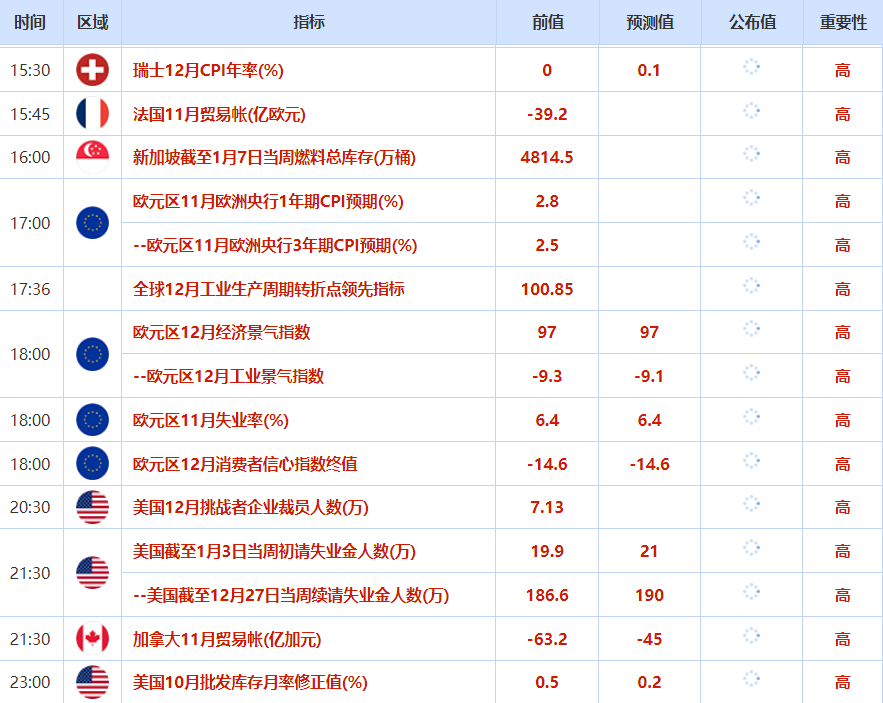
On the economic data front, U.S. job openings fell more than expected in November, while December's ADP private sector employment growth was lower than anticipated. Investors are awaiting Friday's official non-farm payroll report to further assess the Federal Reserve's policy outlook.
Gold prices fell more than 1% on Wednesday, mainly as investors took profits after recent gains. Although weaker-than-expected U.S. jobs data supported expectations of a Federal Reserve rate cut, narrowing losses before the close, spot gold still closed down 0.9% at $4,445.32 an ounce, after falling as much as 1.7% during the session. U.S. gold futures for February delivery closed down 0.7% at $4,462.50.
David Meger, head of metals trading at High Ridge Futures, said the pullback was profit-taking after the recent surge, while weak jobs data continued to support expectations of further easing by the Federal Reserve, providing a floor for gold prices. Data showed that U.S. job openings fell more than expected in November, and December's ADP private sector job growth also fell short of expectations. The market now expects a 61 basis point rate cut this year, and focus has shifted to Friday's non-farm payroll report.
Geopolitical uncertainty persists. Following the arrest of Venezuelan President Maduro over the weekend, US President Trump announced plans on Tuesday to refine and sell Venezuelan crude oil. The White House also confirmed that it is discussing options to acquire Greenland, including potential military intervention. Furthermore, central banks in major Asian countries increased their gold holdings for the 14th consecutive month in December.
In other precious metals, spot silver fell 4.1% to $77.93 per ounce; spot platinum fell 6.5% to $2285.75; and palladium fell 5.2% to $1727.40. HSBC raised its 2026 silver price forecast to $68.25 per ounce, but warned that easing supply could lead to volatility; Goldman Sachs believes that tight London inventories could trigger sharp fluctuations and a short squeeze, but a correction is likely afterward.
Oil prices fell for a second straight session on Wednesday as investors digested a deal announced by U.S. President Donald Trump to import up to $2 billion worth of crude oil from Venezuela, an agreement expected to increase supply from the world’s largest oil consumer.
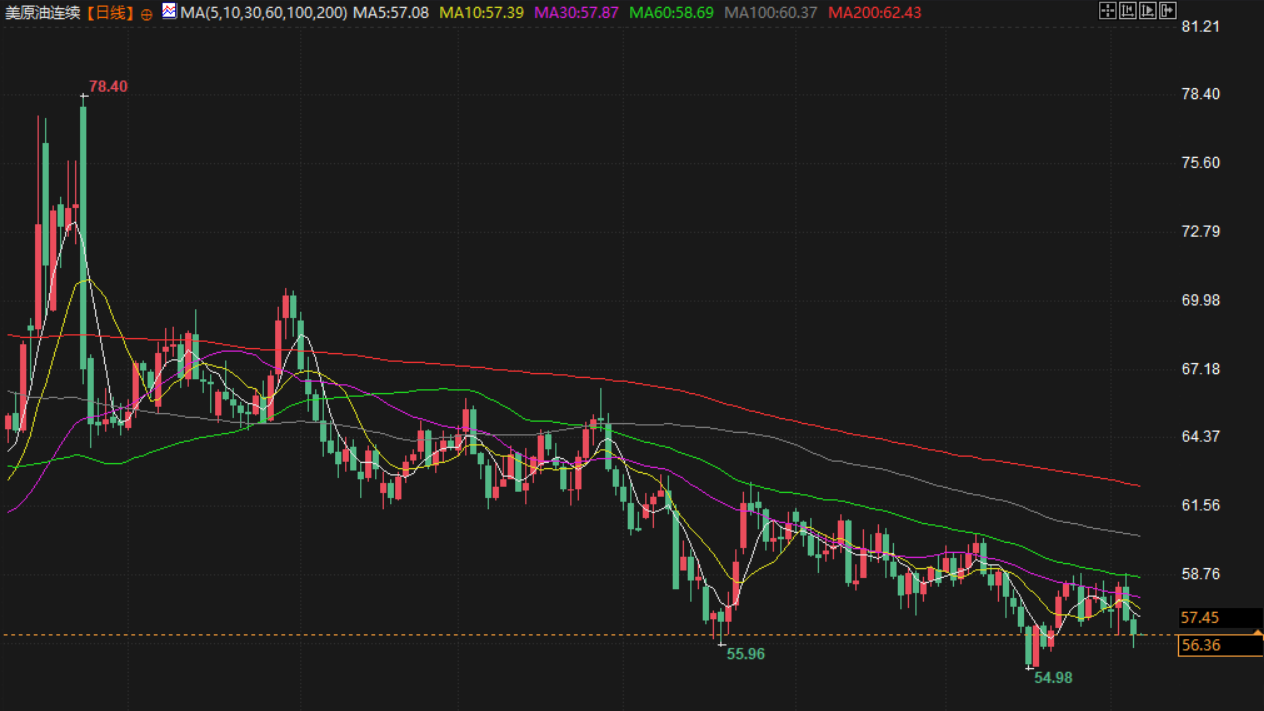
Brent crude fell 1.2% to settle at $59.96 a barrel, while WTI crude dropped 2% to settle at $55.99 a barrel. Both benchmark oil prices had fallen by more than $1 in the previous trading session, with the market widely expecting ample global supply this year.
Trump stated on social media on Tuesday that Venezuela would "deliver" 30 to 50 million barrels of "sanctioned oil" to the United States. Dennis Kissler, senior vice president of trading at BOK Financial, noted that this news triggered selling pressure.
Venezuela has been unable to export crude oil since mid-December due to the export ban imposed by Trump, resulting in millions of barrels of oil being stranded. The ban is part of a U.S. pressure campaign against Venezuela, culminating in the U.S. military's capture of Maduro last weekend. On Wednesday, the U.S. also seized an empty Russian-flagged oil tanker linked to Venezuela in the Atlantic Ocean.
On the other hand, data from the U.S. Energy Information Administration showed that U.S. crude oil inventories fell by 3.8 million barrels in the week ending January 2, far exceeding analysts' expectations of a 447,000-barrel increase. However, gasoline and distillate fuel inventories rose sharply by 7.7 million barrels and 5.6 million barrels respectively, also far exceeding expectations. Morgan Stanley analysts predict that, based on weak demand growth last year and increased production from OPEC and non-OPEC countries, the oil market may experience a surplus of up to 3 million barrels per day in the first half of this year.
The dollar held steady against major currencies on Wednesday, with limited overall volatility in the currency market as markets adjusted positions in anticipation of the U.S. labor market data to be released this week.
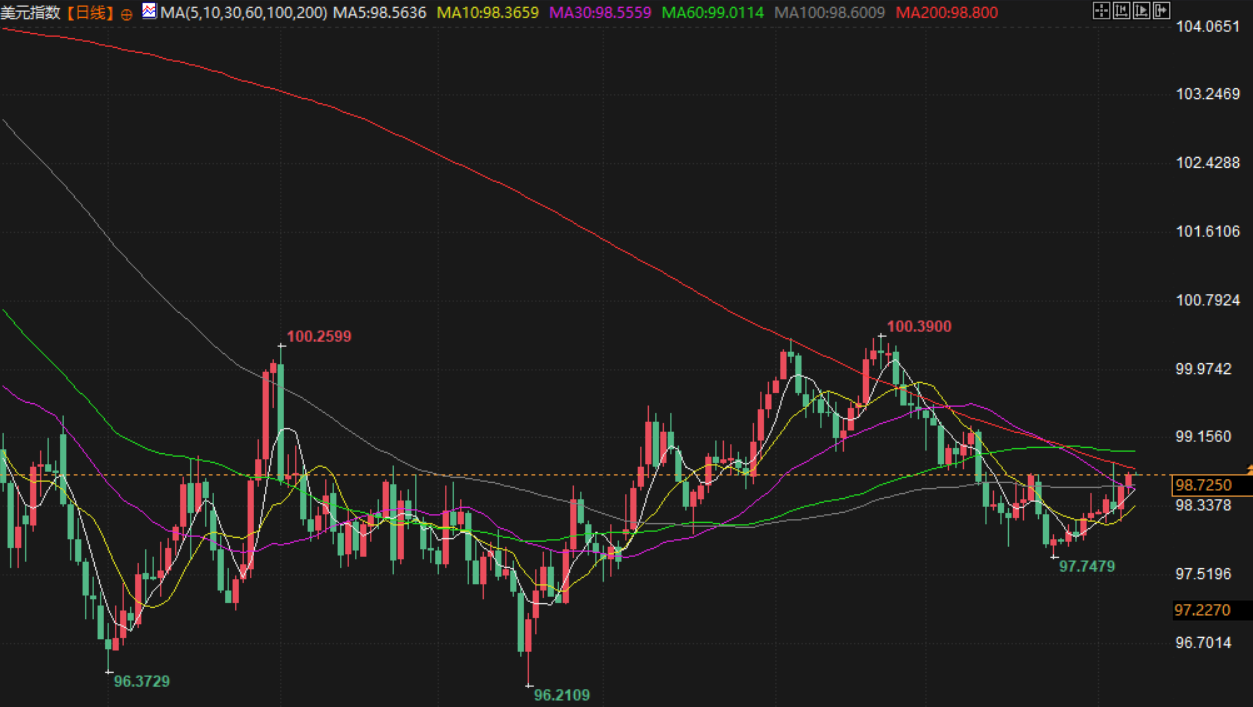
Data shows that U.S. job openings fell more than expected in November, and private sector employment rebounded less than expected in December, suggesting weakening labor demand. However, service sector activity unexpectedly rebounded in December. Investors' focus has now shifted to Friday's more comprehensive non-farm payroll report for further clues about inflation stickiness and the path of interest rates.
In terms of specific exchange rates, the US dollar rose 0.24% against the Swiss franc and edged up 0.08% against the Japanese yen. The US dollar index rose slightly by 0.07% to 98.68. The euro fell slightly by 0.04% against the dollar to $1.1682, mainly due to a larger-than-expected slowdown in German inflation in December, prompting traders to slightly reduce their bets on a European Central Bank rate hike.
The Australian dollar hit its highest level since October 2024 against the US dollar, as a mixed inflation report left open the possibility of a near-term interest rate hike by the Reserve Bank of Australia. The New Zealand dollar edged lower against the US dollar. Goldman Sachs analysts stated in a report that they expect the macroeconomic backdrop and regional positive factors in 2026 to support the Australian and New Zealand dollars against the US dollar.
The probability of a Federal Reserve rate cut in March is 44.6%.
According to CME's "FedWatch": the probability of the Federal Reserve cutting interest rates by 25 basis points in January is 11.6%, and the probability of keeping rates unchanged is 88.4%. By March, the probability of a cumulative 25 basis point rate cut is 40.3%, the probability of keeping rates unchanged is 55.4%, and the probability of a cumulative 50 basis point rate cut is 4.3%.
Israeli Prime Minister: Trump has given the green light for a new round of military action against Hezbollah in Lebanon.
On July 7th local time, Israeli Prime Minister Benjamin Netanyahu revealed to his cabinet ministers that US President Donald Trump had given the green light for a new round of Israeli military action against Hezbollah in Lebanon. It is understood that both Israel and the United States have expressed dissatisfaction with the Lebanese government's handling of the Hezbollah threat. However, there is currently no clear information indicating whether the Israeli military is about to launch a large-scale military strike against Hezbollah. (CCTV News)
The US Energy Secretary announced that Venezuelan oil sales will be controlled "indefinitely".
U.S. Energy Secretary Chris Wright declared on July 7 that the United States would control Venezuelan oil sales "indefinitely." Wright made the statement at an energy industry conference in Miami. A long-time U.S. oil and gas industry veteran, Wright stated that Venezuelan oil sales would be controlled by the U.S. government, including not only inventory but also future sales "indefinitely." Sales revenue would be deposited into accounts controlled by the U.S. government, and these funds could then flow back to Venezuela "to benefit the Venezuelan people." Wright said the U.S.'s immediate goal is to stabilize and increase Venezuelan oil production by providing heavy crude oil diluents, parts, equipment, and services. He stated that Venezuela's daily oil production could increase by hundreds of thousands of barrels in the coming years, but returning to historical highs would require hundreds of billions of dollars in investment and "a considerable amount of time." The U.S. will create conditions for large U.S. oil companies to enter Venezuela. The Trump administration is also considering establishing a compensation mechanism for U.S. oil companies investing in Venezuela. On July 6, U.S. President Trump stated on social media that Venezuela would transfer 30 to 50 million barrels of "sanctioned high-quality oil" to the United States, which would be sold at market prices, and the proceeds would be "personally supervised" by him. The United States launched a large-scale military strike against Venezuela early on March 3, forcibly taking Venezuelan President Nicolás Maduro and his wife into custody and bringing them to the United States. The Trump administration claimed it would "manage" Venezuela, and the plundering of Venezuela's rich oil resources is considered its primary motivation, drawing widespread criticism and condemnation globally. (Xinhua)
Venezuela's acting president outlined three key principles emphasizing the rescue of Maduro and his wife and the defense of national sovereignty.
On January 7, local time, Venezuelan Acting President Rodriguez chaired a national conference of political forces, clarifying that the primary goal was to safeguard national peace and sovereignty. At the conference, Rodriguez proposed three basic principles: rescuing President Maduro and his wife, maintaining national peace and stability, and preserving the country's political governance capacity in the face of current challenges. She also called for unity among all parties to effectively implement existing economic plans and safeguard domestic production activities.
Mexican President: Mexico will become a major crude oil supplier to Cuba
On January 7th local time, Mexican President Jacques Sinbaum denied at a morning press conference that Mexico would ship more crude oil to Cuba following Maduro's arrest. Sinbaum also stated that Mexico would become an important crude oil supplier to Cuba. He explained, "The amount of oil Mexico is shipping to Cuba is not more than before; Mexico will continue to ship crude oil to Cuba regularly, as previous governments have done." Mexico has a long-standing energy cooperation relationship with Cuba. Mexico has repeatedly emphasized that this cooperation is based on historical traditions, bilateral agreements, and humanitarian considerations, and is unaffected by changes in political parties. (CCTV News)
Ukrainian and American delegations hold a new round of consultations in Paris
Ukraine's National Security and Defense Council Secretary Umerov stated on the 7th that he held a new round of consultations that day with US Presidential Envoys Witkov and Kushner, among others. This was the third meeting with US officials in Paris within two days. The two sides focused on key elements of the basic framework for ending the conflict, paying particular attention to possible forms of future contact between Ukraine, its European partners, and US leaders. Umerov indicated that a detailed report would be submitted to Ukrainian President Zelensky after the meeting.
Zelenskyy said he hopes to end the Russia-Ukraine conflict in the first half of 2026.
Ukrainian President Volodymyr Zelenskyy stated during his visit to Cyprus on July 7 that negotiations with US and EU partners have reached a new level, with hopes of ending the conflict with Russia in the first half of 2026. Zelenskyy said that Ukraine, along with its European partners, the US, and all participants in the "coalition of will," is working together to achieve this, and that the negotiations have reached a new phase, with the conflict potentially ending during Cyprus's EU presidency. (CCTV)
Iranian Foreign Minister: The right conditions for negotiations with the United States are not currently in place.
Iranian Foreign Minister Araqchi stated on the 7th that, given the US policy towards Iran, the current conditions are not suitable for negotiations with the United States. Speaking during an interview on the sidelines of a cabinet meeting, Araqchi addressed Trump's interference in Iran's internal affairs, saying that Iran's internal affairs concern only the Iranian people and have nothing to do with anyone else.
US House Speaker Johnson: State of the Union address is expected to take place around February 24th.
U.S. House Speaker Boris Johnson said he is considering scheduling President Trump's State of the Union address for February 24, or another date. "We are looking at several alternative dates and trying to finalize the most suitable time."
Trump claims Venezuela's oil revenue is only used to buy American goods.
US President Donald Trump posted on his Real Social media platform on January 7th, stating that "Venezuela has agreed to use only the proceeds from its oil sales to purchase American-made goods. These purchases will include American agricultural products, pharmaceuticals, medical equipment, and equipment to improve its power grid and energy infrastructure." Venezuela has not yet responded to this. (CCTV International News)
Shanghai Futures Exchange: Adjusts trading limits for silver futures contracts
According to the Shanghai Futures Exchange (SHFE) announcement, it has been decided that, starting from January 9, 2026 (i.e., the night session of January 8), the maximum number of intraday open positions for non-futures company members, overseas special non-broker participants, and clients in all silver futures contracts will be 7,000 lots. The maximum number of intraday open positions for accounts under actual control will be based on a single client. Hedging and market-making transactions are not subject to this restriction.
The Shanghai Futures Exchange adjusts the margin requirements and price limits for silver futures contracts.
According to the Shanghai Futures Exchange's announcement, effective from the closing settlement on January 9, 2026 (Friday), the trading margin ratio and price limits will be adjusted as follows: the price limits for silver futures contracts AG2601, AG2602, AG2603, and AG2604 will be adjusted to 16%, the trading margin ratio for hedging positions will be adjusted to 17%, and the trading margin ratio for general positions will be adjusted to 18%.
Key Focus Today
stock market
U.S. stocks traded mixed on Wednesday, with the S&P 500 closing lower, dragged down by financial and defense stocks, while artificial intelligence-related stocks boosted the Nasdaq. Both the S&P 500 and the Dow Jones Industrial Average hit record highs during the session before turning lower.
Financial stocks were generally under pressure, mainly due to President Trump's statement that he planned to push for a ban on Wall Street investors buying single-family homes to lower housing prices. Blackstone and Apollo Global Management shares fell more than 5%, dragging the S&P 500 Financials index down 1.4%. American Homes 4 Rent, a real estate rental company, fell 4.3%, while online real estate platform Zillow rose more than 2%. JPMorgan Chase fell 2.3% after its rating was downgraded.
Defense stocks also weakened. Trump stated on social media that he would not allow defense companies to pay dividends or buy back shares until they resolved their arms production issues, causing Northrop Grumman to fall 5.5% and Lockheed Martin to fall 4.8%.
Meanwhile, AI-related stocks saw a return of capital. Nvidia and Microsoft both rose by about 1%, while Alphabet gained over 2%. Market interest in leading AI companies is high, with reports that AI company Anthropic plans to raise funds, potentially reaching a valuation of $350 billion, surpassing giants like AMD and Chevron.
Storage and memory technology companies saw profit-taking after recent gains, with Western Digital falling nearly 9% and Seagate Technology dropping 6.7%.
On the economic data front, U.S. job openings fell more than expected in November, while December's ADP private sector employment growth was lower than anticipated. Investors are awaiting Friday's official non-farm payroll report to further assess the Federal Reserve's policy outlook.
Gold Market
Gold prices fell more than 1% on Wednesday, mainly as investors took profits after recent gains. Although weaker-than-expected U.S. jobs data supported expectations of a Federal Reserve rate cut, narrowing losses before the close, spot gold still closed down 0.9% at $4,445.32 an ounce, after falling as much as 1.7% during the session. U.S. gold futures for February delivery closed down 0.7% at $4,462.50.
David Meger, head of metals trading at High Ridge Futures, said the pullback was profit-taking after the recent surge, while weak jobs data continued to support expectations of further easing by the Federal Reserve, providing a floor for gold prices. Data showed that U.S. job openings fell more than expected in November, and December's ADP private sector job growth also fell short of expectations. The market now expects a 61 basis point rate cut this year, and focus has shifted to Friday's non-farm payroll report.
Geopolitical uncertainty persists. Following the arrest of Venezuelan President Maduro over the weekend, US President Trump announced plans on Tuesday to refine and sell Venezuelan crude oil. The White House also confirmed that it is discussing options to acquire Greenland, including potential military intervention. Furthermore, central banks in major Asian countries increased their gold holdings for the 14th consecutive month in December.
In other precious metals, spot silver fell 4.1% to $77.93 per ounce; spot platinum fell 6.5% to $2285.75; and palladium fell 5.2% to $1727.40. HSBC raised its 2026 silver price forecast to $68.25 per ounce, but warned that easing supply could lead to volatility; Goldman Sachs believes that tight London inventories could trigger sharp fluctuations and a short squeeze, but a correction is likely afterward.
oil market
Oil prices fell for a second straight session on Wednesday as investors digested a deal announced by U.S. President Donald Trump to import up to $2 billion worth of crude oil from Venezuela, an agreement expected to increase supply from the world’s largest oil consumer.
Brent crude fell 1.2% to settle at $59.96 a barrel, while WTI crude dropped 2% to settle at $55.99 a barrel. Both benchmark oil prices had fallen by more than $1 in the previous trading session, with the market widely expecting ample global supply this year.
Trump stated on social media on Tuesday that Venezuela would "deliver" 30 to 50 million barrels of "sanctioned oil" to the United States. Dennis Kissler, senior vice president of trading at BOK Financial, noted that this news triggered selling pressure.
Venezuela has been unable to export crude oil since mid-December due to the export ban imposed by Trump, resulting in millions of barrels of oil being stranded. The ban is part of a U.S. pressure campaign against Venezuela, culminating in the U.S. military's capture of Maduro last weekend. On Wednesday, the U.S. also seized an empty Russian-flagged oil tanker linked to Venezuela in the Atlantic Ocean.
On the other hand, data from the U.S. Energy Information Administration showed that U.S. crude oil inventories fell by 3.8 million barrels in the week ending January 2, far exceeding analysts' expectations of a 447,000-barrel increase. However, gasoline and distillate fuel inventories rose sharply by 7.7 million barrels and 5.6 million barrels respectively, also far exceeding expectations. Morgan Stanley analysts predict that, based on weak demand growth last year and increased production from OPEC and non-OPEC countries, the oil market may experience a surplus of up to 3 million barrels per day in the first half of this year.
Foreign exchange market
The dollar held steady against major currencies on Wednesday, with limited overall volatility in the currency market as markets adjusted positions in anticipation of the U.S. labor market data to be released this week.
Data shows that U.S. job openings fell more than expected in November, and private sector employment rebounded less than expected in December, suggesting weakening labor demand. However, service sector activity unexpectedly rebounded in December. Investors' focus has now shifted to Friday's more comprehensive non-farm payroll report for further clues about inflation stickiness and the path of interest rates.
In terms of specific exchange rates, the US dollar rose 0.24% against the Swiss franc and edged up 0.08% against the Japanese yen. The US dollar index rose slightly by 0.07% to 98.68. The euro fell slightly by 0.04% against the dollar to $1.1682, mainly due to a larger-than-expected slowdown in German inflation in December, prompting traders to slightly reduce their bets on a European Central Bank rate hike.
The Australian dollar hit its highest level since October 2024 against the US dollar, as a mixed inflation report left open the possibility of a near-term interest rate hike by the Reserve Bank of Australia. The New Zealand dollar edged lower against the US dollar. Goldman Sachs analysts stated in a report that they expect the macroeconomic backdrop and regional positive factors in 2026 to support the Australian and New Zealand dollars against the US dollar.
International News
The probability of a Federal Reserve rate cut in March is 44.6%.
According to CME's "FedWatch": the probability of the Federal Reserve cutting interest rates by 25 basis points in January is 11.6%, and the probability of keeping rates unchanged is 88.4%. By March, the probability of a cumulative 25 basis point rate cut is 40.3%, the probability of keeping rates unchanged is 55.4%, and the probability of a cumulative 50 basis point rate cut is 4.3%.
Israeli Prime Minister: Trump has given the green light for a new round of military action against Hezbollah in Lebanon.
On July 7th local time, Israeli Prime Minister Benjamin Netanyahu revealed to his cabinet ministers that US President Donald Trump had given the green light for a new round of Israeli military action against Hezbollah in Lebanon. It is understood that both Israel and the United States have expressed dissatisfaction with the Lebanese government's handling of the Hezbollah threat. However, there is currently no clear information indicating whether the Israeli military is about to launch a large-scale military strike against Hezbollah. (CCTV News)
The US Energy Secretary announced that Venezuelan oil sales will be controlled "indefinitely".
U.S. Energy Secretary Chris Wright declared on July 7 that the United States would control Venezuelan oil sales "indefinitely." Wright made the statement at an energy industry conference in Miami. A long-time U.S. oil and gas industry veteran, Wright stated that Venezuelan oil sales would be controlled by the U.S. government, including not only inventory but also future sales "indefinitely." Sales revenue would be deposited into accounts controlled by the U.S. government, and these funds could then flow back to Venezuela "to benefit the Venezuelan people." Wright said the U.S.'s immediate goal is to stabilize and increase Venezuelan oil production by providing heavy crude oil diluents, parts, equipment, and services. He stated that Venezuela's daily oil production could increase by hundreds of thousands of barrels in the coming years, but returning to historical highs would require hundreds of billions of dollars in investment and "a considerable amount of time." The U.S. will create conditions for large U.S. oil companies to enter Venezuela. The Trump administration is also considering establishing a compensation mechanism for U.S. oil companies investing in Venezuela. On July 6, U.S. President Trump stated on social media that Venezuela would transfer 30 to 50 million barrels of "sanctioned high-quality oil" to the United States, which would be sold at market prices, and the proceeds would be "personally supervised" by him. The United States launched a large-scale military strike against Venezuela early on March 3, forcibly taking Venezuelan President Nicolás Maduro and his wife into custody and bringing them to the United States. The Trump administration claimed it would "manage" Venezuela, and the plundering of Venezuela's rich oil resources is considered its primary motivation, drawing widespread criticism and condemnation globally. (Xinhua)
Venezuela's acting president outlined three key principles emphasizing the rescue of Maduro and his wife and the defense of national sovereignty.
On January 7, local time, Venezuelan Acting President Rodriguez chaired a national conference of political forces, clarifying that the primary goal was to safeguard national peace and sovereignty. At the conference, Rodriguez proposed three basic principles: rescuing President Maduro and his wife, maintaining national peace and stability, and preserving the country's political governance capacity in the face of current challenges. She also called for unity among all parties to effectively implement existing economic plans and safeguard domestic production activities.
Mexican President: Mexico will become a major crude oil supplier to Cuba
On January 7th local time, Mexican President Jacques Sinbaum denied at a morning press conference that Mexico would ship more crude oil to Cuba following Maduro's arrest. Sinbaum also stated that Mexico would become an important crude oil supplier to Cuba. He explained, "The amount of oil Mexico is shipping to Cuba is not more than before; Mexico will continue to ship crude oil to Cuba regularly, as previous governments have done." Mexico has a long-standing energy cooperation relationship with Cuba. Mexico has repeatedly emphasized that this cooperation is based on historical traditions, bilateral agreements, and humanitarian considerations, and is unaffected by changes in political parties. (CCTV News)
Ukrainian and American delegations hold a new round of consultations in Paris
Ukraine's National Security and Defense Council Secretary Umerov stated on the 7th that he held a new round of consultations that day with US Presidential Envoys Witkov and Kushner, among others. This was the third meeting with US officials in Paris within two days. The two sides focused on key elements of the basic framework for ending the conflict, paying particular attention to possible forms of future contact between Ukraine, its European partners, and US leaders. Umerov indicated that a detailed report would be submitted to Ukrainian President Zelensky after the meeting.
Zelenskyy said he hopes to end the Russia-Ukraine conflict in the first half of 2026.
Ukrainian President Volodymyr Zelenskyy stated during his visit to Cyprus on July 7 that negotiations with US and EU partners have reached a new level, with hopes of ending the conflict with Russia in the first half of 2026. Zelenskyy said that Ukraine, along with its European partners, the US, and all participants in the "coalition of will," is working together to achieve this, and that the negotiations have reached a new phase, with the conflict potentially ending during Cyprus's EU presidency. (CCTV)
Iranian Foreign Minister: The right conditions for negotiations with the United States are not currently in place.
Iranian Foreign Minister Araqchi stated on the 7th that, given the US policy towards Iran, the current conditions are not suitable for negotiations with the United States. Speaking during an interview on the sidelines of a cabinet meeting, Araqchi addressed Trump's interference in Iran's internal affairs, saying that Iran's internal affairs concern only the Iranian people and have nothing to do with anyone else.
US House Speaker Johnson: State of the Union address is expected to take place around February 24th.
U.S. House Speaker Boris Johnson said he is considering scheduling President Trump's State of the Union address for February 24, or another date. "We are looking at several alternative dates and trying to finalize the most suitable time."
Trump claims Venezuela's oil revenue is only used to buy American goods.
US President Donald Trump posted on his Real Social media platform on January 7th, stating that "Venezuela has agreed to use only the proceeds from its oil sales to purchase American-made goods. These purchases will include American agricultural products, pharmaceuticals, medical equipment, and equipment to improve its power grid and energy infrastructure." Venezuela has not yet responded to this. (CCTV International News)
Domestic News
Shanghai Futures Exchange: Adjusts trading limits for silver futures contracts
According to the Shanghai Futures Exchange (SHFE) announcement, it has been decided that, starting from January 9, 2026 (i.e., the night session of January 8), the maximum number of intraday open positions for non-futures company members, overseas special non-broker participants, and clients in all silver futures contracts will be 7,000 lots. The maximum number of intraday open positions for accounts under actual control will be based on a single client. Hedging and market-making transactions are not subject to this restriction.
The Shanghai Futures Exchange adjusts the margin requirements and price limits for silver futures contracts.
According to the Shanghai Futures Exchange's announcement, effective from the closing settlement on January 9, 2026 (Friday), the trading margin ratio and price limits will be adjusted as follows: the price limits for silver futures contracts AG2601, AG2602, AG2603, and AG2604 will be adjusted to 16%, the trading margin ratio for hedging positions will be adjusted to 17%, and the trading margin ratio for general positions will be adjusted to 18%.
- Risk Warning and Disclaimer
- The market involves risk, and trading may not be suitable for all investors. This article is for reference only and does not constitute personal investment advice, nor does it take into account certain users’ specific investment objectives, financial situation, or other needs. Any investment decisions made based on this information are at your own risk.