A stronger dollar coupled with concerns about a potential Bank of Japan rate hike pushed the dollar to its highest level of the week against the yen.
2026-01-09 14:13:27
The yen continued to be under pressure during Friday's Asian trading session, with the USD/JPY pair rising for the fourth consecutive day, returning to around 157.30 and hitting a new high for the week.
The US dollar maintained its overall strength, while the Japanese yen was dragged down by both domestic fundamental uncertainties and external risk factors. In Japan, although the latest household spending data exceeded expectations, it failed to effectively boost market confidence.

Data from Japan's Statistics Bureau shows that household spending rose 2.9% year-on-year in November, a significant improvement from the previous sharp decline. However, investors are more concerned about the continued deterioration in real income conditions.
Data shows that Japan's inflation-adjusted real wages fell 2.8% year-on-year in November, marking the 11th consecutive month of negative growth. This indicates that the trend of inflation continuing to outpace wage growth remains unchanged, casting a shadow over the outlook for consumer spending and posing greater challenges to the Bank of Japan in its efforts to normalize its policy.
Meanwhile, regional tensions further weighed on the yen's performance. On the policy front, Bank of Japan Governor Kazuo Ueda reiterated this week that the central bank will continue to gradually raise interest rates if the economy and inflation follow expected trends.
This statement provides some support for the yen in the medium to long term, but in the short term, the market still lacks a clear judgment on the specific timing of the next interest rate hike, which limits the yen's ability to rebound.
In contrast, the US dollar remained relatively strong ahead of the non-farm payroll data release. The US dollar index continued its rebound over the past two weeks, reaching a near one-month high, which in turn drove the US dollar to rise against the Japanese yen.
However, the dollar's further upside potential is somewhat limited as the market widely expects the Federal Reserve to continue cutting interest rates this year. Currently, traders are generally focused on the upcoming US non-farm payroll report.
The market expects the possibility of a Federal Reserve rate cut in March to remain, and there may still be room for further easing later this year. Ahead of key data releases, USD/JPY fluctuations are largely driven by expectations and position adjustments.
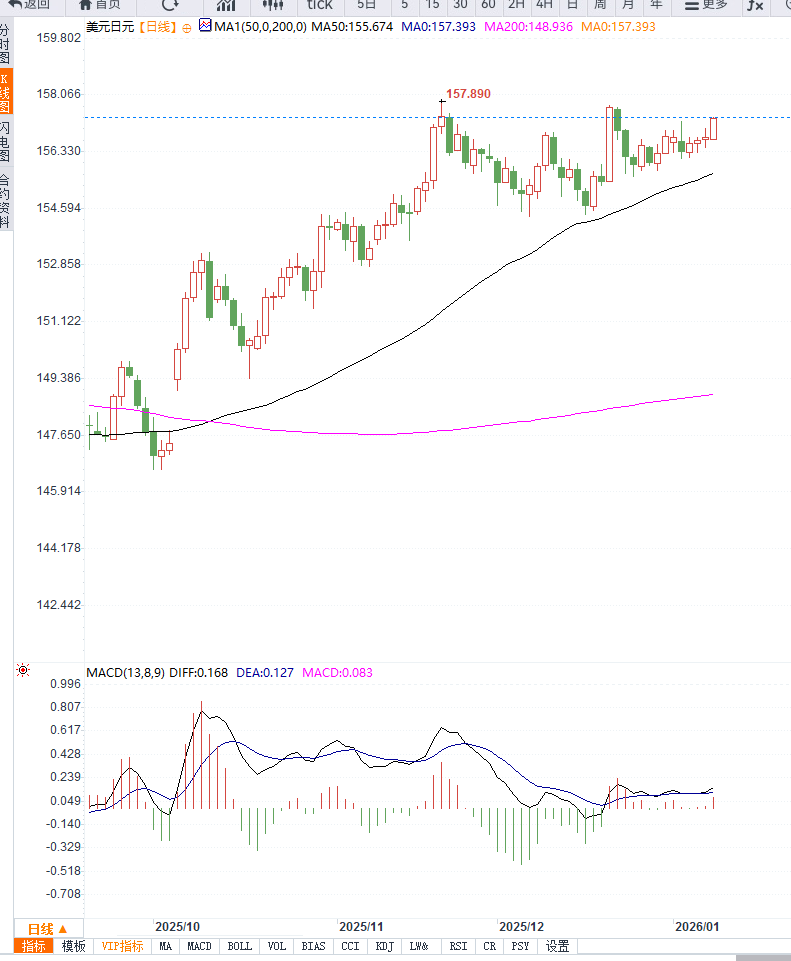
From a daily chart perspective, the USD/JPY pair maintains a slightly bullish, oscillating pattern. The exchange rate continues to trade above major moving averages, indicating a continued bullish medium-term trend. The recent price rebound and test of the 157.30 area suggests that bullish momentum has not yet fully exhausted.
In terms of technical indicators, the daily RSI remains in the neutral to strong range and has not yet entered overbought territory, indicating that there is still room for further upward movement; the MACD fast and slow lines are above the zero axis, and the red bars are expanding moderately, reflecting that the trend momentum still exists.
If the exchange rate can effectively hold above 157.30, a further upward test of the previous high area cannot be ruled out. On the downside, the 156.00-155.80 area forms an important support zone. Once this range is broken, the exchange rate may enter a more pronounced consolidation phase, and the risk of a short-term pullback should be noted.
Editor's Note:
In summary, the strengthening of the USD/JPY exchange rate stems more from the dollar's temporary advantage and market concerns about the Bank of Japan's interest rate hike pace. Given the continued decline in real wages and escalating external frictions, the yen still lacks clear conditions for a short-term reversal.
However, expectations of a Fed rate cut have set a ceiling on the dollar's upside, limiting the exchange rate's potential. Ahead of the non-farm payroll data release, the USD/JPY pair is more likely to maintain a high-level consolidation pattern.
The US dollar maintained its overall strength, while the Japanese yen was dragged down by both domestic fundamental uncertainties and external risk factors. In Japan, although the latest household spending data exceeded expectations, it failed to effectively boost market confidence.
Data from Japan's Statistics Bureau shows that household spending rose 2.9% year-on-year in November, a significant improvement from the previous sharp decline. However, investors are more concerned about the continued deterioration in real income conditions.
Data shows that Japan's inflation-adjusted real wages fell 2.8% year-on-year in November, marking the 11th consecutive month of negative growth. This indicates that the trend of inflation continuing to outpace wage growth remains unchanged, casting a shadow over the outlook for consumer spending and posing greater challenges to the Bank of Japan in its efforts to normalize its policy.
Meanwhile, regional tensions further weighed on the yen's performance. On the policy front, Bank of Japan Governor Kazuo Ueda reiterated this week that the central bank will continue to gradually raise interest rates if the economy and inflation follow expected trends.
This statement provides some support for the yen in the medium to long term, but in the short term, the market still lacks a clear judgment on the specific timing of the next interest rate hike, which limits the yen's ability to rebound.
In contrast, the US dollar remained relatively strong ahead of the non-farm payroll data release. The US dollar index continued its rebound over the past two weeks, reaching a near one-month high, which in turn drove the US dollar to rise against the Japanese yen.
However, the dollar's further upside potential is somewhat limited as the market widely expects the Federal Reserve to continue cutting interest rates this year. Currently, traders are generally focused on the upcoming US non-farm payroll report.
The market expects the possibility of a Federal Reserve rate cut in March to remain, and there may still be room for further easing later this year. Ahead of key data releases, USD/JPY fluctuations are largely driven by expectations and position adjustments.
From a daily chart perspective, the USD/JPY pair maintains a slightly bullish, oscillating pattern. The exchange rate continues to trade above major moving averages, indicating a continued bullish medium-term trend. The recent price rebound and test of the 157.30 area suggests that bullish momentum has not yet fully exhausted.
In terms of technical indicators, the daily RSI remains in the neutral to strong range and has not yet entered overbought territory, indicating that there is still room for further upward movement; the MACD fast and slow lines are above the zero axis, and the red bars are expanding moderately, reflecting that the trend momentum still exists.
If the exchange rate can effectively hold above 157.30, a further upward test of the previous high area cannot be ruled out. On the downside, the 156.00-155.80 area forms an important support zone. Once this range is broken, the exchange rate may enter a more pronounced consolidation phase, and the risk of a short-term pullback should be noted.
Editor's Note:
In summary, the strengthening of the USD/JPY exchange rate stems more from the dollar's temporary advantage and market concerns about the Bank of Japan's interest rate hike pace. Given the continued decline in real wages and escalating external frictions, the yen still lacks clear conditions for a short-term reversal.
However, expectations of a Fed rate cut have set a ceiling on the dollar's upside, limiting the exchange rate's potential. Ahead of the non-farm payroll data release, the USD/JPY pair is more likely to maintain a high-level consolidation pattern.
- Risk Warning and Disclaimer
- The market involves risk, and trading may not be suitable for all investors. This article is for reference only and does not constitute personal investment advice, nor does it take into account certain users’ specific investment objectives, financial situation, or other needs. Any investment decisions made based on this information are at your own risk.