Final Judgment Night: Trump's Tariff "Death Verdict" Arrives! This Move Could Strike at the Threshold of the US Economy
2026-01-09 16:25:46
The U.S. Supreme Court is expected to rule on the legality of President Donald Trump's tariffs around 11:00 p.m. on Friday (January 9), a decision that will undoubtedly have a profound impact on trade policy and even the U.S. fiscal situation.
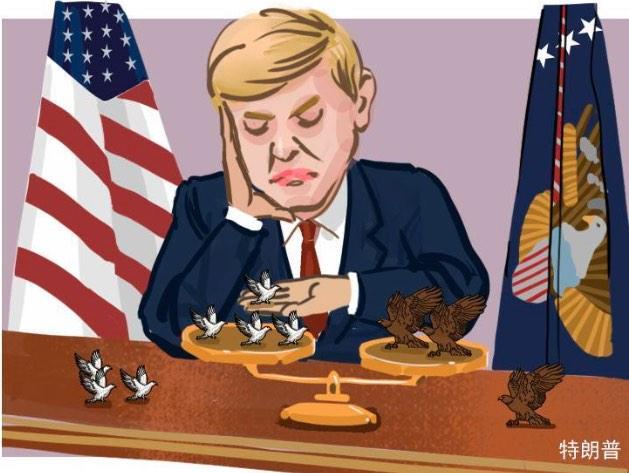
Although the Supreme Court has not yet confirmed that it will issue a ruling, it has designated this Friday as the "sentencing day" to release its opinion, leading to widespread speculation that the tariff case will soon be decided.
The core of this ruling will address two issues: first, whether the government can impose tariffs under the International Emergency Economic Powers Act; and second, if the action is deemed improper, whether the United States needs to compensate importers who have already paid the tariffs.
However, the final ruling may also be a compromise.
The court may choose to grant limited powers under the International Emergency Economic Powers Act, requiring only partial compensation. Regarding this sensitive issue of great concern to Wall Street, the court also has several other options, including the aforementioned one.
Furthermore, even if the White House loses the case, it has other means to implement tariff policies without having to invoke the emergency powers provided by the act.
Treasury Secretary Scott Bessant said on Thursday that he expects a “hodgepodge” ruling.
Speaking at an event in Minneapolis, Bessant said, “There is no doubt that we are fully capable of maintaining essentially the same level of tariffs at the overall tax rate level. But it is regrettable that the president has lost the dual advantage of using tariffs as a policy tool—both in terms of national security and negotiating leverage—which is a great loss to the American people.”
José Torres, a senior economist at Interactive Brokers, said that removing tariffs would have multiple effects.
Torres noted, "If the Supreme Court rejects the tariff policy, the government will seek other alternatives. President Trump is determined to win this case, and he will push the agenda forward despite the potential controversy."
He added, "Vesting tariffs would be detrimental to the goal of bringing manufacturing back to China, would worsen fiscal conditions, and would push up interest rates. But it would be good for corporate profits because input costs would be lower and trade would flow more smoothly."
Government officials have outlined several contingency plans to mitigate the impact of an unfavorable Supreme Court ruling. Data from the prediction market website Kalshi shows only a 28% probability that the court will support the current tariff implementation method. Torres stated that his company's clients hold similar expectations.
Finance Minister Bessant has stated that the government can maintain most tariffs using at least three alternatives under the Trade Expansion Act of 1962. However, he also expressed concern that tariff refunds could put pressure on the government and impact its efforts to reduce the fiscal deficit. Treasury data shows that tariffs generated approximately $195 billion in revenue in fiscal year 2025 and are projected to generate another $62 billion in 2026.
Morgan Stanley analysts believe there may be “significant nuance” in the Supreme Court’s ruling.
In a research report, analysts Arianna Salvatore and Bradley Tian noted, "Courts have broad discretion in their rulings, which can lead to a variety of outcomes—for example, they may limit the scope of existing tariffs rather than enforce their complete elimination, or they may restrict the conditions under which future tariffs may be applied."
They added, "Given the recent policy focus on the burden on people's livelihoods, we believe the government is indeed likely to take a more moderate approach to adjusting the overall tariff system."
This Supreme Court ruling is a major event and risk that could affect the dollar's trajectory.
Given that market expectations lean towards a ruling against the Trump administration, and that the ruling could exert downward pressure on the dollar through multiple channels, including fiscal, inflation, and risk sentiment, the short-term downside risk for the dollar is accumulating.
On Friday during the European session, the US dollar index traded around 99.00, near a one-month high. However, traders should be wary that the real "eye of the storm" on non-farm payroll night may occur 90 minutes after the data release, at which point market logic may be reversed by a single ruling.
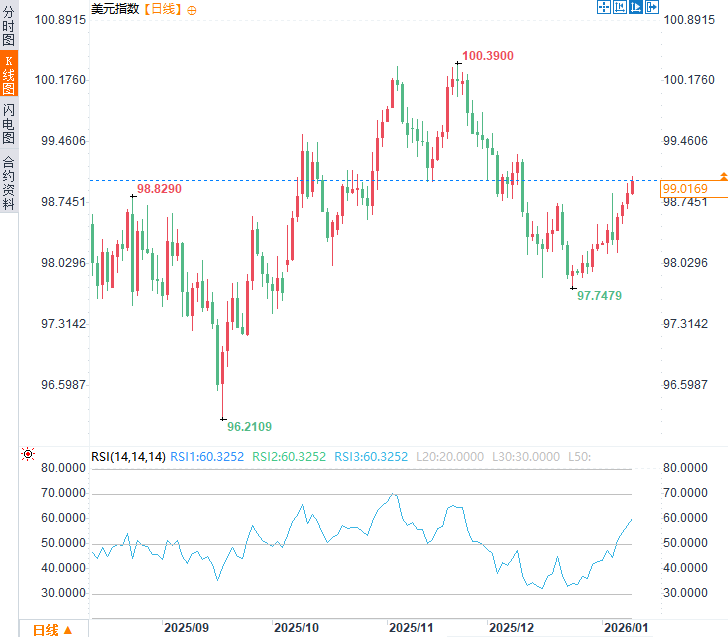
(US Dollar Index Daily Chart, Source: FX678)
At 16:22 Beijing time, the US dollar index is currently at 99.01.
Although the Supreme Court has not yet confirmed that it will issue a ruling, it has designated this Friday as the "sentencing day" to release its opinion, leading to widespread speculation that the tariff case will soon be decided.
The core of this ruling will address two issues: first, whether the government can impose tariffs under the International Emergency Economic Powers Act; and second, if the action is deemed improper, whether the United States needs to compensate importers who have already paid the tariffs.
However, the final ruling may also be a compromise.
The court may choose to grant limited powers under the International Emergency Economic Powers Act, requiring only partial compensation. Regarding this sensitive issue of great concern to Wall Street, the court also has several other options, including the aforementioned one.
Furthermore, even if the White House loses the case, it has other means to implement tariff policies without having to invoke the emergency powers provided by the act.
Treasury Secretary Scott Bessant said on Thursday that he expects a “hodgepodge” ruling.
Speaking at an event in Minneapolis, Bessant said, “There is no doubt that we are fully capable of maintaining essentially the same level of tariffs at the overall tax rate level. But it is regrettable that the president has lost the dual advantage of using tariffs as a policy tool—both in terms of national security and negotiating leverage—which is a great loss to the American people.”
The impact of the defeat
José Torres, a senior economist at Interactive Brokers, said that removing tariffs would have multiple effects.
Torres noted, "If the Supreme Court rejects the tariff policy, the government will seek other alternatives. President Trump is determined to win this case, and he will push the agenda forward despite the potential controversy."
He added, "Vesting tariffs would be detrimental to the goal of bringing manufacturing back to China, would worsen fiscal conditions, and would push up interest rates. But it would be good for corporate profits because input costs would be lower and trade would flow more smoothly."
Government officials have outlined several contingency plans to mitigate the impact of an unfavorable Supreme Court ruling. Data from the prediction market website Kalshi shows only a 28% probability that the court will support the current tariff implementation method. Torres stated that his company's clients hold similar expectations.
Finance Minister Bessant has stated that the government can maintain most tariffs using at least three alternatives under the Trade Expansion Act of 1962. However, he also expressed concern that tariff refunds could put pressure on the government and impact its efforts to reduce the fiscal deficit. Treasury data shows that tariffs generated approximately $195 billion in revenue in fiscal year 2025 and are projected to generate another $62 billion in 2026.
Morgan Stanley analysts believe there may be “significant nuance” in the Supreme Court’s ruling.
In a research report, analysts Arianna Salvatore and Bradley Tian noted, "Courts have broad discretion in their rulings, which can lead to a variety of outcomes—for example, they may limit the scope of existing tariffs rather than enforce their complete elimination, or they may restrict the conditions under which future tariffs may be applied."
They added, "Given the recent policy focus on the burden on people's livelihoods, we believe the government is indeed likely to take a more moderate approach to adjusting the overall tariff system."
Analysis of the impact on the US dollar
This Supreme Court ruling is a major event and risk that could affect the dollar's trajectory.
Given that market expectations lean towards a ruling against the Trump administration, and that the ruling could exert downward pressure on the dollar through multiple channels, including fiscal, inflation, and risk sentiment, the short-term downside risk for the dollar is accumulating.
On Friday during the European session, the US dollar index traded around 99.00, near a one-month high. However, traders should be wary that the real "eye of the storm" on non-farm payroll night may occur 90 minutes after the data release, at which point market logic may be reversed by a single ruling.
(US Dollar Index Daily Chart, Source: FX678)
At 16:22 Beijing time, the US dollar index is currently at 99.01.
- Risk Warning and Disclaimer
- The market involves risk, and trading may not be suitable for all investors. This article is for reference only and does not constitute personal investment advice, nor does it take into account certain users’ specific investment objectives, financial situation, or other needs. Any investment decisions made based on this information are at your own risk.