Fed Dream Shattered? Goldman Sachs Report: Rate Cut Expectations Delayed, Has Wall Street's Stance Shifted?
2026-01-12 15:05:15
Goldman Sachs significantly revised its forecast for the Federal Reserve's interest rate policy on Sunday (January 11), now expecting rate cuts to occur in June and September 2026, marking a significant delay from the investment bank's previous expectation of a rate cut in March.
This updated analysis, according to reports, marks a significant shift in Wall Street's view on the Federal Reserve's inflation management strategy. The investment bank now forecasts two consecutive 25-basis-point cuts in 2026, suggesting a more cautious path for monetary policy easing.
Goldman Sachs' shift in forecast stems from a comprehensive analysis of recent economic data and statements from the Federal Reserve. Multiple key indicators suggest that the U.S. economy is more resilient than expected, giving policymakers reason to maintain a restrictive stance for a longer period.
The labor market did not deteriorate rapidly : Friday's nonfarm payrolls report showed that the unemployment rate fell from 4.6% to 4.4%, exceeding previous market expectations, and job growth was unexpectedly strong.
Consumer spending remains resilient : Data shows that consumer activity remains strong.
Persistent inflation : Although overall inflation is slowing, certain “sticky” categories, particularly the service sector, remain above the Fed’s target.
The Federal Reserve is currently keeping its benchmark interest rate in the range of 3.50% to 3.75%, and the delayed timeline suggests that the Fed will maintain interest rates at this level for several months to ensure that inflation sustainably returns to its 2% target.
This cautious approach aligns with recent statements from Federal Reserve officials, including Chairman Jerome Powell, who has consistently emphasized the need for greater confidence that inflation is on a firm downward trajectory before cutting interest rates.
Market futures pricing now largely reflects this sentiment, with June widely seen as the most likely time to initiate easing policies. The probability of a rate cut in January has plummeted from 11.6% to just 4.8%, and the probability of a rate cut in March has also fallen to around 30%.
The postponement of the interest rate cut schedule has a significant impact on the economy and financial markets.
For consumers, persistently high interest rates mean that borrowing costs for mortgages, auto loans, and credit cards will remain high for an extended period. Businesses may also postpone investment decisions, waiting for more favorable financing terms.
Financial markets have begun to adapt to this new reality. Bond yields have risen recently as market expectations for a near-term interest rate cut have faded. A longer period of high interest rates may also limit the downside potential of the dollar and impact international trade.
On Monday (January 12), during the Asian and European sessions, the US dollar index fluctuated downwards, falling by about 0.2% on the day, retreating from the one-month high (99.27) reached in the previous trading day, and is currently trading around 98.90. This is due to Trump launching a criminal investigation and threatening Powell, which has exacerbated market concerns about the independence of the Federal Reserve and led to doubts about the credibility of the US dollar.
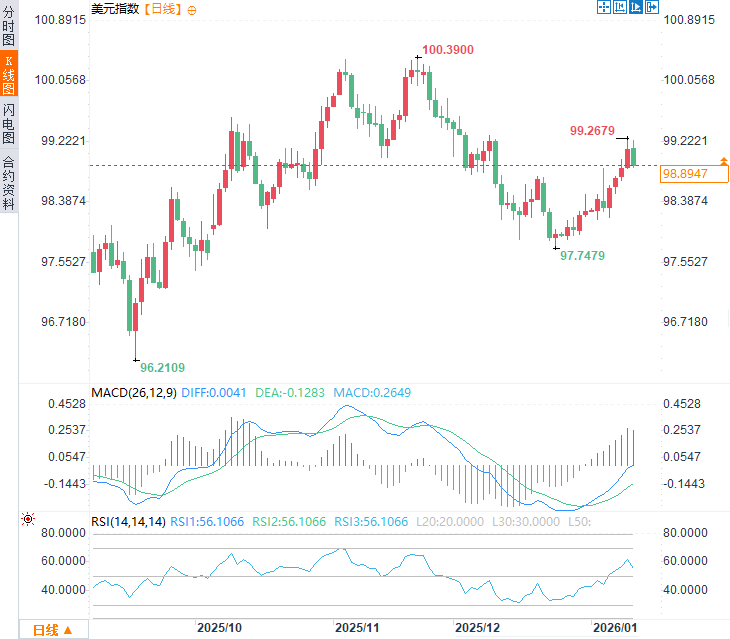
(US Dollar Index Daily Chart, Source: FX678)
The global economic environment further supports a patient approach. Central banks, including the Bank of England and the European Central Bank, have expressed similar concerns about persistent inflation, easing pressure on the Federal Reserve to act prematurely.
While the mid-2026 timeline is now the baseline forecast, several factors could alter the Fed's path:
Accelerating inflation : An unexpected rise in prices could force the Federal Reserve to further postpone interest rate cuts.
Weak labor market : The number of new non-farm payroll jobs fell short of market expectations, which may prompt the Federal Reserve to cut interest rates sooner to support the economy.
Financial instability : Any new pressures on the banking sector could trigger a faster policy response.
Global shock : An unforeseen international crisis could force a comprehensive reassessment of monetary policy.
The Federal Reserve has historically favored gradual, cautious policy adjustments rather than abrupt changes. For example, the tightening cycle from 2015 to 2018 involved a series of slow and predictable interest rate hikes. Goldman Sachs' revised forecasts suggest that the Fed will adopt a similar strategy on easing, carefully managing the transition to low interest rates.
Ultimately, the Fed's main challenge in 2026 remains balancing the need to control inflation with its goal of supporting economic growth . Goldman Sachs' updated forecast provides a clear framework for how Wall Street views this balance: the Fed will remain patient and not begin a policy shift until mid-2026 .
Why did Goldman Sachs change its forecast?
Goldman Sachs adjusted its timeline based on economic data showing a strong labor market, resilient consumer spending, and persistent inflation in the services sector. This suggests that the Federal Reserve needs more time to be confident that inflation is fully under control before it begins cutting interest rates.
How many interest rate cuts does Goldman Sachs now predict there will be in 2026?
The bank now expects two 25-basis-point rate cuts in 2026, in June and September respectively. This outlook is more conservative than its previous forecast, which anticipated more aggressive easing policies.
What economic data underlies the delay?
Key indicators influencing these changes included stronger-than-expected employment data, robust consumer spending data, and inflation indicators showing "sticky" inflation in the services sector. Cautious statements from Federal Reserve officials also played a significant role.
What impact do these delays have on consumers and businesses?
Consumers will continue to face higher interest rates on housing, car, and credit card loans. Rising financing costs may cause businesses to postpone major investments, which could moderately slow economic expansion.
Is it still possible for interest rates to be cut earlier than expected?
While not impossible, an early rate cut is now considered unlikely. For the Federal Reserve to cut rates in March, the economy would need to experience a sudden and significant recession, or a sharp drop in inflation—neither of which the latest data supports.
At 15:05 Beijing time, the US dollar index is currently at 98.91.
This updated analysis, according to reports, marks a significant shift in Wall Street's view on the Federal Reserve's inflation management strategy. The investment bank now forecasts two consecutive 25-basis-point cuts in 2026, suggesting a more cautious path for monetary policy easing.
Why delay interest rate cuts? Strong data and stubborn inflation.
Goldman Sachs' shift in forecast stems from a comprehensive analysis of recent economic data and statements from the Federal Reserve. Multiple key indicators suggest that the U.S. economy is more resilient than expected, giving policymakers reason to maintain a restrictive stance for a longer period.
The labor market did not deteriorate rapidly : Friday's nonfarm payrolls report showed that the unemployment rate fell from 4.6% to 4.4%, exceeding previous market expectations, and job growth was unexpectedly strong.
Consumer spending remains resilient : Data shows that consumer activity remains strong.
Persistent inflation : Although overall inflation is slowing, certain “sticky” categories, particularly the service sector, remain above the Fed’s target.
The Federal Reserve is currently keeping its benchmark interest rate in the range of 3.50% to 3.75%, and the delayed timeline suggests that the Fed will maintain interest rates at this level for several months to ensure that inflation sustainably returns to its 2% target.
This cautious approach aligns with recent statements from Federal Reserve officials, including Chairman Jerome Powell, who has consistently emphasized the need for greater confidence that inflation is on a firm downward trajectory before cutting interest rates.
Market futures pricing now largely reflects this sentiment, with June widely seen as the most likely time to initiate easing policies. The probability of a rate cut in January has plummeted from 11.6% to just 4.8%, and the probability of a rate cut in March has also fallen to around 30%.
The chain reaction on the market and the economy
The postponement of the interest rate cut schedule has a significant impact on the economy and financial markets.
For consumers, persistently high interest rates mean that borrowing costs for mortgages, auto loans, and credit cards will remain high for an extended period. Businesses may also postpone investment decisions, waiting for more favorable financing terms.
Financial markets have begun to adapt to this new reality. Bond yields have risen recently as market expectations for a near-term interest rate cut have faded. A longer period of high interest rates may also limit the downside potential of the dollar and impact international trade.
On Monday (January 12), during the Asian and European sessions, the US dollar index fluctuated downwards, falling by about 0.2% on the day, retreating from the one-month high (99.27) reached in the previous trading day, and is currently trading around 98.90. This is due to Trump launching a criminal investigation and threatening Powell, which has exacerbated market concerns about the independence of the Federal Reserve and led to doubts about the credibility of the US dollar.
(US Dollar Index Daily Chart, Source: FX678)
The global economic environment further supports a patient approach. Central banks, including the Bank of England and the European Central Bank, have expressed similar concerns about persistent inflation, easing pressure on the Federal Reserve to act prematurely.
Key risks that could change the Fed's plans
While the mid-2026 timeline is now the baseline forecast, several factors could alter the Fed's path:
Accelerating inflation : An unexpected rise in prices could force the Federal Reserve to further postpone interest rate cuts.
Weak labor market : The number of new non-farm payroll jobs fell short of market expectations, which may prompt the Federal Reserve to cut interest rates sooner to support the economy.
Financial instability : Any new pressures on the banking sector could trigger a faster policy response.
Global shock : An unforeseen international crisis could force a comprehensive reassessment of monetary policy.
Prudent path of monetary policy
The Federal Reserve has historically favored gradual, cautious policy adjustments rather than abrupt changes. For example, the tightening cycle from 2015 to 2018 involved a series of slow and predictable interest rate hikes. Goldman Sachs' revised forecasts suggest that the Fed will adopt a similar strategy on easing, carefully managing the transition to low interest rates.
Ultimately, the Fed's main challenge in 2026 remains balancing the need to control inflation with its goal of supporting economic growth . Goldman Sachs' updated forecast provides a clear framework for how Wall Street views this balance: the Fed will remain patient and not begin a policy shift until mid-2026 .
Frequently Asked Questions about the Federal Reserve's Next Move
Why did Goldman Sachs change its forecast?
Goldman Sachs adjusted its timeline based on economic data showing a strong labor market, resilient consumer spending, and persistent inflation in the services sector. This suggests that the Federal Reserve needs more time to be confident that inflation is fully under control before it begins cutting interest rates.
How many interest rate cuts does Goldman Sachs now predict there will be in 2026?
The bank now expects two 25-basis-point rate cuts in 2026, in June and September respectively. This outlook is more conservative than its previous forecast, which anticipated more aggressive easing policies.
What economic data underlies the delay?
Key indicators influencing these changes included stronger-than-expected employment data, robust consumer spending data, and inflation indicators showing "sticky" inflation in the services sector. Cautious statements from Federal Reserve officials also played a significant role.
What impact do these delays have on consumers and businesses?
Consumers will continue to face higher interest rates on housing, car, and credit card loans. Rising financing costs may cause businesses to postpone major investments, which could moderately slow economic expansion.
Is it still possible for interest rates to be cut earlier than expected?
While not impossible, an early rate cut is now considered unlikely. For the Federal Reserve to cut rates in March, the economy would need to experience a sudden and significant recession, or a sharp drop in inflation—neither of which the latest data supports.
At 15:05 Beijing time, the US dollar index is currently at 98.91.
- Risk Warning and Disclaimer
- The market involves risk, and trading may not be suitable for all investors. This article is for reference only and does not constitute personal investment advice, nor does it take into account certain users’ specific investment objectives, financial situation, or other needs. Any investment decisions made based on this information are at your own risk.