Kaohsiung City Mayor Sanae plans to dissolve the House of Representatives after only four months in office.
2026-01-13 21:51:11
The Japanese constitution stipulates that the prime minister can hold early elections to re-elect 465 seats in the House of Representatives through popular vote, based on his own approval ratings, in order to support the implementation of subsequent policies.
If there is no new election for the House of Representatives, and if a majority of the House votes to pass a vote of no confidence in the cabinet, the prime minister must either dissolve the House of Representatives within 10 days or the entire cabinet must resign.
Reports indicate that the opposition party originally planned to propose a no-confidence motion on January 23, but Sanae Takaichi chose to "play along" and dissolve the party ahead of schedule, precisely as a strategy to avoid a passive situation.
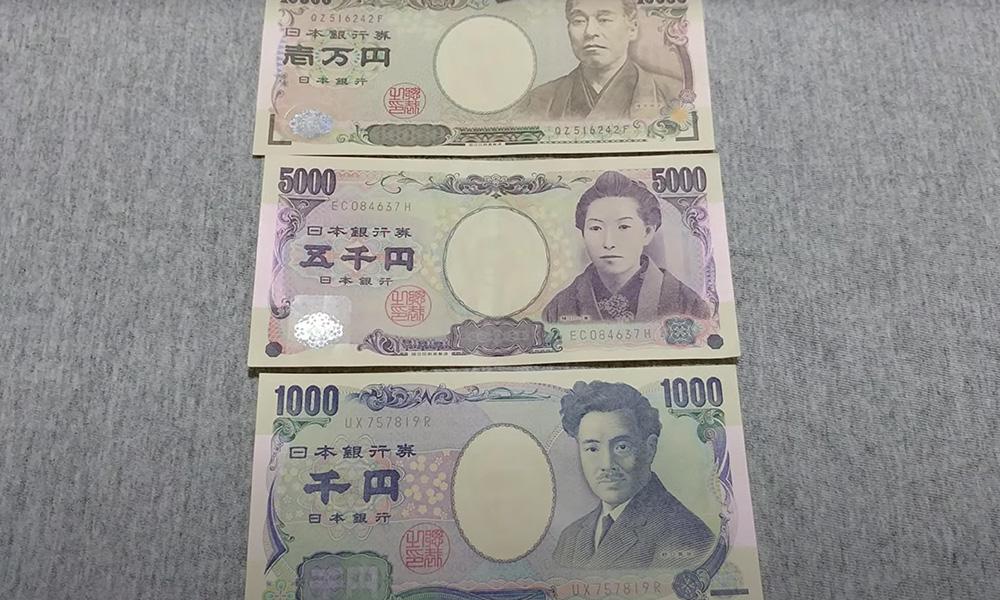
Sanae Kaohsiung's election plan has entered the practical stage: On January 13, she informed the core members of the Liberal Democratic Party of her intention to dissolve the House of Representatives, and it is expected to be officially announced in the near future.
Procedural preparations are underway: the cabinet meeting has officially scheduled the National Assembly session for January 23, which has become a key time anchor for the general election announcement.
It is worth noting that at the senior meeting of the House of Commons Steering Committee, the Liberal Democratic Party deliberately did not announce the timetable for the Prime Minister's policy speech—this agenda, which is usually the opening of Parliament, was put on hold, clearly to leave room for dissolving the House of Representatives.
Sanae Kaohsiung's decision to call an early election is essentially an attempt to use a short political window to break her governing deadlock, with three core points at play:
The window of opportunity for public support: Since taking office, his cabinet's approval rating has remained high, with Nikkei polls showing it has climbed to 75%, and some polls even reaching 78.1%, setting a peak for the approval rating of Japanese prime ministers in recent years, becoming a key source of confidence to drive the general election.
Seat security crisis: The ruling coalition of the Liberal Democratic Party and the Japan Restoration Party currently holds only 233 of the 465 seats in the House of Representatives. This meager majority was barely achieved by absorbing three independent members. Losing just one seat would mean losing the majority, leaving almost no room for error.
Policy implementation demands: Kaohsiung City's expansionary economic policies, the record-breaking 9.0353 trillion yen defense budget, and security policy adjustments all require absolute control by the Diet to proceed.
The lesson learned from her predecessor Shigeru Ishiba's consecutive defeats in the 2024 House of Representatives election and the 2025 House of Councillors election, which resulted in the loss of a majority in both houses and his eventual resignation, has made her even more eager to consolidate her power base through the general election.
In addition, the diplomatic predicament has also become a hidden driving force . If she can win the mandate of public opinion through the election, it will provide a more solid support for her hardline diplomatic approach. Recently, she has been carrying out intensive diplomatic activities, meeting with South Korean President Lee Jae-myung on Tuesday and receiving Italian Prime Minister Meloni on Friday. All of these are interpreted as her efforts to create a favorable environment for the election by leveraging her image of international cooperation.
If the House of Representatives is dissolved as scheduled on January 23, the election will proceed according to two plans: one is to issue an election notice on January 27 and hold the vote on February 8; the other is to issue an election notice on February 3 and hold the vote on February 15. From a procedural standpoint, after dissolution, the election campaign must be completed first, followed by a vote on the nomination of the prime minister and the formation of a new cabinet based on the results. This entire process will occupy crucial legislative time.
This timing makes this election a rare "February election" since World War II. Historical data shows that Japan has only had an election at a similar time on February 18, 1990, led by then-Prime Minister Toshiki Kaifu. This special timing has drawn high attention from political circles and the market to the connection between political cycles and economic policies.
In response to the ruling coalition's proactive move, the opposition camp has launched a coordinated counterattack:
The main opposition party is the Constitutional Democratic Party, which has low approval ratings. It is urgently building a cooperation bridge with the Komeito Party. Its prefectural branches have already connected with Komeito Party members and their backers, including Soka Gakkai, Japan's largest lay Buddhist organization.
It's worth noting that Soka Gakkai has long provided crucial campaign mobilization support to the Liberal Democratic Party, and this cross-campal cooperation may reshape the election landscape.
Coordinated advancement of platform: On January 12, Komeito Party leader Tetsuo Saito and Constitutional Democratic Party leader Yoshihiko Noda held a closed-door meeting and reached a consensus on "exploring a higher-level cooperation mechanism".
Jun Azumi, Secretary-General of the Constitutional Democratic Party, stated more explicitly that the two parties' "core propositions are highly compatible" and that they will create a centrist campaign platform to unite their opposing forces.
Komeito has become the third largest opposition party in the House of Representatives, after the Constitutional Democratic Party and the Democratic Party for the People. If the three parties can form an effective coordination, it will pose a direct challenge to the ruling coalition's seat advantage.
Sanae Kaohsiung's "election gamble" harbors multiple risks and has already raised questions both inside and outside the country:
Budget deliberations have been forced to be postponed: The budget for fiscal year 2026, totaling 122.3 trillion yen, was finalized in December 2025, with the defense budget reaching a record high of 9.0353 trillion yen. It was originally scheduled to be submitted for deliberation at the regular session of the Diet in January.
However, an early election would prevent the budget from being passed before the end of the fiscal year in March, and the government may need to prepare a temporary budget to keep operating, which would directly affect business investment plans, local government funding, and the distribution of subsidies for people's livelihoods.
The policy promises are contradictory: Since taking office, Kaohsiung Mayor has repeatedly emphasized that "addressing high prices is a priority," but the move to dissolve the parliament has been criticized by the opposition as "putting partisan interests above public interests." The Asahi Shimbun even pointed out that he "broke his personal promises," which may trigger a crisis of confidence among voters regarding policy priorities.
Political uncertainty is roiling the market: Despite the ruling coalition's attempts to stabilize expectations through the general election, the House Steering Committee has adjourned to "verify reports of its dissolution," reflecting the undercurrents of political maneuvering between the ruling and opposition parties. Markets are concerned that this uncertainty could cause short-term fluctuations in the yen's exchange rate and the Japanese government bond market, especially given that the effectiveness of policy implementation directly impacts the economic outlook.
This election can be seen as another test of Japan's political landscape. The lesson of former Prime Minister Shigeru Ishiba being forced to resign after losing his majority in both houses of parliament serves as a constant reminder of the fragility of seat advantage.
Even if Sanae Kaoshi expands her House of Representatives seats through the general election, she will still face the predicament of having only a minority in the Senate—the current ruling coalition holds only 119 seats in the Senate (100 seats for the Liberal Democratic Party and 19 seats for the Japan Restoration Party), and the "twisted parliament" dilemma may continue to constrain the progress of medium- and long-term policies.
Will this rare February election ultimately become a "coronation" for Kaohsiung City to consolidate its power, or a "Waterloo" that repeats the mistakes of its predecessor?
The outcome will not only reshape Japan's political landscape, but will also directly affect the pace of the 122 trillion yen budget's implementation and the strength of hawkish policies, becoming an important point of observation for global financial markets in early 2026.
The yen, Japanese bonds, and Japanese stocks all reacted positively, with the market betting that Sanae Takashi could take advantage of the situation to increase the Liberal Meiji Party's control of seats in the House of Representatives and the House of Councillors, thereby enabling its easing and stimulus policies to be implemented more effectively. Japanese bonds and the yen have continued to rise recently, while the Nikkei 225 has also risen for two consecutive trading days, with an increase of more than 5%.
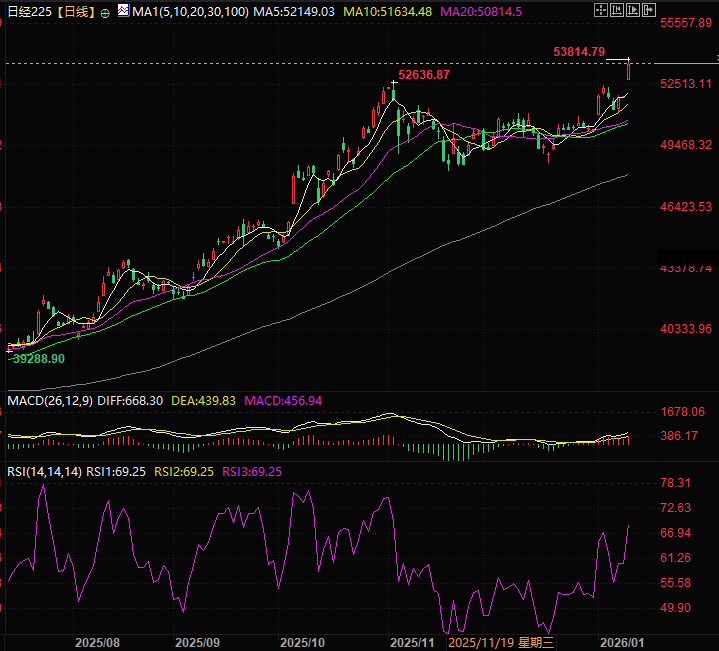
(Nikkei 225-day chart)
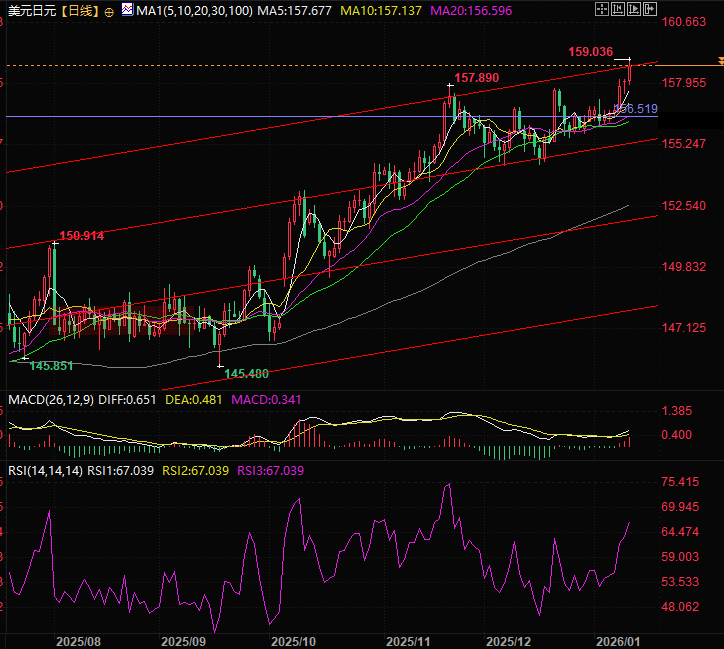
(USD/JPY daily chart, source: FX678)
At 21:41 Beijing time, the USD/JPY exchange rate is currently 158.83/84.
If there is no new election for the House of Representatives, and if a majority of the House votes to pass a vote of no confidence in the cabinet, the prime minister must either dissolve the House of Representatives within 10 days or the entire cabinet must resign.
Reports indicate that the opposition party originally planned to propose a no-confidence motion on January 23, but Sanae Takaichi chose to "play along" and dissolve the party ahead of schedule, precisely as a strategy to avoid a passive situation.
Decision Implementation: From Indication to Substantive Progress
Sanae Kaohsiung's election plan has entered the practical stage: On January 13, she informed the core members of the Liberal Democratic Party of her intention to dissolve the House of Representatives, and it is expected to be officially announced in the near future.
Procedural preparations are underway: the cabinet meeting has officially scheduled the National Assembly session for January 23, which has become a key time anchor for the general election announcement.
It is worth noting that at the senior meeting of the House of Commons Steering Committee, the Liberal Democratic Party deliberately did not announce the timetable for the Prime Minister's policy speech—this agenda, which is usually the opening of Parliament, was put on hold, clearly to leave room for dissolving the House of Representatives.
Core driving force: Breaking through the seat gap with high support rates
Sanae Kaohsiung's decision to call an early election is essentially an attempt to use a short political window to break her governing deadlock, with three core points at play:
The window of opportunity for public support: Since taking office, his cabinet's approval rating has remained high, with Nikkei polls showing it has climbed to 75%, and some polls even reaching 78.1%, setting a peak for the approval rating of Japanese prime ministers in recent years, becoming a key source of confidence to drive the general election.
Seat security crisis: The ruling coalition of the Liberal Democratic Party and the Japan Restoration Party currently holds only 233 of the 465 seats in the House of Representatives. This meager majority was barely achieved by absorbing three independent members. Losing just one seat would mean losing the majority, leaving almost no room for error.
Policy implementation demands: Kaohsiung City's expansionary economic policies, the record-breaking 9.0353 trillion yen defense budget, and security policy adjustments all require absolute control by the Diet to proceed.
The lesson learned from her predecessor Shigeru Ishiba's consecutive defeats in the 2024 House of Representatives election and the 2025 House of Councillors election, which resulted in the loss of a majority in both houses and his eventual resignation, has made her even more eager to consolidate her power base through the general election.
In addition, the diplomatic predicament has also become a hidden driving force . If she can win the mandate of public opinion through the election, it will provide a more solid support for her hardline diplomatic approach. Recently, she has been carrying out intensive diplomatic activities, meeting with South Korean President Lee Jae-myung on Tuesday and receiving Italian Prime Minister Meloni on Friday. All of these are interpreted as her efforts to create a favorable environment for the election by leveraging her image of international cooperation.
Process Simulation: Election Schedule and Procedure Details
If the House of Representatives is dissolved as scheduled on January 23, the election will proceed according to two plans: one is to issue an election notice on January 27 and hold the vote on February 8; the other is to issue an election notice on February 3 and hold the vote on February 15. From a procedural standpoint, after dissolution, the election campaign must be completed first, followed by a vote on the nomination of the prime minister and the formation of a new cabinet based on the results. This entire process will occupy crucial legislative time.
This timing makes this election a rare "February election" since World War II. Historical data shows that Japan has only had an election at a similar time on February 18, 1990, led by then-Prime Minister Toshiki Kaifu. This special timing has drawn high attention from political circles and the market to the connection between political cycles and economic policies.
Election Game: Opposition Parties Unite to Counter the Ruling Coalition
In response to the ruling coalition's proactive move, the opposition camp has launched a coordinated counterattack:
The main opposition party is the Constitutional Democratic Party, which has low approval ratings. It is urgently building a cooperation bridge with the Komeito Party. Its prefectural branches have already connected with Komeito Party members and their backers, including Soka Gakkai, Japan's largest lay Buddhist organization.
It's worth noting that Soka Gakkai has long provided crucial campaign mobilization support to the Liberal Democratic Party, and this cross-campal cooperation may reshape the election landscape.
Coordinated advancement of platform: On January 12, Komeito Party leader Tetsuo Saito and Constitutional Democratic Party leader Yoshihiko Noda held a closed-door meeting and reached a consensus on "exploring a higher-level cooperation mechanism".
Jun Azumi, Secretary-General of the Constitutional Democratic Party, stated more explicitly that the two parties' "core propositions are highly compatible" and that they will create a centrist campaign platform to unite their opposing forces.
Komeito has become the third largest opposition party in the House of Representatives, after the Constitutional Democratic Party and the Democratic Party for the People. If the three parties can form an effective coordination, it will pose a direct challenge to the ruling coalition's seat advantage.
Risks and Concerns: Budget Stalls and Trust Crisis
Sanae Kaohsiung's "election gamble" harbors multiple risks and has already raised questions both inside and outside the country:
Budget deliberations have been forced to be postponed: The budget for fiscal year 2026, totaling 122.3 trillion yen, was finalized in December 2025, with the defense budget reaching a record high of 9.0353 trillion yen. It was originally scheduled to be submitted for deliberation at the regular session of the Diet in January.
However, an early election would prevent the budget from being passed before the end of the fiscal year in March, and the government may need to prepare a temporary budget to keep operating, which would directly affect business investment plans, local government funding, and the distribution of subsidies for people's livelihoods.
The policy promises are contradictory: Since taking office, Kaohsiung Mayor has repeatedly emphasized that "addressing high prices is a priority," but the move to dissolve the parliament has been criticized by the opposition as "putting partisan interests above public interests." The Asahi Shimbun even pointed out that he "broke his personal promises," which may trigger a crisis of confidence among voters regarding policy priorities.
Political uncertainty is roiling the market: Despite the ruling coalition's attempts to stabilize expectations through the general election, the House Steering Committee has adjourned to "verify reports of its dissolution," reflecting the undercurrents of political maneuvering between the ruling and opposition parties. Markets are concerned that this uncertainty could cause short-term fluctuations in the yen's exchange rate and the Japanese government bond market, especially given that the effectiveness of policy implementation directly impacts the economic outlook.
Historical lessons and future uncertainties
This election can be seen as another test of Japan's political landscape. The lesson of former Prime Minister Shigeru Ishiba being forced to resign after losing his majority in both houses of parliament serves as a constant reminder of the fragility of seat advantage.
Even if Sanae Kaoshi expands her House of Representatives seats through the general election, she will still face the predicament of having only a minority in the Senate—the current ruling coalition holds only 119 seats in the Senate (100 seats for the Liberal Democratic Party and 19 seats for the Japan Restoration Party), and the "twisted parliament" dilemma may continue to constrain the progress of medium- and long-term policies.
Will this rare February election ultimately become a "coronation" for Kaohsiung City to consolidate its power, or a "Waterloo" that repeats the mistakes of its predecessor?
The outcome will not only reshape Japan's political landscape, but will also directly affect the pace of the 122 trillion yen budget's implementation and the strength of hawkish policies, becoming an important point of observation for global financial markets in early 2026.
The yen, Japanese bonds, and Japanese stocks all reacted positively, with the market betting that Sanae Takashi could take advantage of the situation to increase the Liberal Meiji Party's control of seats in the House of Representatives and the House of Councillors, thereby enabling its easing and stimulus policies to be implemented more effectively. Japanese bonds and the yen have continued to rise recently, while the Nikkei 225 has also risen for two consecutive trading days, with an increase of more than 5%.
(Nikkei 225-day chart)
(USD/JPY daily chart, source: FX678)
At 21:41 Beijing time, the USD/JPY exchange rate is currently 158.83/84.
- Risk Warning and Disclaimer
- The market involves risk, and trading may not be suitable for all investors. This article is for reference only and does not constitute personal investment advice, nor does it take into account certain users’ specific investment objectives, financial situation, or other needs. Any investment decisions made based on this information are at your own risk.