With inflation cooling, is the Fed about to capitulate? Gold breaks through its previous high; who dares to short it this time?
2026-01-13 21:59:37
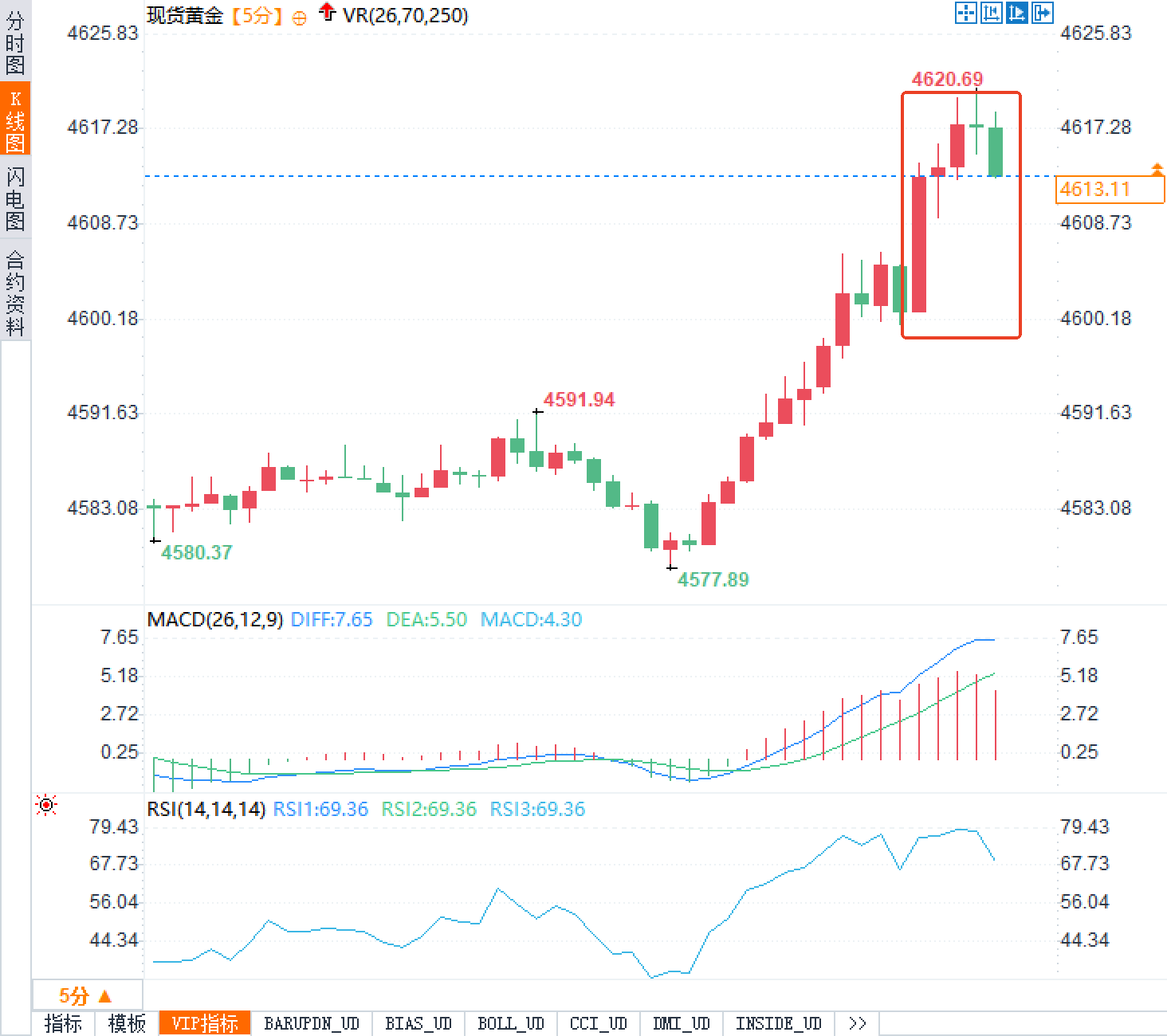
Spot gold has been strengthening recently, with prices repeatedly hitting new historical highs. On Tuesday (January 13), it traded around $4,610 per ounce during the North American session. Since breaking through key resistance levels, the market has shown strong support, with multiple pullbacks quickly being recovered, and the price has stabilized around $4,610 per ounce. This rally is not a short-term speculative move, but rather the result of multiple macroeconomic factors. Besides traditional geopolitical tensions and inflationary pressures, a deeper reason lies in the growing market concerns about the independence of the monetary system and policies.
Analysts point out that the core logic driving gold prices has evolved from a simple "anti-inflation tool" to a "hedge against sovereign credit." When policymakers are potentially subject to political interference, traders naturally turn to non-sovereign assets. The recent issuance of a grand jury subpoena to the Federal Reserve by the US Department of Justice and the threat of potential criminal charges against Chairman Powell have drawn global attention. Powell publicly responded that this concerns whether the Fed can continue to base its interest rate policy on economic data rather than political pressure. The heads of the European Central Bank and the Bank of England have also made rare statements of support, highlighting the seriousness of the issue. Once central banks lose their independence, the credit foundation of the US dollar will be shaken, and gold, as a stateless and debt-free asset, will naturally become significantly more attractive.
The latest US December CPI data shows that the overall annual inflation rate remained at 2.7%, in line with expectations, but the core inflation rate unexpectedly remained flat at 2.6%, slightly lower than the expected 2.7%. More importantly, the core CPI rose only 0.2% month-on-month, missing the expected 0.3%, constituting a significant "dovish surprise." Meanwhile, the "super core CPI," considered a more sensitive inflation indicator, also fell from 0.35% to 0.29% month-on-month. This series of data reinforces the trend of continued cooling inflation and further increases market expectations that the Federal Reserve will shift to an easing policy in 2024.
Against this backdrop, gold prices reacted swiftly and extended their gains. The market's pricing in a Federal Reserve rate cut this year has been revised upwards from the previously implied 52 basis points to 57 basis points, significantly enhancing the attractiveness of gold as a non-yielding asset. The US dollar index weakened due to a weaker interest rate outlook, further supporting gold prices. Spot gold surged rapidly after the data release, breaking through key resistance levels, reflecting a coexistence of rising investor risk appetite and safe-haven demand.
It is worth noting that although the government shutdown resulted in missing data for October and November, causing the market to initially have reservations about a slowdown in inflation in November, the continuity of the December data confirmed that the downward trend in inflation was not a temporary anomaly. In particular, the significant slowdown in energy price increases and the sharp decline in the year-on-year increase in used car prices, while food and housing costs, although still sticky, did not accelerate further, alleviated concerns about persistent inflation in core services.
In summary, the current macroeconomic combination of "solid growth + moderate inflation" favors risk assets but also creates a favorable environment for inflation hedges such as gold. If inflation continues to move toward the 2% target in the coming months, the likelihood of a Fed policy shift will increase further, and gold is expected to challenge new highs. However, geopolitical risks or potential policy shocks from Trump could still cause volatility, and gold prices may maintain a strong upward trend in the short term.
Beyond uncertainties surrounding monetary policy, escalating geopolitical risks are also a significant driver of gold prices. On one hand, US President Trump publicly stated, "We really need Greenland for defense," and added, "We'll get it somehow," sparking international outcry. Although Greenland is an autonomous territory of Denmark, the US's strong stance is interpreted by the market as a widening rift within NATO, challenging the coordination mechanisms among allies. Greenland has responded explicitly, stating that it is "unacceptable under any circumstances," further escalating tensions. If such rhetoric translates into concrete action, it could impact the stability of the Western alliance and further increase the global uncertainty premium.
On the other hand, tensions in the Middle East have escalated again. Trump revealed that the military is assessing "very tough options," leading to widespread speculation of potential military action against Iran. The Iranian parliament responded strongly, stating, "Let's see what happens to US ships and military bases in the region." The heated rhetoric has sharply increased market expectations for potential conflict. These two geopolitical developments simultaneously have accelerated the inflow of funds into traditional safe-haven assets. Gold has thus received dual support—both as a hedge against the risk of war and as a preemptive measure against a loosening of the international order. In this environment, even without immediate conflict, the increased "possibility" alone is enough to keep gold prices fluctuating upwards at high levels.
The recent surge in precious and industrial metals reflects not only fear in the market but also a positive outlook on future supply and demand dynamics. Silver has performed particularly well, with prices breaking through $85 per ounce, representing a year-to-date gain of approximately 20%, continuing its expansion from last year's near 150% surge. Simultaneously, the gold-silver ratio has fallen below 60, its lowest level since 2013. This decline typically indicates that funds are not only allocating to gold as a safe haven but are also increasing their investment in silver and other commodities that combine industrial properties with high volatility.
Analysts believe this structural shift indicates that market risk appetite has not completely retreated, but rather is seeking more aggressive opportunities. While silver has a safe-haven function, its volatility is far higher than gold, and it is more prone to pullbacks after rapid rises. If subsequent macroeconomic data causes disturbances, short-term volatility may intensify. However, this does not weaken gold's core position; on the contrary, it may strengthen the asset portfolio strategy of "using gold as the core and silver for added flexibility." In addition, industrial metals such as copper and aluminum have also strengthened. Copper prices are approaching historical highs, mainly due to supply concerns coupled with a surge in US imports. Data shows that copper inventories on the New York Mercantile Exchange have risen for 42 consecutive weeks, reaching a record high, but global overall inventories remain below storage limits, leading to widening price differences between regions and maintaining a tight spot market.
Aluminum prices rose to their highest level since 2022. Except for Indonesia, smelting supply is constrained in most parts of the world, coupled with intensified competition for electricity resources—some AI data centers are willing to pay higher electricity prices to secure long-term contracts, indirectly pushing up expected costs for aluminum smelting. Tight supply and demand, along with rising costs, are jointly supporting aluminum prices. These signs indicate that the market is not only preparing for a period of turmoil but also betting on continued resilience in future economic activity, particularly with sustained demand in areas such as green energy and high-tech infrastructure.
Analysts point out that the core logic driving gold prices has evolved from a simple "anti-inflation tool" to a "hedge against sovereign credit." When policymakers are potentially subject to political interference, traders naturally turn to non-sovereign assets. The recent issuance of a grand jury subpoena to the Federal Reserve by the US Department of Justice and the threat of potential criminal charges against Chairman Powell have drawn global attention. Powell publicly responded that this concerns whether the Fed can continue to base its interest rate policy on economic data rather than political pressure. The heads of the European Central Bank and the Bank of England have also made rare statements of support, highlighting the seriousness of the issue. Once central banks lose their independence, the credit foundation of the US dollar will be shaken, and gold, as a stateless and debt-free asset, will naturally become significantly more attractive.
Gold prices rose significantly due to US inflation data, with the market betting on an earlier-than-expected interest rate cut by the Federal Reserve.
The latest US December CPI data shows that the overall annual inflation rate remained at 2.7%, in line with expectations, but the core inflation rate unexpectedly remained flat at 2.6%, slightly lower than the expected 2.7%. More importantly, the core CPI rose only 0.2% month-on-month, missing the expected 0.3%, constituting a significant "dovish surprise." Meanwhile, the "super core CPI," considered a more sensitive inflation indicator, also fell from 0.35% to 0.29% month-on-month. This series of data reinforces the trend of continued cooling inflation and further increases market expectations that the Federal Reserve will shift to an easing policy in 2024.
Against this backdrop, gold prices reacted swiftly and extended their gains. The market's pricing in a Federal Reserve rate cut this year has been revised upwards from the previously implied 52 basis points to 57 basis points, significantly enhancing the attractiveness of gold as a non-yielding asset. The US dollar index weakened due to a weaker interest rate outlook, further supporting gold prices. Spot gold surged rapidly after the data release, breaking through key resistance levels, reflecting a coexistence of rising investor risk appetite and safe-haven demand.
It is worth noting that although the government shutdown resulted in missing data for October and November, causing the market to initially have reservations about a slowdown in inflation in November, the continuity of the December data confirmed that the downward trend in inflation was not a temporary anomaly. In particular, the significant slowdown in energy price increases and the sharp decline in the year-on-year increase in used car prices, while food and housing costs, although still sticky, did not accelerate further, alleviated concerns about persistent inflation in core services.
In summary, the current macroeconomic combination of "solid growth + moderate inflation" favors risk assets but also creates a favorable environment for inflation hedges such as gold. If inflation continues to move toward the 2% target in the coming months, the likelihood of a Fed policy shift will increase further, and gold is expected to challenge new highs. However, geopolitical risks or potential policy shocks from Trump could still cause volatility, and gold prices may maintain a strong upward trend in the short term.
Geopolitical tensions are high, with two major crises simultaneously igniting risk aversion.
Beyond uncertainties surrounding monetary policy, escalating geopolitical risks are also a significant driver of gold prices. On one hand, US President Trump publicly stated, "We really need Greenland for defense," and added, "We'll get it somehow," sparking international outcry. Although Greenland is an autonomous territory of Denmark, the US's strong stance is interpreted by the market as a widening rift within NATO, challenging the coordination mechanisms among allies. Greenland has responded explicitly, stating that it is "unacceptable under any circumstances," further escalating tensions. If such rhetoric translates into concrete action, it could impact the stability of the Western alliance and further increase the global uncertainty premium.
On the other hand, tensions in the Middle East have escalated again. Trump revealed that the military is assessing "very tough options," leading to widespread speculation of potential military action against Iran. The Iranian parliament responded strongly, stating, "Let's see what happens to US ships and military bases in the region." The heated rhetoric has sharply increased market expectations for potential conflict. These two geopolitical developments simultaneously have accelerated the inflow of funds into traditional safe-haven assets. Gold has thus received dual support—both as a hedge against the risk of war and as a preemptive measure against a loosening of the international order. In this environment, even without immediate conflict, the increased "possibility" alone is enough to keep gold prices fluctuating upwards at high levels.
Silver, copper, and aluminum all rose, indicating that the market is not just "fearful," but also "betting."
The recent surge in precious and industrial metals reflects not only fear in the market but also a positive outlook on future supply and demand dynamics. Silver has performed particularly well, with prices breaking through $85 per ounce, representing a year-to-date gain of approximately 20%, continuing its expansion from last year's near 150% surge. Simultaneously, the gold-silver ratio has fallen below 60, its lowest level since 2013. This decline typically indicates that funds are not only allocating to gold as a safe haven but are also increasing their investment in silver and other commodities that combine industrial properties with high volatility.
Analysts believe this structural shift indicates that market risk appetite has not completely retreated, but rather is seeking more aggressive opportunities. While silver has a safe-haven function, its volatility is far higher than gold, and it is more prone to pullbacks after rapid rises. If subsequent macroeconomic data causes disturbances, short-term volatility may intensify. However, this does not weaken gold's core position; on the contrary, it may strengthen the asset portfolio strategy of "using gold as the core and silver for added flexibility." In addition, industrial metals such as copper and aluminum have also strengthened. Copper prices are approaching historical highs, mainly due to supply concerns coupled with a surge in US imports. Data shows that copper inventories on the New York Mercantile Exchange have risen for 42 consecutive weeks, reaching a record high, but global overall inventories remain below storage limits, leading to widening price differences between regions and maintaining a tight spot market.
Aluminum prices rose to their highest level since 2022. Except for Indonesia, smelting supply is constrained in most parts of the world, coupled with intensified competition for electricity resources—some AI data centers are willing to pay higher electricity prices to secure long-term contracts, indirectly pushing up expected costs for aluminum smelting. Tight supply and demand, along with rising costs, are jointly supporting aluminum prices. These signs indicate that the market is not only preparing for a period of turmoil but also betting on continued resilience in future economic activity, particularly with sustained demand in areas such as green energy and high-tech infrastructure.
- Risk Warning and Disclaimer
- The market involves risk, and trading may not be suitable for all investors. This article is for reference only and does not constitute personal investment advice, nor does it take into account certain users’ specific investment objectives, financial situation, or other needs. Any investment decisions made based on this information are at your own risk.