All the data is positive? Why is the market feeling like it's been stabbed with a dull knife? This seemingly perfect report hides a slow-acting dagger.
2026-01-14 21:44:44
On Wednesday (January 14), the U.S. Department of Commerce and the Bureau of Labor Statistics released key economic data for November 2025—retail sales and the Producer Price Index (PPI). The data showed that retail sales rose 0.6% month-over-month, higher than the market expectation of 0.4%; core retail sales (excluding automobiles) rose 0.5% month-over-month, also exceeding expectations. Meanwhile, the PPI rose 0.2% month-over-month, in line with expectations, but the year-over-year increase rose to 3.0%, exceeding the market forecast of 2.7%. Overall, the report delivered mixed signals: consumer spending showed resilience, while inflationary pressures have risen somewhat.

In the current high-interest-rate environment, consumer spending, which accounts for about two-thirds of the US economy, is under close scrutiny. Retail sales data rebounded more than expected, primarily driven by a significant recovery in automobile and parts sales and gasoline sales, providing strong support for fourth-quarter economic growth. Analysts interpret this as indicating robust consumer momentum, which helps maintain economic expansion.
However, the report's details also revealed signs of weakness. Previous figures were generally revised downwards; for example, overall retail sales were revised from "flat" to "down 0.1%". This suggests that the consumer base in October was weaker than initially expected. Analysts pointed out a divergence among consumers: high-income spending remained strong, while rising living costs continued to squeeze the budgets of low-income families.
The PPI data is also complex. The year-on-year increase exceeded expectations, reflecting continued cost pressures in the supply chain and production. However, the core PPI (excluding volatile food and energy prices) remained flat month-on-month, indicating that this inflationary pressure is not widespread, contrasting with the recent relatively moderate trend in the Consumer Price Index (CPI).
Following the data release, financial markets reacted relatively mildly but with a shift towards caution. The US dollar index and gold prices did not experience significant fluctuations, indicating that some of the strong data had already been priced in by the market. The yield on the 10-year US Treasury bond narrowed its decline slightly, reflecting the bond market's wariness of higher-than-expected inflation. The three major US stock indices opened slightly lower, with technology and consumer stocks under pressure, showing that market sentiment is transitioning from optimism to caution.
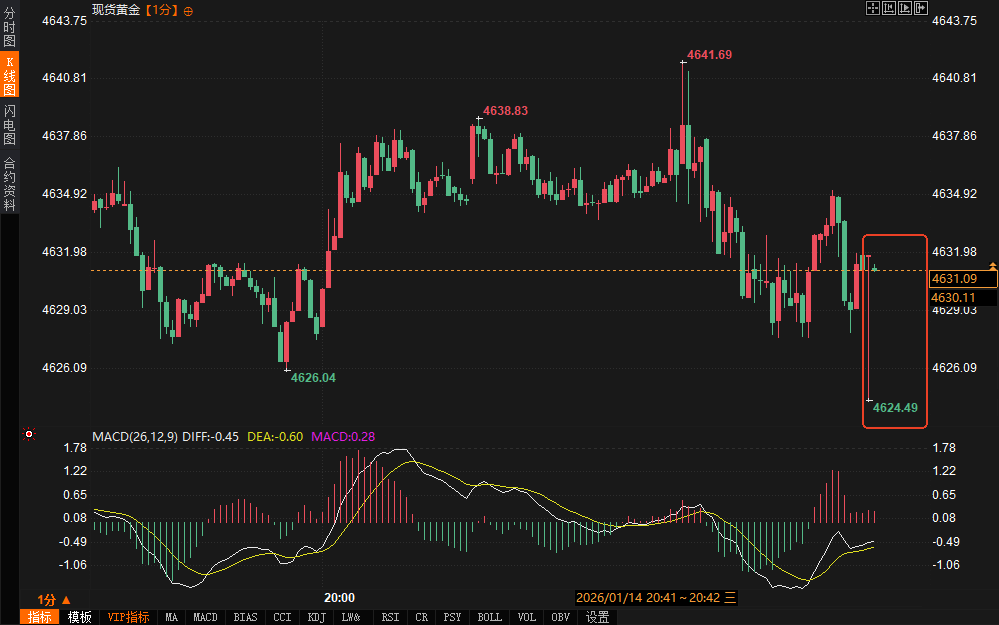
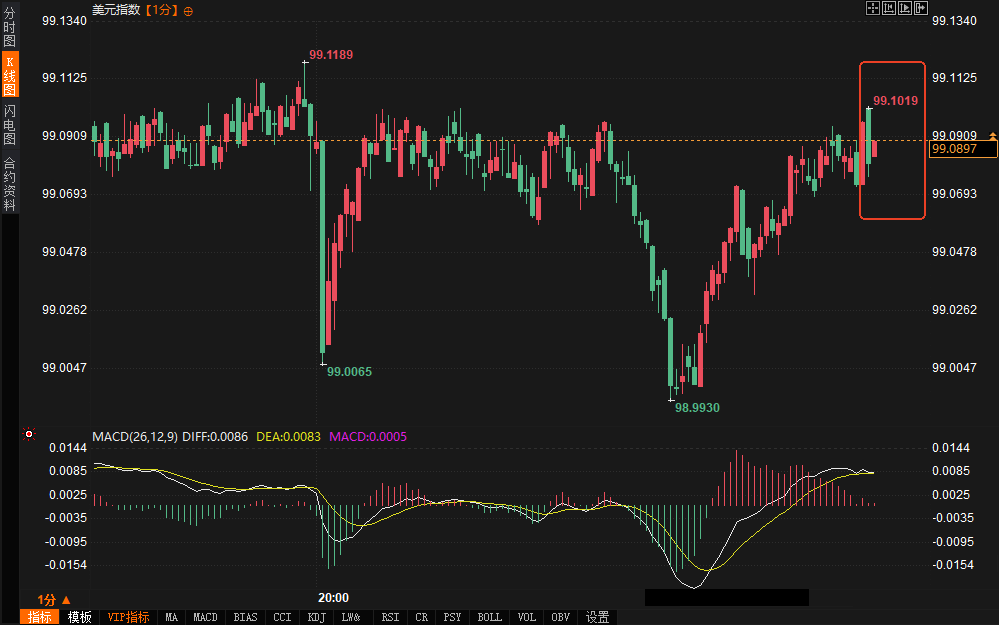
Before the data release, the market generally expected moderate growth in retail sales and stable year-on-year PPI, reflecting optimism about a slowdown in inflation. After the actual results were released, interpretations diverged significantly. Some retail traders believed that "inflation was higher than expected, and the hope for an interest rate cut was slim," expressing concern about the outlook; others saw "better-than-expected retail sales as proof of economic resilience," believing that the stock market still had support. Institutional interpretations quickly focused on the possibility that the higher-than-expected year-on-year PPI might strengthen the Federal Reserve's focus on the persistence of inflation. Overall market sentiment shifted from relative relaxation before the data release to careful observation of this mixed report.
This data has significant implications for the Federal Reserve's future policy path. Strong retail sales indicate resilient domestic demand, potentially reducing the urgency for the central bank to cut interest rates. However, the higher-than-expected PPI year-on-year growth has exacerbated market concerns about sticky inflation. Currently, market expectations for a rate cut in the first half of 2026 have been lowered.
In the short term, the US economy is expected to maintain its resilience, with fourth-quarter GDP growth forecasts potentially even being revised upwards due to a rebound in consumption. However, medium- to long-term risks cannot be ignored: divergence among consumers may constrain overall spending growth in the future, while persistently higher-than-expected inflationary pressures will test market resilience. The Federal Reserve's policy direction will largely depend on the evolution of consumer health and inflation dynamics in the coming months.
From a technical perspective, major assets have entered a new equilibrium range. The US dollar index is expected to fluctuate between 103.5 and 104.5, supported by inflation data, but moderate market reactions are limiting upside potential. Gold prices are consolidating between $2,600 and $2,650, with safe-haven demand driven by inflationary pressures oscillating against the potential downward pressure from a stronger dollar. The 10-year US Treasury yield is likely to fluctuate between 4.10% and 4.25%, with upward pressure mainly stemming from inflation concerns, while downward support arises from the market's continued assessment of economic resilience.
Overall, the November economic data reinforced the narrative of a soft landing for the US economy, but also highlighted the uncertainty surrounding the inflation path. While markets are confirming the sustainability of the economic expansion, they must also prepare for potential volatility. Key future data, such as industrial production, the CPI report, and the Federal Reserve's policy communications, will be crucial catalysts for disrupting the current balance and guiding the next phase of the economic trend.
Data Analysis: Hidden Concerns Behind Consumer Resilience
In the current high-interest-rate environment, consumer spending, which accounts for about two-thirds of the US economy, is under close scrutiny. Retail sales data rebounded more than expected, primarily driven by a significant recovery in automobile and parts sales and gasoline sales, providing strong support for fourth-quarter economic growth. Analysts interpret this as indicating robust consumer momentum, which helps maintain economic expansion.
However, the report's details also revealed signs of weakness. Previous figures were generally revised downwards; for example, overall retail sales were revised from "flat" to "down 0.1%". This suggests that the consumer base in October was weaker than initially expected. Analysts pointed out a divergence among consumers: high-income spending remained strong, while rising living costs continued to squeeze the budgets of low-income families.
The PPI data is also complex. The year-on-year increase exceeded expectations, reflecting continued cost pressures in the supply chain and production. However, the core PPI (excluding volatile food and energy prices) remained flat month-on-month, indicating that this inflationary pressure is not widespread, contrasting with the recent relatively moderate trend in the Consumer Price Index (CPI).
Market reaction: From optimistic expectations to cautious wait-and-see attitude
Following the data release, financial markets reacted relatively mildly but with a shift towards caution. The US dollar index and gold prices did not experience significant fluctuations, indicating that some of the strong data had already been priced in by the market. The yield on the 10-year US Treasury bond narrowed its decline slightly, reflecting the bond market's wariness of higher-than-expected inflation. The three major US stock indices opened slightly lower, with technology and consumer stocks under pressure, showing that market sentiment is transitioning from optimism to caution.
Before the data release, the market generally expected moderate growth in retail sales and stable year-on-year PPI, reflecting optimism about a slowdown in inflation. After the actual results were released, interpretations diverged significantly. Some retail traders believed that "inflation was higher than expected, and the hope for an interest rate cut was slim," expressing concern about the outlook; others saw "better-than-expected retail sales as proof of economic resilience," believing that the stock market still had support. Institutional interpretations quickly focused on the possibility that the higher-than-expected year-on-year PPI might strengthen the Federal Reserve's focus on the persistence of inflation. Overall market sentiment shifted from relative relaxation before the data release to careful observation of this mixed report.
Outlook: Economic Resilience and Policy Path Uncertainty
This data has significant implications for the Federal Reserve's future policy path. Strong retail sales indicate resilient domestic demand, potentially reducing the urgency for the central bank to cut interest rates. However, the higher-than-expected PPI year-on-year growth has exacerbated market concerns about sticky inflation. Currently, market expectations for a rate cut in the first half of 2026 have been lowered.
In the short term, the US economy is expected to maintain its resilience, with fourth-quarter GDP growth forecasts potentially even being revised upwards due to a rebound in consumption. However, medium- to long-term risks cannot be ignored: divergence among consumers may constrain overall spending growth in the future, while persistently higher-than-expected inflationary pressures will test market resilience. The Federal Reserve's policy direction will largely depend on the evolution of consumer health and inflation dynamics in the coming months.
From a technical perspective, major assets have entered a new equilibrium range. The US dollar index is expected to fluctuate between 103.5 and 104.5, supported by inflation data, but moderate market reactions are limiting upside potential. Gold prices are consolidating between $2,600 and $2,650, with safe-haven demand driven by inflationary pressures oscillating against the potential downward pressure from a stronger dollar. The 10-year US Treasury yield is likely to fluctuate between 4.10% and 4.25%, with upward pressure mainly stemming from inflation concerns, while downward support arises from the market's continued assessment of economic resilience.
Overall, the November economic data reinforced the narrative of a soft landing for the US economy, but also highlighted the uncertainty surrounding the inflation path. While markets are confirming the sustainability of the economic expansion, they must also prepare for potential volatility. Key future data, such as industrial production, the CPI report, and the Federal Reserve's policy communications, will be crucial catalysts for disrupting the current balance and guiding the next phase of the economic trend.
- Risk Warning and Disclaimer
- The market involves risk, and trading may not be suitable for all investors. This article is for reference only and does not constitute personal investment advice, nor does it take into account certain users’ specific investment objectives, financial situation, or other needs. Any investment decisions made based on this information are at your own risk.