Crude oil trading alert: Oversupply coupled with the Iranian crisis may exacerbate oil price volatility.
2026-01-15 09:09:11
On Thursday (January 15) in early Asian trading, US crude oil prices fluctuated downwards, falling about 2.5% on the day, and are currently trading around $60.35 per barrel, due to continued supply pressures. The previous trading day saw a rollercoaster ride in oil prices, with a daily range of 5.11%. Prices rose due to market concerns about disruptions to Iranian oil supplies, but then fell back as Iranian repression eased, briefly touching a near three-month high of $62.20.
In addition to long-term trends such as economic growth, inflation, the construction of artificial intelligence infrastructure, and sovereign debt burden, new geopolitical hotspots seem to emerge every day.
While the situations in Venezuela and Greenland continue to escalate, the country currently of greatest concern is Iran. Recent nationwide protests in Iran have raised market concerns about the stability of this major oil-producing nation. Affected by economic hardship and a sharp currency devaluation, the unrest has escalated into large-scale demonstrations and forceful government crackdowns. Although the protests have not yet affected oil production, the market is increasingly pricing in geopolitical risk premiums.
It is worth noting that Iran remains a significant player in the global energy market, producing approximately 2-3 million barrels per day, and controls the strategic Strait of Hormuz—through which nearly 20 million barrels of oil are transported daily. Any disruption to exports or shipping routes could have a substantial impact on global supply and prices.
However, upside risks are constrained by macroeconomic fundamentals. Global oil inventories remain high, and additional supply from other oil-producing countries such as Venezuela helps alleviate market concerns about severe shortages.
A report from the U.S. Energy Information Administration (EIA) showed that U.S. crude oil inventories unexpectedly increased by 3.4 million barrels last week, while gasoline inventories surged by 9 million barrels, far exceeding expectations, reflecting weak demand or oversupply.
Looking ahead, oil price movements will depend on whether the protests escalate into disruptions to production or export infrastructure. While the current impact is primarily driven by market sentiment, any developments of regional instability or disruptions in the Strait of Hormuz could trigger a more significant and sustained surge in oil prices—especially given President Trump's recent declaration that "aid is on the way."
Technical Analysis
From a technical perspective, oil prices had risen for five consecutive trading days, pushing them from the bottom of a three-month trading range ($55-62) to the top. From a chart analysis standpoint, the price has reached a key watershed: if oil prices break through the resistance near $62 (including the 200-day moving average at $62.28), it could open up further upside potential, moving towards the more than six-month high near $66, a level close to the resistance of the long-term downtrend line formed from the highs of the second half of 2023.
On the downside, if the protests in Iran show signs of easing and the situation in the country stabilizes, the geopolitical risk premium in oil prices will diminish. In this scenario, oil prices could very well reverse and fall back below $60. Regardless of the outcome, oil traders should closely monitor the latest developments in Iran in the coming days.
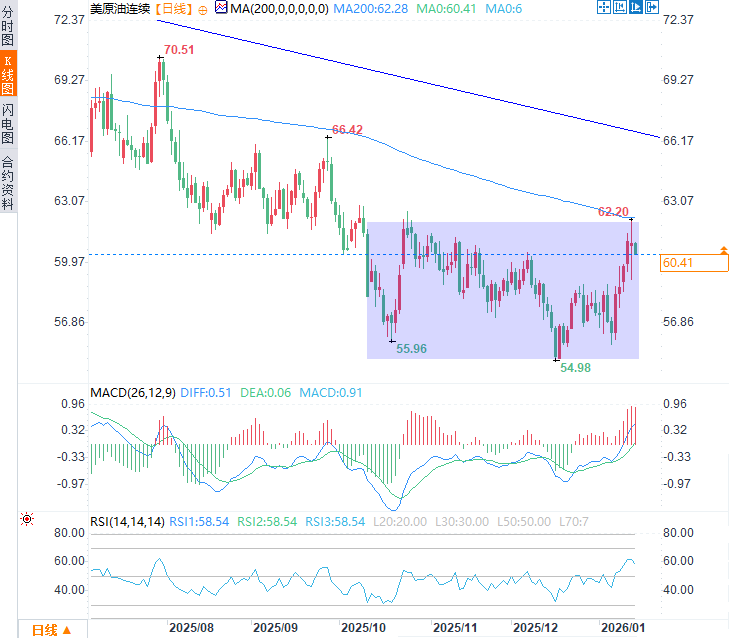
(US crude oil daily chart, source: FX678)
At 9:08 Beijing time, US crude oil futures were trading at $60.35 per barrel.
In addition to long-term trends such as economic growth, inflation, the construction of artificial intelligence infrastructure, and sovereign debt burden, new geopolitical hotspots seem to emerge every day.
While the situations in Venezuela and Greenland continue to escalate, the country currently of greatest concern is Iran. Recent nationwide protests in Iran have raised market concerns about the stability of this major oil-producing nation. Affected by economic hardship and a sharp currency devaluation, the unrest has escalated into large-scale demonstrations and forceful government crackdowns. Although the protests have not yet affected oil production, the market is increasingly pricing in geopolitical risk premiums.
It is worth noting that Iran remains a significant player in the global energy market, producing approximately 2-3 million barrels per day, and controls the strategic Strait of Hormuz—through which nearly 20 million barrels of oil are transported daily. Any disruption to exports or shipping routes could have a substantial impact on global supply and prices.
However, upside risks are constrained by macroeconomic fundamentals. Global oil inventories remain high, and additional supply from other oil-producing countries such as Venezuela helps alleviate market concerns about severe shortages.
A report from the U.S. Energy Information Administration (EIA) showed that U.S. crude oil inventories unexpectedly increased by 3.4 million barrels last week, while gasoline inventories surged by 9 million barrels, far exceeding expectations, reflecting weak demand or oversupply.
Looking ahead, oil price movements will depend on whether the protests escalate into disruptions to production or export infrastructure. While the current impact is primarily driven by market sentiment, any developments of regional instability or disruptions in the Strait of Hormuz could trigger a more significant and sustained surge in oil prices—especially given President Trump's recent declaration that "aid is on the way."
Technical Analysis
From a technical perspective, oil prices had risen for five consecutive trading days, pushing them from the bottom of a three-month trading range ($55-62) to the top. From a chart analysis standpoint, the price has reached a key watershed: if oil prices break through the resistance near $62 (including the 200-day moving average at $62.28), it could open up further upside potential, moving towards the more than six-month high near $66, a level close to the resistance of the long-term downtrend line formed from the highs of the second half of 2023.
On the downside, if the protests in Iran show signs of easing and the situation in the country stabilizes, the geopolitical risk premium in oil prices will diminish. In this scenario, oil prices could very well reverse and fall back below $60. Regardless of the outcome, oil traders should closely monitor the latest developments in Iran in the coming days.
(US crude oil daily chart, source: FX678)
At 9:08 Beijing time, US crude oil futures were trading at $60.35 per barrel.
- Risk Warning and Disclaimer
- The market involves risk, and trading may not be suitable for all investors. This article is for reference only and does not constitute personal investment advice, nor does it take into account certain users’ specific investment objectives, financial situation, or other needs. Any investment decisions made based on this information are at your own risk.