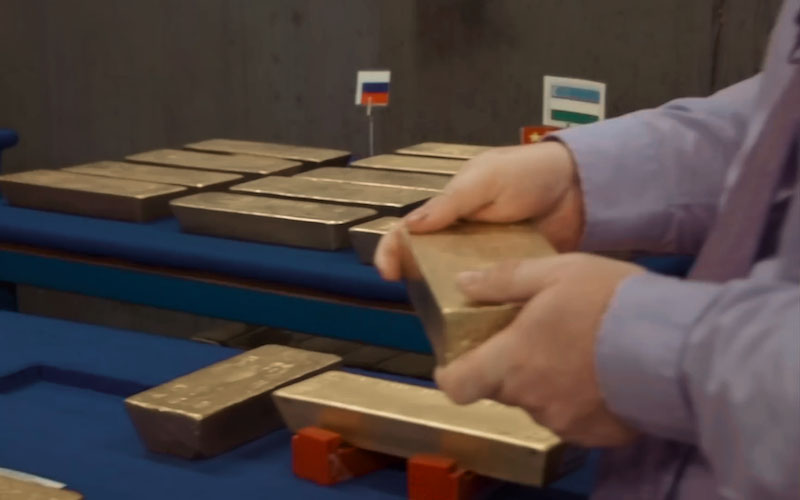
Despite the ongoing threat of conflict in Greenland, gold and the US dollar have both cooled down: Is this unusual market calm a harbinger of a storm or a dangerous decoy?
2026-01-15 18:02:47
On Thursday (January 15), global financial markets exhibited a complex trading pattern. The US dollar index traded in a narrow range around 99.10, rising slightly by 0.04% on the day; the 10-year US Treasury yield rose to 4.143%, indicating a slight easing of safe-haven demand; spot gold retreated from its historical high, currently trading at $4,611.17 per ounce, down 0.33% on the day. Market focus was concentrated on the rapidly evolving geopolitical situation in Greenland and its transmission effect on traditional safe-haven assets, while US statements on key mineral tariffs and the Iran issue further shaped short-term market sentiment.
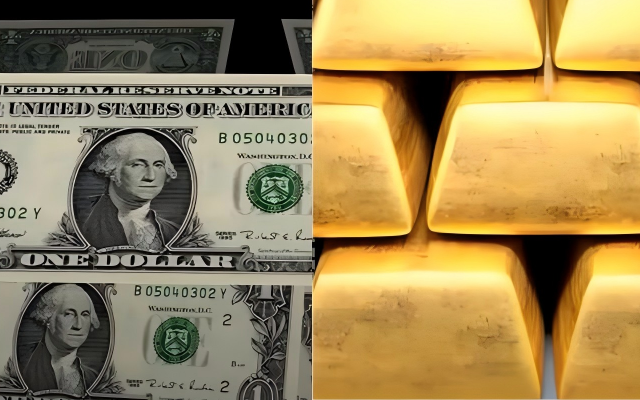
The 10-year US Treasury yield is currently fluctuating within the Bollinger Bands range of 4.130%-4.156%, with the middle band at 4.143% providing initial intraday support. In the MACD indicator, the DIFF line (-0.0005) is slightly higher than the DEA line (-0.0007), and although still in negative territory, the downward momentum shows signs of slight weakening. This reflects that bond market sentiment is slowly recovering from the tension at the beginning of the week.
The core driver of the fundamentals stems from the evolving situation in Greenland. Although high-level talks between Washington, Copenhagen, and Nuuk failed to achieve a breakthrough on fundamental positions—the US insists on acquiring Greenland, while the Danish-Greenland alliance reiterated its "no sale" of sovereignty—the trajectory of events has shifted from mere verbal confrontation to a more substantive phase of diplomatic and military deployments. French President Macron announced the deployment of mountain special forces to participate in Denmark's "Arctic Endurance" exercise in Greenland, with NATO allies such as Germany, Norway, and Sweden simultaneously advancing their military personnel deployments. This move was interpreted by the market as collective support from European allies for Denmark, aimed at deterring potential aggressive actions by demonstrating unity and defensive resolve.
This model has temporarily reduced market concerns about an immediate loss of control of the situation. Analysts from well-known institutions pointed out that although there are "fundamental differences" among the parties, the establishment of the working group and continued diplomatic channels have provided a buffer against the crisis. The market's initial reaction was a slight pullback in geopolitical risk premiums from their extreme highs, with some funds flowing out of safe-haven government bonds, causing yields to rebound from their lows. In the next 2-3 days, the bond market will closely monitor whether the scale of the exercises will expand further and whether the working group meeting will release any signs of de-escalation. If military deployments are limited to symbolic participation and diplomatic dialogue continues, the 10-year US Treasury yield may test the resistance near the upper Bollinger Band at 4.156%; conversely, if unexpected friction occurs or there are statements about a breakdown in negotiations, the lower Bollinger Band support at 4.130% will be tested.
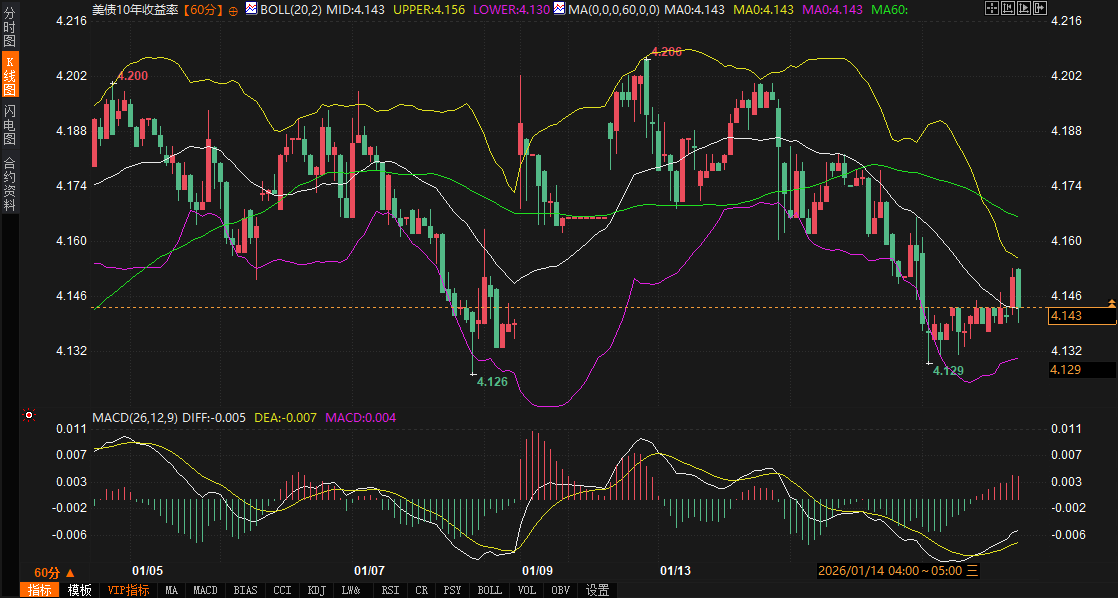
The US dollar index is currently trading at 99.1146, with limited intraday volatility. Technically, the price is closely following the Bollinger Band middle line at 99.1009, with the upper and lower bands (99.2413 / 98.9615) forming a short-term trading range. The MACD shows extremely weak positive momentum (0.114), with both the DIFF and DEA lines hovering around the zero line, indicating a lack of clear market direction.
The logic behind the transmission from the US Treasury market to the foreign exchange market lies in the fact that rising yields typically help support the dollar's interest rate advantage. However, the current rise is moderate and stems from a cooling of risk aversion, thus its boosting effect on the dollar is limited. A more crucial influencing factor comes from the policy level. US President Trump recently stated that he will not impose tariffs on key minerals such as rare earths and lithium for the time being and is shifting towards seeking cooperation with international partners to ensure supply. At the same time, his statements regarding the Iranian protests have also become more "wait-and-see." These measures have collectively alleviated market concerns about a sharp escalation of global trade tensions and the outbreak of another geopolitical conflict.
A prominent commodity strategy director at a well-known institution pointed out that the aforementioned policy signals "alleviated a key concern driving the recent unusually large inflows of metals into the United States." For the US dollar, the temporary easing of tariff rhetoric weakened its additional demand as a "safe-haven currency," but did not fundamentally change its interest rate outlook. The market widely expects the Federal Reserve to hold rates steady at its meeting later this month, but expectations for rate cuts this year remain. Therefore, the short-term trend of the US dollar index is caught in a dilemma: declining geopolitical risk premiums are putting pressure on it, but compared to other major central banks, the Fed's monetary policy path has not significantly shifted dovish, which provides underlying support. It is expected that in the next 2-3 days, the US dollar index will likely remain volatile within the 98.96-99.24 range. During trading, close attention should be paid to any sudden statements from the White House or NATO that could change the current strategic landscape.
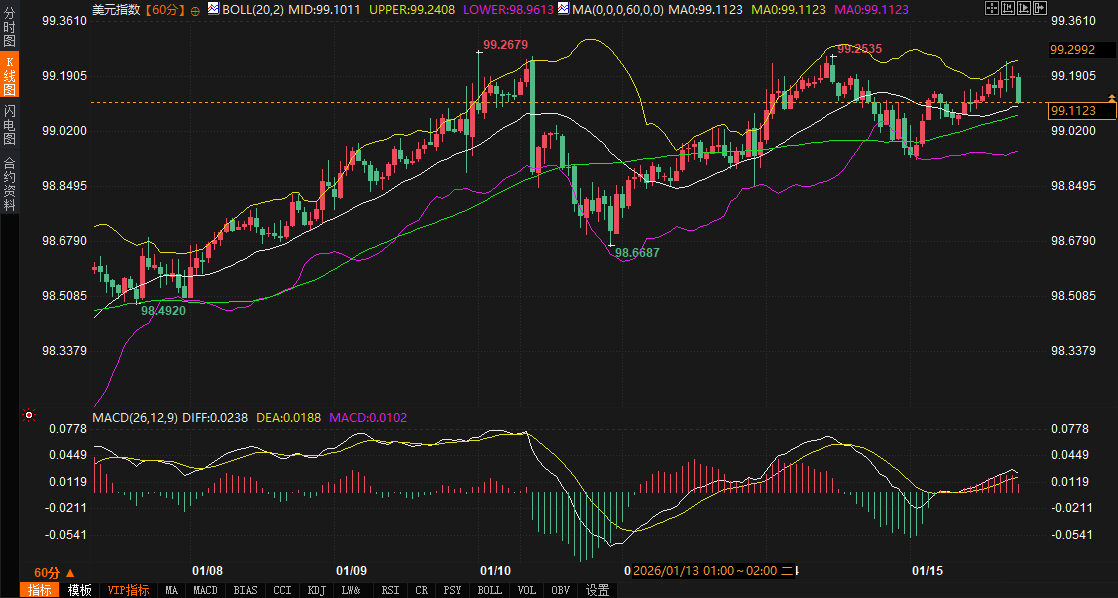
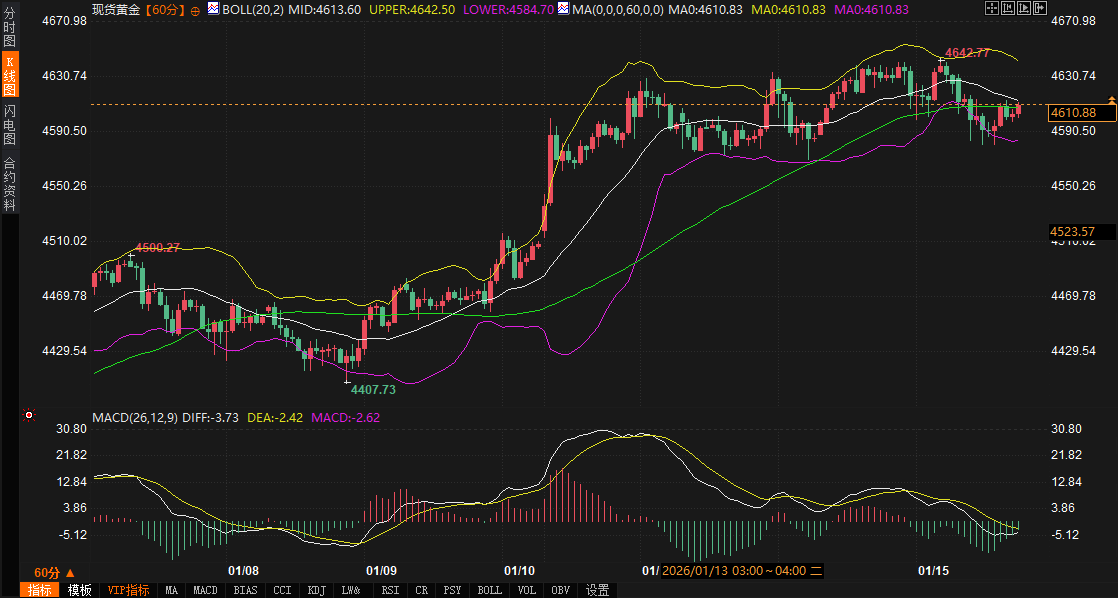
Spot gold retreated after hitting a record high of $4,642.72 per ounce, and the current price has fallen below the middle Bollinger Band on the 4-hour chart at $4,613.66, heading towards the lower band at $4,584.77. In the MACD indicator, the DIFF (-3.64) remains below the DEA (-2.40), and the histogram extends into negative territory, suggesting that short-term technical correction pressure is still mounting.
This round of correction is directly attributed to the softening of geopolitical pressure and the easing of trade risks, as mentioned earlier. Gold, as the ultimate safe-haven asset, is most sensitive to the Greenland crisis in its pricing. When the situation shifted from "direct confrontation threat" to "military exercises and diplomatic negotiations," some short-term bullish investors chasing event-driven moves chose to take profits. This capital flow and the performance of the bond market formed a clear transmission chain: easing of risk aversion → slight increase in US Treasury yields (price decline) → slightly increased expected opportunity cost of holding gold → pressure on gold.
However, this does not mean that gold's safe-haven appeal has faded. A former Danish government political advisor's view is noteworthy; he called the recent US-Denmark-Greenland trilateral talks "the most important meeting in modern Greenlandic history," highlighting the severity and protracted nature of the situation. The current market easing is built on a fragile balance of "NATO demonstrating unity to deter risky behavior." Any miscalculation by any party in rhetoric or action could quickly reverse market sentiment.
Looking ahead to the next 2-3 days, the key technical focus for gold is whether it can find effective support around $4585 (currently the lower Bollinger Band, also close to the support area of the previous rally). If this level holds and there are no new deteriorations in the fundamentals (such as a disruption in diplomatic channels or escalating military confrontation rhetoric), gold prices may enter a high-level range of $4585-$4640 to digest recent gains and await the next catalyst. Analysts' views that "silver relative to gold may normalize, with the gold-silver ratio rising back to 70" also suggest a possible rotation within precious metals, with some funds potentially flowing from overvalued silver to gold during its correction, which could provide some support for gold prices.
In summary, the main theme of the market in the next 48-72 hours will be "assessing the reset level of geopolitical risk premiums." The situation in Greenland has entered a new phase backed by military presence and facilitated by diplomatic negotiations. The probability of immediate conflict has decreased compared to the beginning of the week, but the structural contradictions of the problem are far from being resolved.
For the US Treasury market, yield movements will directly reflect the market's repricing of the situation. As long as military deployments remain "exercises" and diplomatic dialogue continues, yields are expected to maintain a moderate rebound or fluctuate within the 4.13%-4.16% range. The US dollar index will continue to be pulled in both directions: weakening safe-haven demand and a temporary halt in tariff rhetoric will exert pressure, but its relative interest rate advantage will provide a floor support. It is expected to consolidate within the 98.96-99.24 range, awaiting clearer fundamental guidance.
The current correction in the gold market can be seen as a technical adjustment to the extreme geopolitical premium. Its future direction will heavily depend on the tone of news regarding Greenland. If the NATO exercises remain low-key and the working group sends positive signals, gold prices may continue their pullback towards the $4585 area to find support; conversely, if there are any signs of unexpected escalation, gold will quickly regain buying interest. Investors should be wary, as the current market calm is built on a delicate balance, and any unexpectedly hawkish statements from high-ranking officials could trigger a rapid repricing of asset prices.
I. US Treasury yields stabilize and rebound, the Greenland crisis enters a new phase of "military display and diplomatic game".
The 10-year US Treasury yield is currently fluctuating within the Bollinger Bands range of 4.130%-4.156%, with the middle band at 4.143% providing initial intraday support. In the MACD indicator, the DIFF line (-0.0005) is slightly higher than the DEA line (-0.0007), and although still in negative territory, the downward momentum shows signs of slight weakening. This reflects that bond market sentiment is slowly recovering from the tension at the beginning of the week.
The core driver of the fundamentals stems from the evolving situation in Greenland. Although high-level talks between Washington, Copenhagen, and Nuuk failed to achieve a breakthrough on fundamental positions—the US insists on acquiring Greenland, while the Danish-Greenland alliance reiterated its "no sale" of sovereignty—the trajectory of events has shifted from mere verbal confrontation to a more substantive phase of diplomatic and military deployments. French President Macron announced the deployment of mountain special forces to participate in Denmark's "Arctic Endurance" exercise in Greenland, with NATO allies such as Germany, Norway, and Sweden simultaneously advancing their military personnel deployments. This move was interpreted by the market as collective support from European allies for Denmark, aimed at deterring potential aggressive actions by demonstrating unity and defensive resolve.
This model has temporarily reduced market concerns about an immediate loss of control of the situation. Analysts from well-known institutions pointed out that although there are "fundamental differences" among the parties, the establishment of the working group and continued diplomatic channels have provided a buffer against the crisis. The market's initial reaction was a slight pullback in geopolitical risk premiums from their extreme highs, with some funds flowing out of safe-haven government bonds, causing yields to rebound from their lows. In the next 2-3 days, the bond market will closely monitor whether the scale of the exercises will expand further and whether the working group meeting will release any signs of de-escalation. If military deployments are limited to symbolic participation and diplomatic dialogue continues, the 10-year US Treasury yield may test the resistance near the upper Bollinger Band at 4.156%; conversely, if unexpected friction occurs or there are statements about a breakdown in negotiations, the lower Bollinger Band support at 4.130% will be tested.
II. The US dollar index traded in a narrow range, constrained by both bond market volatility and Trump's policy rhetoric.
The US dollar index is currently trading at 99.1146, with limited intraday volatility. Technically, the price is closely following the Bollinger Band middle line at 99.1009, with the upper and lower bands (99.2413 / 98.9615) forming a short-term trading range. The MACD shows extremely weak positive momentum (0.114), with both the DIFF and DEA lines hovering around the zero line, indicating a lack of clear market direction.
The logic behind the transmission from the US Treasury market to the foreign exchange market lies in the fact that rising yields typically help support the dollar's interest rate advantage. However, the current rise is moderate and stems from a cooling of risk aversion, thus its boosting effect on the dollar is limited. A more crucial influencing factor comes from the policy level. US President Trump recently stated that he will not impose tariffs on key minerals such as rare earths and lithium for the time being and is shifting towards seeking cooperation with international partners to ensure supply. At the same time, his statements regarding the Iranian protests have also become more "wait-and-see." These measures have collectively alleviated market concerns about a sharp escalation of global trade tensions and the outbreak of another geopolitical conflict.
A prominent commodity strategy director at a well-known institution pointed out that the aforementioned policy signals "alleviated a key concern driving the recent unusually large inflows of metals into the United States." For the US dollar, the temporary easing of tariff rhetoric weakened its additional demand as a "safe-haven currency," but did not fundamentally change its interest rate outlook. The market widely expects the Federal Reserve to hold rates steady at its meeting later this month, but expectations for rate cuts this year remain. Therefore, the short-term trend of the US dollar index is caught in a dilemma: declining geopolitical risk premiums are putting pressure on it, but compared to other major central banks, the Fed's monetary policy path has not significantly shifted dovish, which provides underlying support. It is expected that in the next 2-3 days, the US dollar index will likely remain volatile within the 98.96-99.24 range. During trading, close attention should be paid to any sudden statements from the White House or NATO that could change the current strategic landscape.
III. Spot gold prices pulled back from their highs, with the effects of narrowing geopolitical premiums and the transmission to the bond market becoming apparent.
Spot gold retreated after hitting a record high of $4,642.72 per ounce, and the current price has fallen below the middle Bollinger Band on the 4-hour chart at $4,613.66, heading towards the lower band at $4,584.77. In the MACD indicator, the DIFF (-3.64) remains below the DEA (-2.40), and the histogram extends into negative territory, suggesting that short-term technical correction pressure is still mounting.
This round of correction is directly attributed to the softening of geopolitical pressure and the easing of trade risks, as mentioned earlier. Gold, as the ultimate safe-haven asset, is most sensitive to the Greenland crisis in its pricing. When the situation shifted from "direct confrontation threat" to "military exercises and diplomatic negotiations," some short-term bullish investors chasing event-driven moves chose to take profits. This capital flow and the performance of the bond market formed a clear transmission chain: easing of risk aversion → slight increase in US Treasury yields (price decline) → slightly increased expected opportunity cost of holding gold → pressure on gold.
However, this does not mean that gold's safe-haven appeal has faded. A former Danish government political advisor's view is noteworthy; he called the recent US-Denmark-Greenland trilateral talks "the most important meeting in modern Greenlandic history," highlighting the severity and protracted nature of the situation. The current market easing is built on a fragile balance of "NATO demonstrating unity to deter risky behavior." Any miscalculation by any party in rhetoric or action could quickly reverse market sentiment.
Looking ahead to the next 2-3 days, the key technical focus for gold is whether it can find effective support around $4585 (currently the lower Bollinger Band, also close to the support area of the previous rally). If this level holds and there are no new deteriorations in the fundamentals (such as a disruption in diplomatic channels or escalating military confrontation rhetoric), gold prices may enter a high-level range of $4585-$4640 to digest recent gains and await the next catalyst. Analysts' views that "silver relative to gold may normalize, with the gold-silver ratio rising back to 70" also suggest a possible rotation within precious metals, with some funds potentially flowing from overvalued silver to gold during its correction, which could provide some support for gold prices.
IV. Market Trend Outlook for the Next Two to Three Days
In summary, the main theme of the market in the next 48-72 hours will be "assessing the reset level of geopolitical risk premiums." The situation in Greenland has entered a new phase backed by military presence and facilitated by diplomatic negotiations. The probability of immediate conflict has decreased compared to the beginning of the week, but the structural contradictions of the problem are far from being resolved.
For the US Treasury market, yield movements will directly reflect the market's repricing of the situation. As long as military deployments remain "exercises" and diplomatic dialogue continues, yields are expected to maintain a moderate rebound or fluctuate within the 4.13%-4.16% range. The US dollar index will continue to be pulled in both directions: weakening safe-haven demand and a temporary halt in tariff rhetoric will exert pressure, but its relative interest rate advantage will provide a floor support. It is expected to consolidate within the 98.96-99.24 range, awaiting clearer fundamental guidance.
The current correction in the gold market can be seen as a technical adjustment to the extreme geopolitical premium. Its future direction will heavily depend on the tone of news regarding Greenland. If the NATO exercises remain low-key and the working group sends positive signals, gold prices may continue their pullback towards the $4585 area to find support; conversely, if there are any signs of unexpected escalation, gold will quickly regain buying interest. Investors should be wary, as the current market calm is built on a delicate balance, and any unexpectedly hawkish statements from high-ranking officials could trigger a rapid repricing of asset prices.
- Risk Warning and Disclaimer
- The market involves risk, and trading may not be suitable for all investors. This article is for reference only and does not constitute personal investment advice, nor does it take into account certain users’ specific investment objectives, financial situation, or other needs. Any investment decisions made based on this information are at your own risk.