Trump's Greenland Strategy: Geopolitical Games, Economic Motivations, and Global Financial Impact
2026-01-15 19:57:30
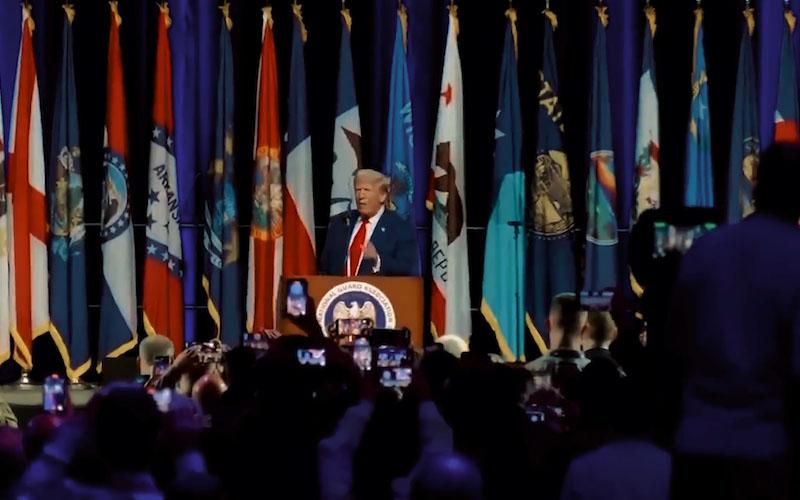
On January 15, 2026, US President Trump continued to strengthen his interest in Greenland, positioning it as a "national security necessity" for the United States, and repeatedly emphasized that "the United States will take action, whether it likes it or not," and even did not rule out military options.
This statement immediately triggered a strong backlash from NATO allies, with Danish Prime Minister Mette Frederiksen stating bluntly that this move could mark the "end" of NATO. As an autonomous territory of Denmark, Greenland possesses diverse and crucial strategic value: it boasts a vast strategic location in the Arctic, controlling key nodes in Arctic shipping routes; it contains 18% of the world's rare earth reserves, with proven rare earth oxide reserves reaching 36-42 million tons, valued at approximately $2.7 trillion; it also has potential for oil resource development and is an ideal location for deploying missile defense systems and enhancing regional surveillance capabilities.
Climate change is accelerating ice sheet melting, extending the window of opportunity for new Arctic shipping routes year by year, further amplifying Greenland's geopolitical and economic value. This power struggle surrounding Greenland has evolved into a multi-dimensional crisis intertwined with resource competition, security confrontation, and alliance stability. Polymarket forecasting data shows that the probability of the United States gaining at least partial control over Greenland has risen to 16%–21%, with related trading volume exceeding $3.95 million, directly reflecting the market's serious pricing of Arctic geopolitical uncertainty.
Trump's objectives: a triple bind of national security, resource control, and political legacy.
Trump's continued pressure on Greenland is not a sudden whim, but a deep intertwining of national security demands, ambitions to control economic resources, and the shaping of his personal political legacy. These three factors support each other and together constitute the policy logic of his "art of the deal" style.
First, national security and Arctic dominance are the primary official pretexts. Trump has repeatedly claimed that the area around Greenland is "saturated with Russian and Chinese ships and submarines," but Danish intelligence has explicitly refuted this, stating that Chinese ships have not been seen in the relevant sensitive waters for a decade. This obvious "narrative bias" is actually a way for the US to legitimize its expansion of its Arctic missile defense system and its strengthening of regional military surveillance capabilities. Experts at Harvard University's Belfer Center for Science and International Affairs interpret this as a modern extension of the "Monroe Doctrine"—pushing the boundaries of US influence in the Western Hemisphere directly to the Arctic. A report by the Royal Institute of International Affairs (Chatham House) further points out that the deeper intention behind this pretext is to force European allies to increase their defense spending in the Arctic region, thereby "saving" NATO by "forcing cost-sharing." Retired senior NATO officer Rob Bauer emphasizes that Trump's military threats are not aimed at actually conquering Greenland, but rather at pushing NATO allies to assume more defense responsibility.
Secondly, control of rare earth resources is a core economic motivation that cannot be ignored. A joint analysis by *European Business Magazine* and CNBC shows that the Trump administration's core demand is to break China's monopoly on 90% of the global rare earth processing. The Tanbreez and Kvanefjeld rare earth projects in Greenland are considered key assets supporting the self-sufficiency of the US electric vehicle, defense, and high-tech industry supply chains. Although constrained by factors such as ice cover and lack of infrastructure, the cost of rare earth mining in the region is about 5-10 times that of other regions, but the global rare earth market is projected to reach $7.6 billion in 2026, with its strategic value far exceeding short-term economic costs. Steve Lamy, a professor at the University of Southern California, and Ian Lesser, an expert at the German Marshall Fund, both point out that the US already enjoys the privilege of stationing troops at the Pituffik base in Greenland, achieving the dual goals of resource development and military presence without the need for a complete acquisition. The so-called "national security" rhetoric is essentially a cloak for resource ambitions.
Third, Trump's personal political legacy and symbolic territorial expansion have added a radical dimension to his policy. The Economist likened Trump's move to a contemporary revival of the "Manifest Mandate" ideology—an attempt to elevate his historical status through a landmark event of "territorial expansion." Danish security expert Hans Tino Hansen analyzes that the extreme statement of "complete acquisition" is more likely a smokescreen for negotiations; his real goal is to obtain priority agreements for rare earth development or expanded access to military bases. The estimated $700 billion acquisition price is more like an "anchor price" to raise bargaining power.
The logical relationship among the three is clear and progressive: the pretext of national security provides legitimacy for the control of economic resources, while the demand for personal political legacy amplifies the open radicalism of policies, ultimately forming Trump's consistent "maximum pressure" negotiation framework.
Trump's Negotiation Strategy: Threat Leverage Under the "Anchoring Effect"
It is widely believed that Trump's military threats are essentially a replication of his classic strategy from his book "The Art of the Deal"—creating a negotiating anchor with extreme demands, then gradually backing down to realistic goals, ultimately obtaining tangible benefits such as privileges for rare earth development, expansion of military bases, or signing of a "free association agreement."
Behavioral economist Richard Shotton defines this strategy as the "anchoring effect" in negotiations: starting with a demand far exceeding reasonable limits, significantly lowering the opponent's psychological expectations, thereby gaining an absolute advantage in subsequent consultations. A report by POLITICO corroborates this assessment; as early as 2019, when Trump first proposed acquiring Greenland, he used "threats" as an effective means to leverage concessions from allies, and this effectiveness has been validated in numerous subsequent instances—the most typical example being forcing NATO allies to commit to a substantial increase in defense spending last summer. Congressman Brian Mast, a Republican ally in Congress, bluntly stated that this is a core part of Trump's "art of the deal," not a genuine intention to undermine the NATO alliance.
The New York Times, citing geopolitical experts, predicted that the current military threat is still tactical pressure, with the ultimate goal of pushing NATO allies to jointly invest with the United States in Arctic resource development and defense. US Secretary of State Marco Rubio also clearly stated to Congress that the government's core objective is "commercial purchases and cooperative development," not military invasion, and that the threat is merely a bargaining chip. Rob Bauer further pointed out that Trump will not actually take military action because such an action would directly lead to the disintegration of NATO, contradicting the core security interests of the United States; the essence of the threat is to "increase bargaining leverage."
Trump's governing trajectory also confirms the rational logic of this strategy: he once abandoned the idea of firing Federal Reserve Chairman Powell due to concerns about a market crash, and he also shelved plans to attack Iran due to fears of soaring oil prices. These decisions all indicate that he prefers to achieve limited objectives through threats rather than reckless military adventures. POLITICO's analysis concludes that Trump has precisely extracted a lesson from his past interactions with allies—bullying and coercion are efficient means of extracting concessions from European allies.
Macron's warning: Europe's collective defensive stance against "transactionalism"
French President Emmanuel Macron responded directly to Trump's threats, emphasizing that "this matter must not be taken lightly." As a country within the EU with independent nuclear deterrence capabilities, France not only participated in the joint military exercise "Operation Arctic Endurance" organized by Denmark, but also publicly warned that any unilateral military action against Greenland would trigger "unprecedented chain reactions."
Macron's strong stance is not an isolated act, but a collective signal from Europe to guard against Trump's "transactionalism"—demonstrating the deterrent power of coordinated military and diplomatic efforts, and clearly opposing the unilateral actions of the United States that harm the interests of its allies in the name of "national security." France's involvement has also escalated the original bilateral game between the US and Denmark into a strategic confrontation between the US and Europe. France's nuclear deterrent capabilities and independent defense system further complicate the response to potential conflicts. The core effect of this warning is to strengthen the joint defense posture of European countries, forcing NATO to re-examine the core principles of "collective security," while simultaneously accelerating the EU's own Arctic defense development.
Obstacles faced: domestic checks and balances, EU divisions, and Greenland's will to sovereignty.
Trump's Greenland strategy is facing a triple constraint from domestic US politics, internal EU power struggles, and the Greenlandic government, which together constitute a "ceiling" for policy implementation.
The first layer of resistance comes from domestic political checks and balances within the United States. Congressional Democratic Leader Chuck Schumer has bluntly stated that Trump's plan is "dangerous interventionism" and has spearheaded legislation attempting to limit the government's authority to take military action against NATO allies. Even within the Republican Party, divisions have become public. Senator Lisa Murkowski explicitly criticized the move, calling it a "huge mistake that destroys NATO" and ultimately only benefiting China and Russia's Arctic strategic positions. Furthermore, domestic polls show that less than 20% of the public supports a strong government intervention in Greenland, and coupled with the political pressure of the midterm elections, Trump's policy window is being significantly compressed.
The second obstacle is the internal division within the EU. EU countries exhibit a clear East-West divide: Western European countries tend towards a strong counter-offensive; France demonstrates its deterrent power through joint military exercises and plans to open a consulate in Greenland to strengthen its political and diplomatic presence; Germany has deployed 13 military reconnaissance personnel to relevant Arctic regions, pushing NATO to upgrade its Arctic defense deployment. Eastern European countries, on the other hand, are more inclined towards compromise. Polish Foreign Minister Radosław Sikorski publicly called on the US Congress to clarify its position, advocating for prioritizing the stability of the NATO alliance—the core consideration behind this is that Eastern European countries need US military support to deal with the Russia-Ukraine conflict. Although Poland also joined the joint statement that "Greenland belongs to its people," its priorities are already very clear. The UK, Italy, Spain, and other countries chose to strengthen diplomatic unity through a joint statement, but the focus was limited to "maintaining peace and stability in the Arctic region," deliberately avoiding direct confrontation with the US. This internal division, while weakening the EU's ability to respond in unison, has also forced the EU to accelerate the militarization of the Arctic—France, Germany, Norway and other countries have pledged to send more troops, and the EU is expected to spend an additional €150 billion on defense annually in the future.
The third and most crucial obstacle is the sovereign will of the Greenlandic government. As a highly autonomous entity, the Greenlandic government has repeatedly emphasized that the island's resource sovereignty and political future are entirely determined by the local people. Greenlandic Prime Minister Múte Bourup Egede has explicitly stated his rejection of any form of "sovereignty trade," pointing out that the prerequisite for rare earth resource development is the protection of the economic and environmental rights of the local population. Public opinion polls in Greenland show that over 75% of the public opposes foreign interference in local resource development. This strong public support renders the negotiations between the Danish government and the United States illegitimate—any agreement that bypasses the Greenlandic government is ineffective.
Possible Outcome: A High Probability of Rational Compromise and "Tense Coupling"
Based on multiple analyses, the Trump administration's strategy has clear rational boundaries, and the probability of an extreme scenario of military invasion is extremely low. "Rational compromise" and "tense coupling of alliances" will likely be the outcome of this game.
The US geopolitical think tank Stratfor predicts that the Trump administration is more likely to achieve its limited objectives through three paths: first, economic coercion and quid pro quo, exchanging aid funds for priority in rare earth development; second, pushing for a "resource development referendum" in Greenland, using funds to support pro-American forces in the region to influence the voting results; and third, establishing a diplomatic working group to replace "sovereign acquisition" with a "joint defense and resource development agreement."
A joint analysis by the Center for Strategic and International Studies (CSIS) and Foreign Affairs magazine suggests that "tense coupling" will be the long-term state of the NATO alliance: On the surface, NATO will maintain its alliance framework; however, in reality, the trust rift between the US and its European allies will continue to widen, directly pushing Europe to accelerate its defense autonomy process—the EU may accelerate the construction of a "European Army," strengthening its defense capabilities independent of NATO. In the extreme scenario of military intervention, NATO may face the risk of disintegration; related institutions estimate that rebuilding NATO would cost as much as $1 trillion.
Geopolitical analysts generally believe that the first quarter of 2026 will be a critical window of opportunity—the vote on relevant bills in the U.S. Congress will directly determine whether the Trump administration can continue to pursue its hardline strategy. At that time, Congress may pass legislation to further restrict the executive branch's unilateral authority.
Long-term impact: the chain reaction and reshaping of the global financial market landscape
This geopolitical game surrounding Greenland, seemingly a regional dispute, will actually have a long-term and profound impact on global financial markets, with its transmission path spanning three major areas: the credibility of the US dollar, the stability of the euro, and the security of global supply chains.
First, there is a dual impact on the dollar's reserve currency status. In the short term, if the US successfully acquires the rights to develop rare earth elements in Greenland, it will effectively alleviate pressure on its high-tech industry supply chain, boost market confidence in dollar assets, and the dollar exchange rate may experience a period of strengthening. However, in the long term, the US's unilateral actions will shake the trust of its allies in the dollar—if European allies sell off US Treasury bonds on a large scale to avoid risks, it will directly push up US Treasury yields and exacerbate domestic inflationary pressures in the US. ABNAMRO's warning hits the nail on the head: rising geopolitical uncertainty will accelerate the diversification of global central banks' foreign exchange reserves, pushing up the proportion of reserves in non-dollar currencies such as the renminbi, and ultimately eroding the dollar's reserve currency status.
Second, the euro will be caught in a two-way tug-of-war between the "benefits of defense spending" and "fiscal pressure." The EU's accelerated Arctic defense construction will drive the development of the Eurozone's military industry and promote the integration of the Eurozone bond market—the issuance of joint defense-related bonds may become a new tool for Eurozone fiscal integration, providing short-term support for the euro. However, in the long run, the additional €150 billion in annual defense spending will increase the fiscal burden on some Eurozone countries, especially Southern European countries mired in debt crises. The widening fiscal deficits could trigger sharp fluctuations in the euro exchange rate.
Third, the restructuring of the global rare earth supply chain and the rising risk premium in the energy market. If the US and Greenland reach a rare earth development agreement, it will gradually weaken China's monopoly in rare earth processing, and the global rare earth supply chain will evolve into a "US-China dual-core" pattern. During this process, the competition for international pricing power in rare earths will intensify, and rare earth prices may surge in the short term due to supply adjustments, directly pushing up production costs for global electric vehicles, wind power generation, and defense industries—according to industry estimates, for every 10% increase in rare earth prices, the cost of permanent magnet motors for electric vehicles will increase by 3%-5%. Simultaneously, the militarization of the Arctic region will pose long-term risks to navigation safety along Arctic shipping routes, potentially increasing global energy trade transportation costs and keeping energy market risk premiums high.
From a financial perspective, Trump's Greenland strategy, while based on the core idea of "low cost, high return," may have long-term economic and political costs that far outweigh short-term gains. It will not only exacerbate internal rifts within the NATO alliance but also reshape the global financial and supply chain landscape, testing the resilience and stability of the global economy.
This statement immediately triggered a strong backlash from NATO allies, with Danish Prime Minister Mette Frederiksen stating bluntly that this move could mark the "end" of NATO. As an autonomous territory of Denmark, Greenland possesses diverse and crucial strategic value: it boasts a vast strategic location in the Arctic, controlling key nodes in Arctic shipping routes; it contains 18% of the world's rare earth reserves, with proven rare earth oxide reserves reaching 36-42 million tons, valued at approximately $2.7 trillion; it also has potential for oil resource development and is an ideal location for deploying missile defense systems and enhancing regional surveillance capabilities.
Climate change is accelerating ice sheet melting, extending the window of opportunity for new Arctic shipping routes year by year, further amplifying Greenland's geopolitical and economic value. This power struggle surrounding Greenland has evolved into a multi-dimensional crisis intertwined with resource competition, security confrontation, and alliance stability. Polymarket forecasting data shows that the probability of the United States gaining at least partial control over Greenland has risen to 16%–21%, with related trading volume exceeding $3.95 million, directly reflecting the market's serious pricing of Arctic geopolitical uncertainty.
Trump's objectives: a triple bind of national security, resource control, and political legacy.
Trump's continued pressure on Greenland is not a sudden whim, but a deep intertwining of national security demands, ambitions to control economic resources, and the shaping of his personal political legacy. These three factors support each other and together constitute the policy logic of his "art of the deal" style.
First, national security and Arctic dominance are the primary official pretexts. Trump has repeatedly claimed that the area around Greenland is "saturated with Russian and Chinese ships and submarines," but Danish intelligence has explicitly refuted this, stating that Chinese ships have not been seen in the relevant sensitive waters for a decade. This obvious "narrative bias" is actually a way for the US to legitimize its expansion of its Arctic missile defense system and its strengthening of regional military surveillance capabilities. Experts at Harvard University's Belfer Center for Science and International Affairs interpret this as a modern extension of the "Monroe Doctrine"—pushing the boundaries of US influence in the Western Hemisphere directly to the Arctic. A report by the Royal Institute of International Affairs (Chatham House) further points out that the deeper intention behind this pretext is to force European allies to increase their defense spending in the Arctic region, thereby "saving" NATO by "forcing cost-sharing." Retired senior NATO officer Rob Bauer emphasizes that Trump's military threats are not aimed at actually conquering Greenland, but rather at pushing NATO allies to assume more defense responsibility.
Secondly, control of rare earth resources is a core economic motivation that cannot be ignored. A joint analysis by *European Business Magazine* and CNBC shows that the Trump administration's core demand is to break China's monopoly on 90% of the global rare earth processing. The Tanbreez and Kvanefjeld rare earth projects in Greenland are considered key assets supporting the self-sufficiency of the US electric vehicle, defense, and high-tech industry supply chains. Although constrained by factors such as ice cover and lack of infrastructure, the cost of rare earth mining in the region is about 5-10 times that of other regions, but the global rare earth market is projected to reach $7.6 billion in 2026, with its strategic value far exceeding short-term economic costs. Steve Lamy, a professor at the University of Southern California, and Ian Lesser, an expert at the German Marshall Fund, both point out that the US already enjoys the privilege of stationing troops at the Pituffik base in Greenland, achieving the dual goals of resource development and military presence without the need for a complete acquisition. The so-called "national security" rhetoric is essentially a cloak for resource ambitions.
Third, Trump's personal political legacy and symbolic territorial expansion have added a radical dimension to his policy. The Economist likened Trump's move to a contemporary revival of the "Manifest Mandate" ideology—an attempt to elevate his historical status through a landmark event of "territorial expansion." Danish security expert Hans Tino Hansen analyzes that the extreme statement of "complete acquisition" is more likely a smokescreen for negotiations; his real goal is to obtain priority agreements for rare earth development or expanded access to military bases. The estimated $700 billion acquisition price is more like an "anchor price" to raise bargaining power.
The logical relationship among the three is clear and progressive: the pretext of national security provides legitimacy for the control of economic resources, while the demand for personal political legacy amplifies the open radicalism of policies, ultimately forming Trump's consistent "maximum pressure" negotiation framework.
Trump's Negotiation Strategy: Threat Leverage Under the "Anchoring Effect"
It is widely believed that Trump's military threats are essentially a replication of his classic strategy from his book "The Art of the Deal"—creating a negotiating anchor with extreme demands, then gradually backing down to realistic goals, ultimately obtaining tangible benefits such as privileges for rare earth development, expansion of military bases, or signing of a "free association agreement."
Behavioral economist Richard Shotton defines this strategy as the "anchoring effect" in negotiations: starting with a demand far exceeding reasonable limits, significantly lowering the opponent's psychological expectations, thereby gaining an absolute advantage in subsequent consultations. A report by POLITICO corroborates this assessment; as early as 2019, when Trump first proposed acquiring Greenland, he used "threats" as an effective means to leverage concessions from allies, and this effectiveness has been validated in numerous subsequent instances—the most typical example being forcing NATO allies to commit to a substantial increase in defense spending last summer. Congressman Brian Mast, a Republican ally in Congress, bluntly stated that this is a core part of Trump's "art of the deal," not a genuine intention to undermine the NATO alliance.
The New York Times, citing geopolitical experts, predicted that the current military threat is still tactical pressure, with the ultimate goal of pushing NATO allies to jointly invest with the United States in Arctic resource development and defense. US Secretary of State Marco Rubio also clearly stated to Congress that the government's core objective is "commercial purchases and cooperative development," not military invasion, and that the threat is merely a bargaining chip. Rob Bauer further pointed out that Trump will not actually take military action because such an action would directly lead to the disintegration of NATO, contradicting the core security interests of the United States; the essence of the threat is to "increase bargaining leverage."
Trump's governing trajectory also confirms the rational logic of this strategy: he once abandoned the idea of firing Federal Reserve Chairman Powell due to concerns about a market crash, and he also shelved plans to attack Iran due to fears of soaring oil prices. These decisions all indicate that he prefers to achieve limited objectives through threats rather than reckless military adventures. POLITICO's analysis concludes that Trump has precisely extracted a lesson from his past interactions with allies—bullying and coercion are efficient means of extracting concessions from European allies.
Macron's warning: Europe's collective defensive stance against "transactionalism"
French President Emmanuel Macron responded directly to Trump's threats, emphasizing that "this matter must not be taken lightly." As a country within the EU with independent nuclear deterrence capabilities, France not only participated in the joint military exercise "Operation Arctic Endurance" organized by Denmark, but also publicly warned that any unilateral military action against Greenland would trigger "unprecedented chain reactions."
Macron's strong stance is not an isolated act, but a collective signal from Europe to guard against Trump's "transactionalism"—demonstrating the deterrent power of coordinated military and diplomatic efforts, and clearly opposing the unilateral actions of the United States that harm the interests of its allies in the name of "national security." France's involvement has also escalated the original bilateral game between the US and Denmark into a strategic confrontation between the US and Europe. France's nuclear deterrent capabilities and independent defense system further complicate the response to potential conflicts. The core effect of this warning is to strengthen the joint defense posture of European countries, forcing NATO to re-examine the core principles of "collective security," while simultaneously accelerating the EU's own Arctic defense development.
Obstacles faced: domestic checks and balances, EU divisions, and Greenland's will to sovereignty.
Trump's Greenland strategy is facing a triple constraint from domestic US politics, internal EU power struggles, and the Greenlandic government, which together constitute a "ceiling" for policy implementation.
The first layer of resistance comes from domestic political checks and balances within the United States. Congressional Democratic Leader Chuck Schumer has bluntly stated that Trump's plan is "dangerous interventionism" and has spearheaded legislation attempting to limit the government's authority to take military action against NATO allies. Even within the Republican Party, divisions have become public. Senator Lisa Murkowski explicitly criticized the move, calling it a "huge mistake that destroys NATO" and ultimately only benefiting China and Russia's Arctic strategic positions. Furthermore, domestic polls show that less than 20% of the public supports a strong government intervention in Greenland, and coupled with the political pressure of the midterm elections, Trump's policy window is being significantly compressed.
The second obstacle is the internal division within the EU. EU countries exhibit a clear East-West divide: Western European countries tend towards a strong counter-offensive; France demonstrates its deterrent power through joint military exercises and plans to open a consulate in Greenland to strengthen its political and diplomatic presence; Germany has deployed 13 military reconnaissance personnel to relevant Arctic regions, pushing NATO to upgrade its Arctic defense deployment. Eastern European countries, on the other hand, are more inclined towards compromise. Polish Foreign Minister Radosław Sikorski publicly called on the US Congress to clarify its position, advocating for prioritizing the stability of the NATO alliance—the core consideration behind this is that Eastern European countries need US military support to deal with the Russia-Ukraine conflict. Although Poland also joined the joint statement that "Greenland belongs to its people," its priorities are already very clear. The UK, Italy, Spain, and other countries chose to strengthen diplomatic unity through a joint statement, but the focus was limited to "maintaining peace and stability in the Arctic region," deliberately avoiding direct confrontation with the US. This internal division, while weakening the EU's ability to respond in unison, has also forced the EU to accelerate the militarization of the Arctic—France, Germany, Norway and other countries have pledged to send more troops, and the EU is expected to spend an additional €150 billion on defense annually in the future.
The third and most crucial obstacle is the sovereign will of the Greenlandic government. As a highly autonomous entity, the Greenlandic government has repeatedly emphasized that the island's resource sovereignty and political future are entirely determined by the local people. Greenlandic Prime Minister Múte Bourup Egede has explicitly stated his rejection of any form of "sovereignty trade," pointing out that the prerequisite for rare earth resource development is the protection of the economic and environmental rights of the local population. Public opinion polls in Greenland show that over 75% of the public opposes foreign interference in local resource development. This strong public support renders the negotiations between the Danish government and the United States illegitimate—any agreement that bypasses the Greenlandic government is ineffective.
Possible Outcome: A High Probability of Rational Compromise and "Tense Coupling"
Based on multiple analyses, the Trump administration's strategy has clear rational boundaries, and the probability of an extreme scenario of military invasion is extremely low. "Rational compromise" and "tense coupling of alliances" will likely be the outcome of this game.
The US geopolitical think tank Stratfor predicts that the Trump administration is more likely to achieve its limited objectives through three paths: first, economic coercion and quid pro quo, exchanging aid funds for priority in rare earth development; second, pushing for a "resource development referendum" in Greenland, using funds to support pro-American forces in the region to influence the voting results; and third, establishing a diplomatic working group to replace "sovereign acquisition" with a "joint defense and resource development agreement."
A joint analysis by the Center for Strategic and International Studies (CSIS) and Foreign Affairs magazine suggests that "tense coupling" will be the long-term state of the NATO alliance: On the surface, NATO will maintain its alliance framework; however, in reality, the trust rift between the US and its European allies will continue to widen, directly pushing Europe to accelerate its defense autonomy process—the EU may accelerate the construction of a "European Army," strengthening its defense capabilities independent of NATO. In the extreme scenario of military intervention, NATO may face the risk of disintegration; related institutions estimate that rebuilding NATO would cost as much as $1 trillion.
Geopolitical analysts generally believe that the first quarter of 2026 will be a critical window of opportunity—the vote on relevant bills in the U.S. Congress will directly determine whether the Trump administration can continue to pursue its hardline strategy. At that time, Congress may pass legislation to further restrict the executive branch's unilateral authority.
Long-term impact: the chain reaction and reshaping of the global financial market landscape
This geopolitical game surrounding Greenland, seemingly a regional dispute, will actually have a long-term and profound impact on global financial markets, with its transmission path spanning three major areas: the credibility of the US dollar, the stability of the euro, and the security of global supply chains.
First, there is a dual impact on the dollar's reserve currency status. In the short term, if the US successfully acquires the rights to develop rare earth elements in Greenland, it will effectively alleviate pressure on its high-tech industry supply chain, boost market confidence in dollar assets, and the dollar exchange rate may experience a period of strengthening. However, in the long term, the US's unilateral actions will shake the trust of its allies in the dollar—if European allies sell off US Treasury bonds on a large scale to avoid risks, it will directly push up US Treasury yields and exacerbate domestic inflationary pressures in the US. ABNAMRO's warning hits the nail on the head: rising geopolitical uncertainty will accelerate the diversification of global central banks' foreign exchange reserves, pushing up the proportion of reserves in non-dollar currencies such as the renminbi, and ultimately eroding the dollar's reserve currency status.
Second, the euro will be caught in a two-way tug-of-war between the "benefits of defense spending" and "fiscal pressure." The EU's accelerated Arctic defense construction will drive the development of the Eurozone's military industry and promote the integration of the Eurozone bond market—the issuance of joint defense-related bonds may become a new tool for Eurozone fiscal integration, providing short-term support for the euro. However, in the long run, the additional €150 billion in annual defense spending will increase the fiscal burden on some Eurozone countries, especially Southern European countries mired in debt crises. The widening fiscal deficits could trigger sharp fluctuations in the euro exchange rate.
Third, the restructuring of the global rare earth supply chain and the rising risk premium in the energy market. If the US and Greenland reach a rare earth development agreement, it will gradually weaken China's monopoly in rare earth processing, and the global rare earth supply chain will evolve into a "US-China dual-core" pattern. During this process, the competition for international pricing power in rare earths will intensify, and rare earth prices may surge in the short term due to supply adjustments, directly pushing up production costs for global electric vehicles, wind power generation, and defense industries—according to industry estimates, for every 10% increase in rare earth prices, the cost of permanent magnet motors for electric vehicles will increase by 3%-5%. Simultaneously, the militarization of the Arctic region will pose long-term risks to navigation safety along Arctic shipping routes, potentially increasing global energy trade transportation costs and keeping energy market risk premiums high.
From a financial perspective, Trump's Greenland strategy, while based on the core idea of "low cost, high return," may have long-term economic and political costs that far outweigh short-term gains. It will not only exacerbate internal rifts within the NATO alliance but also reshape the global financial and supply chain landscape, testing the resilience and stability of the global economy.
- Risk Warning and Disclaimer
- The market involves risk, and trading may not be suitable for all investors. This article is for reference only and does not constitute personal investment advice, nor does it take into account certain users’ specific investment objectives, financial situation, or other needs. Any investment decisions made based on this information are at your own risk.