Gold hits record highs, dollar plunges! Europe furious about tariffs if Greenland isn't given more aid?
2026-01-19 17:59:13
Over the past year, financial markets seem to have figured out a pattern: whenever the US throws out tariff threats, the market initially falls before stabilizing, and ultimately, at the last minute, there is always a easing or postponement. This rhythm of "first scare, then negotiate, and finally back off" is jokingly referred to by traders as "TACO trading": that is, the market prices in the threat first, and then rebounds when the policy tone softens.
The underlying logic is not complicated: threats are often used to expedite negotiations, so the effective date is always set in the future to create time pressure; and when the stock market experiences significant fluctuations, policymakers often re-evaluate the costs, especially in the US political arena, where asset prices are often seen as a barometer of governance effectiveness.
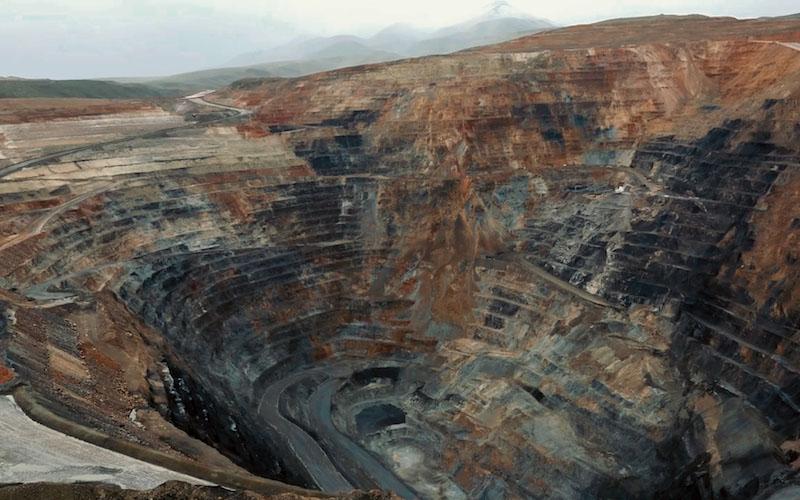
However, whether this model still applies is facing a severe test. This time, the tariff threat no longer revolves around the traditional trade deficit, but instead targets a startling objective: Greenland. Trump announced that starting February 1st, Denmark, Norway, Sweden, France, Germany, the UK, the Netherlands, and Finland would face a 10% tariff, with plans to raise it to 25% on June 1st, unless the US is allowed to "purchase" Greenland. The stated reason is "national security," but the real target is the island's abundant rare earth resources—these rare minerals are core raw materials for high-end manufacturing and advanced weapons systems.
This is no longer a simple economic game, but a profound contest of geopolitics and resource control. Analysts point out that the essence of this event is closer to "using tariffs as leverage to exchange for territorial benefits," and its path is no longer a linear "negotiation-signing-implementation," but a complex tug-of-war full of probing, pressure, and even the possibility of escalation. This means that the stable policy incentives upon which the "TACO deal" relies are faltering, and the market can no longer simply apply the script of "always backing down at the last minute."
Faced with this unprecedented demand, European countries reacted swiftly and firmly. French Finance Minister Roland Lescuhl stated bluntly that this "extortionate approach is unacceptable" and emphasized that the EU would activate its anti-coercion mechanism while pushing for a G7 finance ministers' meeting to coordinate positions. German Finance Minister Lars Klinger, while expressing a willingness to seek solutions, also clearly warned of a "strong response." Norwegian Prime Minister Jonas Garstøy went even further, calling the statement "unacceptable." These statements send a clear signal: Europe is shifting from a reactive approach to a proactive defense.
More importantly, the negotiating partners this time are not a single country, but multiple sovereign states spanning Northern and Western Europe, making coordination extremely difficult. Greenland is an autonomous territory of Denmark, involving sovereignty issues that are far more complex than ordinary trade agreements. Even if Europe is willing to compromise, it will be difficult to accept a proposal to "sell territory" on both a legal and public level. This also means that if the United States insists on pushing forward, it is highly likely to encounter substantial countermeasures, rather than the symbolic concessions of the past.
Meanwhile, Europe has begun to build a counter-offensive chain. Besides preparing tariff retaliation, it may also erect barriers in areas such as trade in services, government procurement, and capital flows. The purpose of this multi-layered countermeasure strategy is to increase the cost of the US's "bluffing" and force it to reassess the costs of its actions. For the market, this means that the duration and destructive power of this round of conflict may far exceed those of the past, and the risk of simply relying on "policy inertia" to bet on has increased significantly.
The market's immediate reaction has revealed unease. A weakening dollar has led to a flow of funds into traditional safe-haven currencies such as the yen and Swiss franc, with gold and silver performing particularly well. Spot gold briefly approached the $4,700 mark, while silver broke through the $94 mark and hit a new intraday high. Behind this round of asset revaluation lies not only short-term risk aversion but also a deep-seated concern about "US policy uncertainty." When policy tools are used to achieve geopolitical expansion goals, their predictability and institutional stability are challenged, which is precisely the factor that financial markets fear most.
It's worth noting that the US markets were closed for Martin Luther King Jr. Day, resulting in thinner liquidity and amplified price volatility. In this environment, single-day price movements are easily distorted and unsuitable for trend judgment. However, the strength of precious metals remains indicative – they are not only tools for hedging against inflation but also insurance policies against "tail risk." The current record highs in gold and silver prices indicate that traders are pricing in extreme scenarios, even if their probability is low.
The next key dates include: the World Economic Forum in Davos from January 19th to 23rd, where Trump will attend on Wednesday (January 21st) and may meet face-to-face with leaders from multiple countries; any conciliatory remarks could quickly boost risk appetite. The EU summit following on Thursday will be a crucial window into Europe's resolve to retaliate—whether it chooses to launch actual countermeasures or continues to focus on building mechanisms will directly impact market expectations. These dates themselves do not determine the outcome, but they can help determine the direction of probability shifts.
Analysts commonly use scenario planning frameworks to manage uncertainty. The first scenario is the baseline scenario (50-60% probability): the tariff threat is primarily used for pressure, negotiations progress gradually, and ultimately end with partial concessions or delays. In this scenario, risk assets may experience a brief period of pressure before recovering, but given the damaged policy credibility, the market is unlikely to fully return to calm. Maintaining a light but consistent hedging strategy is more reasonable in this situation, as protection costs will quickly decline once the situation de-escalates.
The second scenario is an adverse one (30-40% probability): the 10% tariffs are implemented as scheduled on February 1st, with Europe taking mild countermeasures. This will increase the overall risk premium, particularly impacting export-oriented economies. Traders may shift to high-quality, defensive asset classes while increasing their protection against extreme volatility to avoid being forced to reduce positions in the event of subsequent shocks.
The third scenario is the tail scenario (probability approximately 10%): the scope of countermeasures expands to the service, procurement, and even capital sectors, causing structural cracks in transatlantic relations. If this happens, asset correlations will rise sharply, traditional geographical diversification strategies will fail, and portfolios will need to include stronger hedging assets such as gold, long-term government bonds, and volatility hedging tools to protect against systemic deleveraging risks.
In summary, the real danger of this round of turmoil lies not in the tariff figures themselves, but in the fact that it blurs the lines between trade policy and geopolitical objectives, making each press release potentially trigger a dramatic reassessment. In the short term, there may still be a "rebound after the threat has dulled," but upside potential is limited by the persistent "uncertainty premium." Trend-driven opportunities are hard to find; swing trading and event-driven strategies are more advantageous. The key point to watch in the coming weeks is not "whether it will escalate," but rather which will gain the upper hand: Europe's resolve to retaliate or the US's conciliatory signals.
The underlying logic is not complicated: threats are often used to expedite negotiations, so the effective date is always set in the future to create time pressure; and when the stock market experiences significant fluctuations, policymakers often re-evaluate the costs, especially in the US political arena, where asset prices are often seen as a barometer of governance effectiveness.
However, whether this model still applies is facing a severe test. This time, the tariff threat no longer revolves around the traditional trade deficit, but instead targets a startling objective: Greenland. Trump announced that starting February 1st, Denmark, Norway, Sweden, France, Germany, the UK, the Netherlands, and Finland would face a 10% tariff, with plans to raise it to 25% on June 1st, unless the US is allowed to "purchase" Greenland. The stated reason is "national security," but the real target is the island's abundant rare earth resources—these rare minerals are core raw materials for high-end manufacturing and advanced weapons systems.
This is no longer a simple economic game, but a profound contest of geopolitics and resource control. Analysts point out that the essence of this event is closer to "using tariffs as leverage to exchange for territorial benefits," and its path is no longer a linear "negotiation-signing-implementation," but a complex tug-of-war full of probing, pressure, and even the possibility of escalation. This means that the stable policy incentives upon which the "TACO deal" relies are faltering, and the market can no longer simply apply the script of "always backing down at the last minute."
Europe is no longer silent: from verbal protests to preparations for countermeasures.
Faced with this unprecedented demand, European countries reacted swiftly and firmly. French Finance Minister Roland Lescuhl stated bluntly that this "extortionate approach is unacceptable" and emphasized that the EU would activate its anti-coercion mechanism while pushing for a G7 finance ministers' meeting to coordinate positions. German Finance Minister Lars Klinger, while expressing a willingness to seek solutions, also clearly warned of a "strong response." Norwegian Prime Minister Jonas Garstøy went even further, calling the statement "unacceptable." These statements send a clear signal: Europe is shifting from a reactive approach to a proactive defense.
More importantly, the negotiating partners this time are not a single country, but multiple sovereign states spanning Northern and Western Europe, making coordination extremely difficult. Greenland is an autonomous territory of Denmark, involving sovereignty issues that are far more complex than ordinary trade agreements. Even if Europe is willing to compromise, it will be difficult to accept a proposal to "sell territory" on both a legal and public level. This also means that if the United States insists on pushing forward, it is highly likely to encounter substantial countermeasures, rather than the symbolic concessions of the past.
Meanwhile, Europe has begun to build a counter-offensive chain. Besides preparing tariff retaliation, it may also erect barriers in areas such as trade in services, government procurement, and capital flows. The purpose of this multi-layered countermeasure strategy is to increase the cost of the US's "bluffing" and force it to reassess the costs of its actions. For the market, this means that the duration and destructive power of this round of conflict may far exceed those of the past, and the risk of simply relying on "policy inertia" to bet on has increased significantly.
How should the market respond to this "atypical crisis"?
The market's immediate reaction has revealed unease. A weakening dollar has led to a flow of funds into traditional safe-haven currencies such as the yen and Swiss franc, with gold and silver performing particularly well. Spot gold briefly approached the $4,700 mark, while silver broke through the $94 mark and hit a new intraday high. Behind this round of asset revaluation lies not only short-term risk aversion but also a deep-seated concern about "US policy uncertainty." When policy tools are used to achieve geopolitical expansion goals, their predictability and institutional stability are challenged, which is precisely the factor that financial markets fear most.
It's worth noting that the US markets were closed for Martin Luther King Jr. Day, resulting in thinner liquidity and amplified price volatility. In this environment, single-day price movements are easily distorted and unsuitable for trend judgment. However, the strength of precious metals remains indicative – they are not only tools for hedging against inflation but also insurance policies against "tail risk." The current record highs in gold and silver prices indicate that traders are pricing in extreme scenarios, even if their probability is low.
The next key dates include: the World Economic Forum in Davos from January 19th to 23rd, where Trump will attend on Wednesday (January 21st) and may meet face-to-face with leaders from multiple countries; any conciliatory remarks could quickly boost risk appetite. The EU summit following on Thursday will be a crucial window into Europe's resolve to retaliate—whether it chooses to launch actual countermeasures or continues to focus on building mechanisms will directly impact market expectations. These dates themselves do not determine the outcome, but they can help determine the direction of probability shifts.
What's next? Three scenario analyses reveal the real risks.
Analysts commonly use scenario planning frameworks to manage uncertainty. The first scenario is the baseline scenario (50-60% probability): the tariff threat is primarily used for pressure, negotiations progress gradually, and ultimately end with partial concessions or delays. In this scenario, risk assets may experience a brief period of pressure before recovering, but given the damaged policy credibility, the market is unlikely to fully return to calm. Maintaining a light but consistent hedging strategy is more reasonable in this situation, as protection costs will quickly decline once the situation de-escalates.
The second scenario is an adverse one (30-40% probability): the 10% tariffs are implemented as scheduled on February 1st, with Europe taking mild countermeasures. This will increase the overall risk premium, particularly impacting export-oriented economies. Traders may shift to high-quality, defensive asset classes while increasing their protection against extreme volatility to avoid being forced to reduce positions in the event of subsequent shocks.
The third scenario is the tail scenario (probability approximately 10%): the scope of countermeasures expands to the service, procurement, and even capital sectors, causing structural cracks in transatlantic relations. If this happens, asset correlations will rise sharply, traditional geographical diversification strategies will fail, and portfolios will need to include stronger hedging assets such as gold, long-term government bonds, and volatility hedging tools to protect against systemic deleveraging risks.
In summary, the real danger of this round of turmoil lies not in the tariff figures themselves, but in the fact that it blurs the lines between trade policy and geopolitical objectives, making each press release potentially trigger a dramatic reassessment. In the short term, there may still be a "rebound after the threat has dulled," but upside potential is limited by the persistent "uncertainty premium." Trend-driven opportunities are hard to find; swing trading and event-driven strategies are more advantageous. The key point to watch in the coming weeks is not "whether it will escalate," but rather which will gain the upper hand: Europe's resolve to retaliate or the US's conciliatory signals.
- Risk Warning and Disclaimer
- The market involves risk, and trading may not be suitable for all investors. This article is for reference only and does not constitute personal investment advice, nor does it take into account certain users’ specific investment objectives, financial situation, or other needs. Any investment decisions made based on this information are at your own risk.