The USD/JPY pair remained range-bound, with the market cautious ahead of the BOJ meeting.
2026-01-21 14:07:17
The yen remained firm against the dollar during Wednesday's Asian trading session, but bullish moves were limited. Markets cautiously awaited the Bank of Japan's (BoJ) two-day meeting scheduled for Friday for clues about the timing of the next interest rate hike.
The yen received some support, mainly from market expectations that Japanese authorities might intervene to prevent further currency depreciation, as well as market expectations of potential tightening policies from the BoJ.
Meanwhile, rising global risk aversion also benefits the yen, a traditional safe-haven currency. However, fiscal risks and pressure on Japan's government bond market have limited further appreciation of the yen.

The recent surge in Japanese government bond yields reflects investor concerns about the health of Japan's fiscal health and the fiscal expansion policies promoted by Prime Minister Sanae Takaichi. In particular, the yield on 40-year government bonds reached its highest level since 2007, while demand for 20-year bond auctions declined, exacerbating selling pressure in the market.
This has led to cautious positioning among yen bulls in the short term, making it difficult to gain substantial momentum. On the fundamental front, the BoJ raised its overnight rate to 0.75% last month, the highest level in thirty years, but the market widely expects the rate to remain unchanged at this week's meeting.
Investors will focus on BoJ President Kazuo Ueda's post-meeting remarks, seeking a timetable for the next interest rate hike. Meanwhile, the US will release its Personal Consumption Expenditures (PCE) price index and final third-quarter GDP data, which will provide guidance on the Fed's rate-cutting path and thus influence the dollar and USD/JPY exchange rates.
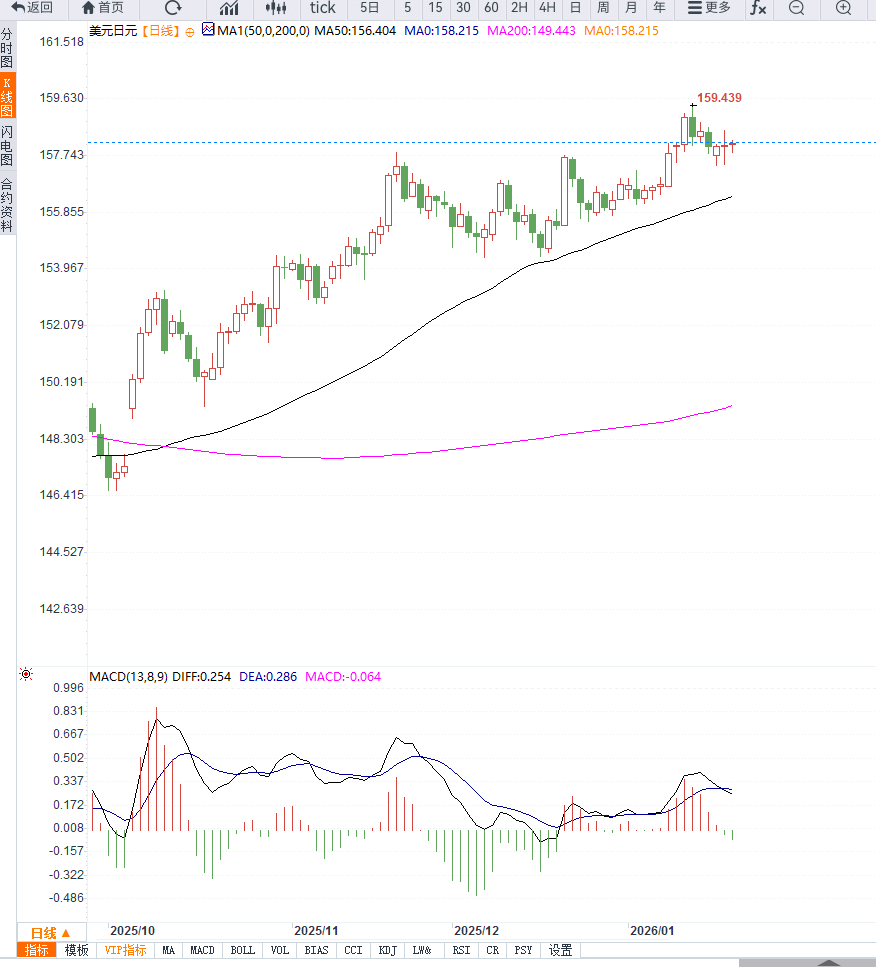
From a technical perspective, USD/JPY is currently facing short-term resistance at the 100-hour simple moving average (SMA) at 158.17, with the exchange rate continuing to oscillate below the moving average, indicating a short-term bearish bias. The MACD and signal lines are close to the zero axis, and the histogram is flat, suggesting limited momentum. The RSI is hovering around 48, indicating a neutral stance and a lack of clear direction.
Based on the high of 159.46 and the low of 157.41, the 38.2% Fibonacci retracement level is at 158.19, and the 50% retracement level is at 158.43, which act as initial resistance for any rebound. If the exchange rate fails to break through these key resistance levels, sellers will still have the upper hand in the short term, and the upside potential will be limited.
Overall, USD/JPY is expected to remain weak and volatile in the short term, with the market adopting a wait-and-see approach ahead of the BoJ meeting and the release of key US economic data. If the exchange rate breaks through the 100-hour SMA and Fibonacci retracement resistance, a new round of rebound may begin; otherwise, the downtrend may continue, limiting any rebound.
"While the yen has remained strong due to safe-haven demand and potential policy tightening, the risks of Japanese government debt and fiscal expansion limit further upside potential. Investors should exercise caution when trading USD/JPY ahead of the BoJ meeting." — Market analyst
Editor's Note:
The recent movement of the Japanese yen reflects the interplay between fundamental factors and policy risks. Short-term support comes from BoJ tightening expectations and safe-haven inflows, while fiscal pressure and bond market volatility limit further upside.
From a technical perspective, the exchange rate is being suppressed by key moving averages and Fibonacci resistance, suggesting a short-term bias towards consolidation and weakness. The key focus will be on the BoJ meeting and US economic data to determine the future direction of USD/JPY.
The yen received some support, mainly from market expectations that Japanese authorities might intervene to prevent further currency depreciation, as well as market expectations of potential tightening policies from the BoJ.
Meanwhile, rising global risk aversion also benefits the yen, a traditional safe-haven currency. However, fiscal risks and pressure on Japan's government bond market have limited further appreciation of the yen.
The recent surge in Japanese government bond yields reflects investor concerns about the health of Japan's fiscal health and the fiscal expansion policies promoted by Prime Minister Sanae Takaichi. In particular, the yield on 40-year government bonds reached its highest level since 2007, while demand for 20-year bond auctions declined, exacerbating selling pressure in the market.
This has led to cautious positioning among yen bulls in the short term, making it difficult to gain substantial momentum. On the fundamental front, the BoJ raised its overnight rate to 0.75% last month, the highest level in thirty years, but the market widely expects the rate to remain unchanged at this week's meeting.
Investors will focus on BoJ President Kazuo Ueda's post-meeting remarks, seeking a timetable for the next interest rate hike. Meanwhile, the US will release its Personal Consumption Expenditures (PCE) price index and final third-quarter GDP data, which will provide guidance on the Fed's rate-cutting path and thus influence the dollar and USD/JPY exchange rates.
From a technical perspective, USD/JPY is currently facing short-term resistance at the 100-hour simple moving average (SMA) at 158.17, with the exchange rate continuing to oscillate below the moving average, indicating a short-term bearish bias. The MACD and signal lines are close to the zero axis, and the histogram is flat, suggesting limited momentum. The RSI is hovering around 48, indicating a neutral stance and a lack of clear direction.
Based on the high of 159.46 and the low of 157.41, the 38.2% Fibonacci retracement level is at 158.19, and the 50% retracement level is at 158.43, which act as initial resistance for any rebound. If the exchange rate fails to break through these key resistance levels, sellers will still have the upper hand in the short term, and the upside potential will be limited.
Overall, USD/JPY is expected to remain weak and volatile in the short term, with the market adopting a wait-and-see approach ahead of the BoJ meeting and the release of key US economic data. If the exchange rate breaks through the 100-hour SMA and Fibonacci retracement resistance, a new round of rebound may begin; otherwise, the downtrend may continue, limiting any rebound.
"While the yen has remained strong due to safe-haven demand and potential policy tightening, the risks of Japanese government debt and fiscal expansion limit further upside potential. Investors should exercise caution when trading USD/JPY ahead of the BoJ meeting." — Market analyst
Editor's Note:
The recent movement of the Japanese yen reflects the interplay between fundamental factors and policy risks. Short-term support comes from BoJ tightening expectations and safe-haven inflows, while fiscal pressure and bond market volatility limit further upside.
From a technical perspective, the exchange rate is being suppressed by key moving averages and Fibonacci resistance, suggesting a short-term bias towards consolidation and weakness. The key focus will be on the BoJ meeting and US economic data to determine the future direction of USD/JPY.
- Risk Warning and Disclaimer
- The market involves risk, and trading may not be suitable for all investors. This article is for reference only and does not constitute personal investment advice, nor does it take into account certain users’ specific investment objectives, financial situation, or other needs. Any investment decisions made based on this information are at your own risk.