Trump's Davos speech highlighted the structural collapse of the "old order" of the global economy.
2026-01-22 11:20:00
US President Donald Trump embodies everything the Davos elite opposes, and his lengthy speech at the World Economic Forum (WEF) on Wednesday (January 21) further exacerbated this divide. He is a protectionist, not a free trade advocate; a skeptic of the climate crisis; and deeply skeptical of the multilateral organizations championed by the Davos meeting.
Trump abandoned dialogue in favor of power politics, dismissing the World Economic Forum's advocacy of "awakened" capitalism that emphasizes equality and ethical investment. To ensure his attendance, event organizers even had to set these issues aside.
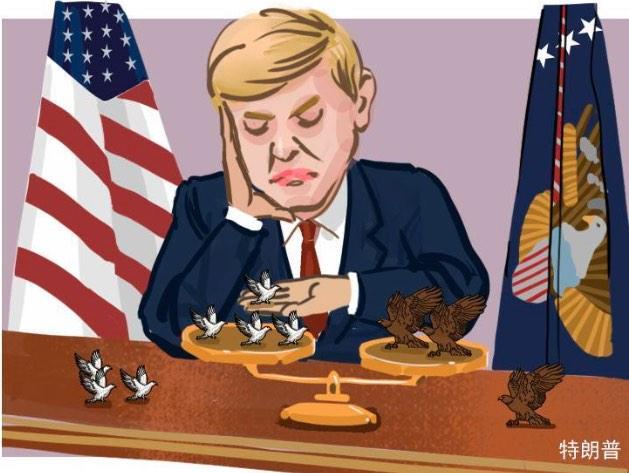
For decades, anti-globalization activists have been trying to shut down the World Economic Forum. Now, with Trump's destructive approach to international relations, their goal seems closer than ever. If Davos has become irrelevant, then Trump's attendance would be a fatal blow to the liberal international rules-based order that the World Economic Forum aims to defend.
French President Emmanuel Macron has rightly pointed to the shift toward a “world without rules.” Ironically, this liberal order, which has existed since World War II, is largely a product of the United States.
Fundamentally, the liberal "rules-based order" is merely another way of describing American hegemony, with Europe as a secondary partner. Within this system, the United States guarantees European security through NATO and acts as the global consumer of last resort.
But this model had already begun to crumble long before Trump entered the White House, for reasons that were complex and structural.
The institutional framework for setting and enforcing global rules is no longer adequate for current needs. The economic architecture designed by Washington policymakers in the 1940s—the International Monetary Fund (IMF) and the World Bank—is now over eighty years old and reflects a world dominated by American power.
outdated institutions
This established structure granted the United States a valid veto over decisions made by the International Monetary Fund and the World Bank. A gentleman's agreement ensured that the United States appointed the president of the World Bank, while Europe selected the managing director of the International Monetary Fund.
Powerful emerging economies believe there is no reason for these institutions to reflect the world of 1944 rather than today's reality.
Stagnant global trade
The situation is similar in international trade. Liberalization agreements involving tariff reductions and market openings are primarily reached between the United States and Europe. Terms agreed upon by Western allies are then imposed on other countries.
As developing countries grow stronger, they become increasingly unwilling to accept agreements that offer them little benefit. The rest of the world also believes that the value of a system so biased towards wealthy, developed countries is diminishing. More than 30 years have passed since the last global trade agreement was reached.
The system faces dual challenges from both external and internal sources. The rapid growth of other economies poses a serious challenge to the United States' position as the global economic hegemon.
Meanwhile, Europe is in a weaker position than the United States. Its economic growth rate lags far behind the US, its innovation capacity is not comparable, and it remains dependent on the US for security. If Trump decides to seize Greenland by force, Europe will be collectively powerless to stop him.
Inequality has eroded domestic support in the United States
Rules-based order is also facing threats from internal pressures. When the tide of economic growth can lift all boats, it's much easier to support liberal democracy. But in a world where the rich get richer and low- and middle-income families struggle, peddling this idea is far more difficult.
This trend was most evident in the United States during the Trump era, where the share of labor income in national income had fallen to its lowest level on record.
A well-functioning international order is clearly superior to global chaos, but establishing a new order is by no means easy. It requires:
Faster, more inclusive economic growth.
Significant investments in public infrastructure.
Financial aid from the wealthy West to help poorer countries cope with the climate crisis.
Europe is taking on more responsibility for its own defense.
Fundamental reforms to international institutions, including the United Nations, the World Trade Organization, the International Monetary Fund, and the World Bank.
During the establishment of the International Monetary Fund, John Maynard Keynes, representing Britain, advocated that creditor and debtor nations should share the burden of adjusting economic imbalances. At the time, the United States, as the world's largest creditor nation, rejected proposals requiring creditor nations to increase imports. Instead, debtor nations bore the full burden of adjusting imbalances through import reductions and domestic austerity measures. A truly effective system needs to correct this fundamental flaw.
Markets will have to reprice geopolitical fragmentation, rule gaps, and alliance restructuring, which will likely lead to a general increase in "risk premiums."
The international status of the US dollar is rooted in the post-war rules-based system. As the risk of this system's collapse increases, the institutional foundation for the dollar as the global reserve and settlement currency is being shaken. Central banks and sovereign wealth funds will accelerate the diversification of their foreign exchange reserves, reducing their holdings of US Treasury bonds and increasing their holdings of gold and other non-US assets.
Gold serves as insurance for sovereign credit and the monetary system. If the old order (the sovereign credit system centered on the US dollar) fails and a new order has not yet been established, gold's monetary and ultimate safe-haven attributes will become more prominent than ever before.
On Thursday in Asian trading, the US dollar index fluctuated narrowly around 98.75, while spot gold trended downwards, currently trading around $4,785 per ounce, down about 0.9% on the day. This was due to the fading risks of the US-EU trade war, which had briefly touched a record high of $4,888.17 on Wednesday, driven by safe-haven buying fueled by a combination of institutional risks and various geopolitical risks conveyed at the Davos meeting.
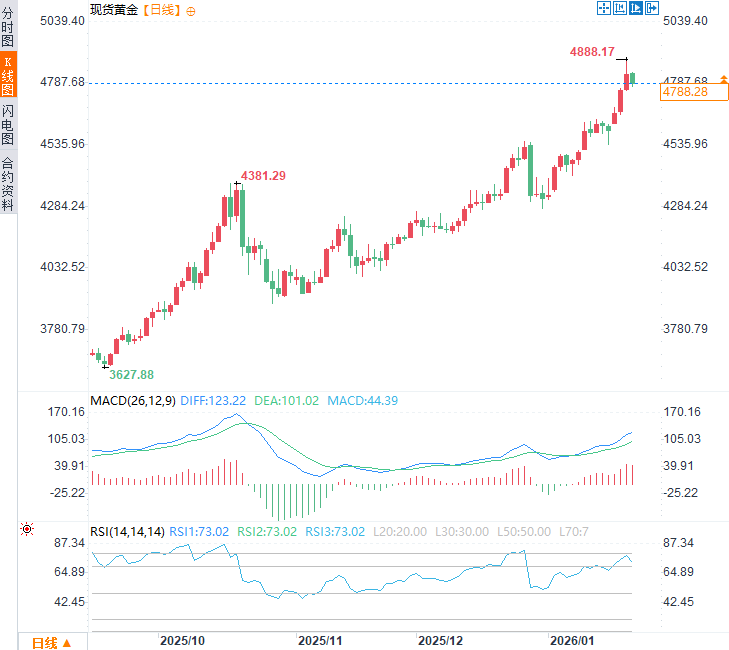
(Spot gold daily chart, source: FX678)
Do not let your guard down. It's easy to believe that everything will return to normal after Trump leaves the White House, but this optimism is unrealistic.
This challenge is not just about changing a leader; it's about addressing the deep structural failures that cause the rules-based system to collapse.
As Canadian Prime Minister Mark Carney said in Davos, "The old order is not coming back."
At 11:19 Beijing time, spot gold was trading at $4,786.92 per ounce.
Trump abandoned dialogue in favor of power politics, dismissing the World Economic Forum's advocacy of "awakened" capitalism that emphasizes equality and ethical investment. To ensure his attendance, event organizers even had to set these issues aside.
For decades, anti-globalization activists have been trying to shut down the World Economic Forum. Now, with Trump's destructive approach to international relations, their goal seems closer than ever. If Davos has become irrelevant, then Trump's attendance would be a fatal blow to the liberal international rules-based order that the World Economic Forum aims to defend.
French President Emmanuel Macron has rightly pointed to the shift toward a “world without rules.” Ironically, this liberal order, which has existed since World War II, is largely a product of the United States.
What is rule-based order?
Fundamentally, the liberal "rules-based order" is merely another way of describing American hegemony, with Europe as a secondary partner. Within this system, the United States guarantees European security through NATO and acts as the global consumer of last resort.
But this model had already begun to crumble long before Trump entered the White House, for reasons that were complex and structural.
Why did the postwar system fail?
The institutional framework for setting and enforcing global rules is no longer adequate for current needs. The economic architecture designed by Washington policymakers in the 1940s—the International Monetary Fund (IMF) and the World Bank—is now over eighty years old and reflects a world dominated by American power.
outdated institutions
This established structure granted the United States a valid veto over decisions made by the International Monetary Fund and the World Bank. A gentleman's agreement ensured that the United States appointed the president of the World Bank, while Europe selected the managing director of the International Monetary Fund.
Powerful emerging economies believe there is no reason for these institutions to reflect the world of 1944 rather than today's reality.
Stagnant global trade
The situation is similar in international trade. Liberalization agreements involving tariff reductions and market openings are primarily reached between the United States and Europe. Terms agreed upon by Western allies are then imposed on other countries.
As developing countries grow stronger, they become increasingly unwilling to accept agreements that offer them little benefit. The rest of the world also believes that the value of a system so biased towards wealthy, developed countries is diminishing. More than 30 years have passed since the last global trade agreement was reached.
External shocks and internal decay
The system faces dual challenges from both external and internal sources. The rapid growth of other economies poses a serious challenge to the United States' position as the global economic hegemon.
Meanwhile, Europe is in a weaker position than the United States. Its economic growth rate lags far behind the US, its innovation capacity is not comparable, and it remains dependent on the US for security. If Trump decides to seize Greenland by force, Europe will be collectively powerless to stop him.
Inequality has eroded domestic support in the United States
Rules-based order is also facing threats from internal pressures. When the tide of economic growth can lift all boats, it's much easier to support liberal democracy. But in a world where the rich get richer and low- and middle-income families struggle, peddling this idea is far more difficult.
This trend was most evident in the United States during the Trump era, where the share of labor income in national income had fallen to its lowest level on record.
Can the global order be rebuilt?
A well-functioning international order is clearly superior to global chaos, but establishing a new order is by no means easy. It requires:
Faster, more inclusive economic growth.
Significant investments in public infrastructure.
Financial aid from the wealthy West to help poorer countries cope with the climate crisis.
Europe is taking on more responsibility for its own defense.
Fundamental reforms to international institutions, including the United Nations, the World Trade Organization, the International Monetary Fund, and the World Bank.
During the establishment of the International Monetary Fund, John Maynard Keynes, representing Britain, advocated that creditor and debtor nations should share the burden of adjusting economic imbalances. At the time, the United States, as the world's largest creditor nation, rejected proposals requiring creditor nations to increase imports. Instead, debtor nations bore the full burden of adjusting imbalances through import reductions and domestic austerity measures. A truly effective system needs to correct this fundamental flaw.
A paradigm shift from certainty premiums to risk premiums
Markets will have to reprice geopolitical fragmentation, rule gaps, and alliance restructuring, which will likely lead to a general increase in "risk premiums."
The international status of the US dollar is rooted in the post-war rules-based system. As the risk of this system's collapse increases, the institutional foundation for the dollar as the global reserve and settlement currency is being shaken. Central banks and sovereign wealth funds will accelerate the diversification of their foreign exchange reserves, reducing their holdings of US Treasury bonds and increasing their holdings of gold and other non-US assets.
Gold serves as insurance for sovereign credit and the monetary system. If the old order (the sovereign credit system centered on the US dollar) fails and a new order has not yet been established, gold's monetary and ultimate safe-haven attributes will become more prominent than ever before.
On Thursday in Asian trading, the US dollar index fluctuated narrowly around 98.75, while spot gold trended downwards, currently trading around $4,785 per ounce, down about 0.9% on the day. This was due to the fading risks of the US-EU trade war, which had briefly touched a record high of $4,888.17 on Wednesday, driven by safe-haven buying fueled by a combination of institutional risks and various geopolitical risks conveyed at the Davos meeting.
(Spot gold daily chart, source: FX678)
Beyond Trump: A Structural Crisis
Do not let your guard down. It's easy to believe that everything will return to normal after Trump leaves the White House, but this optimism is unrealistic.
This challenge is not just about changing a leader; it's about addressing the deep structural failures that cause the rules-based system to collapse.
As Canadian Prime Minister Mark Carney said in Davos, "The old order is not coming back."
At 11:19 Beijing time, spot gold was trading at $4,786.92 per ounce.
- Risk Warning and Disclaimer
- The market involves risk, and trading may not be suitable for all investors. This article is for reference only and does not constitute personal investment advice, nor does it take into account certain users’ specific investment objectives, financial situation, or other needs. Any investment decisions made based on this information are at your own risk.