One court hearing, two futures: Can we still trust US monetary policy?
2026-01-22 19:44:34
Recently, a seemingly insignificant geopolitical news story has quietly revealed a legal storm that could reshape the landscape of US monetary policy. The US Supreme Court is hearing a unique case: whether the president has the right to unilaterally dismiss Federal Reserve Governor Lisa Cook. On the surface, this appears to be a personnel dispute, but it directly challenges the institutional foundation of the Federal Reserve's independence. Financial markets never look beyond appearances; they are more concerned with whether the rules will be rewritten: if executive power can easily interfere in central bank personnel appointments, can future monetary policy remain reliable?
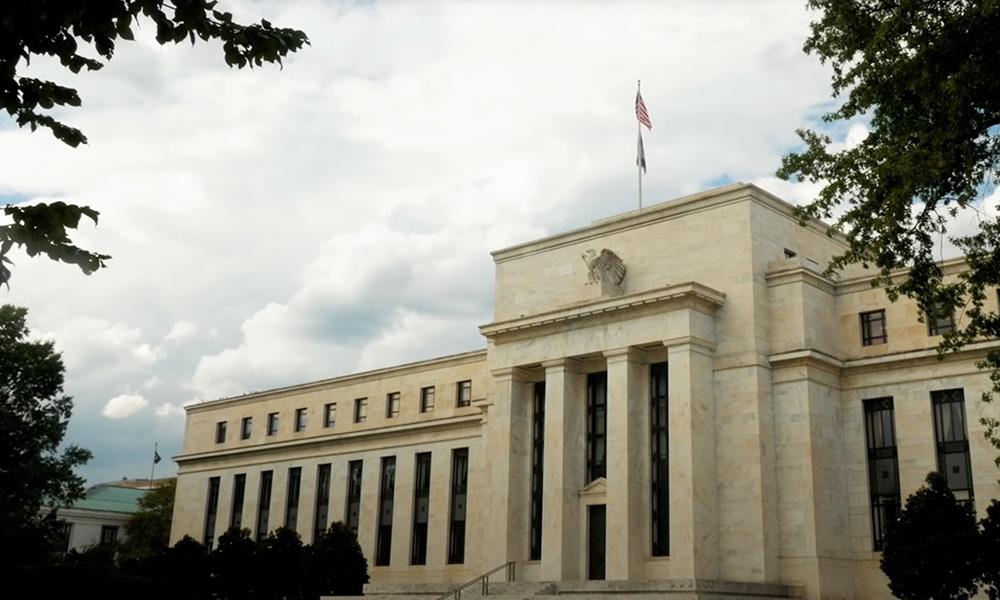
The White House, represented by senior Justice Department officials, testified in support of the president's position, arguing that the president should have greater discretion in appointing and dismissing federal officials and that such decisions should not be subject to excessive judicial review. However, this argument immediately drew sharp criticism from several Supreme Court justices: if removing Federal Reserve governors becomes so easy, does it mean that every administration can pressure the central bank for short-term political gain? Such institutional loosening could lead to monetary policy being used to stimulate election cycles rather than anchoring long-term inflation stability. Analysts point out that the market's real concern is not the fate of any particular individual, but whether this mechanism will be repeatedly used, thereby undermining the credibility of the entire macroeconomic policy framework.
The Federal Reserve's independence is repeatedly emphasized not out of academic preference, but because it directly impacts the pricing logic of financial markets. When a central bank is viewed as a political appendage, investors question whether interest rate decisions are still based on economic data or influenced by non-economic factors such as elections and fiscal pressures. This skepticism is quickly reflected in asset prices, especially medium- and long-term interest rates. Historical experience shows that once a central bank's credibility is damaged, the market demands a higher term premium to compensate for the risk of future policy shifts.
During the trial, a Supreme Court justice nominated by the current president explicitly expressed concern that allowing the president to remove board members without sufficient reason and without judicial oversight would set a dangerous precedent of "unilateral determinations." She emphasized that this was not a matter of taking sides, but a systemic consequence: once this precedent is set, any future government could potentially intervene in monetary policy in a similar manner. Another justice, also appointed by the current president, took a more cautious approach, but cautioned that even if the stock market hasn't fallen, it doesn't mean the risk is nonexistent. The court's role is not to predict market trends, but to assess whether the system's design will create systemic risks.
Economists submitted a report suggesting that Cook's dismissal could trigger a recession. The White House countered that the stock market had continued to rise since the intention to remove him was announced in August, thus the so-called "pessimistic expectations" lacked basis. However, analysts believe that using short-term market performance to negate systemic risks is highly misleading. Financial markets often ignore tail risks for extended periods before a crisis erupts, only reacting at a critical point. The real danger often lurks beneath the surface.
If the Supreme Court ultimately supports expanding presidential appointment and removal powers, the impact will extend far beyond a personnel change. The most direct transmission path will be a reassessment of the market's response function to monetary policy. Investors will have to assume that the pace of future interest rate hikes or cuts will depend not only on employment and inflation data but also on the White House's political considerations. This uncertainty will lead to an overall upward shift in the yield curve, particularly a significant increase in yields over five years to reflect a higher policy risk premium.
Further chain reactions are already beginning to emerge. Credit spreads may widen, increasing corporate bond issuance costs; the foreign exchange market will repric the stability of the system, potentially shrinking the "safety premium" of dollar assets; volatility indices may also gradually rise, reflecting market anxiety about the ambiguity of the policy path. Even if risk assets do not plummet in the short term, the valuation logic has already changed—the same earnings prospects may correspond to lower valuation multiples because the uncertainty discount has increased.
It's worth noting that over the past year, the Supreme Court has favored expanding the president's control over personnel appointments in several urgent cases, leading some traders to worry that this trend might continue in this case. However, judging from the intensity of the questioning in this trial, the Federal Reserve is clearly seen as a special entity. Its policy spillover effects are extremely strong, affecting government financing costs, banking system liquidity, and even global capital flows. If personnel appointments become too arbitrary, a situation of frequent intervention may emerge in the future, for which the market will pay a higher price in the long run.
The market generally expects the ruling to be announced before the end of June, but an earlier announcement is not ruled out. Regardless of the outcome, the significance of this ruling transcends the legal realm, becoming a test of trust in the foundations of the financial order. If the court strengthens the protection of the Federal Reserve's independence, the market may see a correction in the certainty premium, interest rate volatility is expected to stabilize, and financial conditions may ease slightly. Conversely, if the president's powers are expanded, short-term divergence may occur due to a mismatch of sentiment, but a systemic reassessment of risk premiums is inevitable in the medium term.
Analysts believe the core value of this case lies in its unprecedented connection between constitutional arrangements and financial pricing. The Federal Reserve's independence is crucial because it serves as an anchor for inflation expectations, a guarantee of policy continuity, and a cornerstone of financial stability. If the Supreme Court chooses a more cautious path, it may not necessarily be a victory for either side, but rather sends a clear signal to the world: in key areas of monetary power, rules remain binding. This signal itself will enter trading models, influencing the volatility structure of interest rates, exchange rates, and risk assets in the coming months.
The White House, represented by senior Justice Department officials, testified in support of the president's position, arguing that the president should have greater discretion in appointing and dismissing federal officials and that such decisions should not be subject to excessive judicial review. However, this argument immediately drew sharp criticism from several Supreme Court justices: if removing Federal Reserve governors becomes so easy, does it mean that every administration can pressure the central bank for short-term political gain? Such institutional loosening could lead to monetary policy being used to stimulate election cycles rather than anchoring long-term inflation stability. Analysts point out that the market's real concern is not the fate of any particular individual, but whether this mechanism will be repeatedly used, thereby undermining the credibility of the entire macroeconomic policy framework.
Independence is not just a slogan; it is directly related to interest rates and financing costs.
The Federal Reserve's independence is repeatedly emphasized not out of academic preference, but because it directly impacts the pricing logic of financial markets. When a central bank is viewed as a political appendage, investors question whether interest rate decisions are still based on economic data or influenced by non-economic factors such as elections and fiscal pressures. This skepticism is quickly reflected in asset prices, especially medium- and long-term interest rates. Historical experience shows that once a central bank's credibility is damaged, the market demands a higher term premium to compensate for the risk of future policy shifts.
During the trial, a Supreme Court justice nominated by the current president explicitly expressed concern that allowing the president to remove board members without sufficient reason and without judicial oversight would set a dangerous precedent of "unilateral determinations." She emphasized that this was not a matter of taking sides, but a systemic consequence: once this precedent is set, any future government could potentially intervene in monetary policy in a similar manner. Another justice, also appointed by the current president, took a more cautious approach, but cautioned that even if the stock market hasn't fallen, it doesn't mean the risk is nonexistent. The court's role is not to predict market trends, but to assess whether the system's design will create systemic risks.
Economists submitted a report suggesting that Cook's dismissal could trigger a recession. The White House countered that the stock market had continued to rise since the intention to remove him was announced in August, thus the so-called "pessimistic expectations" lacked basis. However, analysts believe that using short-term market performance to negate systemic risks is highly misleading. Financial markets often ignore tail risks for extended periods before a crisis erupts, only reacting at a critical point. The real danger often lurks beneath the surface.
Once the rules change, the entire cost of capital will be reassessed.
If the Supreme Court ultimately supports expanding presidential appointment and removal powers, the impact will extend far beyond a personnel change. The most direct transmission path will be a reassessment of the market's response function to monetary policy. Investors will have to assume that the pace of future interest rate hikes or cuts will depend not only on employment and inflation data but also on the White House's political considerations. This uncertainty will lead to an overall upward shift in the yield curve, particularly a significant increase in yields over five years to reflect a higher policy risk premium.
Further chain reactions are already beginning to emerge. Credit spreads may widen, increasing corporate bond issuance costs; the foreign exchange market will repric the stability of the system, potentially shrinking the "safety premium" of dollar assets; volatility indices may also gradually rise, reflecting market anxiety about the ambiguity of the policy path. Even if risk assets do not plummet in the short term, the valuation logic has already changed—the same earnings prospects may correspond to lower valuation multiples because the uncertainty discount has increased.
It's worth noting that over the past year, the Supreme Court has favored expanding the president's control over personnel appointments in several urgent cases, leading some traders to worry that this trend might continue in this case. However, judging from the intensity of the questioning in this trial, the Federal Reserve is clearly seen as a special entity. Its policy spillover effects are extremely strong, affecting government financing costs, banking system liquidity, and even global capital flows. If personnel appointments become too arbitrary, a situation of frequent intervention may emerge in the future, for which the market will pay a higher price in the long run.
The outcome is still uncertain, but the market is already betting on the future of the system.
The market generally expects the ruling to be announced before the end of June, but an earlier announcement is not ruled out. Regardless of the outcome, the significance of this ruling transcends the legal realm, becoming a test of trust in the foundations of the financial order. If the court strengthens the protection of the Federal Reserve's independence, the market may see a correction in the certainty premium, interest rate volatility is expected to stabilize, and financial conditions may ease slightly. Conversely, if the president's powers are expanded, short-term divergence may occur due to a mismatch of sentiment, but a systemic reassessment of risk premiums is inevitable in the medium term.
Analysts believe the core value of this case lies in its unprecedented connection between constitutional arrangements and financial pricing. The Federal Reserve's independence is crucial because it serves as an anchor for inflation expectations, a guarantee of policy continuity, and a cornerstone of financial stability. If the Supreme Court chooses a more cautious path, it may not necessarily be a victory for either side, but rather sends a clear signal to the world: in key areas of monetary power, rules remain binding. This signal itself will enter trading models, influencing the volatility structure of interest rates, exchange rates, and risk assets in the coming months.
- Risk Warning and Disclaimer
- The market involves risk, and trading may not be suitable for all investors. This article is for reference only and does not constitute personal investment advice, nor does it take into account certain users’ specific investment objectives, financial situation, or other needs. Any investment decisions made based on this information are at your own risk.