Trump's Greenland Strategy: Old Wine in New Bottles, New Threats Looming? Gold Prices May Record Largest Weekly Gain in Nearly Six Years
2026-01-23 15:49:27
On the international geopolitical stage, US President Donald Trump's recent negotiations regarding Greenland have drawn widespread attention. At the heart of these negotiations lies strengthening NATO's military presence in the region, deterring potential adversaries, and granting the US sovereignty claims over parts of the island. However, this proposal bears a striking resemblance to the 1951 defense agreement between the US and Denmark, seemingly merely a repackaging of an old framework. Although the negotiations were hastily initiated at the World Economic Forum in Davos, Switzerland, they have already prompted Trump to soften his hardline stance. While Denmark and Greenland have not yet formally agreed, this initial concept may foreshadow a future agreement. This article will analyze in detail the background, similarities, potential impact, and reactions of allies to this event, ultimately exploring its profound implications for the NATO alliance.

Discussions between Trump and NATO officials at this week's Davos Forum marked the beginning of future negotiations for Greenland. This hastily formulated preliminary plan successfully mitigated Trump's earlier extreme threats to seize the autonomous Danish territory by purchase or force.
Two unnamed European officials revealed that although the agreement has not yet received formal approval from Denmark or Greenland, it outlines potential cooperation, including expanding military bases, increasing troop deployments, and strengthening security cooperation.
These initiatives are designed to address strategic competition in the Arctic, particularly in the context of melting ice and opening shipping lanes due to climate change. However, officials generally question the innovativeness of this new plan, as it essentially replicates the content of existing frameworks.
Looking back at history, the United States and Denmark signed a defense agreement as early as 1951, which granted the United States broad authorization for military activities in Greenland.
Specifically, the Pentagon can establish a base on the island and deploy any number of troops after obtaining approval from Copenhagen, and the Danish government almost always gives the green light.
Iris Ferguson, former Deputy Assistant Secretary of State for Arctic and Global Resilience at the Pentagon in the Biden administration, emphasized that this agreement grants the United States significant operational flexibility, allowing it to freely execute related actions based on its own security needs. However, on paper, many elements proposed in the new negotiations, such as base construction and troop movements, are already fully covered in the old agreement. This inevitably evokes the metaphor of "old wine in new bottles," where apparent novelty masks underlying repetition.
Greenland, the world's largest island, played a crucial role during the Cold War. At its peak, the United States stationed over 10,000 troops there, utilizing its geographical location as a radar hub to monitor the Soviet missile threat coming across the Atlantic. Furthermore, the island was used as a military outpost for testing survivability under nuclear attack.
Currently, the United States maintains Space Force facilities and advanced radar systems in Greenland, focused on early warning and missile defense. However, further expansion of the force would present significant challenges, including costly upgrades to aging facilities and the construction of new housing and logistics systems during the short, warm season.
The U.S. Army Corps of Engineers recently announced that it will spend up to $25 million to modernize the runway at the Pitufik Space Station, highlighting the high cost of construction in the harsh Arctic environment.
Meanwhile, the role of NATO remains unclear, with its military leaders even learning about negotiation details from media reports, reflecting a disconnect in communication.
Trump's public call in Davos for the U.S. to have "full access" to Greenland without time limits demonstrates his ambitions beyond the conventional framework.
However, the legal status of U.S. troops at the Pitufik Space Station was established by NATO's 1955 Status of Forces Agreement. This agreement allows U.S. troops free access to the island, although it does not formally cede the land to U.S. sovereignty.
Since the late 1980s, the United States has significantly reduced its troop presence at the base, leaving only about 100 soldiers focused on early warning missions.
Jim Townsend, former Deputy Assistant Secretary of Defense for NATO and European Affairs, pointed out that such sovereignty negotiations are commonplace at US military bases around the world and are not unique to Greenland. This further confirms the new proposal's "old wine" nature, lacking any real breakthrough.
Danish Prime Minister Mette Frederiksen will meet with NATO Secretary General Mark Rutte on Friday to discuss her dialogue with Trump. However, Trump's erratic behavior remains the biggest uncertainty; just as he quickly backed down from invasion threats this week, he could also resume a hardline stance at any time. Allies are no longer hiding their discontent.
Swedish MP and Defense Council member Bjorn Soder criticized the U.S. move, saying that while it was based on Arctic security concerns, its aggressive start had damaged relations within the alliance.
In pro-American regions, public opinion, which had previously been highly praising the United States, is gradually turning negative. Danish leaders have also expressed dissatisfaction with the exclusion of Denmark and Greenland from the negotiations. In a statement, Frederiksen emphasized that only Denmark and Greenland should decide on relevant matters and that negotiations should be open in the political, security, and economic spheres, but that sovereignty is absolutely non-negotiable.
Nevertheless, leaders such as French President Emmanuel Macron and German Chancellor Friedrich Merz expressed relief at the de-escalation of the situation, demonstrating cautious optimism among European allies.
Frederiksen stated that the Danish government is open to further cooperation based on the 1951 agreement, but the next steps still need to be clarified. This position leaves room for future negotiations, potentially involving infrastructure investment and economic cooperation to balance security needs with sovereign dignity. However, the entire process highlights tensions within NATO and the test of alliance cohesion posed by US unilateralism.
In conclusion, while Trump's Greenland negotiations appear novel, they are difficult to escape the shadow of the 1951 agreement. This "old wine in new bottles" strategy, while temporarily alleviating the crisis, has also exposed the rift in trust among allies. Future developments depend on whether all parties can achieve mutual benefit while respecting sovereignty; otherwise, this event could become a new challenge for NATO and warrants continued attention.
Trump's negotiations and related threats regarding Greenland (including tariff pressure) significantly boosted gold prices this week, repeatedly hitting record highs. On Friday (January 23), gold reached a high of $4967.19 per ounce in Asian trading, accumulating a nearly 8% gain for the week, potentially marking the largest increase since the COVID-19 pandemic began in 2020. This surge is attributed to heightened geopolitical uncertainty surrounding Greenland, strained US-EU relations, and global risk aversion. Investors need to pay close attention to related news and changes in market sentiment. If negotiations continue or new geopolitical risks emerge, gold prices may continue their upward momentum, testing the $5000 mark; however, if the situation completely de-escalates, gold prices are expected to face short-term downward pressure.
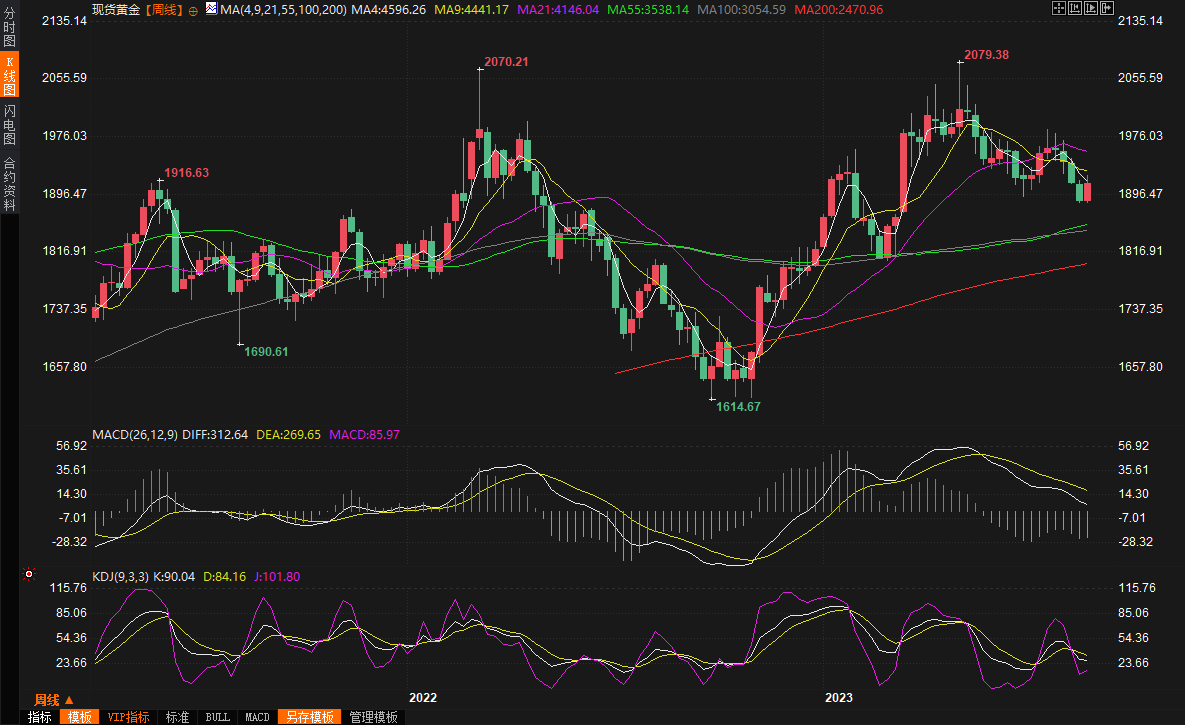
(Spot gold daily chart, source: FX678)
At 15:46 Beijing time, spot gold was trading at $4949.47 per ounce.
Origins and Initial Framework of Negotiations
Discussions between Trump and NATO officials at this week's Davos Forum marked the beginning of future negotiations for Greenland. This hastily formulated preliminary plan successfully mitigated Trump's earlier extreme threats to seize the autonomous Danish territory by purchase or force.
Two unnamed European officials revealed that although the agreement has not yet received formal approval from Denmark or Greenland, it outlines potential cooperation, including expanding military bases, increasing troop deployments, and strengthening security cooperation.
These initiatives are designed to address strategic competition in the Arctic, particularly in the context of melting ice and opening shipping lanes due to climate change. However, officials generally question the innovativeness of this new plan, as it essentially replicates the content of existing frameworks.
The Shadow of Old Agreements: The Flexibility of the 1951 Defense Treaty
Looking back at history, the United States and Denmark signed a defense agreement as early as 1951, which granted the United States broad authorization for military activities in Greenland.
Specifically, the Pentagon can establish a base on the island and deploy any number of troops after obtaining approval from Copenhagen, and the Danish government almost always gives the green light.
Iris Ferguson, former Deputy Assistant Secretary of State for Arctic and Global Resilience at the Pentagon in the Biden administration, emphasized that this agreement grants the United States significant operational flexibility, allowing it to freely execute related actions based on its own security needs. However, on paper, many elements proposed in the new negotiations, such as base construction and troop movements, are already fully covered in the old agreement. This inevitably evokes the metaphor of "old wine in new bottles," where apparent novelty masks underlying repetition.
Cold War Legacy: Greenland's Military History and Current Facilities
Greenland, the world's largest island, played a crucial role during the Cold War. At its peak, the United States stationed over 10,000 troops there, utilizing its geographical location as a radar hub to monitor the Soviet missile threat coming across the Atlantic. Furthermore, the island was used as a military outpost for testing survivability under nuclear attack.
Currently, the United States maintains Space Force facilities and advanced radar systems in Greenland, focused on early warning and missile defense. However, further expansion of the force would present significant challenges, including costly upgrades to aging facilities and the construction of new housing and logistics systems during the short, warm season.
The U.S. Army Corps of Engineers recently announced that it will spend up to $25 million to modernize the runway at the Pitufik Space Station, highlighting the high cost of construction in the harsh Arctic environment.
Meanwhile, the role of NATO remains unclear, with its military leaders even learning about negotiation details from media reports, reflecting a disconnect in communication.
Trump's ambition and the continuation of the legal basis
Trump's public call in Davos for the U.S. to have "full access" to Greenland without time limits demonstrates his ambitions beyond the conventional framework.
However, the legal status of U.S. troops at the Pitufik Space Station was established by NATO's 1955 Status of Forces Agreement. This agreement allows U.S. troops free access to the island, although it does not formally cede the land to U.S. sovereignty.
Since the late 1980s, the United States has significantly reduced its troop presence at the base, leaving only about 100 soldiers focused on early warning missions.
Jim Townsend, former Deputy Assistant Secretary of Defense for NATO and European Affairs, pointed out that such sovereignty negotiations are commonplace at US military bases around the world and are not unique to Greenland. This further confirms the new proposal's "old wine" nature, lacking any real breakthrough.
Allies' concerns and Denmark's firm stance
Danish Prime Minister Mette Frederiksen will meet with NATO Secretary General Mark Rutte on Friday to discuss her dialogue with Trump. However, Trump's erratic behavior remains the biggest uncertainty; just as he quickly backed down from invasion threats this week, he could also resume a hardline stance at any time. Allies are no longer hiding their discontent.
Swedish MP and Defense Council member Bjorn Soder criticized the U.S. move, saying that while it was based on Arctic security concerns, its aggressive start had damaged relations within the alliance.
In pro-American regions, public opinion, which had previously been highly praising the United States, is gradually turning negative. Danish leaders have also expressed dissatisfaction with the exclusion of Denmark and Greenland from the negotiations. In a statement, Frederiksen emphasized that only Denmark and Greenland should decide on relevant matters and that negotiations should be open in the political, security, and economic spheres, but that sovereignty is absolutely non-negotiable.
Nevertheless, leaders such as French President Emmanuel Macron and German Chancellor Friedrich Merz expressed relief at the de-escalation of the situation, demonstrating cautious optimism among European allies.
Future Outlook: Potential Extensions Based on Legacy Protocols
Frederiksen stated that the Danish government is open to further cooperation based on the 1951 agreement, but the next steps still need to be clarified. This position leaves room for future negotiations, potentially involving infrastructure investment and economic cooperation to balance security needs with sovereign dignity. However, the entire process highlights tensions within NATO and the test of alliance cohesion posed by US unilateralism.
In conclusion, while Trump's Greenland negotiations appear novel, they are difficult to escape the shadow of the 1951 agreement. This "old wine in new bottles" strategy, while temporarily alleviating the crisis, has also exposed the rift in trust among allies. Future developments depend on whether all parties can achieve mutual benefit while respecting sovereignty; otherwise, this event could become a new challenge for NATO and warrants continued attention.
Trump's negotiations and related threats regarding Greenland (including tariff pressure) significantly boosted gold prices this week, repeatedly hitting record highs. On Friday (January 23), gold reached a high of $4967.19 per ounce in Asian trading, accumulating a nearly 8% gain for the week, potentially marking the largest increase since the COVID-19 pandemic began in 2020. This surge is attributed to heightened geopolitical uncertainty surrounding Greenland, strained US-EU relations, and global risk aversion. Investors need to pay close attention to related news and changes in market sentiment. If negotiations continue or new geopolitical risks emerge, gold prices may continue their upward momentum, testing the $5000 mark; however, if the situation completely de-escalates, gold prices are expected to face short-term downward pressure.
(Spot gold daily chart, source: FX678)
At 15:46 Beijing time, spot gold was trading at $4949.47 per ounce.
- Risk Warning and Disclaimer
- The market involves risk, and trading may not be suitable for all investors. This article is for reference only and does not constitute personal investment advice, nor does it take into account certain users’ specific investment objectives, financial situation, or other needs. Any investment decisions made based on this information are at your own risk.