Surges over 3%! Escalating standoff with Iranian fleet, paralyzing Kazakhstan's giant oil field, US crude oil marks its fifth consecutive weekly gain.
2026-01-24 16:46:40
The international crude oil market experienced a dramatic and volatile journey during the third trading week of January 2026. From a period of stability and observation at the beginning of the week, to supply disruptions pushing prices higher in the middle of the week, and then to renewed geopolitical risks at the end of the week, oil prices ultimately closed with a strong rebound. Brent crude futures rose more than 3% this week, with the settlement price approaching the $66 mark, marking the fourth consecutive week of gains, while US WTI crude also rose more than 3%, recording five consecutive weeks of gains. This week's market was heavily influenced by a combination of factors, including the easing and resurgence of unrest in Iran, an unexpected turn in the Greenland sovereignty dispute, the sudden shutdown of a large oil field in Kazakhstan, and positive signals from global economic data. Overall, supply-side uncertainty was the dominant force, driving oil prices to rebound strongly from their lows, but concerns about the trade war and the potential reconciliation of the Russia-Ukraine situation on the demand side also exerted downward pressure at times.
The oil market started the week relatively calmly. On Monday (January 19), trading activity was noticeably thin due to the US federal holiday, and oil prices remained largely unchanged from the previous week. Brent crude futures rose slightly by 1 cent to settle at $64.14 a barrel, while US WTI crude futures were flat at $59.44 a barrel. This stability was mainly due to the rapid quelling of unrest in Iran. Iranian authorities prevented the situation from escalating further by forcefully suppressing the protests, which, according to official figures, resulted in approximately 5,000 deaths. Meanwhile, US President Trump appeared to have withdrawn his previous threats of military intervention against Iran, significantly easing market concerns about supply disruptions from this major oil-producing nation. As OPEC's fourth-largest oil producer, with a daily output of approximately 3.2 million barrels, Iran's stability is crucial to global oil flows.
However, market focus did not stop there, but quickly shifted to the sovereignty dispute over Greenland. This event quickly became a hot topic for investors, with Trump publicly vowing on Saturday to impose tariffs on EU member states such as Denmark, Sweden, France, Germany, the Netherlands, Finland, as well as the UK and Norway, until the US gains the right to purchase Greenland. The EU responded swiftly, announcing an emergency summit on Thursday to discuss countermeasures. This potential rift in US-EU relations triggered a decline in global stock markets, and the US dollar weakened against safe-haven currencies such as the Japanese yen and Swiss franc, further amplifying the risk of an escalation of the trade war. Analysts pointed out that if US-EU trade frictions expand, it will directly impact global fuel demand, especially given the upcoming colder weather in North America and Europe. Potential problems with Russian infrastructure have also exacerbated market tensions. Although oil prices did not fluctuate sharply on Monday, this geopolitical uncertainty has laid the groundwork for future market movements, with investors beginning to assess its long-term impact on crude oil demand.
On Tuesday (January 20), oil prices began to show strong upward momentum. Brent crude futures rose 98 cents, or 1.53%, to settle at $64.92 a barrel; WTI crude futures rose 90 cents, or 1.51%, to settle at $60.34 a barrel. This rise was mainly due to a sudden disruption at an oil field in Kazakhstan. Tengizchevroil, a company led by Chevron, announced that production at the Tengiz and Korolev oil fields was suspended due to a power distribution system failure. Sources revealed that the shutdown could last seven to ten days, leading to a reduction in crude oil exports from the Caspian pipeline. As one of the world's largest oil fields, Tengiz accounts for nearly half of Kazakhstan's total daily production, and its disruption undoubtedly has a significant impact on the global supply chain. Analysts emphasized that although this event appears temporary, it amplifies the supply risks of OPEC+ oil-producing countries, pushing oil prices away from the lows at the beginning of the week.
Meanwhile, positive economic data further boosted market sentiment. China reported a 5.0% GDP growth rate in the fourth quarter, in line with the government's target, and crude oil production is projected to grow by 1.5% by 2025, strengthening investor confidence in global economic growth. As the world's second-largest oil consumer, China's robust recovery in demand directly stimulates expectations for fuel demand. The decline in the US dollar also provided support, making dollar-denominated oil more attractive to holders of other currencies. However, the Greenland dispute continues to linger, with Trump reiterating his intention to impose a 10% tariff on imports from several European countries starting February 1st, and warning that if no agreement is reached, the tariff would rise to 25% on June 1st. While this threat did not immediately trigger panic, it reminded the market that demand-side trade barriers could put downward pressure on oil prices in the future.
Oil prices continued their upward trend on Wednesday (January 21). Brent crude settled at $65.24 per barrel, while WTI settled at $60.62. Supply issues in Kazakhstan continued to escalate, with industry sources revealing that oil from the Kashagan oil field was diverted to the domestic market for the first time due to damage to equipment at the CPC terminal on the Black Sea coast caused by a drone attack, leading to an export bottleneck. The operator of Tengizchevroil officially declared force majeure on the pipeline to CPC, further highlighting the reality of tight supply.
Meanwhile, the slow progress of Venezuelan oil exports has also become a focus. According to ship tracking data, its exports have reached only about 7.8 million barrels, hampered by its supply agreement with the United States, hindering the country's efforts to reverse production cuts. The International Energy Agency (IEA) raised its 2026 global oil demand growth forecast in its monthly report this week, suggesting that the supply glut may have narrowed slightly, providing additional support for oil prices. The market is also closely watching upcoming US inventory data, with preliminary surveys indicating a possible increase in crude oil and gasoline inventories, while distillate fuel inventories are declining. On the geopolitical front, UBS analysts warned that escalating tariffs could slow economic growth and trigger risk aversion, but the immediate impact of supply disruptions has temporarily outweighed these concerns.
On Thursday (January 22), prices reversed course, falling about 2% to a one-week low. Brent crude settled at $64.06 a barrel, while WTI settled at $59.36. This pullback was primarily due to Trump's downplaying of threats against Greenland and Iran. He announced an agreement with NATO to ensure permanent U.S. access to Greenland, and the NATO Secretary General emphasized the need for allies to strengthen Arctic security to counter threats from Russia and China. This eased the immediate risk of a U.S.-EU trade war, and market risk premiums subsequently decreased. Meanwhile, Trump indicated a desire to avoid further military action against Iran, only warning of measures if Iran resumes its nuclear program. The reduced risk of Iranian supply further pressured oil prices.
Furthermore, signs of a potential resolution to the Russia-Ukraine conflict are also exerting downward pressure. Following his meeting with Trump in Davos, Ukrainian President Zelenskyy revealed that security guarantees had been finalized, although territorial issues remain unresolved. The war has lasted nearly four years, and if a reconciliation is reached and sanctions against Russia are lifted, Russia, as the world's third-largest oil producer, will increase its output, with a potential supply of 10.28 million barrels per day, further depressing global oil prices. Russia's production is projected to decline by 0.8% by 2025, but the prospect of reconciliation continues to make the market cautious. US officials have also stated that allowing major Asian countries to purchase Venezuelan crude oil at market prices, while helpful for Venezuelan exports, also highlights the possibility of a supply recovery. Nevertheless, analysts believe that oil prices will still have support around $60 per barrel, but short-term volatility is increasing.
On Friday (January 23), oil prices rebounded strongly by nearly 3%, closing at a more than one-week high. Brent crude rose $1.82 to settle at $65.88, while WTI crude rose $1.71 to settle at $61.07. This rebound stemmed from escalating US pressure on Iran. Trump announced a fleet was en route to the Middle East and imposed new sanctions on nine ships transporting Iranian oil and eight companies. This reignited market concerns about supply disruptions in the Middle East, especially given Iran's role as a major supplier to China. The shutdown at Kazakhstan's Tengiz oil field remains unresolved, with JPMorgan Chase predicting production of only 1-1.1 million barrels per day for the remainder of the month, far below the normal 1.8 million barrels per day. The aftermath of the fire further amplified the supply shortage, driving oil prices sharply higher from Thursday's lows.
Looking back on this week, the crude oil market achieved a net increase amid a mix of supply disruptions and geopolitical risks, with both Brent and WTI recording weekly gains of over 3%. The unexpected events in Kazakhstan were the biggest driver, while the recurring tensions in Iran and Greenland amplified market sentiment. Despite concerns on the demand side regarding the trade war and the potential for a Russia-Ukraine reconciliation, positive global economic data and expectations of cold weather provided a buffer. Looking ahead to next week, investors should closely monitor US inventory data, the outcome of the EU summit, and progress in Kazakhstan's recovery. If supply disruptions continue or US-Iran tensions escalate, oil prices may continue to rise; conversely, if trade tensions ease, the risk of a pullback remains. Overall, this week's market action highlighted the fragility of the crude oil market; any geopolitical event could trigger a chain reaction, and investors are advised to remain vigilant.
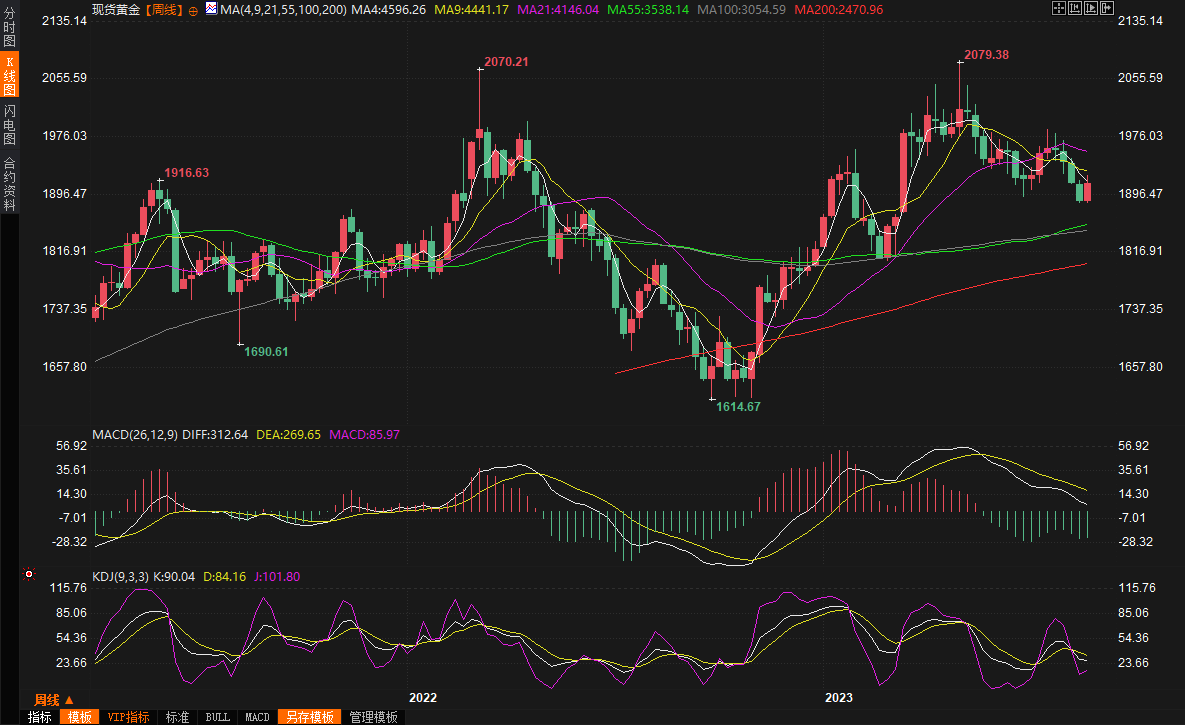
(US crude oil weekly chart, source: FX678)
Iran quells Greenland crisis: Oil prices hold steady early week as geopolitical risks quietly shift.
The oil market started the week relatively calmly. On Monday (January 19), trading activity was noticeably thin due to the US federal holiday, and oil prices remained largely unchanged from the previous week. Brent crude futures rose slightly by 1 cent to settle at $64.14 a barrel, while US WTI crude futures were flat at $59.44 a barrel. This stability was mainly due to the rapid quelling of unrest in Iran. Iranian authorities prevented the situation from escalating further by forcefully suppressing the protests, which, according to official figures, resulted in approximately 5,000 deaths. Meanwhile, US President Trump appeared to have withdrawn his previous threats of military intervention against Iran, significantly easing market concerns about supply disruptions from this major oil-producing nation. As OPEC's fourth-largest oil producer, with a daily output of approximately 3.2 million barrels, Iran's stability is crucial to global oil flows.
However, market focus did not stop there, but quickly shifted to the sovereignty dispute over Greenland. This event quickly became a hot topic for investors, with Trump publicly vowing on Saturday to impose tariffs on EU member states such as Denmark, Sweden, France, Germany, the Netherlands, Finland, as well as the UK and Norway, until the US gains the right to purchase Greenland. The EU responded swiftly, announcing an emergency summit on Thursday to discuss countermeasures. This potential rift in US-EU relations triggered a decline in global stock markets, and the US dollar weakened against safe-haven currencies such as the Japanese yen and Swiss franc, further amplifying the risk of an escalation of the trade war. Analysts pointed out that if US-EU trade frictions expand, it will directly impact global fuel demand, especially given the upcoming colder weather in North America and Europe. Potential problems with Russian infrastructure have also exacerbated market tensions. Although oil prices did not fluctuate sharply on Monday, this geopolitical uncertainty has laid the groundwork for future market movements, with investors beginning to assess its long-term impact on crude oil demand.
Kazakhstan's production halt coupled with Chinese data: Oil prices rebounded strongly mid-week, with tight supply becoming the main theme.
On Tuesday (January 20), oil prices began to show strong upward momentum. Brent crude futures rose 98 cents, or 1.53%, to settle at $64.92 a barrel; WTI crude futures rose 90 cents, or 1.51%, to settle at $60.34 a barrel. This rise was mainly due to a sudden disruption at an oil field in Kazakhstan. Tengizchevroil, a company led by Chevron, announced that production at the Tengiz and Korolev oil fields was suspended due to a power distribution system failure. Sources revealed that the shutdown could last seven to ten days, leading to a reduction in crude oil exports from the Caspian pipeline. As one of the world's largest oil fields, Tengiz accounts for nearly half of Kazakhstan's total daily production, and its disruption undoubtedly has a significant impact on the global supply chain. Analysts emphasized that although this event appears temporary, it amplifies the supply risks of OPEC+ oil-producing countries, pushing oil prices away from the lows at the beginning of the week.
Meanwhile, positive economic data further boosted market sentiment. China reported a 5.0% GDP growth rate in the fourth quarter, in line with the government's target, and crude oil production is projected to grow by 1.5% by 2025, strengthening investor confidence in global economic growth. As the world's second-largest oil consumer, China's robust recovery in demand directly stimulates expectations for fuel demand. The decline in the US dollar also provided support, making dollar-denominated oil more attractive to holders of other currencies. However, the Greenland dispute continues to linger, with Trump reiterating his intention to impose a 10% tariff on imports from several European countries starting February 1st, and warning that if no agreement is reached, the tariff would rise to 25% on June 1st. While this threat did not immediately trigger panic, it reminded the market that demand-side trade barriers could put downward pressure on oil prices in the future.
Oil prices continued their upward trend on Wednesday (January 21). Brent crude settled at $65.24 per barrel, while WTI settled at $60.62. Supply issues in Kazakhstan continued to escalate, with industry sources revealing that oil from the Kashagan oil field was diverted to the domestic market for the first time due to damage to equipment at the CPC terminal on the Black Sea coast caused by a drone attack, leading to an export bottleneck. The operator of Tengizchevroil officially declared force majeure on the pipeline to CPC, further highlighting the reality of tight supply.
Meanwhile, the slow progress of Venezuelan oil exports has also become a focus. According to ship tracking data, its exports have reached only about 7.8 million barrels, hampered by its supply agreement with the United States, hindering the country's efforts to reverse production cuts. The International Energy Agency (IEA) raised its 2026 global oil demand growth forecast in its monthly report this week, suggesting that the supply glut may have narrowed slightly, providing additional support for oil prices. The market is also closely watching upcoming US inventory data, with preliminary surveys indicating a possible increase in crude oil and gasoline inventories, while distillate fuel inventories are declining. On the geopolitical front, UBS analysts warned that escalating tariffs could slow economic growth and trigger risk aversion, but the immediate impact of supply disruptions has temporarily outweighed these concerns.
Threats Diminished, Risks Reignited: Oil Prices Volatile at the End of the Week, US-Iran Standoff Resumes as Focus
On Thursday (January 22), prices reversed course, falling about 2% to a one-week low. Brent crude settled at $64.06 a barrel, while WTI settled at $59.36. This pullback was primarily due to Trump's downplaying of threats against Greenland and Iran. He announced an agreement with NATO to ensure permanent U.S. access to Greenland, and the NATO Secretary General emphasized the need for allies to strengthen Arctic security to counter threats from Russia and China. This eased the immediate risk of a U.S.-EU trade war, and market risk premiums subsequently decreased. Meanwhile, Trump indicated a desire to avoid further military action against Iran, only warning of measures if Iran resumes its nuclear program. The reduced risk of Iranian supply further pressured oil prices.
Furthermore, signs of a potential resolution to the Russia-Ukraine conflict are also exerting downward pressure. Following his meeting with Trump in Davos, Ukrainian President Zelenskyy revealed that security guarantees had been finalized, although territorial issues remain unresolved. The war has lasted nearly four years, and if a reconciliation is reached and sanctions against Russia are lifted, Russia, as the world's third-largest oil producer, will increase its output, with a potential supply of 10.28 million barrels per day, further depressing global oil prices. Russia's production is projected to decline by 0.8% by 2025, but the prospect of reconciliation continues to make the market cautious. US officials have also stated that allowing major Asian countries to purchase Venezuelan crude oil at market prices, while helpful for Venezuelan exports, also highlights the possibility of a supply recovery. Nevertheless, analysts believe that oil prices will still have support around $60 per barrel, but short-term volatility is increasing.
On Friday (January 23), oil prices rebounded strongly by nearly 3%, closing at a more than one-week high. Brent crude rose $1.82 to settle at $65.88, while WTI crude rose $1.71 to settle at $61.07. This rebound stemmed from escalating US pressure on Iran. Trump announced a fleet was en route to the Middle East and imposed new sanctions on nine ships transporting Iranian oil and eight companies. This reignited market concerns about supply disruptions in the Middle East, especially given Iran's role as a major supplier to China. The shutdown at Kazakhstan's Tengiz oil field remains unresolved, with JPMorgan Chase predicting production of only 1-1.1 million barrels per day for the remainder of the month, far below the normal 1.8 million barrels per day. The aftermath of the fire further amplified the supply shortage, driving oil prices sharply higher from Thursday's lows.
Looking back on this week, the crude oil market achieved a net increase amid a mix of supply disruptions and geopolitical risks, with both Brent and WTI recording weekly gains of over 3%. The unexpected events in Kazakhstan were the biggest driver, while the recurring tensions in Iran and Greenland amplified market sentiment. Despite concerns on the demand side regarding the trade war and the potential for a Russia-Ukraine reconciliation, positive global economic data and expectations of cold weather provided a buffer. Looking ahead to next week, investors should closely monitor US inventory data, the outcome of the EU summit, and progress in Kazakhstan's recovery. If supply disruptions continue or US-Iran tensions escalate, oil prices may continue to rise; conversely, if trade tensions ease, the risk of a pullback remains. Overall, this week's market action highlighted the fragility of the crude oil market; any geopolitical event could trigger a chain reaction, and investors are advised to remain vigilant.
(US crude oil weekly chart, source: FX678)
- Risk Warning and Disclaimer
- The market involves risk, and trading may not be suitable for all investors. This article is for reference only and does not constitute personal investment advice, nor does it take into account certain users’ specific investment objectives, financial situation, or other needs. Any investment decisions made based on this information are at your own risk.