One rate hike, three possible outcomes? How will the RBA influence the market on Tuesday?
2026-02-02 20:57:23
With the Reserve Bank of Australia's (RBA) interest rate meeting approaching (February 3), financial markets have reached a near-universal consensus: the cash rate will be raised by 25 basis points to 3.85%. This expectation has already been fully priced in, reflected in futures pricing and forex positions, demonstrating traders' confidence in the rate hike outcome. However, analysts point out that what truly determines the future direction of the Australian dollar is not the rate hike itself, but whether the post-meeting policy statement and forward guidance release a more hawkish signal. In other words, the rate hike merely confirms past data and trends, while the future path lies in the wording of RBA Governor Bullock.

The market's focus has long since shifted from "whether to raise rates" to "what to do after raising them." While an interest rate hike is highly probable, if the Fed expresses concern about an economic slowdown in its statement, or emphasizes that future decisions will still "depend on data," then even if the rate hike is implemented, it could be seen as a "last-ditch effort," triggering a short-term decline in the Australian dollar. After all, in financial markets, prices trade on expectations, not facts.
The rising expectations for this round of interest rate hikes began with a much stronger-than-expected jobs report. Data showed that Australia added significantly more jobs in December than market forecasts predicted, and the unemployment rate quickly fell from 4.3% to 4.1%, a multi-year low. This performance not only highlighted the resilience of the labor market but also exacerbated concerns about continued wage growth pushing up service sector inflation. With economic growth yet to show signs of slowing, strong employment means that demand-side pressures are unlikely to subside on their own, providing a realistic basis for the central bank to continue tightening.
The subsequent release of the fourth-quarter CPI data further fueled the fire. The core indicator, the cut-mean CPI, which excludes volatility, jumped to 3.4% year-on-year, far exceeding the previous value of 3.0% and significantly surpassing the Reserve Bank of Australia's target range of 2%-3%. Crucially, the cut-mean is considered a core tool for measuring inflation trends; its rise suggests that inflation is not driven by short-term factors but rather exhibits broader stickiness. This makes it difficult for policymakers to explain current price pressures as "temporary," further increasing the necessity for continued interest rate hikes.
Faced with two hot economic data points, the Reserve Bank of Australia (RBA) had previously stated that it would "seriously consider" whether further action was needed at its February meeting. Governor Bullock emphasized that the decision would be based on the latest economic performance, particularly the trends in inflation and employment. Now, both of these key indicators point to upside risks, making this rate hike logically sound and helping to maintain the central bank's credibility in combating inflation.
While a 25 basis point rate hike is almost a certainty, analysts generally believe that whether it can drive further appreciation of the Australian dollar depends on whether the Reserve Bank of Australia (RBA) releases clearer signals of further tightening. Current market pricing indicates approximately 55 basis points of room for rate hikes by the end of the year, implying at least one more rate hike beyond this one. If the post-meeting statement merely reiterates "data dependence," emphasizes lagging effects and downside risks to the economy, this cautious tone could be interpreted as a sign that policy is nearing its end, leading the market to lower its expectations for final interest rates and triggering profit-taking in the Australian dollar.
Conversely, if the Reserve Bank of Australia (RBA) hints in its statement that inflation risks remain skewed to the upside, or explicitly indicates that policy needs to move into a "more restrictive zone," or even indirectly raises the interest rate path through updated economic forecasts, it could support a further rise in the Australian dollar. However, this scenario is unlikely to materialize. On one hand, monetary policy has a significant lag effect, and prematurely committing to further rate hikes could limit future adjustment space. On the other hand, the RBA previously predicted that inflation would decline in the December quarter, but the results were different, making it more inclined to leave room for maneuver in its communications to avoid being contradicted by data again.
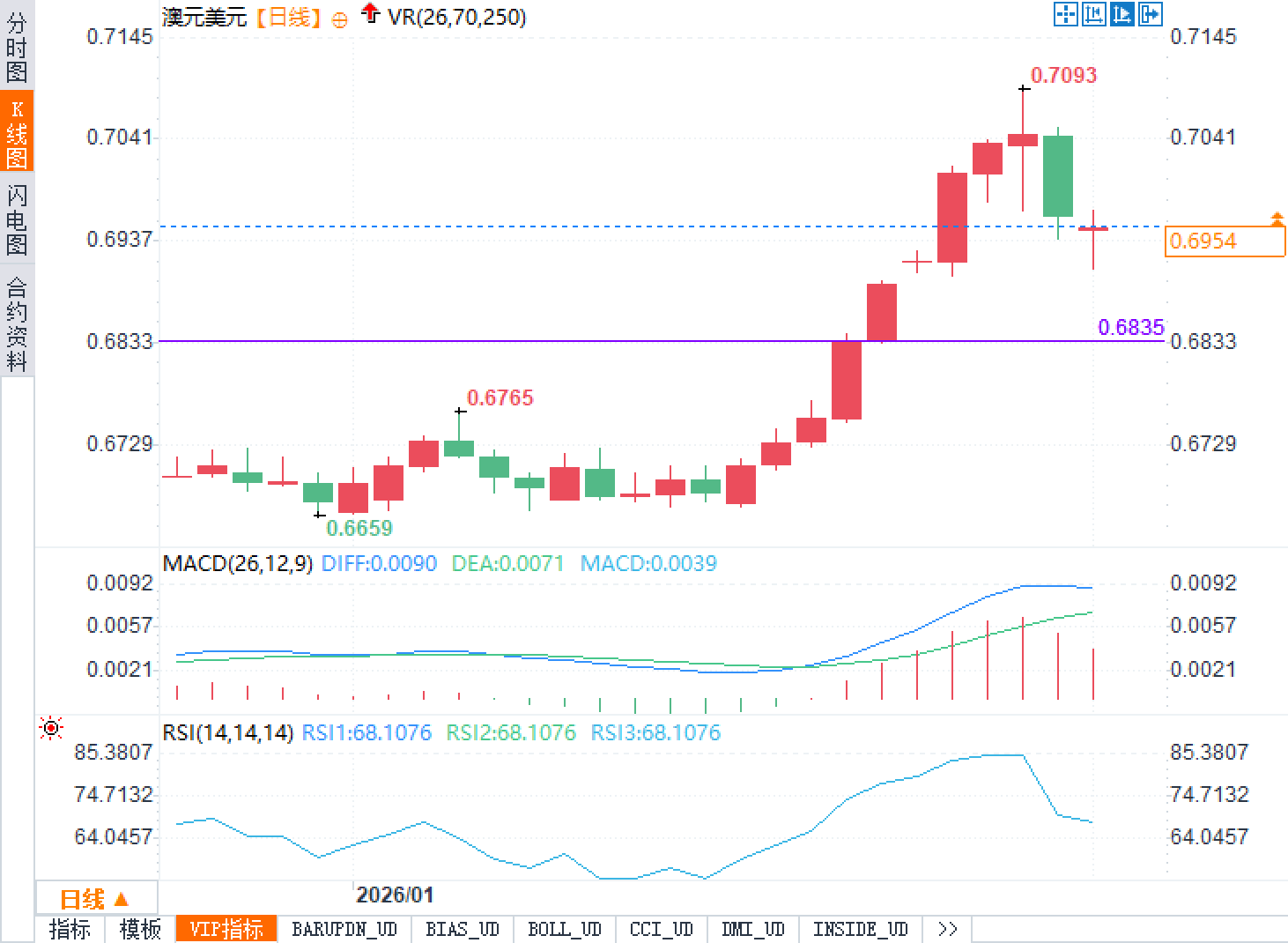
Therefore, the most likely scenario is that interest rates will be raised as scheduled, but the wording will remain restrained, acknowledging the stubbornness of inflation without readily providing a timetable for the next steps. This balanced strategy of "hawkish yet dovish" aligns with policy inertia, but it may also disappoint bulls expecting stronger signals, causing the Australian dollar to rise and then fall.
Another significant tail risk is the possibility that the Reserve Bank of Australia (RBA) might choose to pause interest rate hikes and maintain the current rate. While current employment and core inflation are both strong, making such a decision would be extremely politically and credibility-wise costly. However, if the RBA believes that excessive tightening could severely impact the housing market and consumption, a technical pause is still possible. If this happens, given the market's highly concentrated focus on interest rate hikes, the Australian dollar could face cross-market selling, forcing speculative long positions to be liquidated and causing a sharp increase in volatility.
Because this scenario differs so greatly from mainstream expectations, its impact is often more severe. Historical experience shows that when a highly certain event suddenly fails to materialize, the market's reaction is not rational correction, but rather an emotional reversal. Traders generally pay close attention to marginal changes in the post-meeting statement—even a slight adjustment of a single word can become the trigger for a market rally.
The market's focus has long since shifted from "whether to raise rates" to "what to do after raising them." While an interest rate hike is highly probable, if the Fed expresses concern about an economic slowdown in its statement, or emphasizes that future decisions will still "depend on data," then even if the rate hike is implemented, it could be seen as a "last-ditch effort," triggering a short-term decline in the Australian dollar. After all, in financial markets, prices trade on expectations, not facts.
Strong economic data ignited the powder keg for interest rate hikes, with both inflation and employment figures exceeding record highs.
The rising expectations for this round of interest rate hikes began with a much stronger-than-expected jobs report. Data showed that Australia added significantly more jobs in December than market forecasts predicted, and the unemployment rate quickly fell from 4.3% to 4.1%, a multi-year low. This performance not only highlighted the resilience of the labor market but also exacerbated concerns about continued wage growth pushing up service sector inflation. With economic growth yet to show signs of slowing, strong employment means that demand-side pressures are unlikely to subside on their own, providing a realistic basis for the central bank to continue tightening.
The subsequent release of the fourth-quarter CPI data further fueled the fire. The core indicator, the cut-mean CPI, which excludes volatility, jumped to 3.4% year-on-year, far exceeding the previous value of 3.0% and significantly surpassing the Reserve Bank of Australia's target range of 2%-3%. Crucially, the cut-mean is considered a core tool for measuring inflation trends; its rise suggests that inflation is not driven by short-term factors but rather exhibits broader stickiness. This makes it difficult for policymakers to explain current price pressures as "temporary," further increasing the necessity for continued interest rate hikes.
Faced with two hot economic data points, the Reserve Bank of Australia (RBA) had previously stated that it would "seriously consider" whether further action was needed at its February meeting. Governor Bullock emphasized that the decision would be based on the latest economic performance, particularly the trends in inflation and employment. Now, both of these key indicators point to upside risks, making this rate hike logically sound and helping to maintain the central bank's credibility in combating inflation.
The real variable lies in the rhetoric: whether it's hawks or doves will determine the fate of the Australian dollar.
While a 25 basis point rate hike is almost a certainty, analysts generally believe that whether it can drive further appreciation of the Australian dollar depends on whether the Reserve Bank of Australia (RBA) releases clearer signals of further tightening. Current market pricing indicates approximately 55 basis points of room for rate hikes by the end of the year, implying at least one more rate hike beyond this one. If the post-meeting statement merely reiterates "data dependence," emphasizes lagging effects and downside risks to the economy, this cautious tone could be interpreted as a sign that policy is nearing its end, leading the market to lower its expectations for final interest rates and triggering profit-taking in the Australian dollar.
Conversely, if the Reserve Bank of Australia (RBA) hints in its statement that inflation risks remain skewed to the upside, or explicitly indicates that policy needs to move into a "more restrictive zone," or even indirectly raises the interest rate path through updated economic forecasts, it could support a further rise in the Australian dollar. However, this scenario is unlikely to materialize. On one hand, monetary policy has a significant lag effect, and prematurely committing to further rate hikes could limit future adjustment space. On the other hand, the RBA previously predicted that inflation would decline in the December quarter, but the results were different, making it more inclined to leave room for maneuver in its communications to avoid being contradicted by data again.
Therefore, the most likely scenario is that interest rates will be raised as scheduled, but the wording will remain restrained, acknowledging the stubbornness of inflation without readily providing a timetable for the next steps. This balanced strategy of "hawkish yet dovish" aligns with policy inertia, but it may also disappoint bulls expecting stronger signals, causing the Australian dollar to rise and then fall.
Unexpected inaction? A low-probability event, yet the biggest "black swan" event.
Another significant tail risk is the possibility that the Reserve Bank of Australia (RBA) might choose to pause interest rate hikes and maintain the current rate. While current employment and core inflation are both strong, making such a decision would be extremely politically and credibility-wise costly. However, if the RBA believes that excessive tightening could severely impact the housing market and consumption, a technical pause is still possible. If this happens, given the market's highly concentrated focus on interest rate hikes, the Australian dollar could face cross-market selling, forcing speculative long positions to be liquidated and causing a sharp increase in volatility.
Because this scenario differs so greatly from mainstream expectations, its impact is often more severe. Historical experience shows that when a highly certain event suddenly fails to materialize, the market's reaction is not rational correction, but rather an emotional reversal. Traders generally pay close attention to marginal changes in the post-meeting statement—even a slight adjustment of a single word can become the trigger for a market rally.
- Risk Warning and Disclaimer
- The market involves risk, and trading may not be suitable for all investors. This article is for reference only and does not constitute personal investment advice, nor does it take into account certain users’ specific investment objectives, financial situation, or other needs. Any investment decisions made based on this information are at your own risk.