Is the yen poised for a comeback as trust in the US dollar weakens?
2026-02-10 17:19:47
On Tuesday, February 10th, the USD/JPY pair traded around 155.50, in a typical repricing phase. While superficially a currency fluctuation, it actually reflects a subtle erosion of market confidence in the dollar. Despite the Federal Reserve's multiple interest rate cuts in 2025, pushing the dollar down by 9.4%, this weakening trend did not stop at the beginning of 2026; instead, it was exacerbated by deeper structural problems.

Analysis indicates that the key to the weakening dollar lies not in short-term data, but in the erosion of the medium- to long-term narrative. The "American exceptionalism" that previously supported the dollar's strength is being challenged—more and more investors are beginning to question the sustainability of US fiscal policy and whether the Federal Reserve's policy independence can be maintained. Even with Warsh taking office as the new chairman, market confidence has not been restored; instead, there is greater focus on whether future policies will be consistent and sufficiently binding. These concerns directly lower the risk-averse premium for dollar assets, making global funds more cautious about allocating their investments in the dollar.
More importantly, policy uncertainty itself is suppressing the "risk premium" of the US dollar. The US dollar has traditionally been considered a safe-haven currency, but against the backdrop of high fiscal deficits and frequent political maneuvering, its safe-haven attributes are being discounted. When the market no longer unconditionally believes in the stability of the dollar system, even if the fundamentals are still sound, the exchange rate will reflect this "trust discount" in advance.
In stark contrast to the weakness of the US dollar, the Japanese yen is gradually emerging from its period of weakness. The strengthening of the yen is driven not only by the weakening dollar, but also by a fundamental shift in Japan's own policy expectations. The most crucial variable is monetary policy. The market widely expects the Bank of Japan to discuss the scope for interest rate hikes at its April meeting. While the rate hike may not be aggressive, simply sending a clear signal—a determination to move away from the era of ultra-loose monetary policy—would be enough to change global investors' valuation logic for yen assets. The foreign exchange market has never focused on current interest rate differentials, but rather on discounting future paths. Once the market believes that the yen's interest rate center will systematically shift upward, funds will naturally position themselves in advance, driving the exchange rate to adjust in the opposite direction.
Meanwhile, fiscal issues have become a new focus in the yen's pricing. Japanese Prime Minister Sanae Takaichi has recently emphasized fiscal sustainability on multiple occasions, explicitly stating the need to control the debt-to-economy ratio and promising not to finance the food sales tax reduction plan through new bond issuance. This statement, seemingly a technical arrangement, actually sends a strong signal of discipline: the government is attempting to rebuild market confidence in Japan's finances. If such policies continue to be implemented, it will not only help reduce the risk premium in long-term interest rates but may also, in turn, support the yen's exchange rate.
The USD/JPY exchange rate today is no longer a simple interest rate differential game of "buying whichever has the higher interest rate." It is evolving into a comprehensive contest of institutional credibility and fiscal discipline. Asset risk dashboards from research institutions show that foreign exchange risk scores have been declining steadily since the beginning of 2026, even reaching their lowest level since the end of 2021. However, this is not because the world has become safer, but rather because the temporary weakening of the US dollar has dominated the indicator's trend.
When the US dollar retraces, carry trade unwinding and hedging adjustments often lead to a marginal decrease in foreign exchange volatility. However, the underlying risks do not disappear; they are merely temporarily masked. The real indicator lies in whether the market is willing to continue paying a premium for the dollar and whether it begins to allow room for a "discount correction" in the yen.
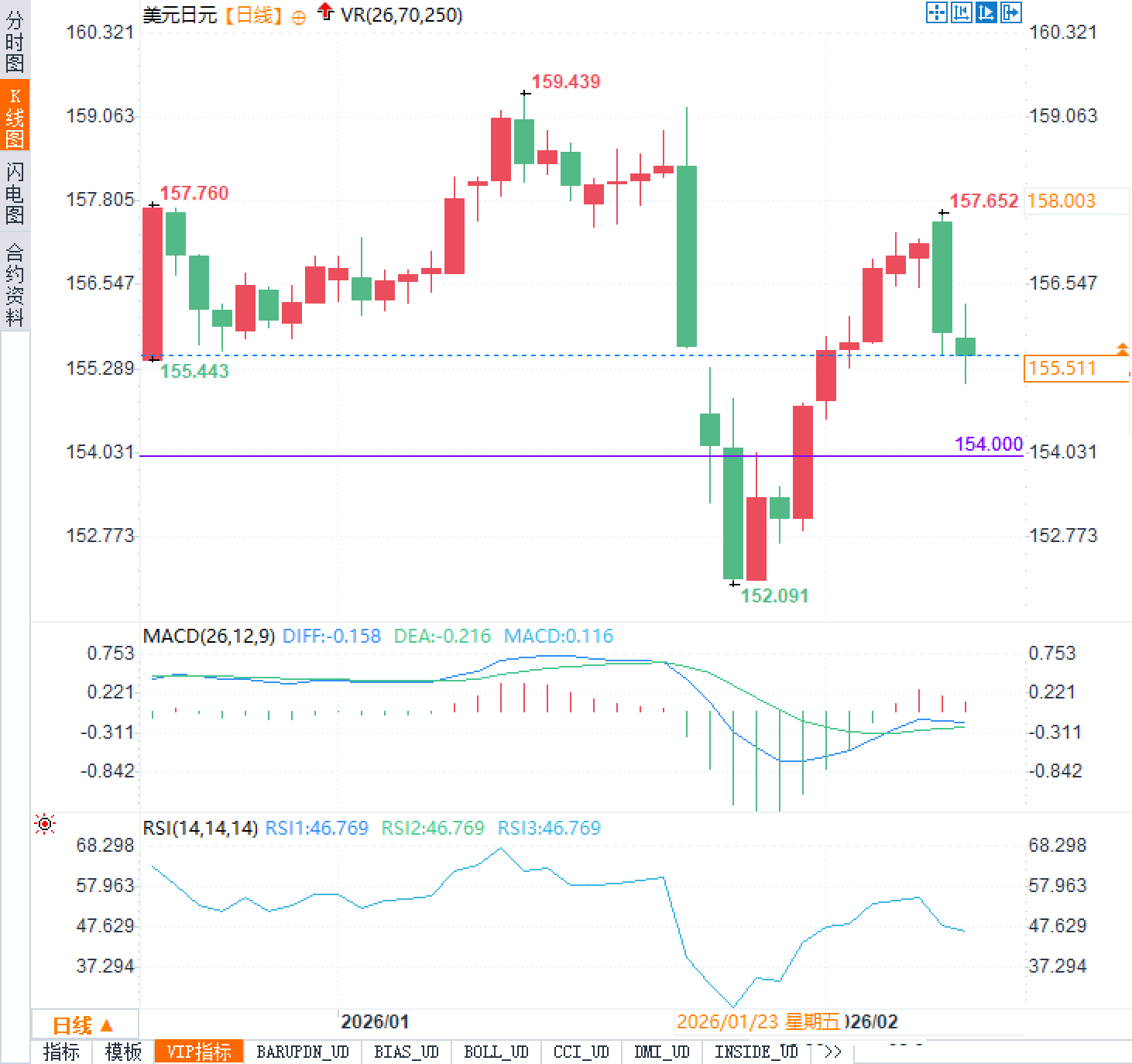
Currently, two main themes are developing simultaneously: on the one hand, discussions about the Federal Reserve's independence and fiscal sustainability continue to depress the dollar's risk premium; on the other hand, the Bank of Japan's interest rate hike expectations and fiscal anchoring signals are gradually improving the yen's long-term pricing foundation. As long as these two forces do not reverse, the trend of the USD/JPY pair slowly moving below 150 is unlikely to be easily broken.
Analysis indicates that the key to the weakening dollar lies not in short-term data, but in the erosion of the medium- to long-term narrative. The "American exceptionalism" that previously supported the dollar's strength is being challenged—more and more investors are beginning to question the sustainability of US fiscal policy and whether the Federal Reserve's policy independence can be maintained. Even with Warsh taking office as the new chairman, market confidence has not been restored; instead, there is greater focus on whether future policies will be consistent and sufficiently binding. These concerns directly lower the risk-averse premium for dollar assets, making global funds more cautious about allocating their investments in the dollar.
More importantly, policy uncertainty itself is suppressing the "risk premium" of the US dollar. The US dollar has traditionally been considered a safe-haven currency, but against the backdrop of high fiscal deficits and frequent political maneuvering, its safe-haven attributes are being discounted. When the market no longer unconditionally believes in the stability of the dollar system, even if the fundamentals are still sound, the exchange rate will reflect this "trust discount" in advance.
Why is the yen starting to "stand tall"?
In stark contrast to the weakness of the US dollar, the Japanese yen is gradually emerging from its period of weakness. The strengthening of the yen is driven not only by the weakening dollar, but also by a fundamental shift in Japan's own policy expectations. The most crucial variable is monetary policy. The market widely expects the Bank of Japan to discuss the scope for interest rate hikes at its April meeting. While the rate hike may not be aggressive, simply sending a clear signal—a determination to move away from the era of ultra-loose monetary policy—would be enough to change global investors' valuation logic for yen assets. The foreign exchange market has never focused on current interest rate differentials, but rather on discounting future paths. Once the market believes that the yen's interest rate center will systematically shift upward, funds will naturally position themselves in advance, driving the exchange rate to adjust in the opposite direction.
Meanwhile, fiscal issues have become a new focus in the yen's pricing. Japanese Prime Minister Sanae Takaichi has recently emphasized fiscal sustainability on multiple occasions, explicitly stating the need to control the debt-to-economy ratio and promising not to finance the food sales tax reduction plan through new bond issuance. This statement, seemingly a technical arrangement, actually sends a strong signal of discipline: the government is attempting to rebuild market confidence in Japan's finances. If such policies continue to be implemented, it will not only help reduce the risk premium in long-term interest rates but may also, in turn, support the yen's exchange rate.
The real battle behind exchange rates: a war of trust
The USD/JPY exchange rate today is no longer a simple interest rate differential game of "buying whichever has the higher interest rate." It is evolving into a comprehensive contest of institutional credibility and fiscal discipline. Asset risk dashboards from research institutions show that foreign exchange risk scores have been declining steadily since the beginning of 2026, even reaching their lowest level since the end of 2021. However, this is not because the world has become safer, but rather because the temporary weakening of the US dollar has dominated the indicator's trend.
When the US dollar retraces, carry trade unwinding and hedging adjustments often lead to a marginal decrease in foreign exchange volatility. However, the underlying risks do not disappear; they are merely temporarily masked. The real indicator lies in whether the market is willing to continue paying a premium for the dollar and whether it begins to allow room for a "discount correction" in the yen.
Currently, two main themes are developing simultaneously: on the one hand, discussions about the Federal Reserve's independence and fiscal sustainability continue to depress the dollar's risk premium; on the other hand, the Bank of Japan's interest rate hike expectations and fiscal anchoring signals are gradually improving the yen's long-term pricing foundation. As long as these two forces do not reverse, the trend of the USD/JPY pair slowly moving below 150 is unlikely to be easily broken.
- Risk Warning and Disclaimer
- The market involves risk, and trading may not be suitable for all investors. This article is for reference only and does not constitute personal investment advice, nor does it take into account certain users’ specific investment objectives, financial situation, or other needs. Any investment decisions made based on this information are at your own risk.