With the non-farm payrolls report coming soon, what are traders paying attention to?
2026-02-11 16:47:48
The most anticipated event in the financial markets this week is undoubtedly the upcoming US jobs report for January (February 11, 21:30). This crucial data, which should have been released earlier, has been delayed, making it a key variable influencing global interest rates and exchange rates. Following the release of the job openings data, US Treasury yields experienced significant volatility, demonstrating the market's high sensitivity to the labor market. The current market consensus is for 70,000 new jobs in January, higher than the 50,000 in December, but the forecast range is extremely wide—from a high of 135,000 to a low of -10,000—reflecting a very high level of uncertainty.

The analysis points out that the real key issue is not whether the data is "good" or "bad," but whether it will bring about an "unexpected" event sufficient to change policy expectations. If new job creation only recovers moderately or weakens slightly, it may only trigger market fluctuations and adjustments within the existing framework; however, if the data is significantly lower than expected, especially if details such as wage growth and unemployment rate indicate a significant slowdown in demand, it could completely ignite expectations of interest rate cuts, push short-term interest rates further down, and exacerbate the depreciation pressure on the US dollar.
Prior to this, several leading indicators had already released cautious signals: the private sector added only 22,000 jobs, job openings fell to 6.5 million in December, the number of layoff announcements climbed to its highest level since 2009, and hiring activity in both manufacturing and service sectors showed signs of weakness. These combined signs have led the market to believe that the job market is weakening, but whether this will ultimately mark a turning point remains to be seen and will require a definitive answer from this report.
Before the employment data was released, the December retail sales report gave a bleak signal. All four key metrics fell short of expectations, with overall retail and core retail sales readings both flat, and the control group, which better reflects endogenous consumer momentum, even declining by 0.1%. This performance indicates that US consumers are tightening their spending at the end of the year, and end-user demand is weakening.
From a financial perspective, weakening consumption typically means a cooling demand for goods and services, which helps alleviate inflationary pressures. Indeed, the market reacted swiftly: US Treasury yields showed a "bull market flattening"—meaning the long-term yields fell more than the short-term yields, reflecting stronger expectations for future economic growth and declining inflation; simultaneously, the US dollar index came under pressure, indicating a warming prospect for monetary policy easing.
However, despite signs of easing on the demand side, current inflation remains stubbornly above the Federal Reserve's 2% target. This means that a single instance of weak consumer data is insufficient to prompt the central bank to immediately shift to a significant interest rate cut. But it at least provides more room for policy maneuver—as long as employment and inflation remain weak, the Fed will have greater flexibility in its pace of action, and may even be able to take more aggressive rate-cutting measures. Currently, the interest rate market has largely priced in expectations of approximately three rate cuts this year, and the yield curve has returned to near its early January lows, indicating that repricing has been largely completed.
The most noticeable recent exchange rate fluctuation has been the rapid decline of the USD/JPY exchange rate. As expectations for interest rate cuts shifted towards a dovish stance, the market's implied year-end federal funds rate fell to as low as 60 basis points below current levels, directly exacerbating selling pressure on the dollar. The USD/JPY pair fell 1.0% prior to the report and continued its weakness in subsequent trading sessions, making its performance particularly pronounced.
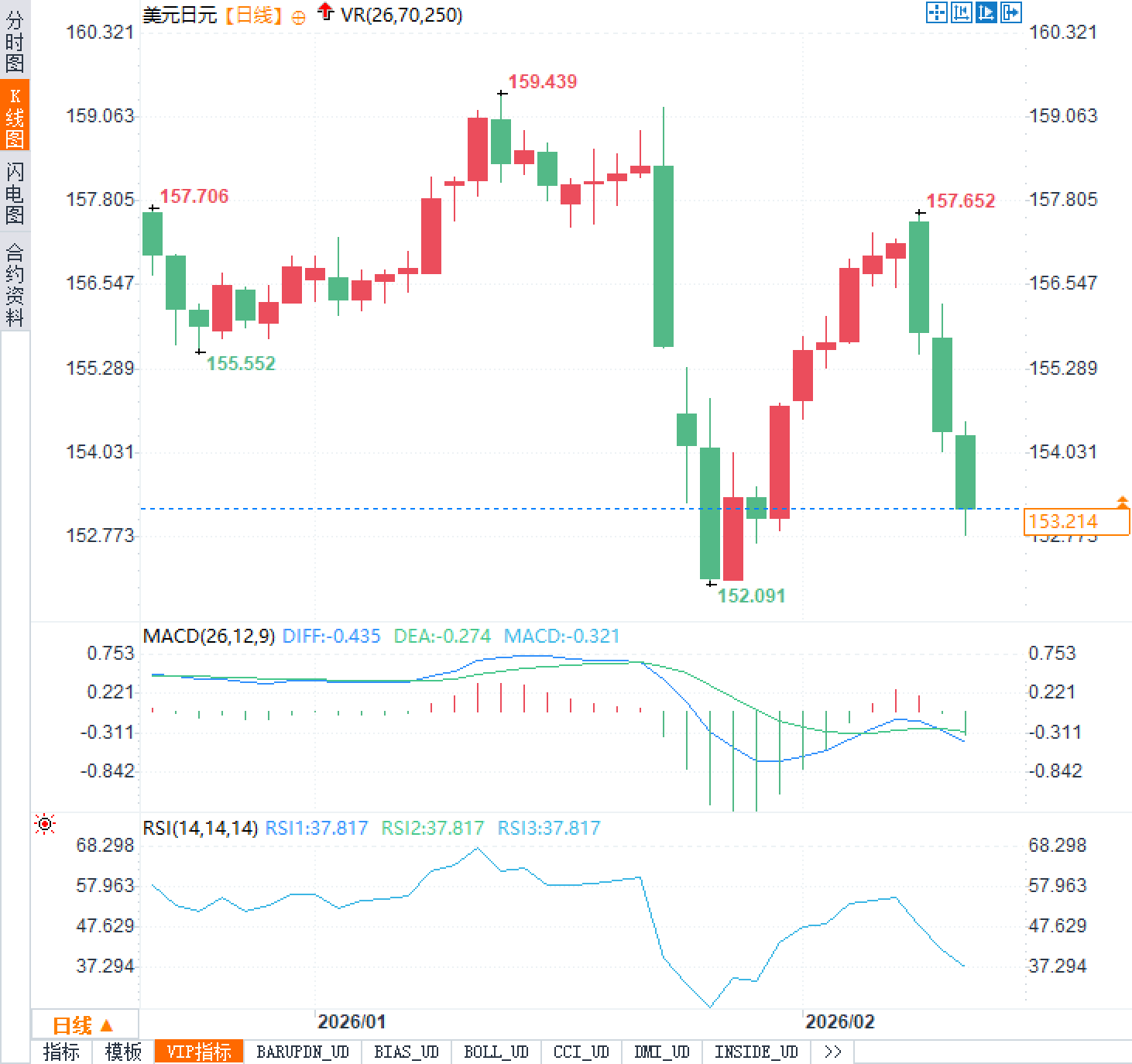
It's worth noting that this market trend seems to contradict some fundamental narratives. Theoretically, if the market expects Japan to push forward with structural reforms or strengthen business policies, the yen should face temporary pressure. However, the reality is that the yen has continued to strengthen, reflecting a typical "buy the rumor, sell the fact" reversal. Previously excessively concentrated short positions in the yen were being covered in a concentrated manner amid rising expectations of interest rate cuts, leading to a sharp price rebound.
The core logic of current trading is no longer simply judging whether data is "good" or "bad," but rather assessing its impact on the Federal Reserve's policy response function. Weak retail sales have opened a window for a rate-cutting narrative, but if the employment report only shows modest changes, the market will likely continue to oscillate around the consensus of "three rate cuts this year," with the yield curve showing more of a pattern adjustment than a trend breakout.
What could truly drive a sustained decline in short-term interest rates and trigger a systemic weakening of the US dollar is a simultaneous and significant downturn in both employment and inflation. Only when these two key variables point to a substantial slowdown in economic momentum could the Federal Reserve be forced to initiate an easing cycle sooner and on a larger scale.
The analysis points out that the real key issue is not whether the data is "good" or "bad," but whether it will bring about an "unexpected" event sufficient to change policy expectations. If new job creation only recovers moderately or weakens slightly, it may only trigger market fluctuations and adjustments within the existing framework; however, if the data is significantly lower than expected, especially if details such as wage growth and unemployment rate indicate a significant slowdown in demand, it could completely ignite expectations of interest rate cuts, push short-term interest rates further down, and exacerbate the depreciation pressure on the US dollar.
Prior to this, several leading indicators had already released cautious signals: the private sector added only 22,000 jobs, job openings fell to 6.5 million in December, the number of layoff announcements climbed to its highest level since 2009, and hiring activity in both manufacturing and service sectors showed signs of weakness. These combined signs have led the market to believe that the job market is weakening, but whether this will ultimately mark a turning point remains to be seen and will require a definitive answer from this report.
Cooling consumption paves the way, but persistent inflation remains a major obstacle.
Before the employment data was released, the December retail sales report gave a bleak signal. All four key metrics fell short of expectations, with overall retail and core retail sales readings both flat, and the control group, which better reflects endogenous consumer momentum, even declining by 0.1%. This performance indicates that US consumers are tightening their spending at the end of the year, and end-user demand is weakening.
From a financial perspective, weakening consumption typically means a cooling demand for goods and services, which helps alleviate inflationary pressures. Indeed, the market reacted swiftly: US Treasury yields showed a "bull market flattening"—meaning the long-term yields fell more than the short-term yields, reflecting stronger expectations for future economic growth and declining inflation; simultaneously, the US dollar index came under pressure, indicating a warming prospect for monetary policy easing.
However, despite signs of easing on the demand side, current inflation remains stubbornly above the Federal Reserve's 2% target. This means that a single instance of weak consumer data is insufficient to prompt the central bank to immediately shift to a significant interest rate cut. But it at least provides more room for policy maneuver—as long as employment and inflation remain weak, the Fed will have greater flexibility in its pace of action, and may even be able to take more aggressive rate-cutting measures. Currently, the interest rate market has largely priced in expectations of approximately three rate cuts this year, and the yield curve has returned to near its early January lows, indicating that repricing has been largely completed.
The US dollar is caught in a "double whammy," while the Japanese yen emerges as the biggest winner.
The most noticeable recent exchange rate fluctuation has been the rapid decline of the USD/JPY exchange rate. As expectations for interest rate cuts shifted towards a dovish stance, the market's implied year-end federal funds rate fell to as low as 60 basis points below current levels, directly exacerbating selling pressure on the dollar. The USD/JPY pair fell 1.0% prior to the report and continued its weakness in subsequent trading sessions, making its performance particularly pronounced.
It's worth noting that this market trend seems to contradict some fundamental narratives. Theoretically, if the market expects Japan to push forward with structural reforms or strengthen business policies, the yen should face temporary pressure. However, the reality is that the yen has continued to strengthen, reflecting a typical "buy the rumor, sell the fact" reversal. Previously excessively concentrated short positions in the yen were being covered in a concentrated manner amid rising expectations of interest rate cuts, leading to a sharp price rebound.
The market has entered a "critical moment," and a true turning point requires a "double whammy."
The core logic of current trading is no longer simply judging whether data is "good" or "bad," but rather assessing its impact on the Federal Reserve's policy response function. Weak retail sales have opened a window for a rate-cutting narrative, but if the employment report only shows modest changes, the market will likely continue to oscillate around the consensus of "three rate cuts this year," with the yield curve showing more of a pattern adjustment than a trend breakout.
What could truly drive a sustained decline in short-term interest rates and trigger a systemic weakening of the US dollar is a simultaneous and significant downturn in both employment and inflation. Only when these two key variables point to a substantial slowdown in economic momentum could the Federal Reserve be forced to initiate an easing cycle sooner and on a larger scale.
- Risk Warning and Disclaimer
- The market involves risk, and trading may not be suitable for all investors. This article is for reference only and does not constitute personal investment advice, nor does it take into account certain users’ specific investment objectives, financial situation, or other needs. Any investment decisions made based on this information are at your own risk.