Is the non-farm payrolls report just an appetizer? The euro's bulls and bears have entered the final standoff.
2026-02-12 20:59:06
The strong US non-farm payroll report released yesterday (February 11th) initially ignited market optimism for the US dollar. The data showed better-than-expected job growth, prompting a swift market reaction that reduced the likelihood of a Fed rate cut in the near term, leading to a brief rise in the dollar. However, this rally was short-lived, with the dollar quickly giving back its gains and even falling back into a consolidation phase. This unusual movement has drawn market attention – why couldn't the dollar capitalize on the positive data?

Analysts believe the market may have already "over-digested" the data or is adopting a wait-and-see approach. Although economic data has been generally positive since the beginning of the year, indicating the resilience of the US economy, traders have not increased their bets on the dollar. This is because a larger risk event is approaching—the US Consumer Price Index (CPI) will be released on Friday. Compared to employment data, inflation is the core indicator determining the direction of the Federal Reserve's monetary policy. Therefore, even with strong non-farm payroll data, the market is choosing to remain on the sidelines, awaiting a more decisive signal.
This also exposes the current contradictory sentiment in the market: on the one hand, there are signs of economic recovery, but on the other hand, there are concerns that recurring inflation may disrupt the pace of policy. If the CPI data is strong, the US dollar is expected to truly begin its rebound; however, if the data is weak, it may further strengthen market expectations for future easing by the Federal Reserve, suppressing the dollar's performance.
Is the Euro Calm? Actually, undercurrents are swirling. Compared to the fluctuations of the US dollar, the euro's recent performance has appeared relatively calm. Currently, the euro/dollar exchange rate is hovering around 1.1870, consolidating within a narrow range of 1.1840 to 1.1920. On the surface, the euro lacks a directional breakout, but this "calm" precisely reflects the market's cautious attitude before a crucial juncture.
The European Central Bank (ECB) recently kept interest rates unchanged and emphasized that its policy will be highly dependent on subsequent economic data, especially the trend of inflation. Although the euro touched the 1.20 level earlier this year, ECB officials did not show a strong willingness to intervene. Vice President de Guindos even publicly stated that the rise at the beginning of the year was "not dramatic," signaling a high tolerance for exchange rate fluctuations. This means that as long as inflation does not spiral out of control, the ECB will not easily intervene to suppress or support the euro.
However, potential risks remain. If future inflation data continues to be weak, the market may begin to price in the possibility of the European Central Bank cutting interest rates in the second half of 2026. If this expectation intensifies, the euro will face downward pressure. Currently, eurozone inflation remains the primary concern for policymakers, and any long-term trend deviating from the 2% target could trigger new market volatility.
The technical stalemate awaits a break, with key indicators revealing subtle signals. From a technical chart perspective, the EUR/USD pair is at a crucial juncture, caught between bulls and bears. Currently, the price is sandwiched between the support level of 1.1840 and the resistance level of 1.1920, forming a typical consolidation pattern. This type of movement often occurs before major data releases, indicating that traders are generally taking a wait-and-see approach and are unwilling to make hasty bets.
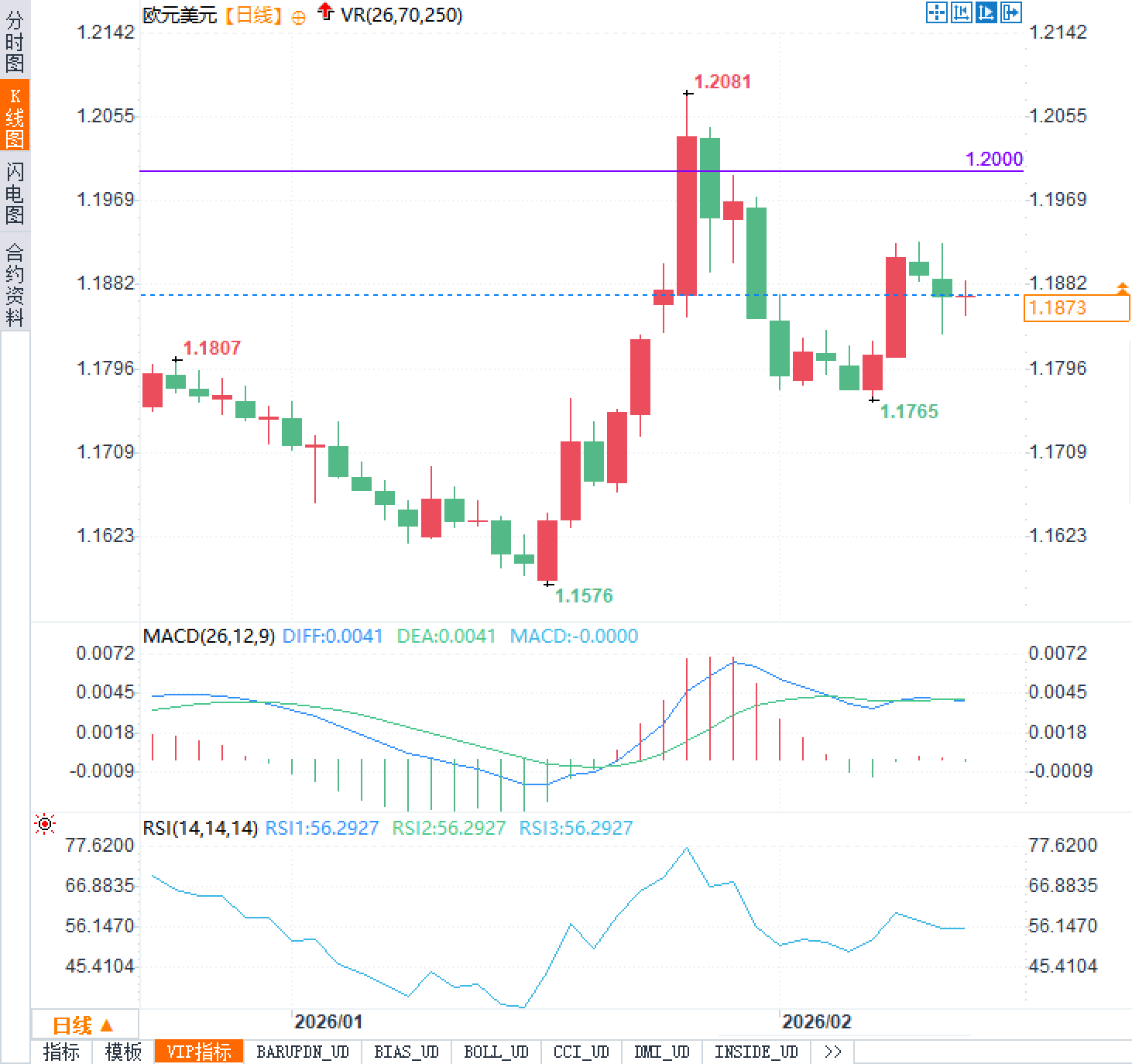
The biggest catalyst at present is the upcoming US CPI data. This data will not only affect the Federal Reserve's policy path but also directly influence the dollar's trajectory, thus determining whether the euro/dollar exchange rate can break out of its range. If the CPI is higher than expected, the dollar may rebound strongly, pushing the exchange rate down to 1.1840 or even lower; conversely, if the CPI is lower than expected, the dollar will be under pressure, and the euro may challenge 1.1920 or even higher.
With the decisive moment approaching, the market is holding its breath, awaiting the "trigger point."
The current main logic in the foreign exchange market is clear: the direction of the US dollar depends on inflation data, while the euro is constrained by the European Central Bank's policy patience and market expectations of interest rate cuts. These two factors converge on the key currency pair, EUR/USD, making it the focus of global capital attention.
With the non-farm payroll data already "digested," market attention has completely shifted to the upcoming CPI report. This data may disrupt the current balance and become the "trigger" for a market breakout. Whether the dollar regains its upward momentum or the euro launches a counterattack, this "data storm" is needed to ignite it.
In the coming days, the 1.1840 and 1.1920 price levels will be crucial battlegrounds for bulls and bears. A decisive break above these levels could trigger a chain reaction, leading to adjustments in other major currency pairs. Until then, the market will remain cautious, awaiting the reveal of that pivotal number.
Analysts believe the market may have already "over-digested" the data or is adopting a wait-and-see approach. Although economic data has been generally positive since the beginning of the year, indicating the resilience of the US economy, traders have not increased their bets on the dollar. This is because a larger risk event is approaching—the US Consumer Price Index (CPI) will be released on Friday. Compared to employment data, inflation is the core indicator determining the direction of the Federal Reserve's monetary policy. Therefore, even with strong non-farm payroll data, the market is choosing to remain on the sidelines, awaiting a more decisive signal.
This also exposes the current contradictory sentiment in the market: on the one hand, there are signs of economic recovery, but on the other hand, there are concerns that recurring inflation may disrupt the pace of policy. If the CPI data is strong, the US dollar is expected to truly begin its rebound; however, if the data is weak, it may further strengthen market expectations for future easing by the Federal Reserve, suppressing the dollar's performance.
Is the Euro Calm? Actually, undercurrents are swirling. Compared to the fluctuations of the US dollar, the euro's recent performance has appeared relatively calm. Currently, the euro/dollar exchange rate is hovering around 1.1870, consolidating within a narrow range of 1.1840 to 1.1920. On the surface, the euro lacks a directional breakout, but this "calm" precisely reflects the market's cautious attitude before a crucial juncture.
The European Central Bank (ECB) recently kept interest rates unchanged and emphasized that its policy will be highly dependent on subsequent economic data, especially the trend of inflation. Although the euro touched the 1.20 level earlier this year, ECB officials did not show a strong willingness to intervene. Vice President de Guindos even publicly stated that the rise at the beginning of the year was "not dramatic," signaling a high tolerance for exchange rate fluctuations. This means that as long as inflation does not spiral out of control, the ECB will not easily intervene to suppress or support the euro.
However, potential risks remain. If future inflation data continues to be weak, the market may begin to price in the possibility of the European Central Bank cutting interest rates in the second half of 2026. If this expectation intensifies, the euro will face downward pressure. Currently, eurozone inflation remains the primary concern for policymakers, and any long-term trend deviating from the 2% target could trigger new market volatility.
The technical stalemate awaits a break, with key indicators revealing subtle signals. From a technical chart perspective, the EUR/USD pair is at a crucial juncture, caught between bulls and bears. Currently, the price is sandwiched between the support level of 1.1840 and the resistance level of 1.1920, forming a typical consolidation pattern. This type of movement often occurs before major data releases, indicating that traders are generally taking a wait-and-see approach and are unwilling to make hasty bets.
The biggest catalyst at present is the upcoming US CPI data. This data will not only affect the Federal Reserve's policy path but also directly influence the dollar's trajectory, thus determining whether the euro/dollar exchange rate can break out of its range. If the CPI is higher than expected, the dollar may rebound strongly, pushing the exchange rate down to 1.1840 or even lower; conversely, if the CPI is lower than expected, the dollar will be under pressure, and the euro may challenge 1.1920 or even higher.
With the decisive moment approaching, the market is holding its breath, awaiting the "trigger point."
The current main logic in the foreign exchange market is clear: the direction of the US dollar depends on inflation data, while the euro is constrained by the European Central Bank's policy patience and market expectations of interest rate cuts. These two factors converge on the key currency pair, EUR/USD, making it the focus of global capital attention.
With the non-farm payroll data already "digested," market attention has completely shifted to the upcoming CPI report. This data may disrupt the current balance and become the "trigger" for a market breakout. Whether the dollar regains its upward momentum or the euro launches a counterattack, this "data storm" is needed to ignite it.
In the coming days, the 1.1840 and 1.1920 price levels will be crucial battlegrounds for bulls and bears. A decisive break above these levels could trigger a chain reaction, leading to adjustments in other major currency pairs. Until then, the market will remain cautious, awaiting the reveal of that pivotal number.
- Risk Warning and Disclaimer
- The market involves risk, and trading may not be suitable for all investors. This article is for reference only and does not constitute personal investment advice, nor does it take into account certain users’ specific investment objectives, financial situation, or other needs. Any investment decisions made based on this information are at your own risk.