Why is the market panicking despite the sudden drop in CPI? Is the interest rate cut a sign of stability or a trap?
2026-02-13 21:43:22
On Friday (February 13), the market reacted strongly to the release of the highly anticipated US January Consumer Price Index (CPI) data. The data, which came in below expectations across the board, eased market concerns about inflationary pressures and reinforced expectations that the Federal Reserve would continue to cut interest rates this year.

Overall, the CPI rose 0.2% month-on-month in January (expected 0.3%) and 2.4% year-on-year (expected 2.5%), a slowdown from the 2.7% in the previous month. Core CPI rose 0.3% month-on-month and 2.5% year-on-year, both in line with expectations.
Prior to the data release, the market's assessment of the US economic situation was complex. On the one hand, recent strong employment data (last month's non-farm payrolls increased more than expected, and the unemployment rate fell to 4.3%) provided support for economic resilience; on the other hand, the market still had doubts about whether inflation could fall as expected.
This cautious sentiment was particularly evident in community discussions. Some analysts pointed out that core inflation may face upward pressure. Considering the potential transmission effects of tariff rhetoric and the seasonal price reset at the beginning of the year, if core inflation does not show a significant cooling, it will pose a challenge to the Federal Reserve's decision-making. Others suggested that the government shutdown might have led to an underestimation of previous data, thus amplifying the volatility of this data.
These discussions reflect widespread market caution regarding potential upside risks. Against this backdrop, the bond market has already priced in defensively, with the 10-year US Treasury yield falling to a near three-month low, while the volatility index VIX has climbed, indicating that risk aversion dominated ahead of the data release.
Following the release of lower-than-expected inflation data, market logic quickly shifted to "anti-inflation trading," resulting in a sharp reaction across various asset classes:
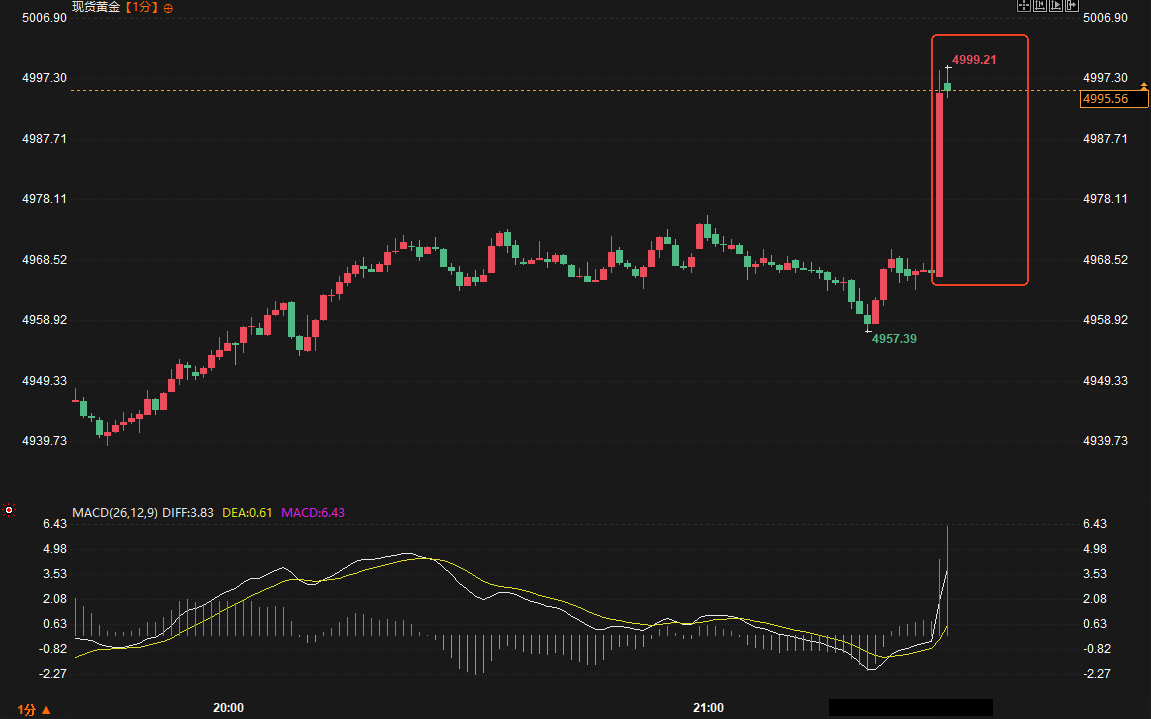
1. Gold: As a typical safe-haven asset, gold prices surged rapidly after the data release. Spot gold jumped more than $59 within one minute, demonstrating a rapid release of bullish momentum. The core logic behind this movement is that easing inflationary pressures have reduced the necessity for the Federal Reserve to tighten policy, thereby increasing the attractiveness of gold, a non-interest-bearing asset.
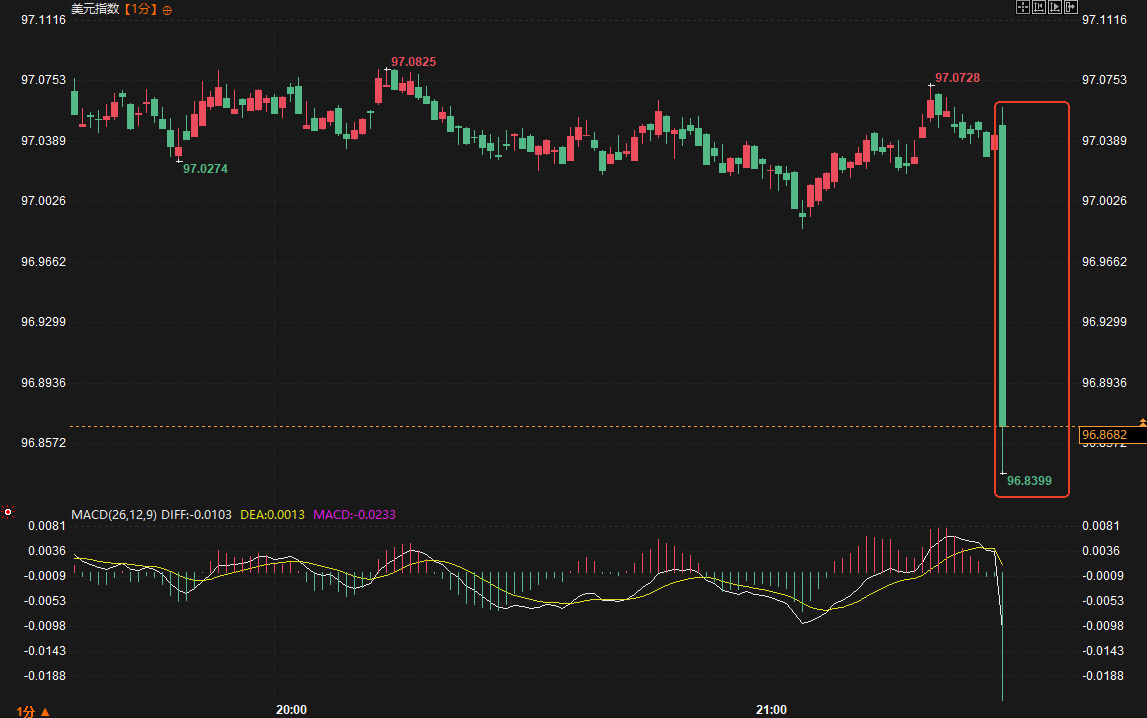
2. US Dollar: The US dollar index fell sharply, breaking through a key support level and weakening its short-term trend. This reaction is consistent with the dovish signals released by inflation data: cooling inflation means the Federal Reserve may shift to interest rate cuts more quickly, which will weaken the dollar's interest rate advantage and reduce its relative attractiveness.
3. US Treasuries: US Treasury yields declined further, with the 2-year yield, which is more sensitive to interest rates, falling more than the 10-year yield. This has led to a steepening of the yield curve, reflecting increased market expectations for lower short-term interest rates (i.e., rate cuts). Historically, the yield curve has been deeply inverted during periods of peak inflation, and the current steepening is generally seen as a signal of renewed investor confidence in a "soft landing" for the economy.
Overall, the lower-than-expected overall inflation readings quickly translated into a bullish market reaction: safe-haven assets (gold) rose, the dollar came under pressure, and the bond market reinforced its dovish pricing in a Fed rate cut this year.
The most direct impact of this CPI data is the reinforcement of the Federal Reserve's easing policy path. Following the data release, US interest rate futures indicated a slight upward revision in market expectations for a June rate cut. This suggests that investors view this data as a clue that the window for rate cuts is widening.
However, caution must still be exercised when interpreting the data:
Sticky core inflation: Although overall inflation is close to the 2% target, core inflation remains at 2.5% year-on-year, without a significant acceleration in its decline. In particular, the housing component, which has a large weighting (including landlord-equivalent rent), is still rising, which constitutes potential inflation stickiness and limits the room for excessive market optimism.
Cautious voices from institutions: While retail traders generally believe that declining inflation is beneficial to the market, some institutions caution that the risk of liquidity withdrawal should not be ignored. They suggest focusing on month-on-month changes rather than just year-on-year data to avoid complacency based on single-month data.
Looking ahead, most economists expect inflation to continue moving toward the 2% target. If subsequent data confirms this trajectory, the Federal Reserve will have more policy space to balance inflation and employment. However, in the short term, the market will focus on statements from Fed officials and next month's data to assess the sustainability of this slowdown in inflation. Over-interpreting single data points should be avoided; the evolution of underlying fundamentals will be key to determining long-term trends.
Overall, the CPI rose 0.2% month-on-month in January (expected 0.3%) and 2.4% year-on-year (expected 2.5%), a slowdown from the 2.7% in the previous month. Core CPI rose 0.3% month-on-month and 2.5% year-on-year, both in line with expectations.
Ahead of data release: Market sentiment is cautious, with concerns about the risk of an inflation rebound.
Prior to the data release, the market's assessment of the US economic situation was complex. On the one hand, recent strong employment data (last month's non-farm payrolls increased more than expected, and the unemployment rate fell to 4.3%) provided support for economic resilience; on the other hand, the market still had doubts about whether inflation could fall as expected.
This cautious sentiment was particularly evident in community discussions. Some analysts pointed out that core inflation may face upward pressure. Considering the potential transmission effects of tariff rhetoric and the seasonal price reset at the beginning of the year, if core inflation does not show a significant cooling, it will pose a challenge to the Federal Reserve's decision-making. Others suggested that the government shutdown might have led to an underestimation of previous data, thus amplifying the volatility of this data.
These discussions reflect widespread market caution regarding potential upside risks. Against this backdrop, the bond market has already priced in defensively, with the 10-year US Treasury yield falling to a near three-month low, while the volatility index VIX has climbed, indicating that risk aversion dominated ahead of the data release.
Following the data release: The cooling of inflation is confirmed, with significant reactions in stocks, bonds, gold, and foreign exchange.
Following the release of lower-than-expected inflation data, market logic quickly shifted to "anti-inflation trading," resulting in a sharp reaction across various asset classes:
1. Gold: As a typical safe-haven asset, gold prices surged rapidly after the data release. Spot gold jumped more than $59 within one minute, demonstrating a rapid release of bullish momentum. The core logic behind this movement is that easing inflationary pressures have reduced the necessity for the Federal Reserve to tighten policy, thereby increasing the attractiveness of gold, a non-interest-bearing asset.
2. US Dollar: The US dollar index fell sharply, breaking through a key support level and weakening its short-term trend. This reaction is consistent with the dovish signals released by inflation data: cooling inflation means the Federal Reserve may shift to interest rate cuts more quickly, which will weaken the dollar's interest rate advantage and reduce its relative attractiveness.
3. US Treasuries: US Treasury yields declined further, with the 2-year yield, which is more sensitive to interest rates, falling more than the 10-year yield. This has led to a steepening of the yield curve, reflecting increased market expectations for lower short-term interest rates (i.e., rate cuts). Historically, the yield curve has been deeply inverted during periods of peak inflation, and the current steepening is generally seen as a signal of renewed investor confidence in a "soft landing" for the economy.
Overall, the lower-than-expected overall inflation readings quickly translated into a bullish market reaction: safe-haven assets (gold) rose, the dollar came under pressure, and the bond market reinforced its dovish pricing in a Fed rate cut this year.
Outlook: Expectations for interest rate cuts are rising, but sticky inflation remains a concern.
The most direct impact of this CPI data is the reinforcement of the Federal Reserve's easing policy path. Following the data release, US interest rate futures indicated a slight upward revision in market expectations for a June rate cut. This suggests that investors view this data as a clue that the window for rate cuts is widening.
However, caution must still be exercised when interpreting the data:
Sticky core inflation: Although overall inflation is close to the 2% target, core inflation remains at 2.5% year-on-year, without a significant acceleration in its decline. In particular, the housing component, which has a large weighting (including landlord-equivalent rent), is still rising, which constitutes potential inflation stickiness and limits the room for excessive market optimism.
Cautious voices from institutions: While retail traders generally believe that declining inflation is beneficial to the market, some institutions caution that the risk of liquidity withdrawal should not be ignored. They suggest focusing on month-on-month changes rather than just year-on-year data to avoid complacency based on single-month data.
Looking ahead, most economists expect inflation to continue moving toward the 2% target. If subsequent data confirms this trajectory, the Federal Reserve will have more policy space to balance inflation and employment. However, in the short term, the market will focus on statements from Fed officials and next month's data to assess the sustainability of this slowdown in inflation. Over-interpreting single data points should be avoided; the evolution of underlying fundamentals will be key to determining long-term trends.
- Risk Warning and Disclaimer
- The market involves risk, and trading may not be suitable for all investors. This article is for reference only and does not constitute personal investment advice, nor does it take into account certain users’ specific investment objectives, financial situation, or other needs. Any investment decisions made based on this information are at your own risk.