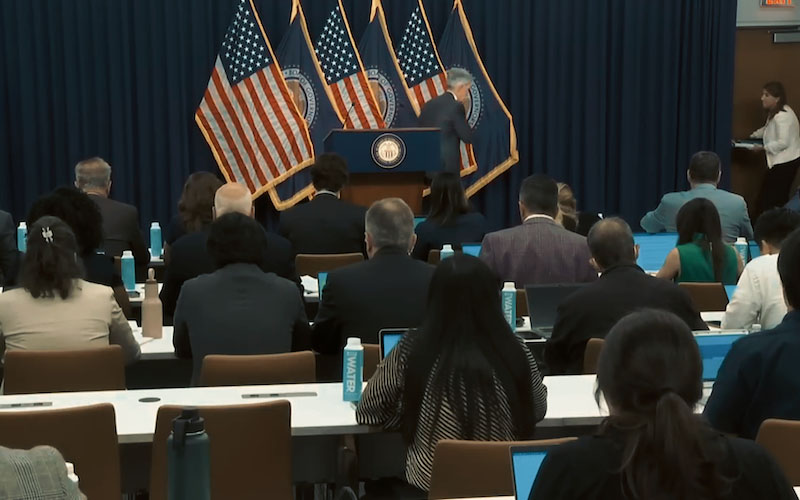
Inflation data reinforced the Federal Reserve's wait-and-see signal, causing the yen to surge and record its biggest weekly gain in 15 months.
2026-02-14 08:02:08
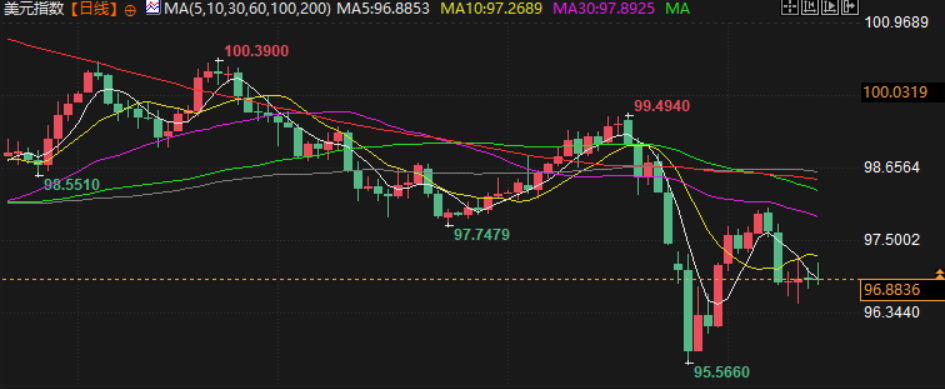
The dollar was largely unchanged on Friday after U.S. inflation rose less than expected in January, reinforcing market expectations that the Federal Reserve would keep interest rates unchanged in the near term. The dollar index dipped 0.07% to 96.85, bringing its weekly decline to 0.84%.

U.S. inflation slowed to 2.4% year-on-year in January, a larger drop than economists had expected, mainly driven by declines in gasoline and used car prices. Excluding volatile food and energy items, core CPI rose 2.5% year-on-year and 0.3% month-on-month in January, in line with expectations.
Data shows that while the overall slowdown in price increases has eased market concerns about sustained inflation triggered by high tariffs, consumers still face pressure from rising service costs. January saw the fastest monthly increase in costs for services such as airfares and hospital care in a year, while prices for clothing, televisions, home appliances, and new cars also rose sharply compared to December, indicating that retailers are attempting to pass on the costs of tariffs to consumers.
With the release of this inflation data following the better-than-expected jobs report two days prior, analysts believe it's unlikely to prompt the Federal Reserve to change its current wait-and-see stance on interest rates. The head of US research at Societe Generale pointed out that the underlying inflation trend has not cooled rapidly to the Fed's 2% target level, and the impact of tariffs may not subside until the second half of the year.
It is worth noting that the release of the January inflation report was slightly delayed due to the recent partial government shutdown. The prolonged shutdown in the fall previously resulted in the loss of some price data, but economists say this issue will not affect recent month-on-month figures. Current consumer confidence surveys show that high prices remain one of the most pressing concerns for the public and are becoming a major issue for both parties in the congressional elections.
Goldman Sachs analysts pointed out that the relative weakness of the US dollar is partly due to the volatility in US policy in January and the sell-off of technology stocks, which reduced the attractiveness of US stocks. The market is waiting for the central bank to release clearer interest rate signals.
The Japanese yen was the biggest highlight in the foreign exchange market this week, recording a nearly 3% weekly gain against the dollar, marking its largest weekly gain in about 15 months since November 2024. At the close of trading in New York on Friday, the dollar fell 0.08% against the yen to 152.67. Analysts believe that the yen's strength was driven by easing investor concerns about government finances after Prime Minister Sanae Takaichi's election victory. The yen also rose 2.37% against the euro this week, its strongest performance in a year.
Analysts believe the yen may experience some short-term volatility to assess the impact of the LDP's landslide victory on the foreign exchange market. With stronger public support, fiscal policy may shift towards a more expansionary stance, such as a significant increase in the likelihood of a food consumption tax reduction. While this would further exacerbate Japan's fiscal pressures, it could also push up inflation and potentially bring forward the Bank of Japan's interest rate hike timeline. With the US Federal Reserve maintaining a wait-and-see approach and the Bank of Japan expected to raise interest rates no earlier than the second quarter of this year, the USD/JPY exchange rate could potentially rebound to near 160.
The euro edged up 0.02% to 1.1873 against the dollar, gaining about 0.5% for the week. The Australian dollar performed strongly, becoming the best-performing major currency so far in 2026, still rising nearly 1% against the dollar this week, closing at US$0.70765 on Friday. Reserve Bank of Australia Governor Michelle Bullock warned at a Senate hearing on Thursday that the current inflation rate of over 3% is "unacceptable," and emphasized that the central bank is prepared to raise interest rates again if inflation remains stubborn. This statement echoed comments made the previous day by Deputy Andrew Hauser, who noted that current inflation levels remain "too high" and continue to be a major challenge for the Monetary Policy Committee.
U.S. inflation slowed to 2.4% year-on-year in January, a larger drop than economists had expected, mainly driven by declines in gasoline and used car prices. Excluding volatile food and energy items, core CPI rose 2.5% year-on-year and 0.3% month-on-month in January, in line with expectations.
Data shows that while the overall slowdown in price increases has eased market concerns about sustained inflation triggered by high tariffs, consumers still face pressure from rising service costs. January saw the fastest monthly increase in costs for services such as airfares and hospital care in a year, while prices for clothing, televisions, home appliances, and new cars also rose sharply compared to December, indicating that retailers are attempting to pass on the costs of tariffs to consumers.
With the release of this inflation data following the better-than-expected jobs report two days prior, analysts believe it's unlikely to prompt the Federal Reserve to change its current wait-and-see stance on interest rates. The head of US research at Societe Generale pointed out that the underlying inflation trend has not cooled rapidly to the Fed's 2% target level, and the impact of tariffs may not subside until the second half of the year.
It is worth noting that the release of the January inflation report was slightly delayed due to the recent partial government shutdown. The prolonged shutdown in the fall previously resulted in the loss of some price data, but economists say this issue will not affect recent month-on-month figures. Current consumer confidence surveys show that high prices remain one of the most pressing concerns for the public and are becoming a major issue for both parties in the congressional elections.
Goldman Sachs analysts pointed out that the relative weakness of the US dollar is partly due to the volatility in US policy in January and the sell-off of technology stocks, which reduced the attractiveness of US stocks. The market is waiting for the central bank to release clearer interest rate signals.
The Japanese yen was the biggest highlight in the foreign exchange market this week, recording a nearly 3% weekly gain against the dollar, marking its largest weekly gain in about 15 months since November 2024. At the close of trading in New York on Friday, the dollar fell 0.08% against the yen to 152.67. Analysts believe that the yen's strength was driven by easing investor concerns about government finances after Prime Minister Sanae Takaichi's election victory. The yen also rose 2.37% against the euro this week, its strongest performance in a year.
Analysts believe the yen may experience some short-term volatility to assess the impact of the LDP's landslide victory on the foreign exchange market. With stronger public support, fiscal policy may shift towards a more expansionary stance, such as a significant increase in the likelihood of a food consumption tax reduction. While this would further exacerbate Japan's fiscal pressures, it could also push up inflation and potentially bring forward the Bank of Japan's interest rate hike timeline. With the US Federal Reserve maintaining a wait-and-see approach and the Bank of Japan expected to raise interest rates no earlier than the second quarter of this year, the USD/JPY exchange rate could potentially rebound to near 160.
The euro edged up 0.02% to 1.1873 against the dollar, gaining about 0.5% for the week. The Australian dollar performed strongly, becoming the best-performing major currency so far in 2026, still rising nearly 1% against the dollar this week, closing at US$0.70765 on Friday. Reserve Bank of Australia Governor Michelle Bullock warned at a Senate hearing on Thursday that the current inflation rate of over 3% is "unacceptable," and emphasized that the central bank is prepared to raise interest rates again if inflation remains stubborn. This statement echoed comments made the previous day by Deputy Andrew Hauser, who noted that current inflation levels remain "too high" and continue to be a major challenge for the Monetary Policy Committee.
- Risk Warning and Disclaimer
- The market involves risk, and trading may not be suitable for all investors. This article is for reference only and does not constitute personal investment advice, nor does it take into account certain users’ specific investment objectives, financial situation, or other needs. Any investment decisions made based on this information are at your own risk.