Crude oil trading alert: Geopolitical risks and a weaker dollar are pushing up oil prices, but supply pressures are limiting the upside potential.
2026-02-17 08:09:10
On Tuesday during Asian trading hours, international crude oil futures fluctuated upwards as market risk appetite improved. US crude oil (WTI) traded at $63.73 per barrel, up $0.92, or 1.46%, with an intraday high of $63.87 and a low of $62.49 per barrel.
This round of price increases was primarily driven by both geopolitical risks and a weakening US dollar. The security situation in the Red Sea remains tense, compounded by escalating geopolitical risks related to Iran, raising market concerns about potential supply disruptions.
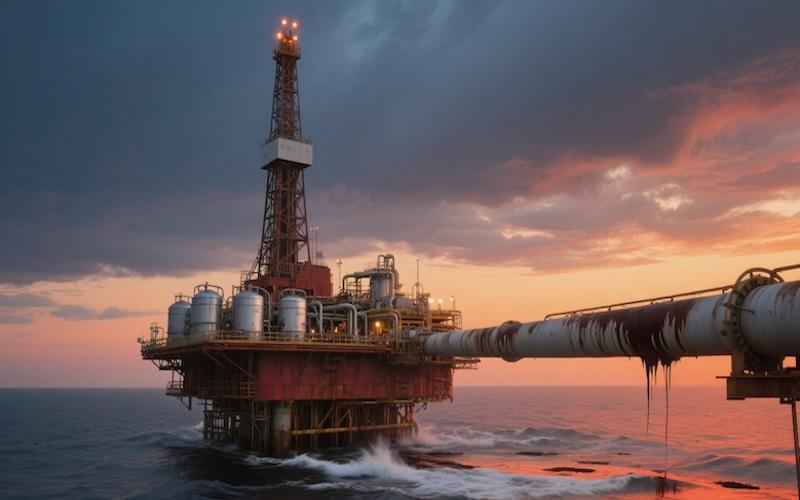
The Middle East accounts for about one-third of global crude oil production, and a deterioration in the situation would pose a substantial challenge to the supply side. Oil prices have risen by about 10% so far this year, with geopolitical premiums being a key supporting factor.
However, with the recent temporary easing of the risk of direct military conflict, market sentiment has cooled somewhat.
Meanwhile, the International Energy Agency recently lowered its forecast for global oil demand growth, pointing out that uneven economic recovery could dampen consumption growth.
This caused some of the previous gains to be reversed. On the supply side, some OPEC+ members believe there is room to resume production increases in April and say that market concerns about oversupply are exaggerated.
The organization will hold a meeting on March 1, where production policy will be the focus. A representative indicated that the final decision may depend on whether the United States takes military action against Iran or reaches a new nuclear agreement.
In addition, US-led negotiations aimed at ending the Russia-Ukraine conflict have begun in Geneva, but the likelihood of a swift end to the conflict and the full return of Russian crude oil to the international market remains low.
Last weekend's drone attacks on energy facilities along the Black Sea coast have also reinforced the reality of supply risks.
Robert Lenny, head of commodities and carbon research at Westpac, pointed out that while short-term geopolitical factors provide support, supply will once again dominate price movements in the coming months.
With global production gradually increasing in the first half of the year, Brent crude oil may face pressure to fall back to just over $60.
Overall, oil prices are currently in a mixed state: geopolitical risks and a weaker dollar are providing support, while high inventory levels and potential production increases are limiting gains.
In the short term, the market is expected to maintain a range-bound trading pattern, with close attention focused on inventory data, the OPEC+ meeting, and developments in the Middle East.
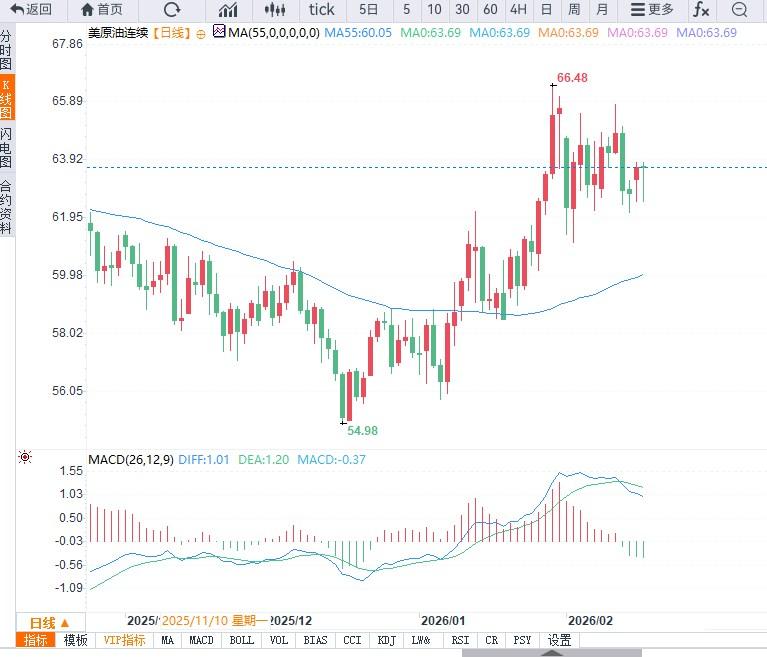
From a daily chart perspective, WTI crude oil is fluctuating within the $62.00–$64.50 range. The price has climbed back above the 20-day moving average, but the 50-day moving average is still providing some resistance, indicating that bullish momentum has not yet been fully released.
The area around $63.80 forms a short-term resistance zone. If it breaks through and holds above $64.50, it may test the $65.50 level. Support levels to watch are $62.50 and the psychological level of $62.00. A break below these levels could lead to a return to the $61 area.
The overall technical structure indicates that the current trend is more inclined towards consolidation and correction than a trend breakout.
Editor's Note:
The current main logic behind oil prices remains the interplay between "geopolitical risk premiums" and "actual supply pressures." Short-term geopolitical factors are providing sentiment support to the market.
However, with increasing expectations of supply in the medium term and a slowing demand growth outlook, oil prices are unlikely to form a sustained one-sided upward trend. Attention should be paid to inventory data and OPEC+ policy signals, while also being wary of the risk of amplified volatility due to unforeseen geopolitical events.
This round of price increases was primarily driven by both geopolitical risks and a weakening US dollar. The security situation in the Red Sea remains tense, compounded by escalating geopolitical risks related to Iran, raising market concerns about potential supply disruptions.
The Middle East accounts for about one-third of global crude oil production, and a deterioration in the situation would pose a substantial challenge to the supply side. Oil prices have risen by about 10% so far this year, with geopolitical premiums being a key supporting factor.
However, with the recent temporary easing of the risk of direct military conflict, market sentiment has cooled somewhat.
Meanwhile, the International Energy Agency recently lowered its forecast for global oil demand growth, pointing out that uneven economic recovery could dampen consumption growth.
This caused some of the previous gains to be reversed. On the supply side, some OPEC+ members believe there is room to resume production increases in April and say that market concerns about oversupply are exaggerated.
The organization will hold a meeting on March 1, where production policy will be the focus. A representative indicated that the final decision may depend on whether the United States takes military action against Iran or reaches a new nuclear agreement.
In addition, US-led negotiations aimed at ending the Russia-Ukraine conflict have begun in Geneva, but the likelihood of a swift end to the conflict and the full return of Russian crude oil to the international market remains low.
Last weekend's drone attacks on energy facilities along the Black Sea coast have also reinforced the reality of supply risks.
Robert Lenny, head of commodities and carbon research at Westpac, pointed out that while short-term geopolitical factors provide support, supply will once again dominate price movements in the coming months.
With global production gradually increasing in the first half of the year, Brent crude oil may face pressure to fall back to just over $60.
Overall, oil prices are currently in a mixed state: geopolitical risks and a weaker dollar are providing support, while high inventory levels and potential production increases are limiting gains.
In the short term, the market is expected to maintain a range-bound trading pattern, with close attention focused on inventory data, the OPEC+ meeting, and developments in the Middle East.
From a daily chart perspective, WTI crude oil is fluctuating within the $62.00–$64.50 range. The price has climbed back above the 20-day moving average, but the 50-day moving average is still providing some resistance, indicating that bullish momentum has not yet been fully released.
The area around $63.80 forms a short-term resistance zone. If it breaks through and holds above $64.50, it may test the $65.50 level. Support levels to watch are $62.50 and the psychological level of $62.00. A break below these levels could lead to a return to the $61 area.
The overall technical structure indicates that the current trend is more inclined towards consolidation and correction than a trend breakout.
Editor's Note:
The current main logic behind oil prices remains the interplay between "geopolitical risk premiums" and "actual supply pressures." Short-term geopolitical factors are providing sentiment support to the market.
However, with increasing expectations of supply in the medium term and a slowing demand growth outlook, oil prices are unlikely to form a sustained one-sided upward trend. Attention should be paid to inventory data and OPEC+ policy signals, while also being wary of the risk of amplified volatility due to unforeseen geopolitical events.
- Risk Warning and Disclaimer
- The market involves risk, and trading may not be suitable for all investors. This article is for reference only and does not constitute personal investment advice, nor does it take into account certain users’ specific investment objectives, financial situation, or other needs. Any investment decisions made based on this information are at your own risk.