February 18th Financial Breakfast: Progress in US-Iran negotiations leads to gold price pullback, potentially testing the $4800 level; oil prices fall to a two-week low.
2026-02-18 07:11:38
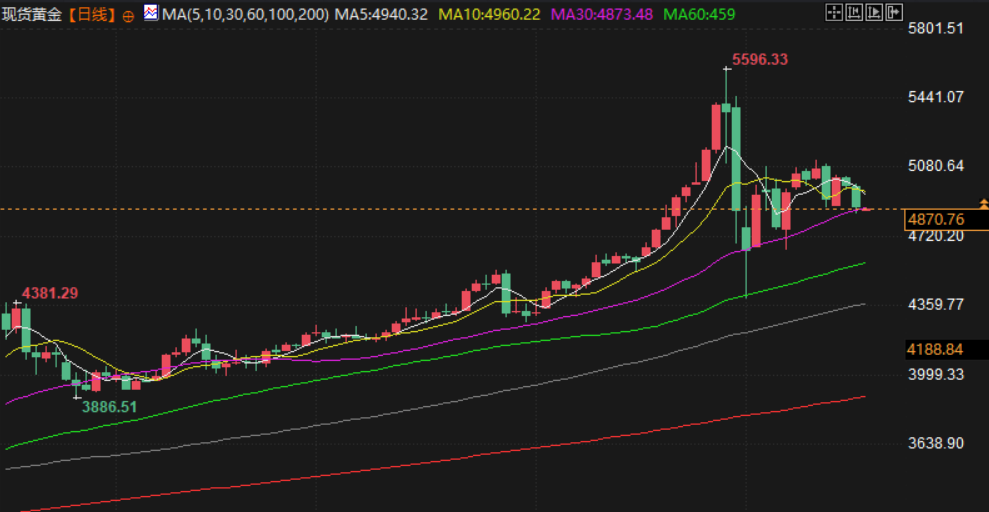
On Wednesday (February 18, Beijing time) in early Asian trading, spot gold was trading around $4,870 per ounce. Gold prices fell more than 2% on Tuesday and are expected to test the $4,800 per ounce level during the day. Signs of progress in US-Iran negotiations weakened safe-haven demand, and a stronger dollar exacerbated selling pressure. US crude oil was trading around $62.16 per barrel. Oil prices fell to a two-week low on Tuesday as the Iranian foreign minister stated that the US and Iran had reached a consensus on the main "guiding principles" of nuclear negotiations, and the market expected a de-escalation of tensions between the two countries.

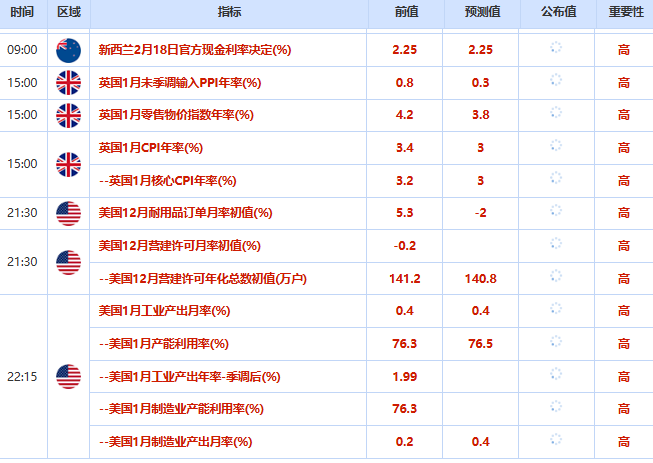
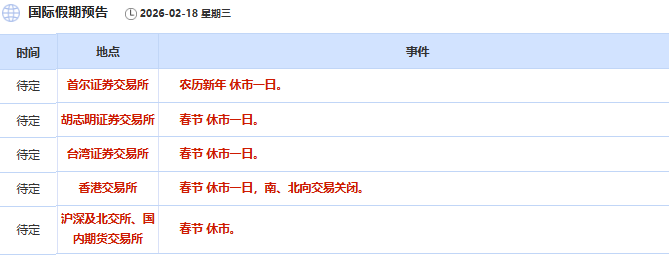
U.S. stocks managed a slight gain on Tuesday after struggling in early trading, with technology stocks rebounding from intraday lows and financial stocks also providing support. The S&P 500 information technology sector fell as much as 1.5% during the session but ultimately recovered to close up 0.5%, with gains in Nvidia and Apple offsetting losses in Microsoft and Oracle.
The previous week, market concerns that artificial intelligence would disrupt business models triggered a sell-off in software companies, brokerage firms, and trucking companies, resulting in the biggest weekly drop in Wall Street's three major stock indexes since mid-November.
Tim Ghriskey, senior portfolio strategist at Ingalls & Snyder in New York, said, "Investor flows are currently diversified, and market volatility is high—not daily, but alternating ups and downs have become the norm. The market is currently too short-sighted, and the artificial intelligence sector will eventually regain favor."
On Monday, Alibaba released its new AI model, Qwen3.5, designed to independently perform complex tasks. Despite a rebound in tech stocks, software stocks remained under pressure. The S&P 500 Software Index closed down 1.6%, with Intuit and Cadence Design falling more than 5%, making them the worst-performing stocks in the index.
The Dow Jones Industrial Average rose 0.07% to close at 49,533.19 points; the S&P 500 rose 0.10% to close at 6,843.22 points; and the Nasdaq Composite rose 0.14% to close at 22,578.38 points.
The S&P 500 Financials sector led the gains among the 11 sectors on the day. Gains in bank stocks, including Goldman Sachs and JPMorgan Chase, helped the Dow Jones Industrial Average recover from a 0.7% intraday decline. The Consumer Staples sector fell 1.5%, making it the worst-performing sector in the S&P 500.
This week, the Federal Reserve's preferred inflation gauge, the Personal Consumption Expenditures (PCE) price index report, will be the focus, as the market will glean insights into the state of inflation and its impact on the Fed's interest rate path. Last week's weaker-than-expected consumer inflation data slightly increased market expectations for a rate cut this year. Traders are currently pricing in a roughly 63% probability of a 25-basis-point rate cut at the Fed's June meeting, the first meeting with a probability exceeding 50%.
Chicago Fed President Goolsby stated that if inflation falls back towards the Fed's 2% target, there could be "multiple" rate cuts this year; while Governor Barr pointed out that given the continued risks to the US inflation outlook, the next rate cut may have to wait a considerable amount of time. Furthermore, San Francisco Fed President Daly emphasized that the Fed must conduct in-depth data analysis to determine whether artificial intelligence is driving productivity growth, thereby enabling faster economic growth without triggering inflation or requiring the Fed to tighten policy to "put the brakes" on the economy.
Gold prices fell more than 2% on Tuesday as signs of progress in US-Iran talks weakened safe-haven demand, while a stronger dollar exacerbated the selling pressure. Spot gold fell 2.2% to $4,884.46 an ounce. US gold futures for April delivery settled down 2.8% at $4,905.90 an ounce.
Kitco Metals senior analyst Jim Wyckoff said, "Bull markets need frequent new fundamental support, and in the case of the gold and silver markets, there has been a lack of new bullish fundamental news to push prices higher recently."
Iranian Foreign Minister Arazig said on Tuesday that Iran and the United States had reached a consensus on key "guiding principles" for negotiations to resolve the long-standing nuclear dispute, but this did not mean an agreement was imminent. Meanwhile, under US mediation, Ukrainian and Russian negotiators began two days of peace talks in Geneva.
Wyckoff points out that these negotiations highlight negative factors for gold and silver. If the US can avoid attacking Iran, market anxiety will ease, which is bearish for safe-haven assets like gold and silver, and the same applies to the Russia-Ukraine negotiations.
Investors are awaiting the release of the Federal Reserve's January meeting minutes on Wednesday and the U.S. December Personal Consumption Expenditures (PCE) price index on Friday for clues about the interest rate outlook. The market expects the first rate cut this year to occur in June.
Spot silver fell 4.1% to $73.47 an ounce, after hitting a low of $71.92 during the session. Spot platinum fell 1.3% to $2,017.06 an ounce, and palladium fell 3.1% to $1,670.25 an ounce.
Oil prices fell about 2% on Tuesday to a two-week low as the Iranian foreign minister said the U.S. and Iran had reached an agreement on key "guiding principles" for nuclear negotiations, fueling market expectations of easing tensions between the two countries.
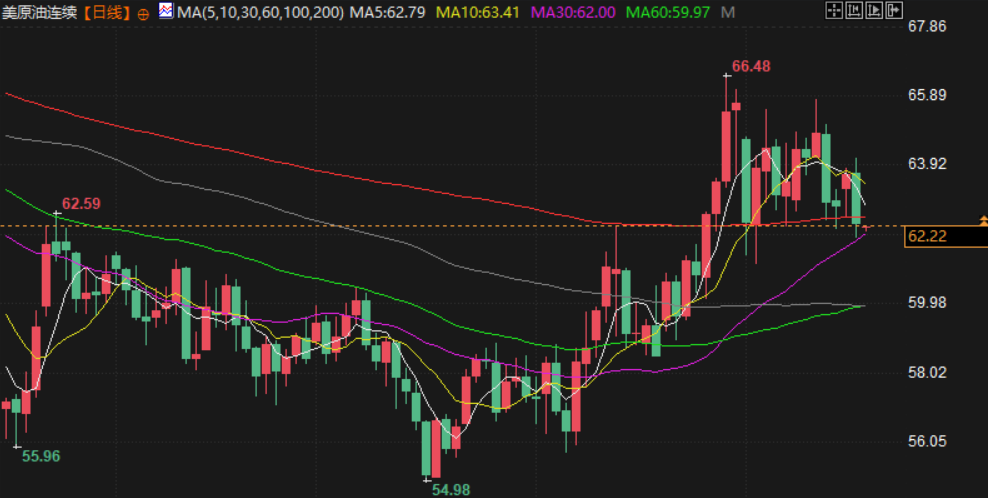
Brent crude futures fell 1.8% to settle at $67.42 a barrel, while WTI crude futures fell 0.9% to settle at $62.33 a barrel. These were the lowest closing prices for Brent crude since February 3 and for WTI crude since February 2.
Iranian Foreign Minister Araqchi said on Tuesday that Iran and the United States reached an agreement on key “guiding principles” during the second round of indirect talks in Geneva on the nuclear dispute, but this does not mean that an agreement is imminent.
The United States is increasing its troop presence in the Middle East during the negotiations. Iran's Supreme Leader stated on Tuesday that any U.S. attempt to overthrow his government will fail. Meanwhile, Iranian state media reported that Iran closed the Strait of Hormuz for several hours on Tuesday, but did not specify whether this vital global oil export route had been fully reopened.
Sugandha Sachdeva, founder of the New Delhi-based research firm SS WealthStreet, points out that oil prices are likely to continue to fluctuate, with sharp rises and falls primarily driven by diplomatic signals rather than purely supply and demand fundamentals. Another factor influencing oil prices is the gradual increase in production at Kazakhstan's giant Tengiz oil field, which was shut down in January.
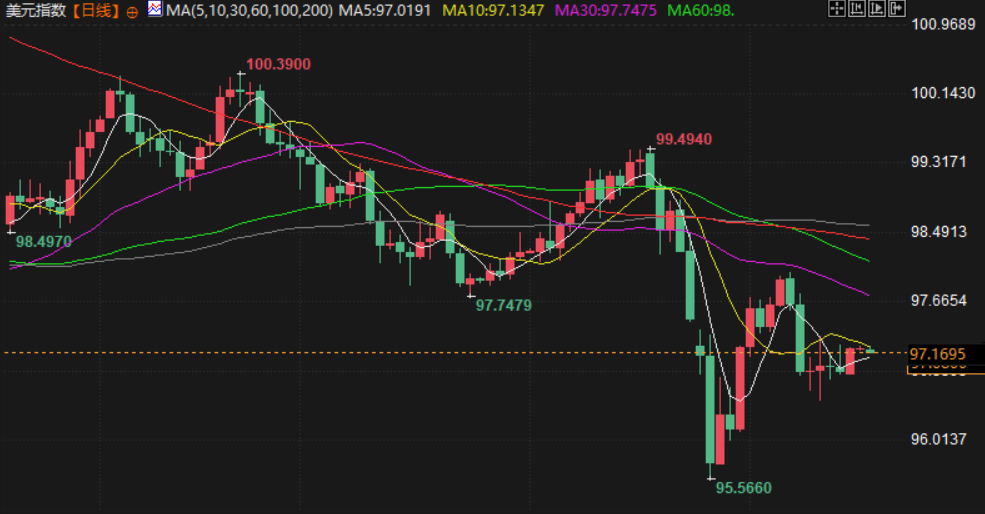
The dollar rose slightly against major currencies on Tuesday as heightened geopolitical tensions stemming from ongoing US-Iran nuclear negotiations increased market uncertainty and fueled risk aversion among investors. Investors also prepared for the release of the minutes from the Federal Reserve's last meeting and key economic data later this week.
Iranian Foreign Minister Araqchi said on Tuesday that although an agreement has not yet been reached, Iran and the United States reached a consensus on key "guiding principles" during the second round of indirect nuclear negotiations. The United States has deployed combat troops to the Middle East to pressure Tehran into making concessions in this decades-long dispute. President Trump previously stated that "regime change" in Tehran might be the best outcome.
Eugene Epstein, Head of Trading and Structured Products at Moneycorp, pointed out that the US dollar tends to perform better during periods of uncertainty, with investors favoring buying US Treasuries and selling stocks. He stated, "The sharp decline in US Treasury yields coupled with a strengthening dollar is interesting—the market is returning to traditional risk-averse thinking. With the potential risk of conflict with Iran, investors are following the classic strategy of buying dollars, purchasing US Treasuries, and selling stocks, which is exactly what's happening in the market today."
The dollar closed at 0.701 Swiss francs in New York trading, up 0.08%. The euro edged up 0.03% against the dollar to $1.18533. The dollar index rose 0.05% to 97.15, poised for its second consecutive day of gains.
Epstein stated, "From a technical perspective, the conditions for a weaker dollar are in place—the market is currently pricing in the largest Fed rate cut since the end of last year, and bond yields are also falling—yet the dollar is rising. I believe this is primarily due to the conflict in Iran."
The yen initially fell before recovering slightly, extending gains following Prime Minister Sanae Takashi's election victory. Inflows into the booming Japanese stock market were expected to support the yen. However, the Nikkei index fell on Tuesday as investors took profits, and post-election euphoria began to wane.
Morgan Stanley analysts, including Molly Nickolin, noted in an investor report that options pricing data showed investors increased their long positions in the yen while simultaneously increasing their short positions in the dollar index. The yen rose 0.17% against the dollar to 153.27 yen.
The pound fell after data showed the UK unemployment rate rose to a five-year high in December and wage growth slowed, potentially providing grounds for further interest rate cuts by the Bank of England. The pound fell 0.52% against the dollar to $1.356.
The first day of talks between Russia, the US, and Ukraine in Geneva ended, with media reporting a tense atmosphere.
Representatives from Russia, the United States, and Ukraine concluded their first day of talks in Geneva, Switzerland, on the 17th. No formal statements were issued by the three parties, and talks will continue on the 18th. Media reports indicate a tense atmosphere on the first day. The talks were held behind closed doors, beginning in the afternoon and ending in the evening. The head of the Ukrainian negotiating delegation, Umerov, secretary of the National Security and Defense Council, said on social media after the first day's talks that joint talks were held first, followed by group consultations focusing on "practical issues and mechanisms for implementing potential solutions." The political and military working groups completed their tasks for the day. Russia's TASS news agency, citing sources, reported that the atmosphere was tense on the first day of trilateral talks between Russia, the US, and Ukraine, and that Russia-US and Russia-Ukraine talks were also held during the day. (Xinhua)
US and Iranian officials have stated that progress has been made in the Geneva nuclear negotiations.
A U.S. official said Tuesday that progress had been made in nuclear talks between the U.S. and Iran in Geneva. Iranian negotiators plan to bring back a new proposal within two weeks. This cautiously optimistic assessment suggests a lower likelihood of a military conflict in the near future. Iran will submit a more detailed proposal to bridge remaining differences between the two sides, but cautioned that many details still need to be discussed. Earlier, Iran stated that it had reached a general consensus with the U.S. on the basis of a potential nuclear agreement that would lift sanctions on Tehran and reduce the risk of war in the Middle East.
Iranian President: Iran will not abandon its peaceful nuclear industry
Iranian President Pezechzian said on the 17th that Iran is not seeking nuclear weapons, but will not abandon its peaceful nuclear industry. According to Iran's Mehr News Agency on the 17th, Pezechzian stated that Iran is prepared to accept any form of inspection regarding the peaceful nature of its nuclear industry. He also emphasized that Iran will not abandon its peaceful nuclear industry used in medical, agricultural, and industrial fields.
Wall Street's projections of the Fed's balance sheet reduction path under Warsh's leadership predict that the central bank will pay a high price.
Wall Street strategists believe that Kevin Warsh, Trump's nominee for Federal Reserve chairman, has several ways to shrink the bank's $6.6 trillion balance sheet, but this process is costly and extremely time-consuming. Strategists say available options include relaxing regulations that encourage banks to hold large amounts of cash reserves at the central bank, or shortening the average maturity of the Fed's holdings. The Fed could also stop buying Treasury bills or even sell securities directly. A less likely path is to resume reductions, the so-called quantitative tightening. The central bank abandoned this process in December due to increased pressure on the money market caused by increased government borrowing. Subsequently, the Fed turned to buying Treasury bills, aiming to reinject reserves into the system. Whichever path the Fed takes under Warsh's leadership, it could take several years.
The mayor of New York City plans to raise property taxes by 9.5% for the first time in over two decades.
New York City Mayor Zohran Mamdani has proposed raising property taxes in the city for the first time in over two decades and plans to use the city's reserve fund to fill a budget shortfall of approximately $5 billion. New York City Comptroller Mark Levin stated, "He has proposed a rather extreme plan, combining a property tax increase with the use of the reserve fund, and also relying on some rather aggressive revenue projections." The proposed 9.5% property tax increase, which Mamdani calls a "last resort," would take effect in the next fiscal year beginning July 1st and would cover all types of properties citywide, affecting more than 3 million residential units and more than 100,000 commercial units. The mayor's office stated that if implemented, this would generate an additional $3.7 billion in revenue in the next fiscal year.
The White House rejected the latest proposal from Democrats to end the Department of Homeland Security shutdown.
On February 17, local time, the White House rejected the latest proposal from Democrats, with the two sides still "far from" ending the partial shutdown of the Department of Homeland Security (DHS). White House officials stated that the government remains willing to engage in "goodwill dialogue" to end the "Democrat-induced shutdown," but insists on upholding the president's commitments on immigration enforcement. Democrats, on the other hand, are demanding stronger oversight of federal immigration enforcement as a prerequisite for funding. This partial shutdown has lasted for several days, and there are no signs of an impending agreement.
The Japanese Diet will hold a prime ministerial election today.
The Japanese Diet will hold elections for prime minister on October 18th, local time. The Japanese constitution stipulates that a special session of the Diet must be convened within 30 days of the House of Representatives election to elect a new prime minister. It is expected that on the day this special session of the Diet convenes, the current Takaichi cabinet will collectively resign, and the newly elected members of the House of Representatives and the existing House of Councillors will vote separately to elect a new prime minister and form a new cabinet. (CCTV News)
Iranian officials hinted at a possible proposal to suspend uranium enrichment activities for up to three years.
Several diplomats said Iranian officials, in communications with regional diplomats, also hinted at a possible proposal to suspend uranium enrichment activities for up to three years. However, this commitment would not bring about significant change—it is widely believed that Iran halted uranium enrichment after the US strikes that destroyed its main nuclear facilities in June—and this still does not meet the US demand for a complete halt to enrichment. Diplomats said that in the first round of talks in early February, Iran also proposed the establishment of a regional consortium to produce usable fuel plates from enriched uranium. But diplomats stated that, so far, Iran insists on keeping the production process within its borders, which is completely unacceptable to the US.
Fliggy: Hotel room nights booked increased by over 80% in the first three days of the holiday, while ticket bookings increased by 54%.
The Spring Festival holiday has entered its peak travel season. On February 17th, Fliggy released data showing a significant year-on-year increase in bookings for travel and accommodation services during the first three days of the holiday. Specifically, hotel room nights increased by over 80% year-on-year, and ticket sales increased by 54%. Guangzhou, Shanghai, Beijing, Shenzhen, Hangzhou, Chengdu, Chongqing, Kunming, and Xiamen are among the most popular destinations for holiday travel. Furthermore, orders for outbound airfares and local activities have both increased by over 30% year-on-year, while inbound airfares for overseas tourists have surged by 345% year-on-year.
Central Bank Report: Asset Management Product Scale to Grow Rapidly by 2025, Primarily Invested in Interbank Deposits and Certificates of Deposit
A report recently released by the People's Bank of China shows that by the end of 2025, total asset management assets reached 120 trillion yuan, a year-on-year increase of 13.1%. The scale of asset management products grew rapidly, with new assets mainly invested in interbank deposits and certificates of deposit. According to the report, by the end of 2025, asset management products held a total of 28.7 trillion yuan in interbank deposits and certificates of deposit, a year-on-year increase of 18.9%, with a cumulative increase of 4.6 trillion yuan for the year, accounting for about half of all new underlying assets of asset management, an increase of more than 20 percentage points compared with the same period of the previous year. The report emphasizes that as my country's financial market continues to deepen, direct financing is developing rapidly, and financing channels are becoming more diversified, residents' savings assets will be allocated and selected more diversified between bank deposits and financial assets such as asset management products. (Xinhua News Agency)
Key Focus Today
stock market
U.S. stocks managed a slight gain on Tuesday after struggling in early trading, with technology stocks rebounding from intraday lows and financial stocks also providing support. The S&P 500 information technology sector fell as much as 1.5% during the session but ultimately recovered to close up 0.5%, with gains in Nvidia and Apple offsetting losses in Microsoft and Oracle.
The previous week, market concerns that artificial intelligence would disrupt business models triggered a sell-off in software companies, brokerage firms, and trucking companies, resulting in the biggest weekly drop in Wall Street's three major stock indexes since mid-November.
Tim Ghriskey, senior portfolio strategist at Ingalls & Snyder in New York, said, "Investor flows are currently diversified, and market volatility is high—not daily, but alternating ups and downs have become the norm. The market is currently too short-sighted, and the artificial intelligence sector will eventually regain favor."
On Monday, Alibaba released its new AI model, Qwen3.5, designed to independently perform complex tasks. Despite a rebound in tech stocks, software stocks remained under pressure. The S&P 500 Software Index closed down 1.6%, with Intuit and Cadence Design falling more than 5%, making them the worst-performing stocks in the index.
The Dow Jones Industrial Average rose 0.07% to close at 49,533.19 points; the S&P 500 rose 0.10% to close at 6,843.22 points; and the Nasdaq Composite rose 0.14% to close at 22,578.38 points.
The S&P 500 Financials sector led the gains among the 11 sectors on the day. Gains in bank stocks, including Goldman Sachs and JPMorgan Chase, helped the Dow Jones Industrial Average recover from a 0.7% intraday decline. The Consumer Staples sector fell 1.5%, making it the worst-performing sector in the S&P 500.
This week, the Federal Reserve's preferred inflation gauge, the Personal Consumption Expenditures (PCE) price index report, will be the focus, as the market will glean insights into the state of inflation and its impact on the Fed's interest rate path. Last week's weaker-than-expected consumer inflation data slightly increased market expectations for a rate cut this year. Traders are currently pricing in a roughly 63% probability of a 25-basis-point rate cut at the Fed's June meeting, the first meeting with a probability exceeding 50%.
Chicago Fed President Goolsby stated that if inflation falls back towards the Fed's 2% target, there could be "multiple" rate cuts this year; while Governor Barr pointed out that given the continued risks to the US inflation outlook, the next rate cut may have to wait a considerable amount of time. Furthermore, San Francisco Fed President Daly emphasized that the Fed must conduct in-depth data analysis to determine whether artificial intelligence is driving productivity growth, thereby enabling faster economic growth without triggering inflation or requiring the Fed to tighten policy to "put the brakes" on the economy.
Gold Market
Gold prices fell more than 2% on Tuesday as signs of progress in US-Iran talks weakened safe-haven demand, while a stronger dollar exacerbated the selling pressure. Spot gold fell 2.2% to $4,884.46 an ounce. US gold futures for April delivery settled down 2.8% at $4,905.90 an ounce.
Kitco Metals senior analyst Jim Wyckoff said, "Bull markets need frequent new fundamental support, and in the case of the gold and silver markets, there has been a lack of new bullish fundamental news to push prices higher recently."
Iranian Foreign Minister Arazig said on Tuesday that Iran and the United States had reached a consensus on key "guiding principles" for negotiations to resolve the long-standing nuclear dispute, but this did not mean an agreement was imminent. Meanwhile, under US mediation, Ukrainian and Russian negotiators began two days of peace talks in Geneva.
Wyckoff points out that these negotiations highlight negative factors for gold and silver. If the US can avoid attacking Iran, market anxiety will ease, which is bearish for safe-haven assets like gold and silver, and the same applies to the Russia-Ukraine negotiations.
Investors are awaiting the release of the Federal Reserve's January meeting minutes on Wednesday and the U.S. December Personal Consumption Expenditures (PCE) price index on Friday for clues about the interest rate outlook. The market expects the first rate cut this year to occur in June.
Spot silver fell 4.1% to $73.47 an ounce, after hitting a low of $71.92 during the session. Spot platinum fell 1.3% to $2,017.06 an ounce, and palladium fell 3.1% to $1,670.25 an ounce.
oil market
Oil prices fell about 2% on Tuesday to a two-week low as the Iranian foreign minister said the U.S. and Iran had reached an agreement on key "guiding principles" for nuclear negotiations, fueling market expectations of easing tensions between the two countries.
Brent crude futures fell 1.8% to settle at $67.42 a barrel, while WTI crude futures fell 0.9% to settle at $62.33 a barrel. These were the lowest closing prices for Brent crude since February 3 and for WTI crude since February 2.
Iranian Foreign Minister Araqchi said on Tuesday that Iran and the United States reached an agreement on key “guiding principles” during the second round of indirect talks in Geneva on the nuclear dispute, but this does not mean that an agreement is imminent.
The United States is increasing its troop presence in the Middle East during the negotiations. Iran's Supreme Leader stated on Tuesday that any U.S. attempt to overthrow his government will fail. Meanwhile, Iranian state media reported that Iran closed the Strait of Hormuz for several hours on Tuesday, but did not specify whether this vital global oil export route had been fully reopened.
Sugandha Sachdeva, founder of the New Delhi-based research firm SS WealthStreet, points out that oil prices are likely to continue to fluctuate, with sharp rises and falls primarily driven by diplomatic signals rather than purely supply and demand fundamentals. Another factor influencing oil prices is the gradual increase in production at Kazakhstan's giant Tengiz oil field, which was shut down in January.
Foreign exchange market
The dollar rose slightly against major currencies on Tuesday as heightened geopolitical tensions stemming from ongoing US-Iran nuclear negotiations increased market uncertainty and fueled risk aversion among investors. Investors also prepared for the release of the minutes from the Federal Reserve's last meeting and key economic data later this week.
Iranian Foreign Minister Araqchi said on Tuesday that although an agreement has not yet been reached, Iran and the United States reached a consensus on key "guiding principles" during the second round of indirect nuclear negotiations. The United States has deployed combat troops to the Middle East to pressure Tehran into making concessions in this decades-long dispute. President Trump previously stated that "regime change" in Tehran might be the best outcome.
Eugene Epstein, Head of Trading and Structured Products at Moneycorp, pointed out that the US dollar tends to perform better during periods of uncertainty, with investors favoring buying US Treasuries and selling stocks. He stated, "The sharp decline in US Treasury yields coupled with a strengthening dollar is interesting—the market is returning to traditional risk-averse thinking. With the potential risk of conflict with Iran, investors are following the classic strategy of buying dollars, purchasing US Treasuries, and selling stocks, which is exactly what's happening in the market today."
The dollar closed at 0.701 Swiss francs in New York trading, up 0.08%. The euro edged up 0.03% against the dollar to $1.18533. The dollar index rose 0.05% to 97.15, poised for its second consecutive day of gains.
Epstein stated, "From a technical perspective, the conditions for a weaker dollar are in place—the market is currently pricing in the largest Fed rate cut since the end of last year, and bond yields are also falling—yet the dollar is rising. I believe this is primarily due to the conflict in Iran."
The yen initially fell before recovering slightly, extending gains following Prime Minister Sanae Takashi's election victory. Inflows into the booming Japanese stock market were expected to support the yen. However, the Nikkei index fell on Tuesday as investors took profits, and post-election euphoria began to wane.
Morgan Stanley analysts, including Molly Nickolin, noted in an investor report that options pricing data showed investors increased their long positions in the yen while simultaneously increasing their short positions in the dollar index. The yen rose 0.17% against the dollar to 153.27 yen.
The pound fell after data showed the UK unemployment rate rose to a five-year high in December and wage growth slowed, potentially providing grounds for further interest rate cuts by the Bank of England. The pound fell 0.52% against the dollar to $1.356.
International News
The first day of talks between Russia, the US, and Ukraine in Geneva ended, with media reporting a tense atmosphere.
Representatives from Russia, the United States, and Ukraine concluded their first day of talks in Geneva, Switzerland, on the 17th. No formal statements were issued by the three parties, and talks will continue on the 18th. Media reports indicate a tense atmosphere on the first day. The talks were held behind closed doors, beginning in the afternoon and ending in the evening. The head of the Ukrainian negotiating delegation, Umerov, secretary of the National Security and Defense Council, said on social media after the first day's talks that joint talks were held first, followed by group consultations focusing on "practical issues and mechanisms for implementing potential solutions." The political and military working groups completed their tasks for the day. Russia's TASS news agency, citing sources, reported that the atmosphere was tense on the first day of trilateral talks between Russia, the US, and Ukraine, and that Russia-US and Russia-Ukraine talks were also held during the day. (Xinhua)
US and Iranian officials have stated that progress has been made in the Geneva nuclear negotiations.
A U.S. official said Tuesday that progress had been made in nuclear talks between the U.S. and Iran in Geneva. Iranian negotiators plan to bring back a new proposal within two weeks. This cautiously optimistic assessment suggests a lower likelihood of a military conflict in the near future. Iran will submit a more detailed proposal to bridge remaining differences between the two sides, but cautioned that many details still need to be discussed. Earlier, Iran stated that it had reached a general consensus with the U.S. on the basis of a potential nuclear agreement that would lift sanctions on Tehran and reduce the risk of war in the Middle East.
Iranian President: Iran will not abandon its peaceful nuclear industry
Iranian President Pezechzian said on the 17th that Iran is not seeking nuclear weapons, but will not abandon its peaceful nuclear industry. According to Iran's Mehr News Agency on the 17th, Pezechzian stated that Iran is prepared to accept any form of inspection regarding the peaceful nature of its nuclear industry. He also emphasized that Iran will not abandon its peaceful nuclear industry used in medical, agricultural, and industrial fields.
Wall Street's projections of the Fed's balance sheet reduction path under Warsh's leadership predict that the central bank will pay a high price.
Wall Street strategists believe that Kevin Warsh, Trump's nominee for Federal Reserve chairman, has several ways to shrink the bank's $6.6 trillion balance sheet, but this process is costly and extremely time-consuming. Strategists say available options include relaxing regulations that encourage banks to hold large amounts of cash reserves at the central bank, or shortening the average maturity of the Fed's holdings. The Fed could also stop buying Treasury bills or even sell securities directly. A less likely path is to resume reductions, the so-called quantitative tightening. The central bank abandoned this process in December due to increased pressure on the money market caused by increased government borrowing. Subsequently, the Fed turned to buying Treasury bills, aiming to reinject reserves into the system. Whichever path the Fed takes under Warsh's leadership, it could take several years.
The mayor of New York City plans to raise property taxes by 9.5% for the first time in over two decades.
New York City Mayor Zohran Mamdani has proposed raising property taxes in the city for the first time in over two decades and plans to use the city's reserve fund to fill a budget shortfall of approximately $5 billion. New York City Comptroller Mark Levin stated, "He has proposed a rather extreme plan, combining a property tax increase with the use of the reserve fund, and also relying on some rather aggressive revenue projections." The proposed 9.5% property tax increase, which Mamdani calls a "last resort," would take effect in the next fiscal year beginning July 1st and would cover all types of properties citywide, affecting more than 3 million residential units and more than 100,000 commercial units. The mayor's office stated that if implemented, this would generate an additional $3.7 billion in revenue in the next fiscal year.
The White House rejected the latest proposal from Democrats to end the Department of Homeland Security shutdown.
On February 17, local time, the White House rejected the latest proposal from Democrats, with the two sides still "far from" ending the partial shutdown of the Department of Homeland Security (DHS). White House officials stated that the government remains willing to engage in "goodwill dialogue" to end the "Democrat-induced shutdown," but insists on upholding the president's commitments on immigration enforcement. Democrats, on the other hand, are demanding stronger oversight of federal immigration enforcement as a prerequisite for funding. This partial shutdown has lasted for several days, and there are no signs of an impending agreement.
The Japanese Diet will hold a prime ministerial election today.
The Japanese Diet will hold elections for prime minister on October 18th, local time. The Japanese constitution stipulates that a special session of the Diet must be convened within 30 days of the House of Representatives election to elect a new prime minister. It is expected that on the day this special session of the Diet convenes, the current Takaichi cabinet will collectively resign, and the newly elected members of the House of Representatives and the existing House of Councillors will vote separately to elect a new prime minister and form a new cabinet. (CCTV News)
Iranian officials hinted at a possible proposal to suspend uranium enrichment activities for up to three years.
Several diplomats said Iranian officials, in communications with regional diplomats, also hinted at a possible proposal to suspend uranium enrichment activities for up to three years. However, this commitment would not bring about significant change—it is widely believed that Iran halted uranium enrichment after the US strikes that destroyed its main nuclear facilities in June—and this still does not meet the US demand for a complete halt to enrichment. Diplomats said that in the first round of talks in early February, Iran also proposed the establishment of a regional consortium to produce usable fuel plates from enriched uranium. But diplomats stated that, so far, Iran insists on keeping the production process within its borders, which is completely unacceptable to the US.
Domestic News
Fliggy: Hotel room nights booked increased by over 80% in the first three days of the holiday, while ticket bookings increased by 54%.
The Spring Festival holiday has entered its peak travel season. On February 17th, Fliggy released data showing a significant year-on-year increase in bookings for travel and accommodation services during the first three days of the holiday. Specifically, hotel room nights increased by over 80% year-on-year, and ticket sales increased by 54%. Guangzhou, Shanghai, Beijing, Shenzhen, Hangzhou, Chengdu, Chongqing, Kunming, and Xiamen are among the most popular destinations for holiday travel. Furthermore, orders for outbound airfares and local activities have both increased by over 30% year-on-year, while inbound airfares for overseas tourists have surged by 345% year-on-year.
Central Bank Report: Asset Management Product Scale to Grow Rapidly by 2025, Primarily Invested in Interbank Deposits and Certificates of Deposit
A report recently released by the People's Bank of China shows that by the end of 2025, total asset management assets reached 120 trillion yuan, a year-on-year increase of 13.1%. The scale of asset management products grew rapidly, with new assets mainly invested in interbank deposits and certificates of deposit. According to the report, by the end of 2025, asset management products held a total of 28.7 trillion yuan in interbank deposits and certificates of deposit, a year-on-year increase of 18.9%, with a cumulative increase of 4.6 trillion yuan for the year, accounting for about half of all new underlying assets of asset management, an increase of more than 20 percentage points compared with the same period of the previous year. The report emphasizes that as my country's financial market continues to deepen, direct financing is developing rapidly, and financing channels are becoming more diversified, residents' savings assets will be allocated and selected more diversified between bank deposits and financial assets such as asset management products. (Xinhua News Agency)
- Risk Warning and Disclaimer
- The market involves risk, and trading may not be suitable for all investors. This article is for reference only and does not constitute personal investment advice, nor does it take into account certain users’ specific investment objectives, financial situation, or other needs. Any investment decisions made based on this information are at your own risk.