













The Fed minutes acknowledge that inflation has been more persistent than expected, and that interest rate cuts will have to wait.
2026-02-19 11:10:40
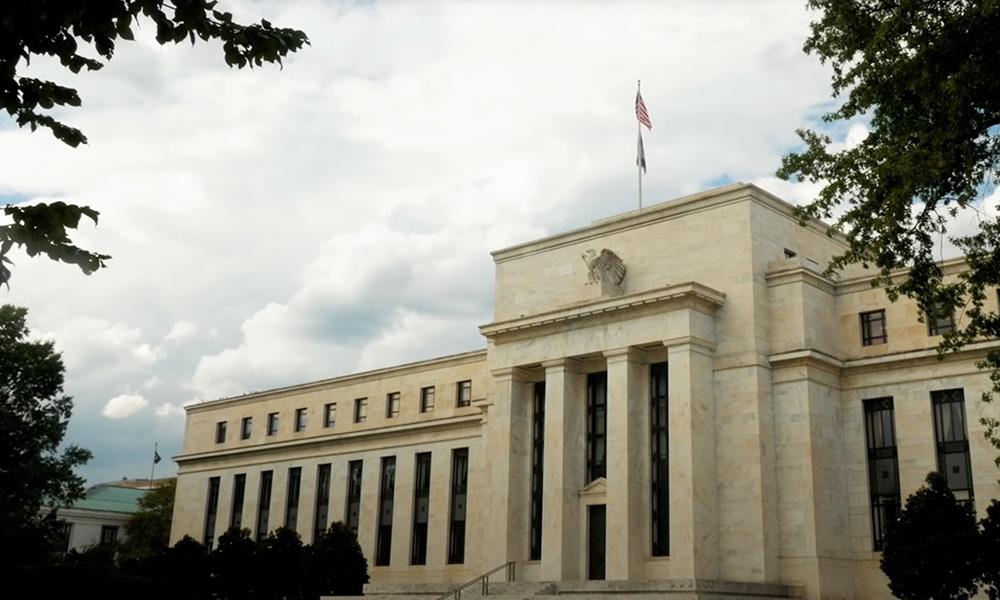
On Wednesday (February 18), U.S. local time, the Federal Reserve released the minutes of the Federal Open Market Committee (FOMC) meeting held on January 27-28. The minutes showed that Fed officials expressed relative confidence that the labor market was stabilizing, but remained highly uncertain about the duration and strength of tariff-induced inflation.
Meanwhile, the divisions within the committee regarding the future path of interest rates became more apparent: most members supported maintaining the current policy stance, but some officials favored a two-way risk statement, and two even voted against keeping interest rates unchanged, advocating for an immediate 25 basis point rate cut.
According to staff's summary of the economic situation, the US real GDP growth rate in 2025 is expected to be slightly lower than in 2024, but will still maintain an expansionary trend; the labor market is showing signs of stabilization after a period of gradual cooling; and core inflation remains "somewhat high." The minutes indicate that overseas economic growth will be below trend in the second half of 2025, and US tariffs will continue to put pressure on industries such as automobiles, aluminum, and steel in Canada and Mexico; conversely, some emerging Asian economies will benefit from the artificial intelligence boom, with exports of high-tech products surging.
In the financial markets, the expected path of the federal funds rate, Treasury yields, and swap-based inflation compensation measures remained largely unchanged during the meeting; major stock indices rose slightly, credit spreads remained at historically low levels, and the one-month implied volatility of the S&P 500 remained at a moderate level.
The January economic forecast has been revised upwards compared to the December forecast, mainly due to recent improved data, more supportive financial conditions, and a slight upward revision of the potential output path. Real GDP growth is expected to continue to exceed potential growth until 2028, with the drag from tariffs gradually fading and fiscal policy and financial market conditions continuing to support spending. The unemployment rate is expected to gradually decline from 2026, falling below the natural rate by the end of the year and remaining below it until 2028.
However, inflation forecasts have been revised slightly upward from December, primarily reflecting tighter resource availability and a higher-than-expected core import price path. Nevertheless, staff still expect the impact of tariffs on inflation to gradually diminish around mid-2026, with inflation returning to its previous deleveraging trajectory.
The minutes emphasized that inflation has remained above 2% since the beginning of 2021, and a significant risk is that inflation may be more persistent than expected. In an environment of high uncertainty, the risks to employment and real GDP growth forecasts continue to be skewed to the downside, while the risks to inflation forecasts continue to be skewed to the upside.
Participants generally agreed that overall inflation has fallen sharply from its 2022 peak, but it remains high relative to the 2% long-term target, mainly due to the impact of tariffs on core commodity prices, while the de-inflation process in core services (especially housing services) continues.
Regarding the labor market, most officials pointed out that the unemployment rate has remained generally stable recently and job growth has remained low, but data such as the unemployment rate, layoffs, and job vacancies suggest that the labor market may have stabilized.
On the outlook for monetary policy, there is a clear divergence: some officials believe that if inflation falls as expected, a further reduction in the target range for the federal funds rate would be appropriate; others advocate keeping the policy rate unchanged for some time and judge that no further easing is needed until the deleveraging process is clearly back on track. Several officials also indicated that they support a "two-way" statement, meaning that if inflation persists above target, a rate hike may be necessary.
All participants agreed that monetary policy is not a predetermined path and will depend on a wide range of data, the evolution of the economic outlook, and the balance of risks.
The meeting voted 10-2 to maintain the target range for the federal funds rate at 3.50%-3.75%. Chairman Powell, along with Williams, Barr, Bowman, Cook, Harmack, Jefferson, Kashkari, Logan, and Paulson, voted in favor; Milan and Waller voted against, both favoring an immediate 25 basis point rate cut.
Following the release of the minutes on Wednesday, gold prices continued to fluctuate at high levels, with spot gold closing at $4976.09 per ounce, a daily increase of 2%. During Thursday's Asian session, spot gold fluctuated around $4965 per ounce. The US dollar index continued to climb, rising 0.62% on Wednesday. During Thursday's Asian session, the dollar index fluctuated narrowly around 97.70, briefly touching a two-week high of 97.73.
Economist Jeffrey Roach stated that some of the Federal Reserve's forecasts appear "overly optimistic." "A combination of above-potential growth and easing inflation is uncommon in Fed forecasts, and this likely reflects strong assumptions about productivity and AI-related investments. The Fed almost never forecasts years of above-trend growth."
Roach also pointed out that the concerns about financial stability risks implied in the minutes are noteworthy. "High asset valuations, narrowing credit spreads, and AI investments have created new risk areas such as private lending, highly leveraged companies, and highly concentrated tech stocks. The minutes specifically mentioned that hedge fund leverage and the vulnerability of the Treasury market remain key concerns."
Looking ahead, Roach suggests paying attention to the potential spillover effects in the global bond and foreign exchange markets. He personally anticipates that the next Fed rate cut may not occur until June, and the updated summary of economic projections released on March 18 will be a crucial window for observation.
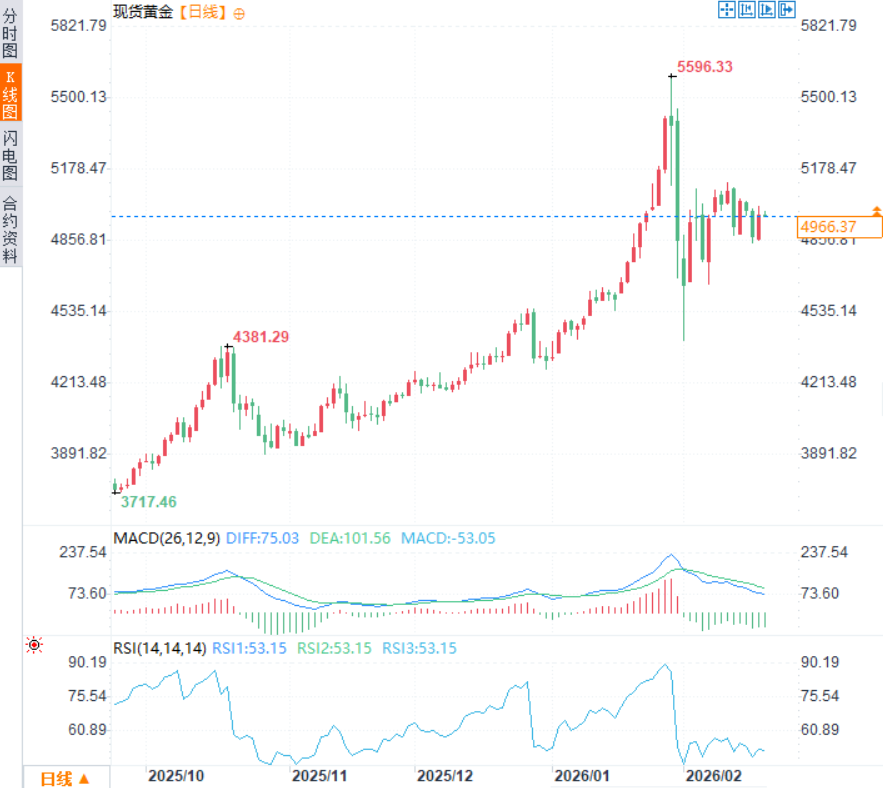
(Spot gold daily chart, source: FX678)
At 11:07 Beijing time, spot gold was trading at $4,967.04 per ounce.
Meanwhile, the divisions within the committee regarding the future path of interest rates became more apparent: most members supported maintaining the current policy stance, but some officials favored a two-way risk statement, and two even voted against keeping interest rates unchanged, advocating for an immediate 25 basis point rate cut.
The Federal Reserve's assessment of the economy and inflation has become cautiously optimistic.
According to staff's summary of the economic situation, the US real GDP growth rate in 2025 is expected to be slightly lower than in 2024, but will still maintain an expansionary trend; the labor market is showing signs of stabilization after a period of gradual cooling; and core inflation remains "somewhat high." The minutes indicate that overseas economic growth will be below trend in the second half of 2025, and US tariffs will continue to put pressure on industries such as automobiles, aluminum, and steel in Canada and Mexico; conversely, some emerging Asian economies will benefit from the artificial intelligence boom, with exports of high-tech products surging.
In the financial markets, the expected path of the federal funds rate, Treasury yields, and swap-based inflation compensation measures remained largely unchanged during the meeting; major stock indices rose slightly, credit spreads remained at historically low levels, and the one-month implied volatility of the S&P 500 remained at a moderate level.
The January economic forecast has been revised upwards compared to the December forecast, mainly due to recent improved data, more supportive financial conditions, and a slight upward revision of the potential output path. Real GDP growth is expected to continue to exceed potential growth until 2028, with the drag from tariffs gradually fading and fiscal policy and financial market conditions continuing to support spending. The unemployment rate is expected to gradually decline from 2026, falling below the natural rate by the end of the year and remaining below it until 2028.
However, inflation forecasts have been revised slightly upward from December, primarily reflecting tighter resource availability and a higher-than-expected core import price path. Nevertheless, staff still expect the impact of tariffs on inflation to gradually diminish around mid-2026, with inflation returning to its previous deleveraging trajectory.
Risk assessment: Downward employment, upward inflation
The minutes emphasized that inflation has remained above 2% since the beginning of 2021, and a significant risk is that inflation may be more persistent than expected. In an environment of high uncertainty, the risks to employment and real GDP growth forecasts continue to be skewed to the downside, while the risks to inflation forecasts continue to be skewed to the upside.
Policy Discussion: Interest Rate Cut Expectations Diverge, Two-Way Risks Gain Support
Participants generally agreed that overall inflation has fallen sharply from its 2022 peak, but it remains high relative to the 2% long-term target, mainly due to the impact of tariffs on core commodity prices, while the de-inflation process in core services (especially housing services) continues.
Regarding the labor market, most officials pointed out that the unemployment rate has remained generally stable recently and job growth has remained low, but data such as the unemployment rate, layoffs, and job vacancies suggest that the labor market may have stabilized.
On the outlook for monetary policy, there is a clear divergence: some officials believe that if inflation falls as expected, a further reduction in the target range for the federal funds rate would be appropriate; others advocate keeping the policy rate unchanged for some time and judge that no further easing is needed until the deleveraging process is clearly back on track. Several officials also indicated that they support a "two-way" statement, meaning that if inflation persists above target, a rate hike may be necessary.
All participants agreed that monetary policy is not a predetermined path and will depend on a wide range of data, the evolution of the economic outlook, and the balance of risks.
The meeting voted 10-2 to maintain the target range for the federal funds rate at 3.50%-3.75%. Chairman Powell, along with Williams, Barr, Bowman, Cook, Harmack, Jefferson, Kashkari, Logan, and Paulson, voted in favor; Milan and Waller voted against, both favoring an immediate 25 basis point rate cut.
Market reaction and expert interpretation
Following the release of the minutes on Wednesday, gold prices continued to fluctuate at high levels, with spot gold closing at $4976.09 per ounce, a daily increase of 2%. During Thursday's Asian session, spot gold fluctuated around $4965 per ounce. The US dollar index continued to climb, rising 0.62% on Wednesday. During Thursday's Asian session, the dollar index fluctuated narrowly around 97.70, briefly touching a two-week high of 97.73.
Economist Jeffrey Roach stated that some of the Federal Reserve's forecasts appear "overly optimistic." "A combination of above-potential growth and easing inflation is uncommon in Fed forecasts, and this likely reflects strong assumptions about productivity and AI-related investments. The Fed almost never forecasts years of above-trend growth."
Roach also pointed out that the concerns about financial stability risks implied in the minutes are noteworthy. "High asset valuations, narrowing credit spreads, and AI investments have created new risk areas such as private lending, highly leveraged companies, and highly concentrated tech stocks. The minutes specifically mentioned that hedge fund leverage and the vulnerability of the Treasury market remain key concerns."
Looking ahead, Roach suggests paying attention to the potential spillover effects in the global bond and foreign exchange markets. He personally anticipates that the next Fed rate cut may not occur until June, and the updated summary of economic projections released on March 18 will be a crucial window for observation.
(Spot gold daily chart, source: FX678)
At 11:07 Beijing time, spot gold was trading at $4,967.04 per ounce.
- Risk Warning and Disclaimer
- The market involves risk, and trading may not be suitable for all investors. This article is for reference only and does not constitute personal investment advice, nor does it take into account certain users’ specific investment objectives, financial situation, or other needs. Any investment decisions made based on this information are at your own risk.

