Is war between the US and Iran imminent? The US issues a 10-day ultimatum, and oil prices hit a six-month high.
2026-02-20 10:33:28
As US-Iran nuclear negotiations stall, the Trump administration on Thursday (February 19) explicitly warned Iran that reaching a swift agreement with Washington would be an "extremely wise" choice. Meanwhile, reports indicate the White House is considering a new round of military strikes against Iran as early as this weekend, and market concerns about potential disruptions in the Strait of Hormuz have further pushed oil prices higher.
On Friday in Asian trading, US crude oil prices fluctuated and strengthened, currently trading around $66.70 per barrel, up about 0.4% on the day. Oil prices rose sharply in the previous two trading days, with prices rising more than 2% on Thursday, once touching a more than six-month high of $66.90.
White House Press Secretary Carolyn Levitt said Wednesday that the U.S. and Iran are “far apart” on some core issues, and stressed that there are “numerous reasons and arguments” to support military action against Iran. She recalled Operation Midnight Hammer in June 2025, when U.S. stealth bombers precisely struck three Iranian nuclear facilities, an operation Levitt described as “very successful.”
Levitt stated, "The president has consistently made it clear that diplomacy is always the preferred approach with Iran and with any country in the world. It would be an extremely wise decision for Iran to reach an agreement with President Trump and his administration."
This statement follows Vice President JD Vance's accusation that Iran has failed to address core U.S. demands. During nuclear negotiations this week in Geneva, Switzerland, Iranian Foreign Minister Abbas Araqchi stated that both sides had reached a consensus on "guiding principles" for the negotiations and claimed that the consultations had made "good progress." However, the U.S. believes that the negotiations have not yielded any substantial concessions, and that deep differences remain between the two sides .
According to CCTV, the US is tightening its "timetable" and advancing military deployments and political pressure in tandem; Israel claims it is "prepared for any eventuality"; and Iran says it is simultaneously negotiating and preparing for war, strengthening its defenses and conducting military exercises.
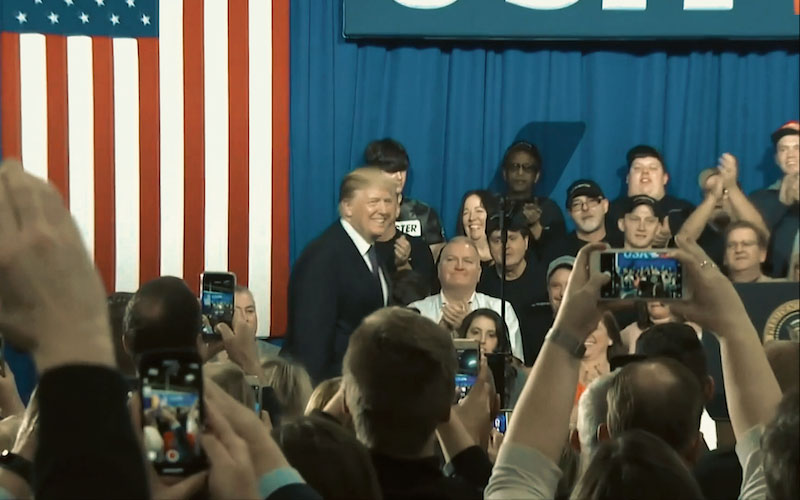
Amid escalating tensions, US President Trump set another "deadline" on Thursday, stating that whether the US and Iran will reach an agreement will be clear in "the next ten days or so." Whether to negotiate or fight remains uncertain.
In recent weeks, military activity by the US and Iran in the oil-producing Middle East has increased significantly. The US has substantially increased its air and naval forces, while Iran has conducted military exercises in the strategically vital Strait of Hormuz and announced joint naval exercises with Russia in the Gulf of Oman.
Laura James, senior Middle East analyst at Oxford Analytics, described the current situation as "extremely dangerous," noting that the US and Iran are "closer to full-blown conflict" than last week. She paid particular attention to the rapid increase in US air power in the region this week: "This could certainly still be a signaling and pressure tactic aimed at pushing for specific diplomatic outcomes. But as more aircraft and equipment arrive, the cost of such signals becomes increasingly high, and Tehran seems unable to meet the bottom line demanded by Washington."
The energy market is closely watching the progress of the Geneva talks between the US and Iran, particularly the potential impact on the Strait of Hormuz. On Tuesday, Iran briefly closed part of the strait under the pretext of "security precautions," further exacerbating market anxiety.
According to data from market intelligence firm Kpler, approximately 13 million barrels of crude oil will be transported daily through the Strait of Hormuz in 2025, accounting for about 31% of global seaborne crude oil traffic. Blockage of this vital waterway would have a significant impact on global energy supply.
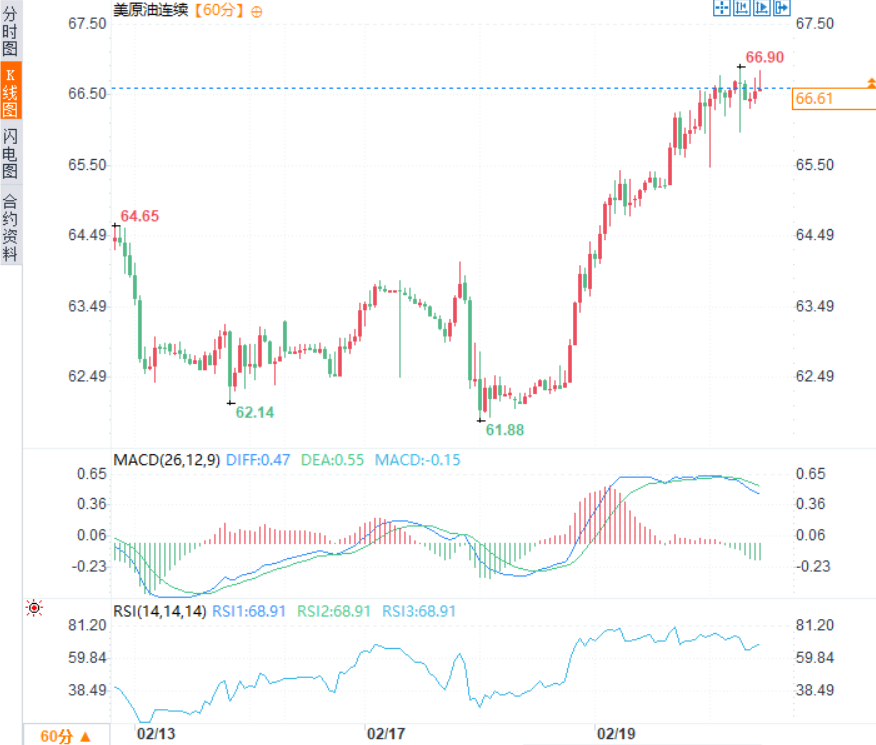
(US crude oil hourly chart, source: FX678)
Currently, US-Iran tensions are at a critical crossroads: while diplomatic efforts are showing signs of progress, the risk of military escalation is rising simultaneously. Oil market risk premiums continue to accumulate, and investors need to closely monitor the progress of negotiations and regional military developments in the coming days.
At 10:32 Beijing time, US crude oil futures were trading at $66.72 per barrel.
On Friday in Asian trading, US crude oil prices fluctuated and strengthened, currently trading around $66.70 per barrel, up about 0.4% on the day. Oil prices rose sharply in the previous two trading days, with prices rising more than 2% on Thursday, once touching a more than six-month high of $66.90.
White House Press Secretary Carolyn Levitt said Wednesday that the U.S. and Iran are “far apart” on some core issues, and stressed that there are “numerous reasons and arguments” to support military action against Iran. She recalled Operation Midnight Hammer in June 2025, when U.S. stealth bombers precisely struck three Iranian nuclear facilities, an operation Levitt described as “very successful.”
Levitt stated, "The president has consistently made it clear that diplomacy is always the preferred approach with Iran and with any country in the world. It would be an extremely wise decision for Iran to reach an agreement with President Trump and his administration."
This statement follows Vice President JD Vance's accusation that Iran has failed to address core U.S. demands. During nuclear negotiations this week in Geneva, Switzerland, Iranian Foreign Minister Abbas Araqchi stated that both sides had reached a consensus on "guiding principles" for the negotiations and claimed that the consultations had made "good progress." However, the U.S. believes that the negotiations have not yielded any substantial concessions, and that deep differences remain between the two sides .
The U.S. military has assembled its largest air force in nearly 23 years.
According to CCTV, the US is tightening its "timetable" and advancing military deployments and political pressure in tandem; Israel claims it is "prepared for any eventuality"; and Iran says it is simultaneously negotiating and preparing for war, strengthening its defenses and conducting military exercises.
Amid escalating tensions, US President Trump set another "deadline" on Thursday, stating that whether the US and Iran will reach an agreement will be clear in "the next ten days or so." Whether to negotiate or fight remains uncertain.
Regional military standoff escalates, Strait of Hormuz becomes focal point
In recent weeks, military activity by the US and Iran in the oil-producing Middle East has increased significantly. The US has substantially increased its air and naval forces, while Iran has conducted military exercises in the strategically vital Strait of Hormuz and announced joint naval exercises with Russia in the Gulf of Oman.
Laura James, senior Middle East analyst at Oxford Analytics, described the current situation as "extremely dangerous," noting that the US and Iran are "closer to full-blown conflict" than last week. She paid particular attention to the rapid increase in US air power in the region this week: "This could certainly still be a signaling and pressure tactic aimed at pushing for specific diplomatic outcomes. But as more aircraft and equipment arrive, the cost of such signals becomes increasingly high, and Tehran seems unable to meet the bottom line demanded by Washington."
Oil prices have absorbed a risk premium, and the market is highly wary of supply disruption risks.
The energy market is closely watching the progress of the Geneva talks between the US and Iran, particularly the potential impact on the Strait of Hormuz. On Tuesday, Iran briefly closed part of the strait under the pretext of "security precautions," further exacerbating market anxiety.
According to data from market intelligence firm Kpler, approximately 13 million barrels of crude oil will be transported daily through the Strait of Hormuz in 2025, accounting for about 31% of global seaborne crude oil traffic. Blockage of this vital waterway would have a significant impact on global energy supply.
(US crude oil hourly chart, source: FX678)
Currently, US-Iran tensions are at a critical crossroads: while diplomatic efforts are showing signs of progress, the risk of military escalation is rising simultaneously. Oil market risk premiums continue to accumulate, and investors need to closely monitor the progress of negotiations and regional military developments in the coming days.
At 10:32 Beijing time, US crude oil futures were trading at $66.72 per barrel.
- Risk Warning and Disclaimer
- The market involves risk, and trading may not be suitable for all investors. This article is for reference only and does not constitute personal investment advice, nor does it take into account certain users’ specific investment objectives, financial situation, or other needs. Any investment decisions made based on this information are at your own risk.