Trump considers strikes against Iran; traders heavily bet on call options; geopolitical premium supports oil prices.
2026-02-21 07:39:23
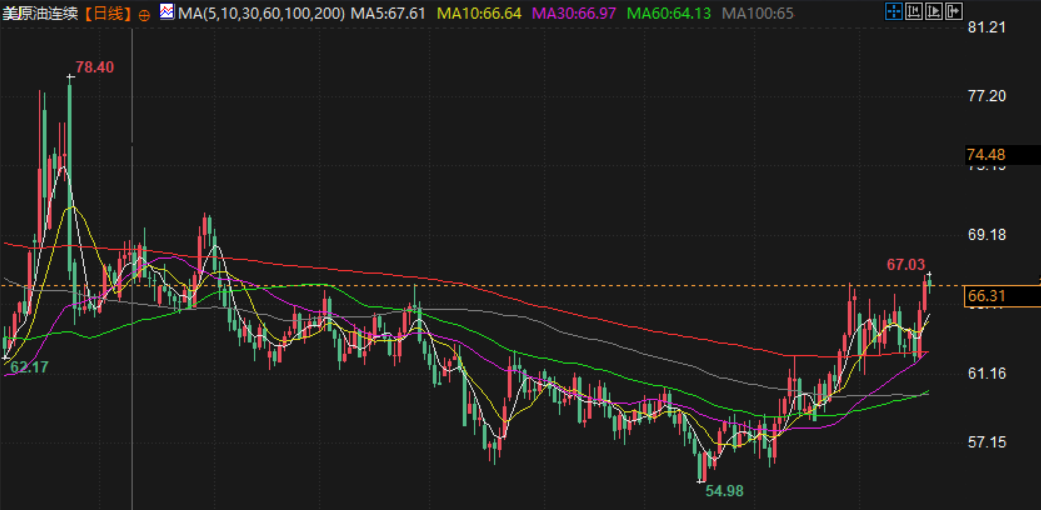
Oil prices rallied strongly this week, with both major benchmark crudes rising more than 5% cumulatively. Brent crude futures closed higher on Friday after short covering intensified tensions between Iran and the United States, settling at $71.76 per barrel. U.S. crude futures closed at $66.39 per barrel, down 0.06%. Investors are concerned about potential U.S. military action against Iran, and President Trump is pressuring Iran to halt its nuclear weapons development.
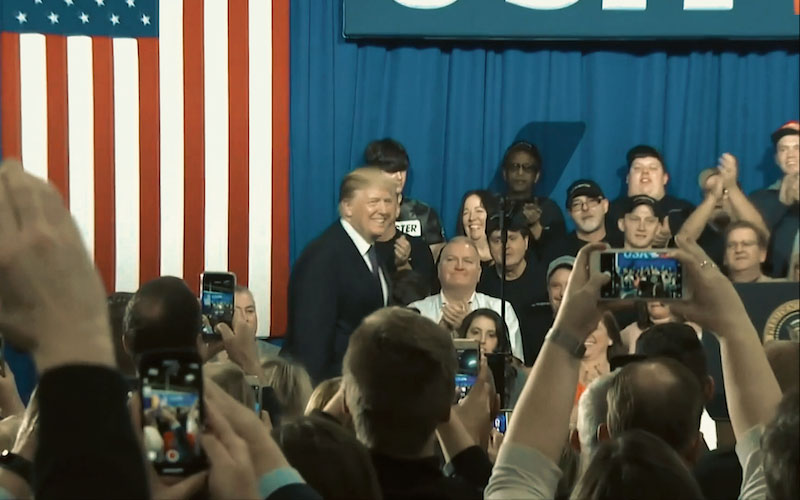
When asked if he planned a limited strike against Iran, US President Donald Trump said he was considering it. Trump stated this week that failure to reach an agreement to stop Iran from developing nuclear weapons would have " dire consequences" for the country. Speaking in Washington on Thursday morning, Trump said he would know within "about 10 days" whether an agreement could be reached. Later, aboard Air Force One, he extended the timeline to 15 days.
Saxo Bank analysis shows that traders and investors have recently increased their holdings of Brent crude oil call options, betting on rising oil prices.
Citigroup analyst Anthony Yuen said, "On the one hand, military action may be imminent. On the other hand, pushing the situation to the brink may be a negotiating tactic, although the oil market pricing does not seem to reflect this much."
Citigroup's bullish scenario for Brent crude around $75/barrel reflects supply risks from Iran and Russia, but does not include the possibility of the Strait of Hormuz being closed. Yuen added that if any conflict with Iran escalates to a disruption of shipping through the strait, oil prices could rise further.
Phil Flynn, senior analyst at Price Futures Group, said, "We are caught in a conflicting mindset between anticipating developments in the US-Iran situation and denying the possibility of an attack."
Flynn noted that the oil market reacted mutedly to the US Supreme Court's ruling that Trump's invocation of the National Emergency Act to impose tariffs was unconstitutional. "The tariff ruling doesn't seem to have had much impact on the market," he added. "I think the market generally expects the tariff issue to be resolved through other means." The Supreme Court ruled that the International Emergency Economic Powers Act, upon which Trump based his tariffs, did not authorize the president to do so. The court ruling stated: "Article 1, Section 8 of the Constitution states: 'Congress shall have power to make and to impose taxes and tariffs.'"
The oil market is experiencing a perplexing disconnect for traders: despite expectations of a massive global supply glut, oil prices are holding firm due to geopolitical risks. Goldman Sachs estimates a daily supply surplus of approximately 1.5 million barrels by 2025, but so far this year, this has not led to a sustained price decline, with crude oil futures being boosted by a geopolitical risk premium.
A key factor is the actual location of this surplus crude oil. Most of the surplus crude oil is not stored in storage centers linked to benchmark pricing, but rather remains at sea as sanctioned crude, with tankers carrying Russian, Iranian, and Venezuelan oil causing a continuous increase in offshore inventories. Goldman Sachs analysts stated that when inventory increases occur at sea, their impact on prices is relatively small. The spot-oriented oil market tends to significantly underestimate the crude oil expected to arrive at pricing centers in the future, especially when geopolitical factors could cause sanctioned crude oil to remain at sea for years.
Geopolitical concerns provided support for near-month contract prices. Navin Das, senior oil analyst at data provider Kpler, stated that Brent crude spot prices have become decoupled from physical fundamentals or broader financial market noise, and their movements are primarily driven by the 24-hour geopolitical news cycle dominated by the US and Iran.
According to sources, US President Trump considered different options for striking Iran on February 20, including targeted strikes and large-scale bombings of government, military, and nuclear facilities. President Trump stated on February 20 that if Iran does not agree to an agreement, very bad things could happen under the current circumstances. With Asian markets returning from holidays next week, trading may once again focus on geopolitical factors. Furthermore, Trump's State of the Union address next week will be closely watched.
When asked if he planned a limited strike against Iran, US President Donald Trump said he was considering it. Trump stated this week that failure to reach an agreement to stop Iran from developing nuclear weapons would have " dire consequences" for the country. Speaking in Washington on Thursday morning, Trump said he would know within "about 10 days" whether an agreement could be reached. Later, aboard Air Force One, he extended the timeline to 15 days.
Saxo Bank analysis shows that traders and investors have recently increased their holdings of Brent crude oil call options, betting on rising oil prices.
Citigroup analyst Anthony Yuen said, "On the one hand, military action may be imminent. On the other hand, pushing the situation to the brink may be a negotiating tactic, although the oil market pricing does not seem to reflect this much."
Citigroup's bullish scenario for Brent crude around $75/barrel reflects supply risks from Iran and Russia, but does not include the possibility of the Strait of Hormuz being closed. Yuen added that if any conflict with Iran escalates to a disruption of shipping through the strait, oil prices could rise further.
Phil Flynn, senior analyst at Price Futures Group, said, "We are caught in a conflicting mindset between anticipating developments in the US-Iran situation and denying the possibility of an attack."
Flynn noted that the oil market reacted mutedly to the US Supreme Court's ruling that Trump's invocation of the National Emergency Act to impose tariffs was unconstitutional. "The tariff ruling doesn't seem to have had much impact on the market," he added. "I think the market generally expects the tariff issue to be resolved through other means." The Supreme Court ruled that the International Emergency Economic Powers Act, upon which Trump based his tariffs, did not authorize the president to do so. The court ruling stated: "Article 1, Section 8 of the Constitution states: 'Congress shall have power to make and to impose taxes and tariffs.'"
The oil market is experiencing a perplexing disconnect for traders: despite expectations of a massive global supply glut, oil prices are holding firm due to geopolitical risks. Goldman Sachs estimates a daily supply surplus of approximately 1.5 million barrels by 2025, but so far this year, this has not led to a sustained price decline, with crude oil futures being boosted by a geopolitical risk premium.
A key factor is the actual location of this surplus crude oil. Most of the surplus crude oil is not stored in storage centers linked to benchmark pricing, but rather remains at sea as sanctioned crude, with tankers carrying Russian, Iranian, and Venezuelan oil causing a continuous increase in offshore inventories. Goldman Sachs analysts stated that when inventory increases occur at sea, their impact on prices is relatively small. The spot-oriented oil market tends to significantly underestimate the crude oil expected to arrive at pricing centers in the future, especially when geopolitical factors could cause sanctioned crude oil to remain at sea for years.
Geopolitical concerns provided support for near-month contract prices. Navin Das, senior oil analyst at data provider Kpler, stated that Brent crude spot prices have become decoupled from physical fundamentals or broader financial market noise, and their movements are primarily driven by the 24-hour geopolitical news cycle dominated by the US and Iran.
According to sources, US President Trump considered different options for striking Iran on February 20, including targeted strikes and large-scale bombings of government, military, and nuclear facilities. President Trump stated on February 20 that if Iran does not agree to an agreement, very bad things could happen under the current circumstances. With Asian markets returning from holidays next week, trading may once again focus on geopolitical factors. Furthermore, Trump's State of the Union address next week will be closely watched.
- Risk Warning and Disclaimer
- The market involves risk, and trading may not be suitable for all investors. This article is for reference only and does not constitute personal investment advice, nor does it take into account certain users’ specific investment objectives, financial situation, or other needs. Any investment decisions made based on this information are at your own risk.