Trump's "tariff stick" suddenly stalled; what changes have occurred in the trade logic?
2026-02-23 20:53:42
US President Trump recently made a high-profile statement on social media, claiming that the Supreme Court ruling has actually given him greater power and hinting at using tools such as licenses to take more aggressive trade measures against foreign countries. This emotionally charged statement could easily lead the outside world to mistakenly believe that a wave of trade protectionism is about to sweep the globe. However, in the logic of financial markets, the loudness of slogans is never the core of asset pricing. The real key lies in whether the legal path can form a closed loop, and how the time cost and uncertainty of policy implementation are transmitted to the price system.
Previously, the Supreme Court, in a 6-3 vote, invoked the "major issue doctrine" to definitively rule that the existing Emergency Economic Powers Act did not grant the president the authority to unilaterally impose broad tariffs. This ruling served as a watershed moment, forcibly pulling trade policy back from the "single-point decision-making" of the executive branch to a track of complex institutional constraints. For the market, this means the end of the past model where a president's tweets could trigger violent shocks; in its place, there is a rigorous scrutiny of procedural justice and the legal basis, a significant revision of expectations regarding the speed of policy implementation, and a fundamental change in how risk premiums are calculated.
Faced with the Supreme Court's restrictions, the Trump team was forced to turn to Section 122 of the Trade Act of 1974, attempting to use it as grounds to implement a uniform 15% tariff for 150 days. This strategy constructs a unique term structure in financial logic: the 150-day window provides the market with a rare period of "policy visibility," significantly reducing short-term uncertainty and allowing traders to relatively clearly measure the immediate impact costs. However, the price of this certainty is pushing a huge amount of uncertainty into the distant future. Extending the tariffs after 150 days requires Congressional approval, and in the current political climate, this probability is not high.
Analysis indicates that the market typically interprets such structures as having "measurable short-term impacts, but a medium-term trajectory highly dependent on political maneuvering." A deeper risk lies in the possibility that even if the executive branch attempts to achieve long-term tariffs through rolling renewals, the Supreme Court could intervene again, blocking any opportunities to exploit loopholes in the system. This potential "policy ceiling" makes it difficult for the real economy to undertake long-term supply chain restructuring or heavy asset relocation based solely on strong verbal signals. Companies tend to adopt inventory management and short-term contract hedging strategies. While this reduces the immediate disruptive impact of tariffs on production capacity, it significantly increases the volatility of the price transmission mechanism, causing market prices to fluctuate wildly without a long-term anchor.
As the 150-day window provided by Section 122 nears its end, the more compliant but cumbersome path—initiating a Section 301 investigation based on unfair trade practices—will become a possible option for the Trump administration. Section 301 is characterized by its targeted nature, but the process is extremely complex, requiring the Office of the United States Trade Representative to complete a series of procedures, including evidence collection and public hearings. This investigation typically takes 6 to 12 months. This time cost is crucial for the market: if the relevant procedures cannot be completed around July or August, the market will face a "gap" in tariff tools. During this period, the administration lacks an immediate means to implement broad tariffs. Market panic regarding short-term escalation may ease, but concerns about medium- to long-term friction will not disappear; they will simply shift from "immediately" to "potentially happening at a later time."
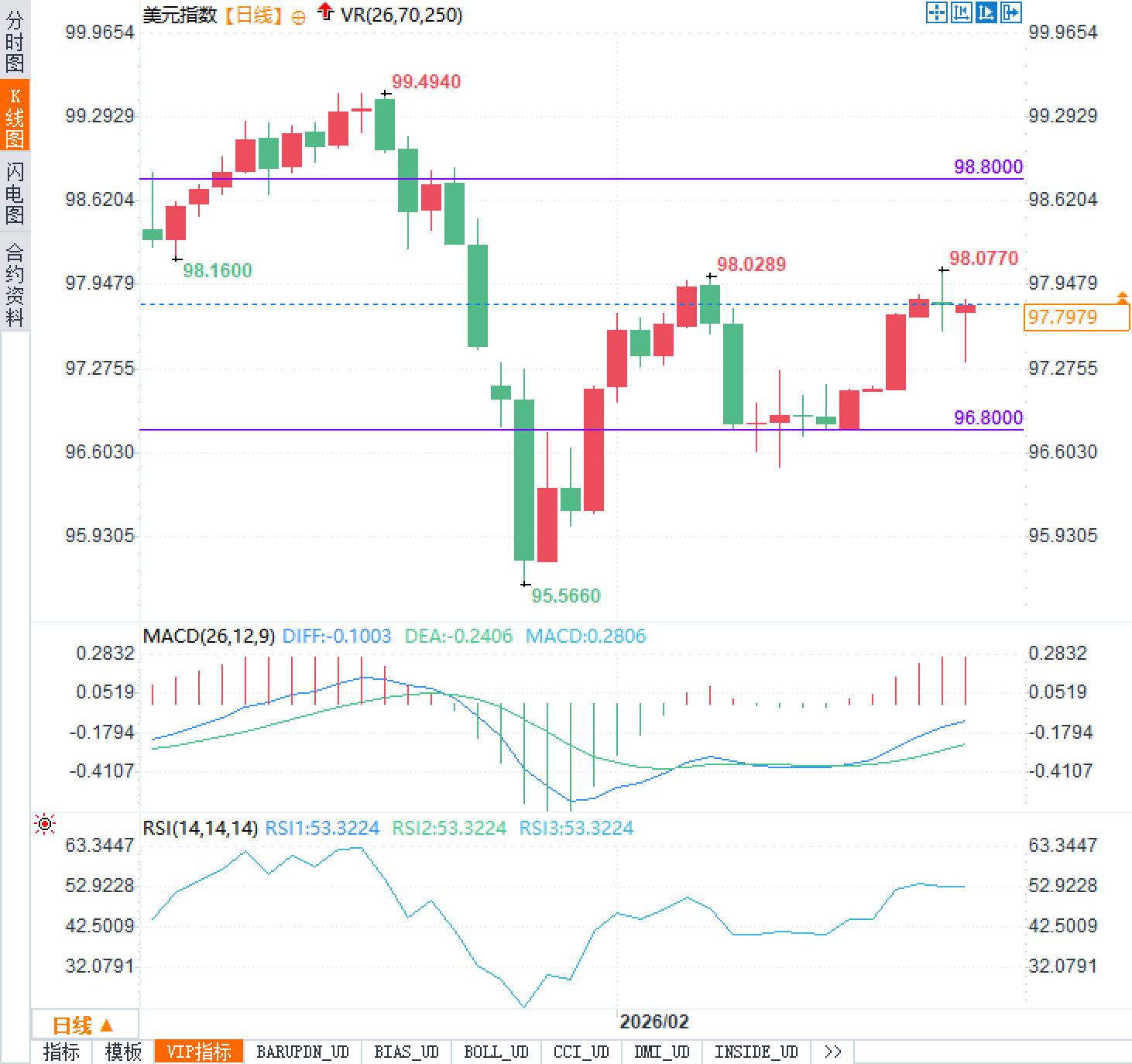
This shift from legal disputes to policy vacuums is profoundly reshaping asset pricing logic. First, there's a change in volatility structure: short-term volatility may subside once the framework is clarified, but it will rise again near key junctures, with implied volatility in options exhibiting a clear term divergence. Second, there's a recalibration of interest rate expectations: uncertainty surrounding the tariff path causes inflation expectations to fluctuate, thus affecting market pricing of the Federal Reserve's policy path, but this is more reflected in uncertainty premiums than unilateral trends. Finally, regarding exchange rates and safe-haven demand, due to increased legal constraints, traders are more inclined to engage in swing trading around key legal and policy junctures rather than making continuous one-sided bets.
Previously, the Supreme Court, in a 6-3 vote, invoked the "major issue doctrine" to definitively rule that the existing Emergency Economic Powers Act did not grant the president the authority to unilaterally impose broad tariffs. This ruling served as a watershed moment, forcibly pulling trade policy back from the "single-point decision-making" of the executive branch to a track of complex institutional constraints. For the market, this means the end of the past model where a president's tweets could trigger violent shocks; in its place, there is a rigorous scrutiny of procedural justice and the legal basis, a significant revision of expectations regarding the speed of policy implementation, and a fundamental change in how risk premiums are calculated.
Short-term certainty: the 150-day window and the fog of uncertainty in the long term.
Faced with the Supreme Court's restrictions, the Trump team was forced to turn to Section 122 of the Trade Act of 1974, attempting to use it as grounds to implement a uniform 15% tariff for 150 days. This strategy constructs a unique term structure in financial logic: the 150-day window provides the market with a rare period of "policy visibility," significantly reducing short-term uncertainty and allowing traders to relatively clearly measure the immediate impact costs. However, the price of this certainty is pushing a huge amount of uncertainty into the distant future. Extending the tariffs after 150 days requires Congressional approval, and in the current political climate, this probability is not high.
Analysis indicates that the market typically interprets such structures as having "measurable short-term impacts, but a medium-term trajectory highly dependent on political maneuvering." A deeper risk lies in the possibility that even if the executive branch attempts to achieve long-term tariffs through rolling renewals, the Supreme Court could intervene again, blocking any opportunities to exploit loopholes in the system. This potential "policy ceiling" makes it difficult for the real economy to undertake long-term supply chain restructuring or heavy asset relocation based solely on strong verbal signals. Companies tend to adopt inventory management and short-term contract hedging strategies. While this reduces the immediate disruptive impact of tariffs on production capacity, it significantly increases the volatility of the price transmission mechanism, causing market prices to fluctuate wildly without a long-term anchor.
The Long Wait: Program Window and Asset Price Recalibration
As the 150-day window provided by Section 122 nears its end, the more compliant but cumbersome path—initiating a Section 301 investigation based on unfair trade practices—will become a possible option for the Trump administration. Section 301 is characterized by its targeted nature, but the process is extremely complex, requiring the Office of the United States Trade Representative to complete a series of procedures, including evidence collection and public hearings. This investigation typically takes 6 to 12 months. This time cost is crucial for the market: if the relevant procedures cannot be completed around July or August, the market will face a "gap" in tariff tools. During this period, the administration lacks an immediate means to implement broad tariffs. Market panic regarding short-term escalation may ease, but concerns about medium- to long-term friction will not disappear; they will simply shift from "immediately" to "potentially happening at a later time."
This shift from legal disputes to policy vacuums is profoundly reshaping asset pricing logic. First, there's a change in volatility structure: short-term volatility may subside once the framework is clarified, but it will rise again near key junctures, with implied volatility in options exhibiting a clear term divergence. Second, there's a recalibration of interest rate expectations: uncertainty surrounding the tariff path causes inflation expectations to fluctuate, thus affecting market pricing of the Federal Reserve's policy path, but this is more reflected in uncertainty premiums than unilateral trends. Finally, regarding exchange rates and safe-haven demand, due to increased legal constraints, traders are more inclined to engage in swing trading around key legal and policy junctures rather than making continuous one-sided bets.
- Risk Warning and Disclaimer
- The market involves risk, and trading may not be suitable for all investors. This article is for reference only and does not constitute personal investment advice, nor does it take into account certain users’ specific investment objectives, financial situation, or other needs. Any investment decisions made based on this information are at your own risk.