Speeches by two Federal Reserve officials on February 24
2026-02-24 21:35:28
As inflation's decline unfolds on an unpredictable path, voices within the Federal Reserve are sketching a delicate balancing act. Atlanta Fed President Bostic offered a thought-provoking perspective: monetary policy must exercise extreme patience. His concern isn't about short-term data fluctuations, but rather a deeper structural problem—the unemployment rate may be heading towards a higher "new normal."
This is not a mathematical problem that can be solved simply by lowering interest rates. If the crux of the labor market problem lies in skills mismatch or a skewed participation rate, then aggressively lowering interest rates will not only fail to create matching jobs, but may also be like pouring oil into an ember, reigniting price pressures. Therefore, policymakers are scrutinizing employment data for different groups with a magnifying glass, trying to distinguish whether the current weakness is a cyclical cold or a structural chronic disease. A misjudgment would result in rising inflation while employment remains unchanged, leading to a policy dilemma where the gains outweigh the losses.
This caution is not unfounded. While productivity gains help reduce costs, Bostic cautions that it takes time for these benefits to spread across industries and should not be used as a reason to ignore short-term inflation risks. Policy predictability is itself a crucial component of financial conditions; if policymakers frequently shift course due to short-term noise, it will only push up risk premiums and shake market anchors to inflation expectations. This means that future policy paths will heavily rely on a precise understanding of "labor market slack," and any blind easing could be seen as a betrayal of the price stability objective.
Echoing Bostic's structural concerns, Chicago Fed President Goolsby sounded the alarm from another angle: the "monster" of service sector inflation has not yet been fully tamed. In an interview, he explicitly stated that while multiple interest rate cuts are possible this year, this is contingent on seeing "accessible" evidence of inflation falling back towards the 2% target. Looking back at the fight against inflation since the pandemic, the factors driving prices upward are complex, and service prices are often closely linked to wage growth and rental costs, naturally declining more slowly than goods prices. If this stickiness persists, prematurely easing financial conditions could very well cause the downward trend in inflation to stall or even reverse.
Goolsby also pointed to a glimmer of hope: the waning impact of tariffs may make recent inflation data appear more positive. However, this is more like the receding of a one-off factor than a fundamental reversal of endogenous trends. For the market, the key is to confirm whether this improvement is sustainable. Current economic data shows that the job market remains resilient, with unemployment claims remaining low and overall growth performing well. This assessment that the economy is "holding up" gives the Federal Reserve the confidence to continue its wait-and-see approach. In other words, future rate cuts are not intended to rescue a recession-ridden economy, but rather a rebalancing operation after confirming that inflation is truly under control. Without a solid chain of evidence, any speculation about rate cuts will remain unfounded.
Currently, the market and the Federal Reserve are in a synchronized "data-dependent" game. Interest rate pricing clearly reflects this cautious sentiment: investors do not expect a rate cut in March or April, and bets on a rate cut at the June meeting have just risen to slightly above 50%. This distribution is highly significant, indicating that inflation data and service prices remain insurmountable hurdles in the short term; if the data does not cooperate, the timing of rate cuts will be ruthlessly postponed. As long as inflation continues to improve and employment does not deteriorate significantly, there is still room for gradually lowering policy rates throughout the year, but the pace will be strictly determined by continuous data flows, rather than monthly fluctuations.
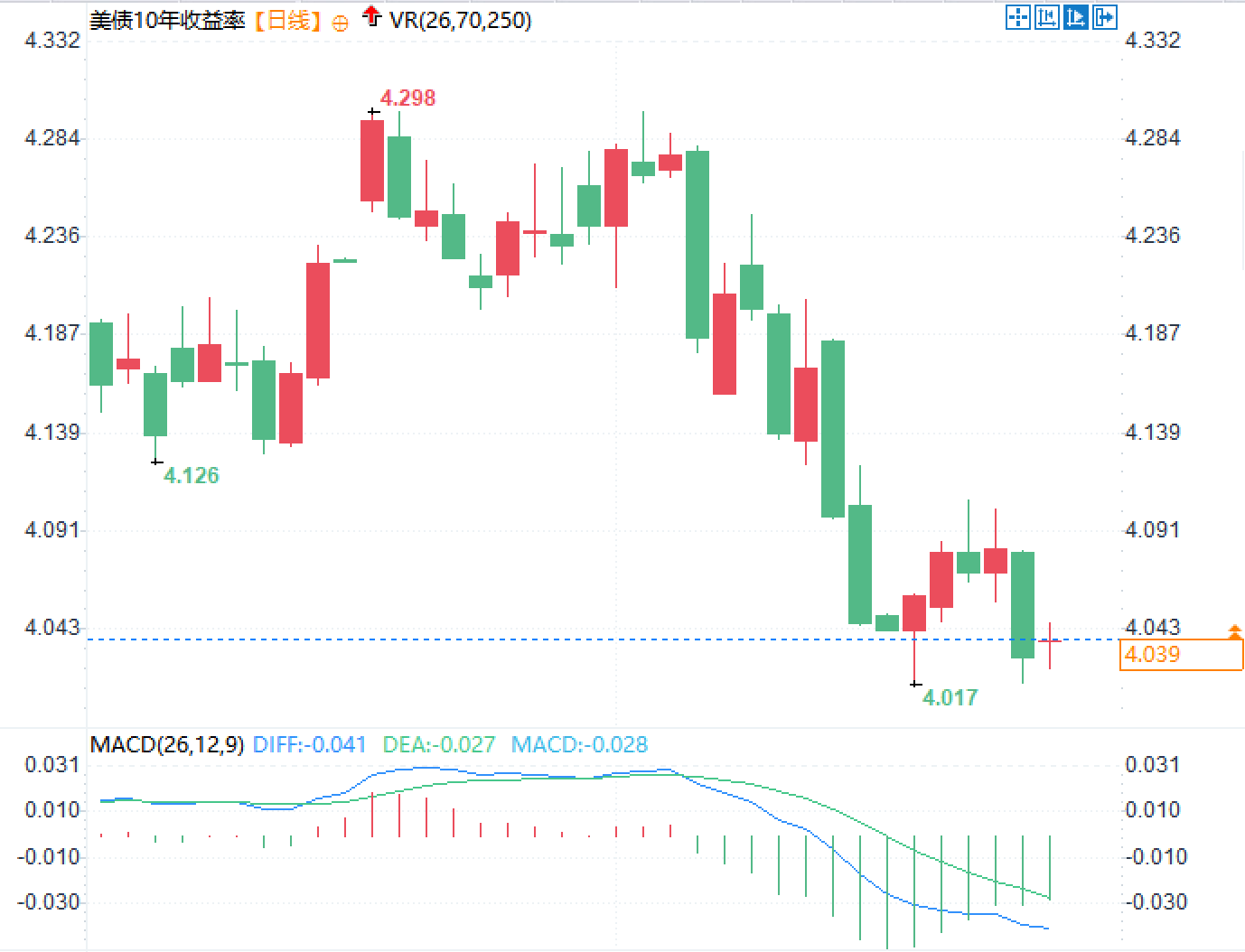
This environment has profoundly impacted asset pricing logic. Front-end interest rates will fluctuate wildly with each data release and official statement, while long-term interest rates will depend more on the market's reassessment of the medium- to long-term inflation center and potential growth rate. For the bond market, this means volatility will become the norm; while for risk assets, although expectations of easing provide some support, if recurring inflation leads to a delay in interest rate cuts, the space for valuation expansion will be severely limited. Analysts believe that future market performance will likely be more structurally differentiated, and a broad-based upward trend is unlikely to reappear. After all, in the face of the 2% inflation rule, all optimism must be built on solid evidence; the stability of institutional arrangements and the effectiveness of communication mechanisms will be key variables influencing the shape of the yield curve.
This is not a mathematical problem that can be solved simply by lowering interest rates. If the crux of the labor market problem lies in skills mismatch or a skewed participation rate, then aggressively lowering interest rates will not only fail to create matching jobs, but may also be like pouring oil into an ember, reigniting price pressures. Therefore, policymakers are scrutinizing employment data for different groups with a magnifying glass, trying to distinguish whether the current weakness is a cyclical cold or a structural chronic disease. A misjudgment would result in rising inflation while employment remains unchanged, leading to a policy dilemma where the gains outweigh the losses.
This caution is not unfounded. While productivity gains help reduce costs, Bostic cautions that it takes time for these benefits to spread across industries and should not be used as a reason to ignore short-term inflation risks. Policy predictability is itself a crucial component of financial conditions; if policymakers frequently shift course due to short-term noise, it will only push up risk premiums and shake market anchors to inflation expectations. This means that future policy paths will heavily rely on a precise understanding of "labor market slack," and any blind easing could be seen as a betrayal of the price stability objective.
The Sticky Specter: The Chain of Evidence Between Service Sector Inflation and Interest Rate Cuts
Echoing Bostic's structural concerns, Chicago Fed President Goolsby sounded the alarm from another angle: the "monster" of service sector inflation has not yet been fully tamed. In an interview, he explicitly stated that while multiple interest rate cuts are possible this year, this is contingent on seeing "accessible" evidence of inflation falling back towards the 2% target. Looking back at the fight against inflation since the pandemic, the factors driving prices upward are complex, and service prices are often closely linked to wage growth and rental costs, naturally declining more slowly than goods prices. If this stickiness persists, prematurely easing financial conditions could very well cause the downward trend in inflation to stall or even reverse.
Goolsby also pointed to a glimmer of hope: the waning impact of tariffs may make recent inflation data appear more positive. However, this is more like the receding of a one-off factor than a fundamental reversal of endogenous trends. For the market, the key is to confirm whether this improvement is sustainable. Current economic data shows that the job market remains resilient, with unemployment claims remaining low and overall growth performing well. This assessment that the economy is "holding up" gives the Federal Reserve the confidence to continue its wait-and-see approach. In other words, future rate cuts are not intended to rescue a recession-ridden economy, but rather a rebalancing operation after confirming that inflation is truly under control. Without a solid chain of evidence, any speculation about rate cuts will remain unfounded.
Reshaping Pricing: Finding New Anchors for Interest Rates Amid Uncertainty
Currently, the market and the Federal Reserve are in a synchronized "data-dependent" game. Interest rate pricing clearly reflects this cautious sentiment: investors do not expect a rate cut in March or April, and bets on a rate cut at the June meeting have just risen to slightly above 50%. This distribution is highly significant, indicating that inflation data and service prices remain insurmountable hurdles in the short term; if the data does not cooperate, the timing of rate cuts will be ruthlessly postponed. As long as inflation continues to improve and employment does not deteriorate significantly, there is still room for gradually lowering policy rates throughout the year, but the pace will be strictly determined by continuous data flows, rather than monthly fluctuations.
This environment has profoundly impacted asset pricing logic. Front-end interest rates will fluctuate wildly with each data release and official statement, while long-term interest rates will depend more on the market's reassessment of the medium- to long-term inflation center and potential growth rate. For the bond market, this means volatility will become the norm; while for risk assets, although expectations of easing provide some support, if recurring inflation leads to a delay in interest rate cuts, the space for valuation expansion will be severely limited. Analysts believe that future market performance will likely be more structurally differentiated, and a broad-based upward trend is unlikely to reappear. After all, in the face of the 2% inflation rule, all optimism must be built on solid evidence; the stability of institutional arrangements and the effectiveness of communication mechanisms will be key variables influencing the shape of the yield curve.
- Risk Warning and Disclaimer
- The market involves risk, and trading may not be suitable for all investors. This article is for reference only and does not constitute personal investment advice, nor does it take into account certain users’ specific investment objectives, financial situation, or other needs. Any investment decisions made based on this information are at your own risk.