Amid policy expectations and risk aversion, the pound sterling rebounded slightly against the yen.
2026-03-02 13:14:50
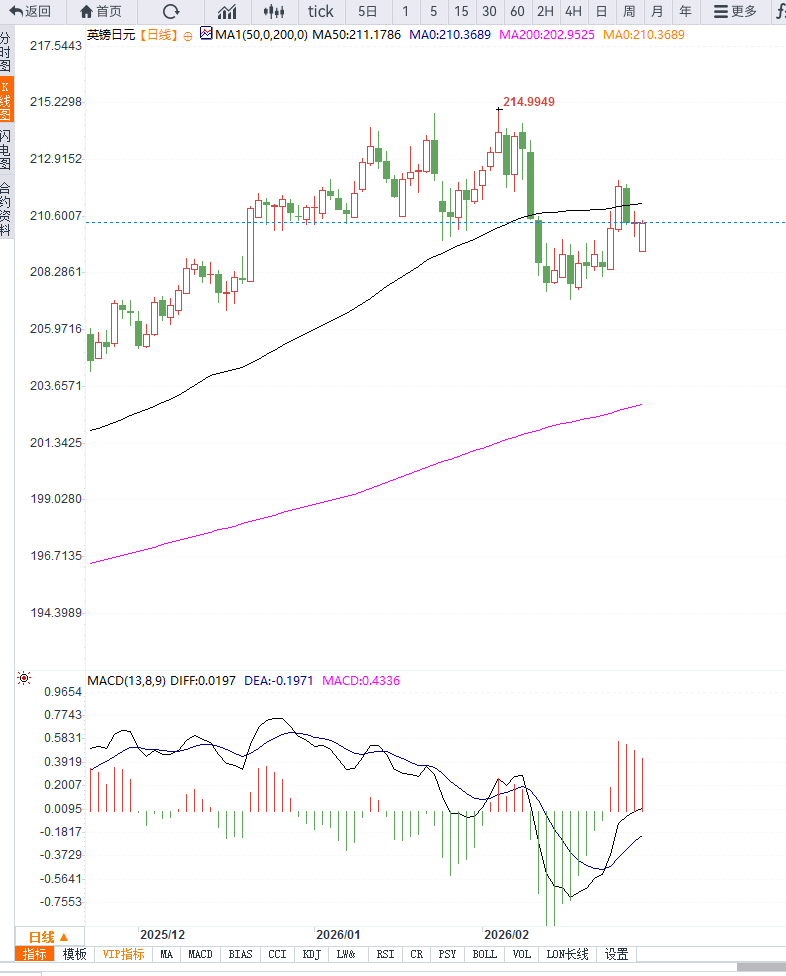
During Monday's Asian trading session, the GBP/JPY pair rebounded sharply from around 209.00 to around 210.35, essentially filling the bearish gap formed at the beginning of the week. The current exchange rate movement is mainly driven by the weakening yen.
Tokyo's core inflation data fell below the 2% policy target, indicating easing inflationary pressures and reducing market bets on a near-term interest rate hike by the Bank of Japan. Meanwhile, the Japanese Prime Minister expressed caution about further monetary tightening during a meeting with the Bank of Japan governor, further weakening the yen's support.
Furthermore, the market is still assessing the possibility of the Bank of Japan gradually normalizing its policy. If future interest rate hikes continue at a gradual pace, the yen's upside potential may be limited. As for the pound, the outlook for UK monetary policy also influences cross-currency trends.
The Bank of England governor stated during a parliamentary hearing that there is room for interest rate cuts as inflation gradually falls back to the 2% target, which to some extent limits the pound's upward momentum. However, the pound is still supported by the dollar's pullback in the short term. The dollar's decline from recent highs has given non-dollar currencies a chance for a period of recovery.
At the same time, the political landscape in the UK is changing, with the Green Party making a breakthrough in local elections, indicating a loosening of the traditional two-party political structure in the UK, but the market reaction to this is relatively limited.
Overall, the GBP/JPY pair is currently in a phase of mixed policy expectations and risk sentiment. If the conflict in the Middle East continues to escalate, demand for the safe-haven yen may rebound, thereby limiting the upside potential of the cross rate.
From a daily chart perspective, the GBP/JPY pair remains in a high-level range-bound trading pattern. After falling from around 212, the exchange rate found significant buying support in the 209 area, forming the initial stages of a short-term double bottom. The daily RSI has rebounded to around 55, indicating that bullish momentum has recovered somewhat but has not yet entered a strong uptrend.
The MACD indicator remains above the zero line, but the red momentum bars are gradually shrinking, indicating that the upward momentum has slowed. The first resistance level to watch is the 211.50 area, followed by the 212.80 level; a decisive break above 212.80 could open up further upside potential.
On the downside, 209.00 is a key short-term support level; a break below this level could lead to a pullback to the 208.00 or even 206.50 area. Looking at the 4-hour chart, the price is forming a short-term rebound channel, trading above short-term moving averages, but the upward slope has slowed. The RSI remains in the 50-60 range, indicating a slightly bullish short-term trend but not yet a strong uptrend.
The MACD histogram shows no significant expansion, indicating caution is advised when chasing the price higher in the short term. If the exchange rate fails to break through the resistance level of 211.50, it may re-enter a consolidation phase at higher levels.
Editor's Note:
The current GBP/JPY exchange rate movement is essentially a game between expectations of yen policy normalization and global risk aversion. In the short term, expectations of yen policy normalization will continue to exert medium-term downward pressure on the exchange rate, while geopolitical conflicts will periodically increase demand for the yen as a safe haven.
Regarding the British pound, the Bank of England's policy outlook remains accommodative, which also limits any unilateral strengthening of the pound. Therefore, GBP/JPY is more likely to maintain a wide range of fluctuations in the short term, while a trend breakout will require stronger macroeconomic drivers.
Tokyo's core inflation data fell below the 2% policy target, indicating easing inflationary pressures and reducing market bets on a near-term interest rate hike by the Bank of Japan. Meanwhile, the Japanese Prime Minister expressed caution about further monetary tightening during a meeting with the Bank of Japan governor, further weakening the yen's support.
Furthermore, the market is still assessing the possibility of the Bank of Japan gradually normalizing its policy. If future interest rate hikes continue at a gradual pace, the yen's upside potential may be limited. As for the pound, the outlook for UK monetary policy also influences cross-currency trends.
The Bank of England governor stated during a parliamentary hearing that there is room for interest rate cuts as inflation gradually falls back to the 2% target, which to some extent limits the pound's upward momentum. However, the pound is still supported by the dollar's pullback in the short term. The dollar's decline from recent highs has given non-dollar currencies a chance for a period of recovery.
At the same time, the political landscape in the UK is changing, with the Green Party making a breakthrough in local elections, indicating a loosening of the traditional two-party political structure in the UK, but the market reaction to this is relatively limited.
Overall, the GBP/JPY pair is currently in a phase of mixed policy expectations and risk sentiment. If the conflict in the Middle East continues to escalate, demand for the safe-haven yen may rebound, thereby limiting the upside potential of the cross rate.
From a daily chart perspective, the GBP/JPY pair remains in a high-level range-bound trading pattern. After falling from around 212, the exchange rate found significant buying support in the 209 area, forming the initial stages of a short-term double bottom. The daily RSI has rebounded to around 55, indicating that bullish momentum has recovered somewhat but has not yet entered a strong uptrend.
The MACD indicator remains above the zero line, but the red momentum bars are gradually shrinking, indicating that the upward momentum has slowed. The first resistance level to watch is the 211.50 area, followed by the 212.80 level; a decisive break above 212.80 could open up further upside potential.
On the downside, 209.00 is a key short-term support level; a break below this level could lead to a pullback to the 208.00 or even 206.50 area. Looking at the 4-hour chart, the price is forming a short-term rebound channel, trading above short-term moving averages, but the upward slope has slowed. The RSI remains in the 50-60 range, indicating a slightly bullish short-term trend but not yet a strong uptrend.
The MACD histogram shows no significant expansion, indicating caution is advised when chasing the price higher in the short term. If the exchange rate fails to break through the resistance level of 211.50, it may re-enter a consolidation phase at higher levels.
Editor's Note:
The current GBP/JPY exchange rate movement is essentially a game between expectations of yen policy normalization and global risk aversion. In the short term, expectations of yen policy normalization will continue to exert medium-term downward pressure on the exchange rate, while geopolitical conflicts will periodically increase demand for the yen as a safe haven.
Regarding the British pound, the Bank of England's policy outlook remains accommodative, which also limits any unilateral strengthening of the pound. Therefore, GBP/JPY is more likely to maintain a wide range of fluctuations in the short term, while a trend breakout will require stronger macroeconomic drivers.
- Risk Warning and Disclaimer
- The market involves risk, and trading may not be suitable for all investors. This article is for reference only and does not constitute personal investment advice, nor does it take into account certain users’ specific investment objectives, financial situation, or other needs. Any investment decisions made based on this information are at your own risk.