Will the Middle East powder keg ignite an energy crisis? Qatar's shutdown raises the question: will it trigger a global inflation countdown?
2026-03-02 20:55:35
The conflict in the Middle East is no longer confined to ground clashes, but has directly impacted the "lifeline" of the global energy supply. Recently, Qatar Energy, one of the world's three largest liquefied natural gas (LNG) producers, was forced to halt operations after its key industrial facilities in Ras Laffan and Mesaied were attacked, causing a complete production shutdown. The impact of this event extends far beyond the operations of a single company, as Qatar controls approximately a quarter of the world's LNG supply for the next decade, and its core facility in Ras Laffan is hailed as the "LNG capital of the world."
When this energy stronghold fell silent, coupled with the current restrictions on passage through the Strait of Hormuz, the global market instantly felt an unprecedented sense of suffocation. This not only caused violent fluctuations in the spot market, but also posed a severe challenge to the fulfillment of long-term contracts, exposing the vulnerability of the supply chain.
Meanwhile, the tactical intentions behind the geopolitical game are becoming increasingly clear. From the suspected drone attack on Saudi Aramco's Rastanura refinery to Iran's claim of missile strikes on three US and British oil tankers in the Gulf, a series of actions are aimed directly at the energy lifeline. This strategy has directly impacted the commodity market, pushing crude oil prices to test a seven-month high in early Asian trading on March 2. With shipping insurance costs soaring, energy transportation costs have been further driven up, forcing traders to reassess the true cost of every barrel of oil and every cubic meter of gas.
Amidst a clouded supply side, OPEC+ confirmed it will increase oil production by 206,000 barrels per day starting in April, higher than some analysts' expectations of 137,000 barrels per day. On the surface, this seems like a good remedy for market tensions, but given the escalating geopolitical conflicts, whether this additional capacity can truly translate into market supply remains a huge question mark. If major shipping routes, such as the Strait of Hormuz, remain blocked, the increased production may be stuck at the production sites, unable to reach consumer markets, leading to regional shortages rather than a global easing. This "oil unable to be transported" situation makes traditional supply and demand balance models inadequate in the current extreme environment.
Commerzbank analysis indicates that Brent crude oil prices are currently reacting relatively mildly to the Middle East war and the de facto closure of the Straits of Hormuz, briefly breaking through $80 before retreating. Some analysts believe that the market's current pricing implicitly assumes a short-lived conflict. In this scenario, the impact on the European Central Bank's jurisdiction and the German economy would be minimal. However, this mild reaction is more like the calm before the storm; once the situation deviates from the short-term conflict scenario, the existing price system will face restructuring. The market is betting on a quick resolution, but upside risks are accumulating, and any misjudgment could trigger a chain reaction.
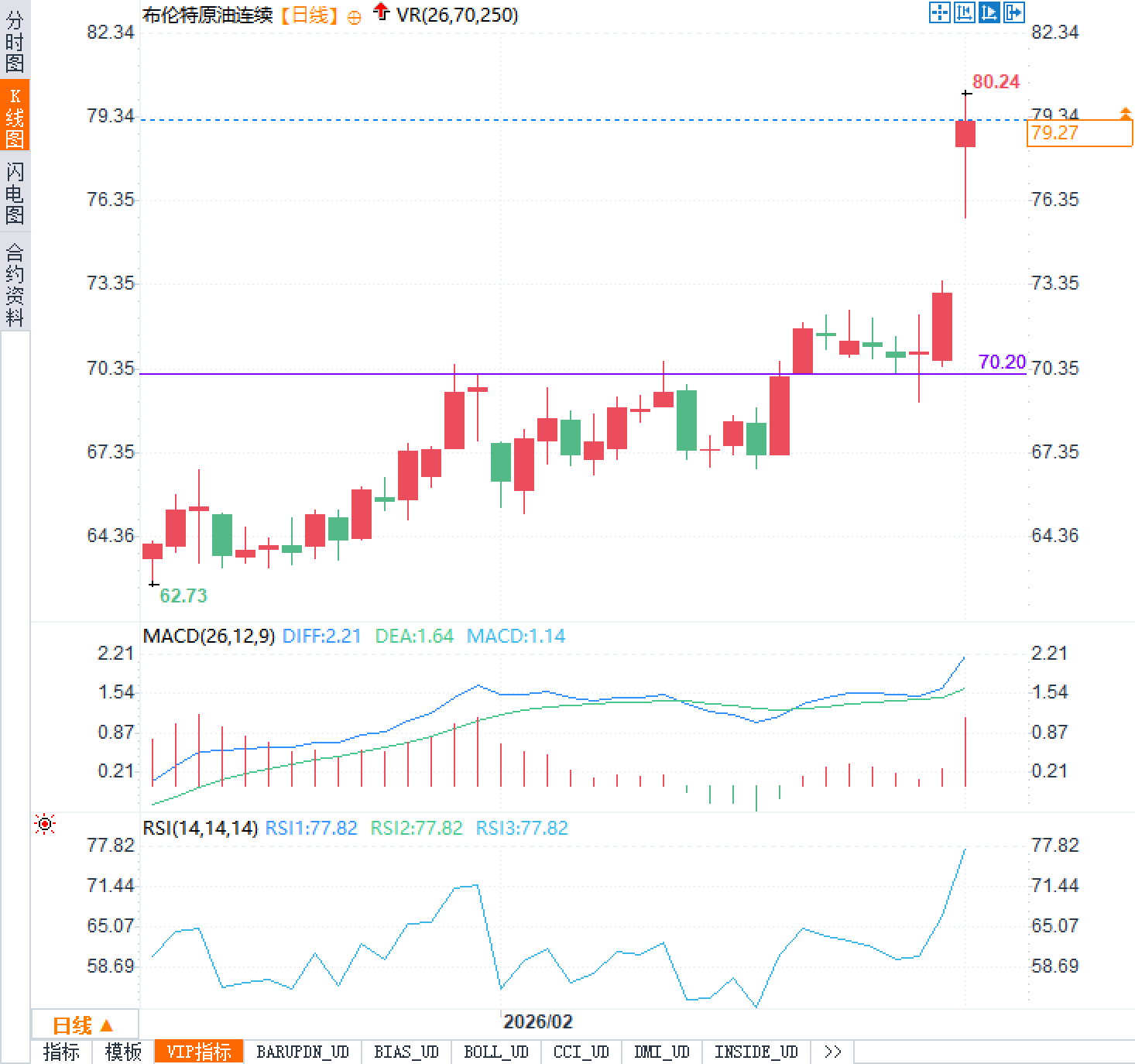
If the war drags on for months, the situation will change dramatically. According to models from Commerzbank, if the Strait of Hormuz remains impassable for an extended period, Brent crude oil prices could climb and remain at a high of $100 per barrel. This would represent an increase of approximately 40% compared to before the surge in war speculation in mid-February. For industries heavily reliant on energy inputs, soaring oil prices mean a comprehensive increase in transportation and manufacturing costs, which will ultimately be passed on to the consumer price index. Analysts warn that if the war is prolonged, inflation in Europe could rise by at least one percentage point, while economic growth could fall by a fraction of a percentage point—a painful blow to already fragile economies.
High energy prices not only erode purchasing power but also tie the hands of policymakers. To curb energy-driven inflation, the European Central Bank may be forced to maintain restrictive monetary policy, thereby suppressing investment demand and further dragging down economic recovery. In the foreign exchange market, currencies of energy-importing countries will face depreciation pressure, while those of resource-exporting countries may find support, reshaping the global capital flow landscape. While the market currently assumes the war is short-lived, potential supply gaps and geopolitical risk premiums cannot be ignored. Every fluctuation in the energy market reminds all parties that geopolitical risk remains a crucial variable in financial pricing, and the coming weeks will be a key window for assessing the resilience of the global economy.
When this energy stronghold fell silent, coupled with the current restrictions on passage through the Strait of Hormuz, the global market instantly felt an unprecedented sense of suffocation. This not only caused violent fluctuations in the spot market, but also posed a severe challenge to the fulfillment of long-term contracts, exposing the vulnerability of the supply chain.
Meanwhile, the tactical intentions behind the geopolitical game are becoming increasingly clear. From the suspected drone attack on Saudi Aramco's Rastanura refinery to Iran's claim of missile strikes on three US and British oil tankers in the Gulf, a series of actions are aimed directly at the energy lifeline. This strategy has directly impacted the commodity market, pushing crude oil prices to test a seven-month high in early Asian trading on March 2. With shipping insurance costs soaring, energy transportation costs have been further driven up, forcing traders to reassess the true cost of every barrel of oil and every cubic meter of gas.
Increased production won't solve the immediate problem: the OPEC plan and the potential supply disruption.
Amidst a clouded supply side, OPEC+ confirmed it will increase oil production by 206,000 barrels per day starting in April, higher than some analysts' expectations of 137,000 barrels per day. On the surface, this seems like a good remedy for market tensions, but given the escalating geopolitical conflicts, whether this additional capacity can truly translate into market supply remains a huge question mark. If major shipping routes, such as the Strait of Hormuz, remain blocked, the increased production may be stuck at the production sites, unable to reach consumer markets, leading to regional shortages rather than a global easing. This "oil unable to be transported" situation makes traditional supply and demand balance models inadequate in the current extreme environment.
Commerzbank analysis indicates that Brent crude oil prices are currently reacting relatively mildly to the Middle East war and the de facto closure of the Straits of Hormuz, briefly breaking through $80 before retreating. Some analysts believe that the market's current pricing implicitly assumes a short-lived conflict. In this scenario, the impact on the European Central Bank's jurisdiction and the German economy would be minimal. However, this mild reaction is more like the calm before the storm; once the situation deviates from the short-term conflict scenario, the existing price system will face restructuring. The market is betting on a quick resolution, but upside risks are accumulating, and any misjudgment could trigger a chain reaction.
The Nightmare of Inflation Returns: Macroeconomic Accounts Under a Protracted War
If the war drags on for months, the situation will change dramatically. According to models from Commerzbank, if the Strait of Hormuz remains impassable for an extended period, Brent crude oil prices could climb and remain at a high of $100 per barrel. This would represent an increase of approximately 40% compared to before the surge in war speculation in mid-February. For industries heavily reliant on energy inputs, soaring oil prices mean a comprehensive increase in transportation and manufacturing costs, which will ultimately be passed on to the consumer price index. Analysts warn that if the war is prolonged, inflation in Europe could rise by at least one percentage point, while economic growth could fall by a fraction of a percentage point—a painful blow to already fragile economies.
High energy prices not only erode purchasing power but also tie the hands of policymakers. To curb energy-driven inflation, the European Central Bank may be forced to maintain restrictive monetary policy, thereby suppressing investment demand and further dragging down economic recovery. In the foreign exchange market, currencies of energy-importing countries will face depreciation pressure, while those of resource-exporting countries may find support, reshaping the global capital flow landscape. While the market currently assumes the war is short-lived, potential supply gaps and geopolitical risk premiums cannot be ignored. Every fluctuation in the energy market reminds all parties that geopolitical risk remains a crucial variable in financial pricing, and the coming weeks will be a key window for assessing the resilience of the global economy.
- Risk Warning and Disclaimer
- The market involves risk, and trading may not be suitable for all investors. This article is for reference only and does not constitute personal investment advice, nor does it take into account certain users’ specific investment objectives, financial situation, or other needs. Any investment decisions made based on this information are at your own risk.